Yan Guixin, Lv Xiaodan, Gao Guizhen, Li Feng, Li Jun, Qiao Jiangwei, Xu Kun, Chen Biyun, Wang Limin, Xiao Xin, Wu Xiaoming
Key Laboratory of Biology and Genetic Improvement of Oil Crops, Ministry of Agriculture, Oil Crops Research Institute of the Chinese Academy of Agricultural Sciences Wuhan, China.
Front Plant Sci. 2016 Feb 16;7:150. doi: 10.3389/fpls.2016.00150. eCollection 2016.
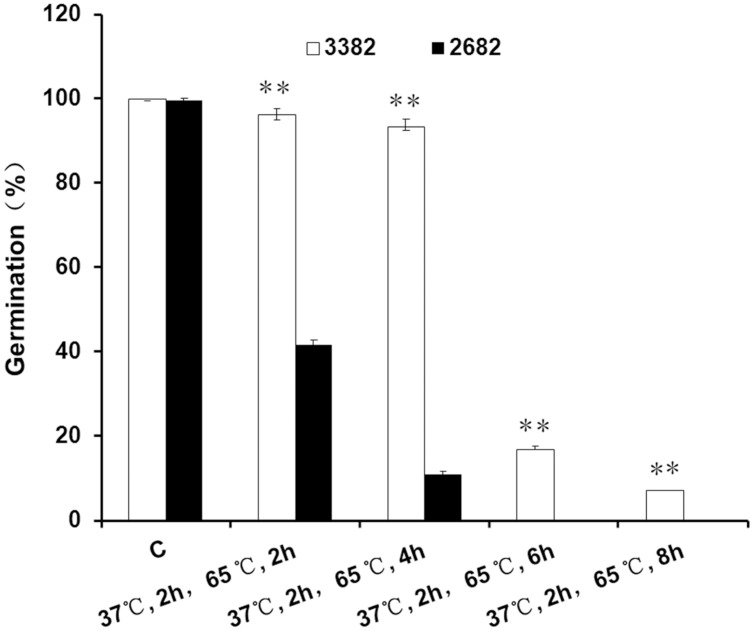
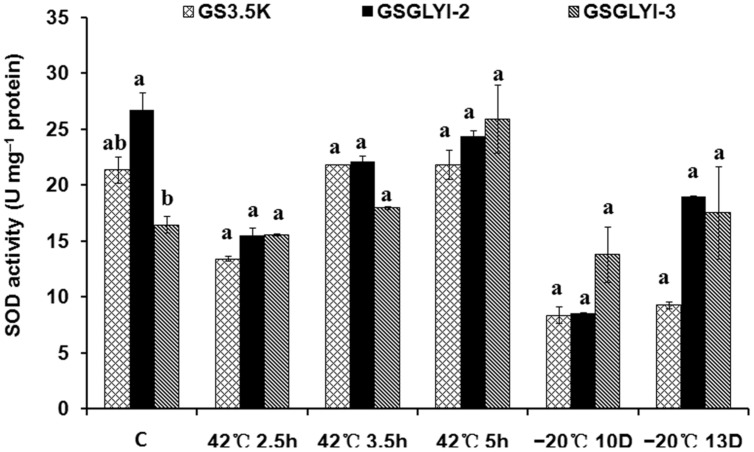
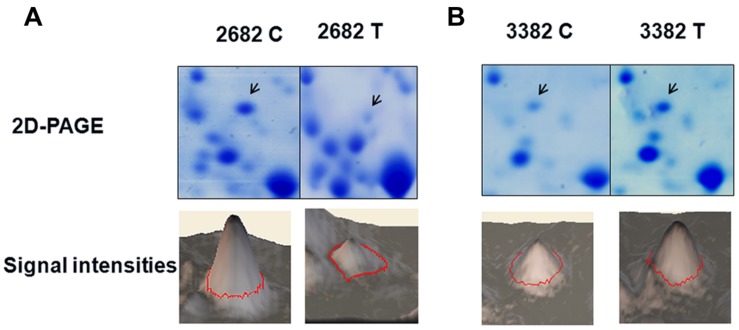
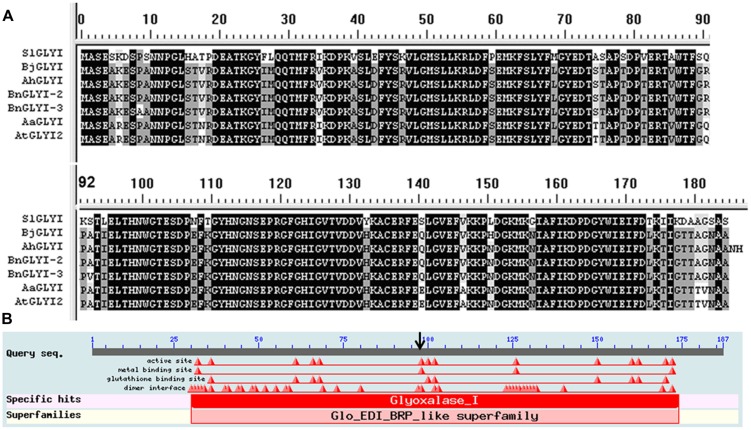
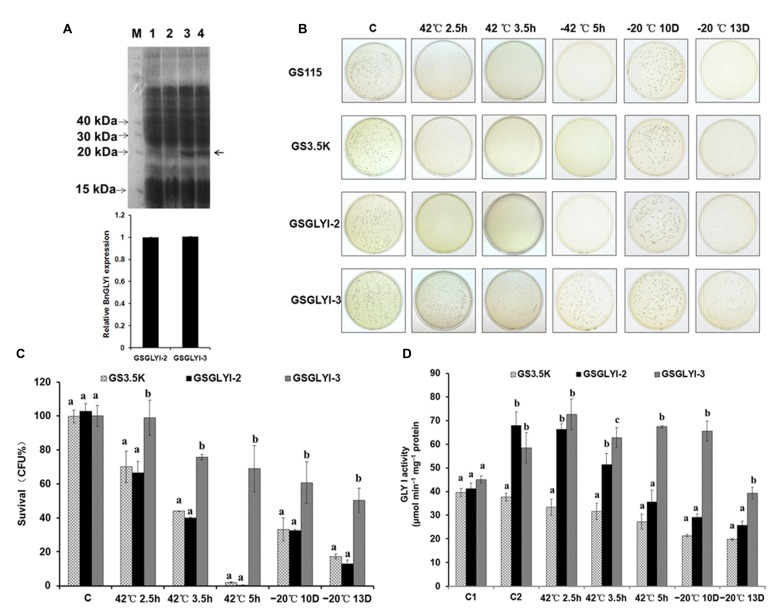
Glyoxalase I (GLYI) is a ubiquitous enzyme in all organisms that catalyzes the conversion of the potent cytotoxin methylglyoxal to S-D-lactoylglutathione. Although many reports suggest the importance of GLYI in the plant response to stress, its function in seeds requires further study. Here, we identified a heat-induced GLYI from Brassica napus seeds, BnGLYI, using a comparative proteomics approach. Two-dimensional gel analyses revealed that BnGLYI protein expression upon heat treatment was significantly elevated in thermotolerant seeds but was diminished in heat-sensitive seeds. The BnGLYI-2 and BnGLYI-3 genes from the heat-sensitive and thermotolerant cultivars, respectively, were characterized, and analyzed. Only two amino acid residue variations were found between the amino acid sequences of the two genes. Moreover, overexpressing BnGLYI-3 in yeast cells enhanced tolerance to heat and cold stress and significantly increased GLYI activity compared to overexpressing BnGLYI-2. In addition, BnGLYI-3 transformants showed enhanced superoxide dismutase activities under heat and cold treatment, whereas these activities were diminished for BnGLYI-2 transformants. Taken together, these results indicate that overexpression of the BnGLYI-3 gene imparts thermotolerance and cold tolerance in yeast and that the variations in BnGLYI-3 may play an important role in the responses to temperature stresses.
乙二醛酶I(GLYI)是所有生物体中普遍存在的一种酶,它催化强效细胞毒素甲基乙二醛转化为S-D-乳酰谷胱甘肽。尽管许多报道表明GLYI在植物应对胁迫中具有重要作用,但其在种子中的功能仍需进一步研究。在这里,我们采用比较蛋白质组学方法,从甘蓝型油菜种子中鉴定出一种热诱导的GLYI,即BnGLYI。二维凝胶分析显示,热处理后,BnGLYI蛋白表达在耐热种子中显著升高,而在热敏种子中则降低。对分别来自热敏和耐热品种的BnGLYI-2和BnGLYI-3基因进行了表征和分析。两个基因的氨基酸序列之间仅发现两个氨基酸残基变异。此外,与过表达BnGLYI-2相比,在酵母细胞中过表达BnGLYI-3增强了对热和冷胁迫的耐受性,并显著提高了GLYI活性。此外,BnGLYI-3转化体在热和冷处理下超氧化物歧化酶活性增强,而BnGLYI-2转化体的这些活性则降低。综上所述,这些结果表明,BnGLYI-3基因的过表达赋予酵母耐热性和耐寒性,并且BnGLYI-3中的变异可能在对温度胁迫的响应中起重要作用。