Hung Chia-Chian, Huang Wen-Chia, Lin Yi-Wen, Yu Ting-Wei, Chen Hsin-Hung, Lin Sung-Chyr, Chiang Wen-Hsuan, Chiu Hsin-Cheng
1. Department of Biomedical Engineering and Environmental Sciences, National Tsing Hua University, Hsinchu 30013, Taiwan.
2. Department of Chemical Engineering, National Chung Hsing University, Taichung 402, Taiwan.
Theranostics. 2016 Jan 1;6(3):302-17. doi: 10.7150/thno.13686. eCollection 2016.
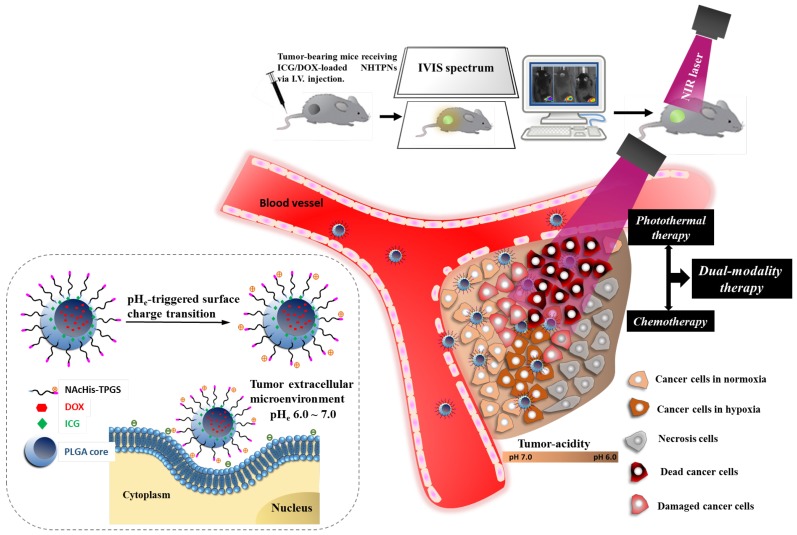
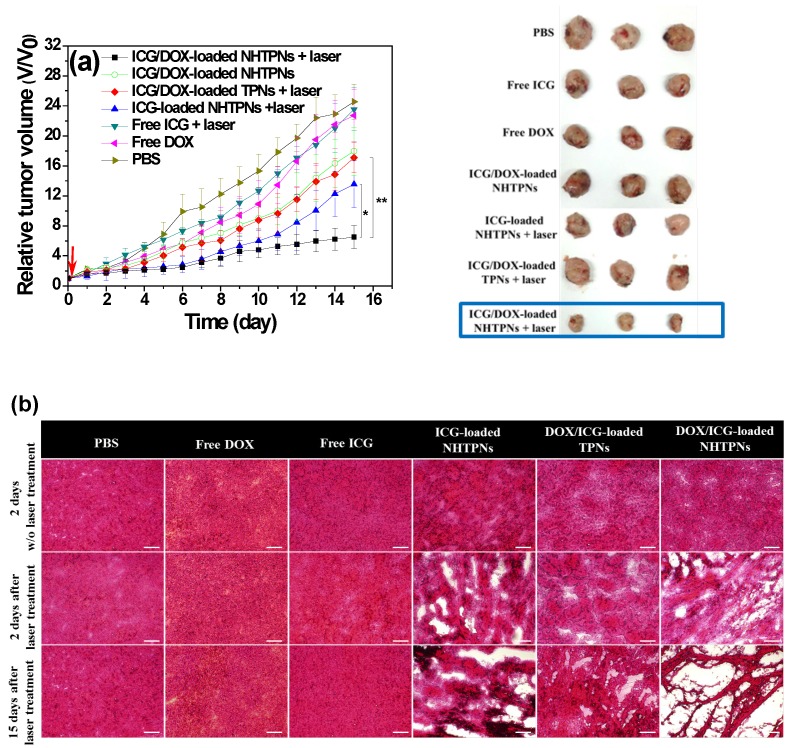
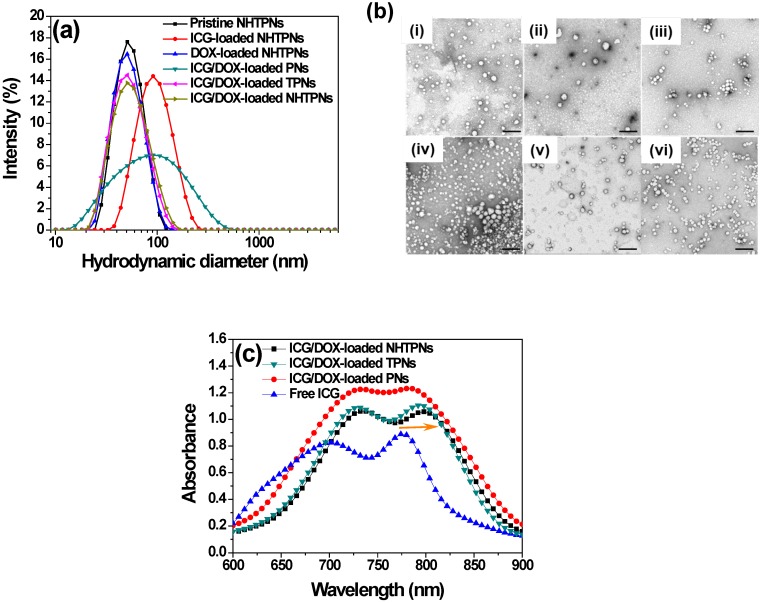
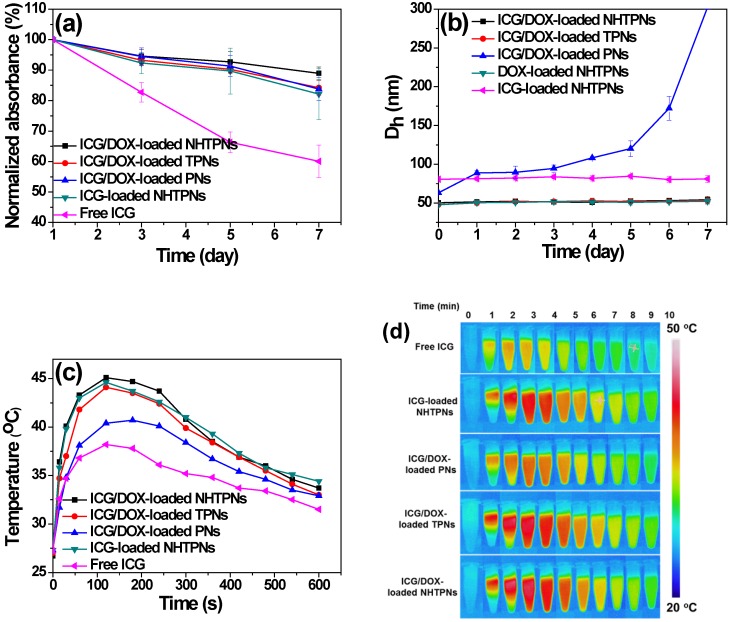
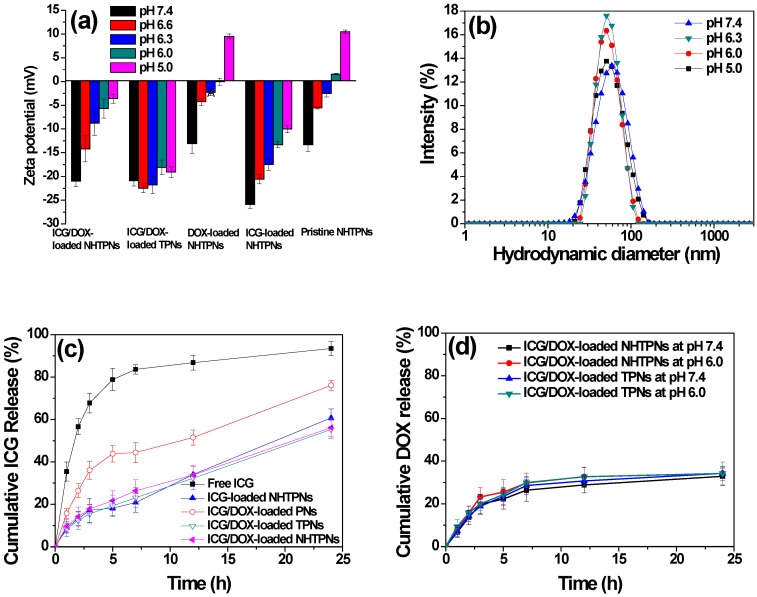
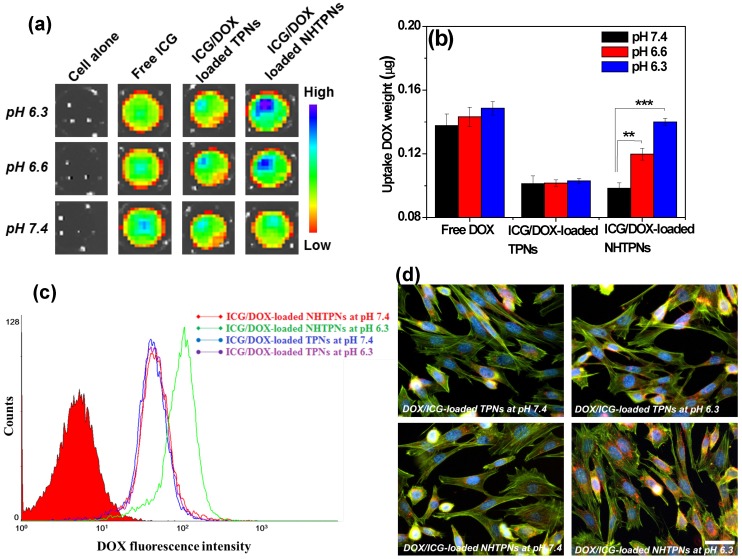
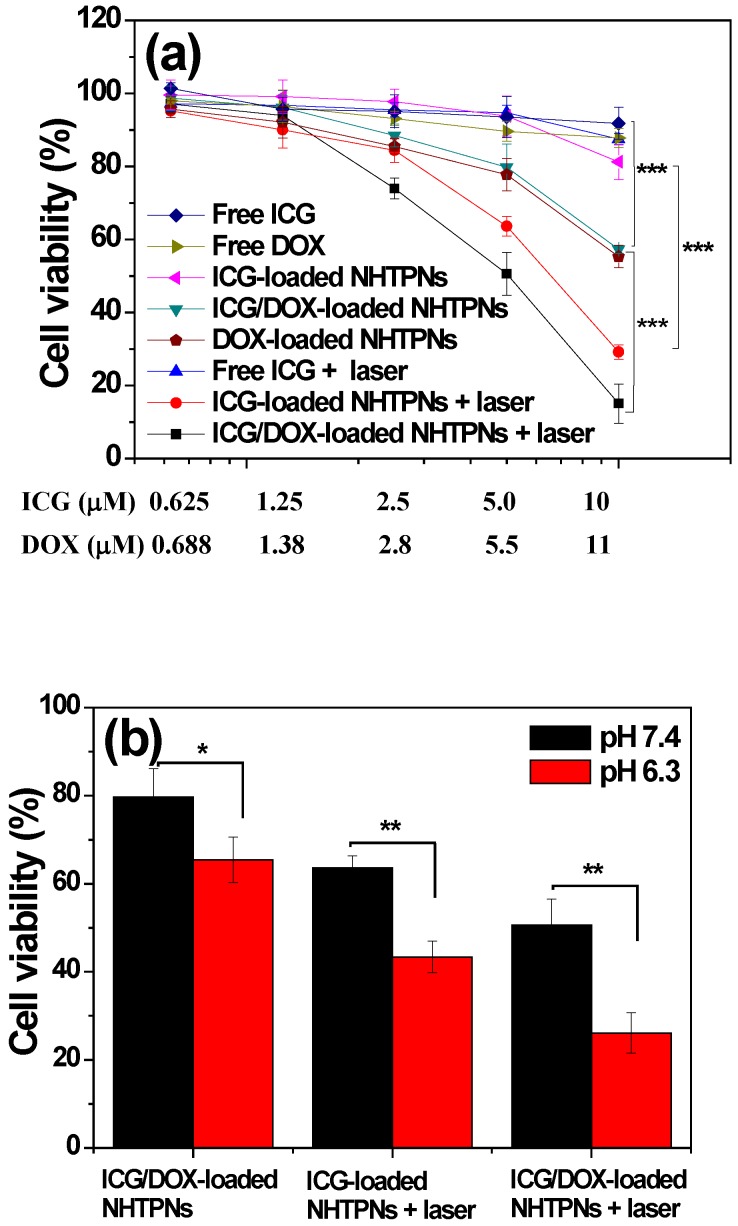
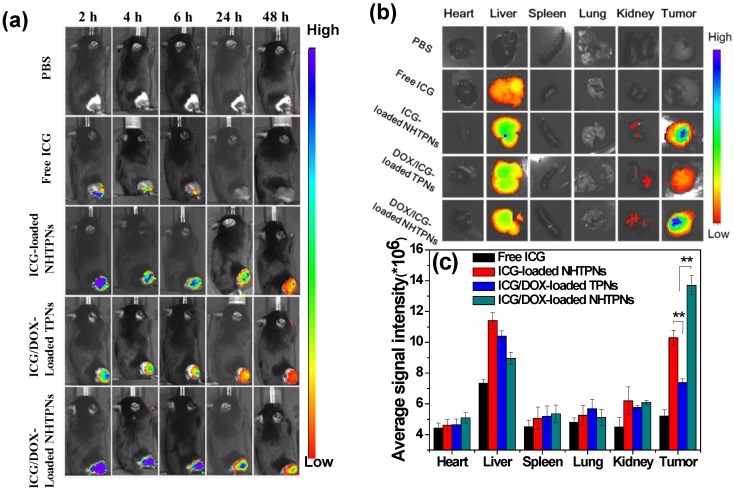
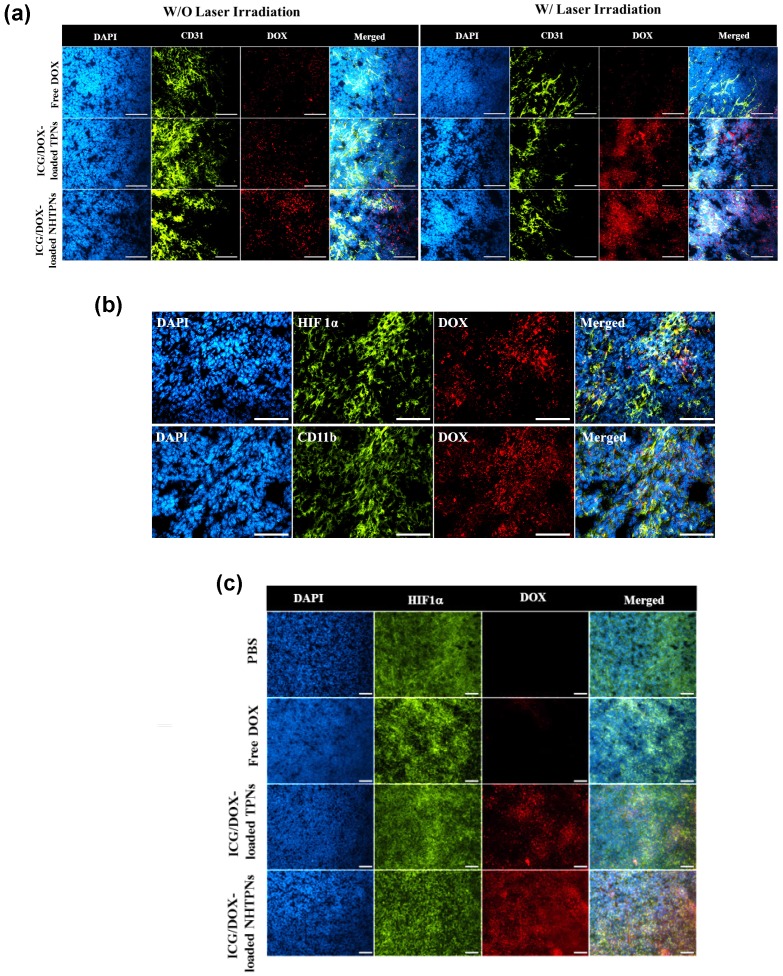
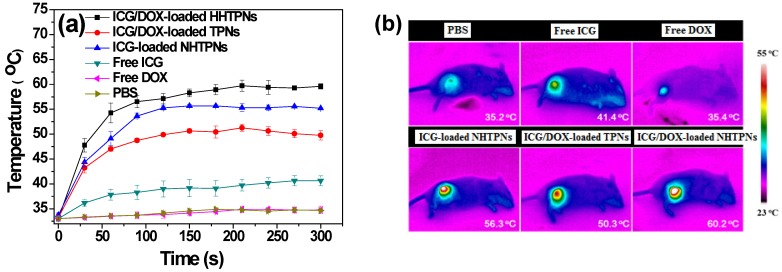
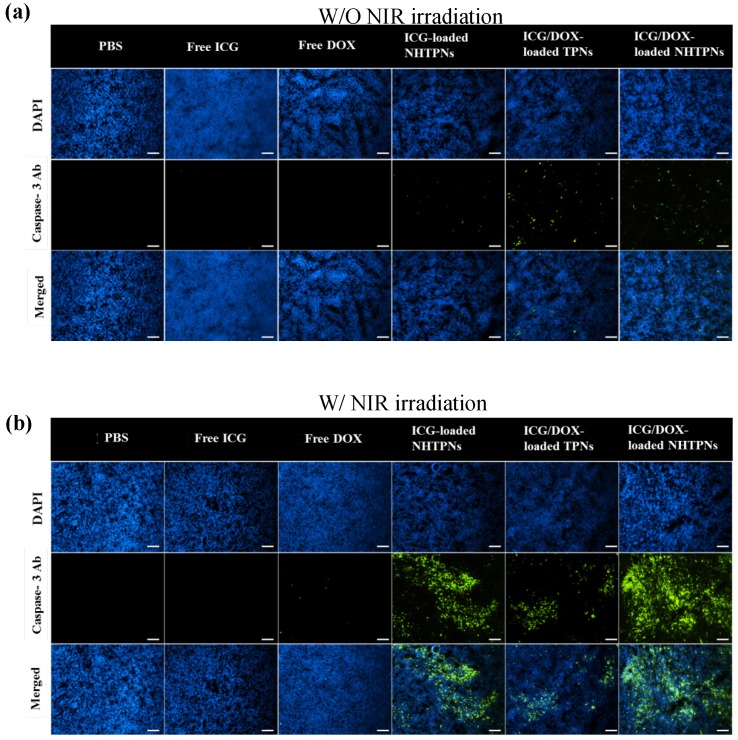
To significantly promote tumor uptake and penetration of therapeutics, a nanovehicle system comprising poly(lactic-co-glycolic acid) (PLGA) as the hydrophobic cores coated with pH-responsive N-acetyl histidine modified D-α-tocopheryl polyethylene glycol succinate (NAcHis-TPGS) is developed in this work. The nanocarriers with switchable surface charges in response to tumor extracellular acidity (pHe) were capable of selectively co-delivering indocyanine green (ICG), a photothermal agent, and doxorubicin (DOX), a chemotherapy drug, to tumor sites. The in vitro cellular uptake of ICG/DOX-loaded nanoparticles by cancer cells and macrophages was significantly promoted in weak acidic environments due to the increased protonation of the NAcHis moieties. The results of in vivo and ex vivo biodistribution studies demonstrated that upon intravenous injection the theranostic nanoparticles were substantially accumulated in TRAMP-C1 solid tumor of tumor-bearing mice. Immunohistochemical examination of tumor sections confirmed the active permeation of the nanoparticles into deep tumor hypoxia due to their small size, pHe-induced near neutral surface, and the additional hitchhiking transport via tumor-associated macrophages. The prominent imaging-guided photothermal therapy of ICG/DOX-loaded nanoparticles after tumor accumulation induced extensive tumor tissue/vessel ablation, which further promoted their extravasation and DOX tumor permeation, thus effectively suppressing tumor growth.
为了显著促进治疗剂在肿瘤中的摄取和渗透,本研究开发了一种纳米载体系统,该系统以聚乳酸-羟基乙酸共聚物(PLGA)为疏水核心,表面包覆有pH响应性的N-乙酰组氨酸修饰的聚乙二醇琥珀酸维生素E(NAcHis-TPGS)。这种纳米载体能够响应肿瘤细胞外酸度(pHe)而改变表面电荷,能够将光热剂吲哚菁绿(ICG)和化疗药物阿霉素(DOX)选择性地共递送至肿瘤部位。在弱酸性环境中,由于NAcHis基团质子化增加,癌细胞和巨噬细胞对负载ICG/DOX的纳米颗粒的体外细胞摄取显著增强。体内和体外生物分布研究结果表明,经静脉注射后,这种诊疗纳米颗粒在荷瘤小鼠的TRAMP-C1实体瘤中大量蓄积。对肿瘤切片的免疫组织化学检查证实,由于纳米颗粒尺寸小、pHe诱导的近中性表面以及通过肿瘤相关巨噬细胞的额外搭便车运输,纳米颗粒能够有效渗透到肿瘤深部缺氧区域。肿瘤蓄积后,负载ICG/DOX的纳米颗粒进行的显著成像引导光热疗法诱导了广泛的肿瘤组织/血管消融,这进一步促进了它们的渗出和DOX在肿瘤中的渗透,从而有效抑制肿瘤生长。