Hu Jing, Yang Zhiyong, Wang Jinbo, Yu Jia, Guo Jing, Liu Shiying, Qian Chunmei, Song Liwen, Wu Yi, Cheng Jiajing
Department of Obstetrics and Gynecology, Shanghai Tenth People's Hospital, Tongji University School of Medicine, Shanghai, China.
The First Clinical Medical College of Nanjing Medical University, Nanjing, Jiangsu, China.
PLoS One. 2016 Feb 24;11(2):e0148994. doi: 10.1371/journal.pone.0148994. eCollection 2016.
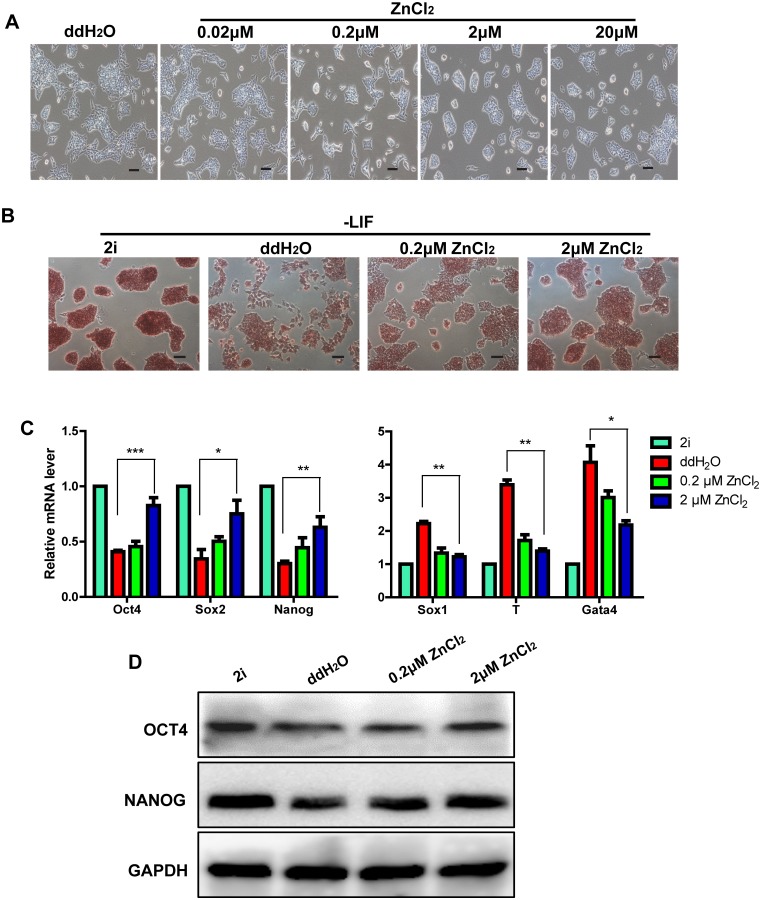
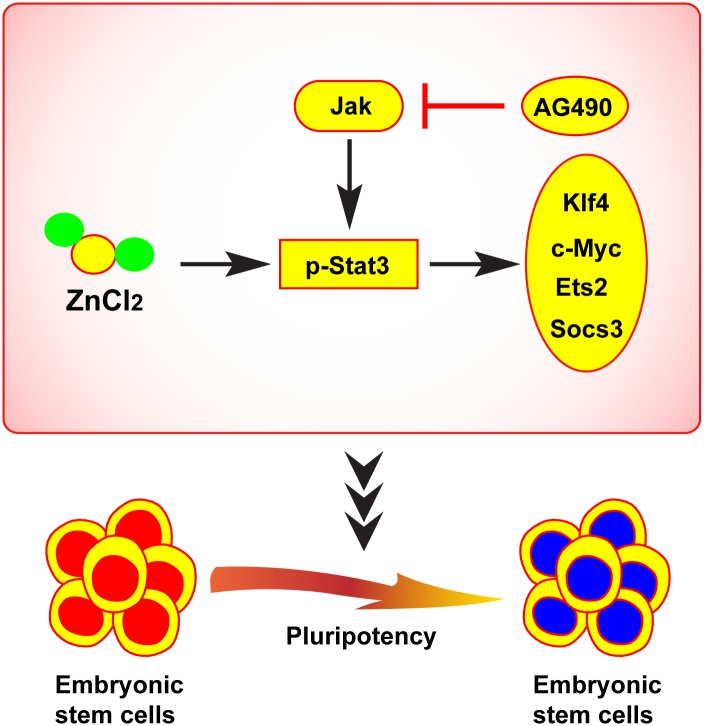
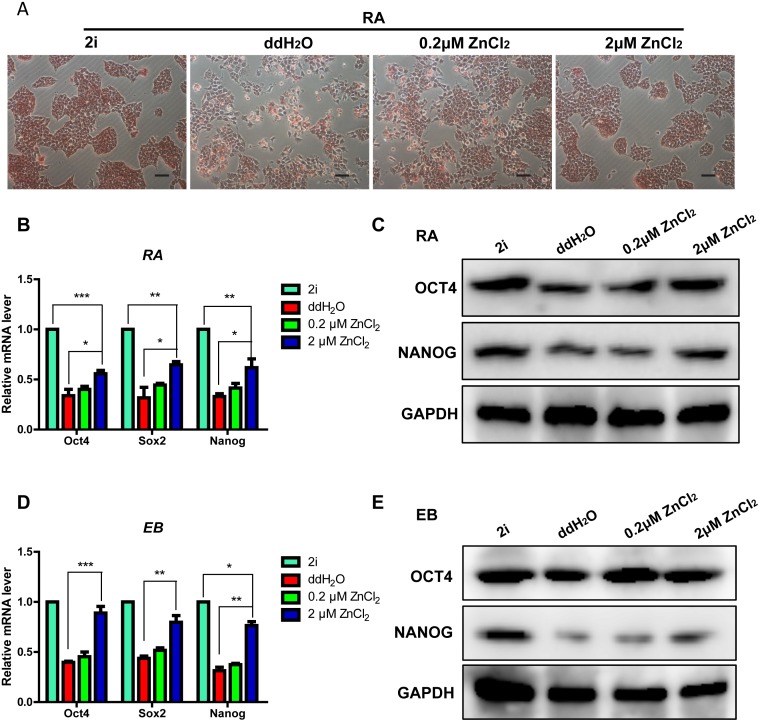
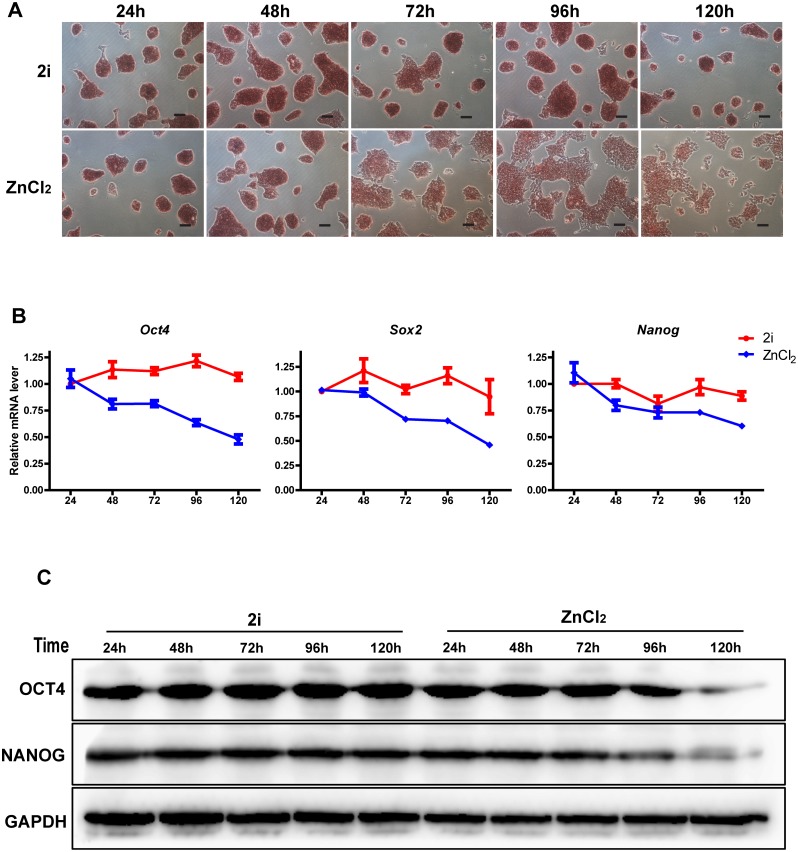
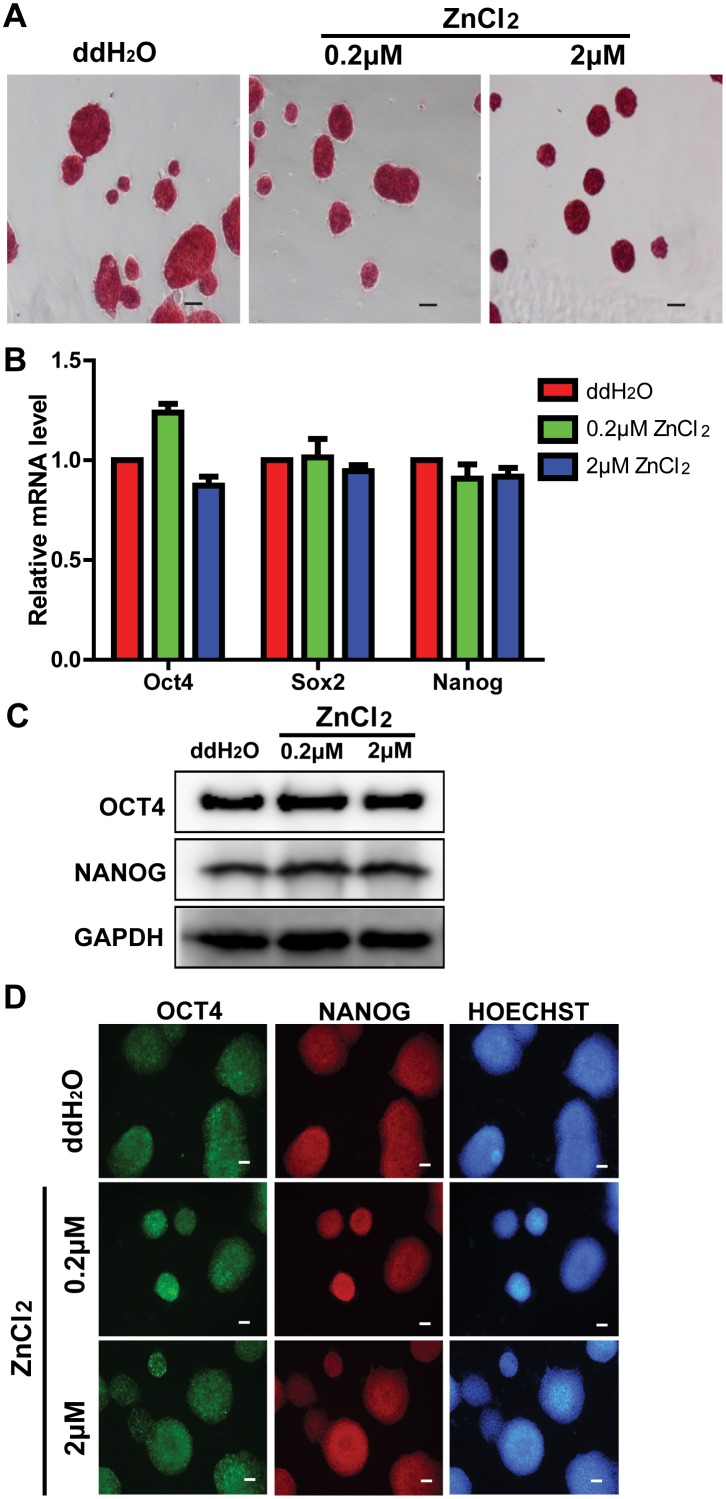
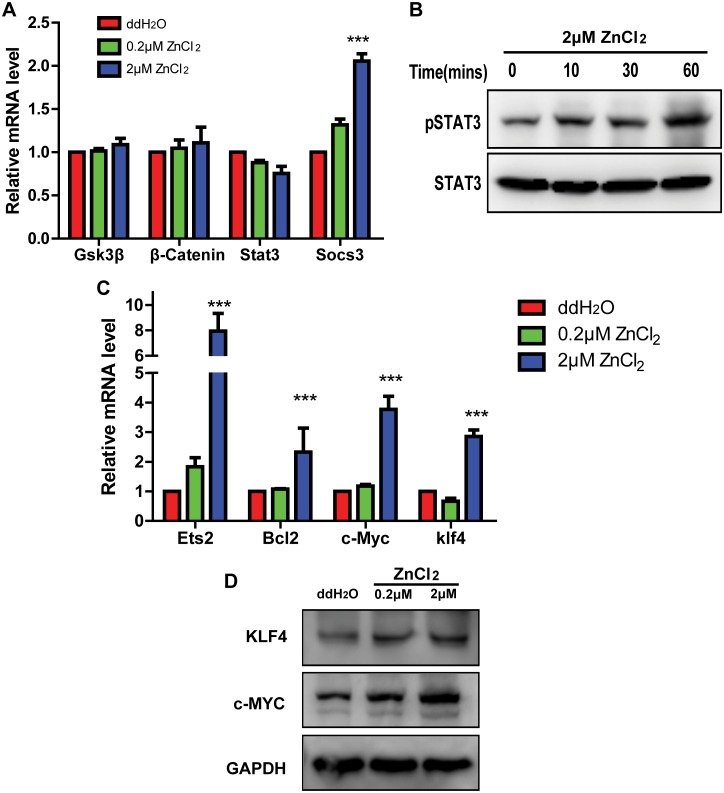
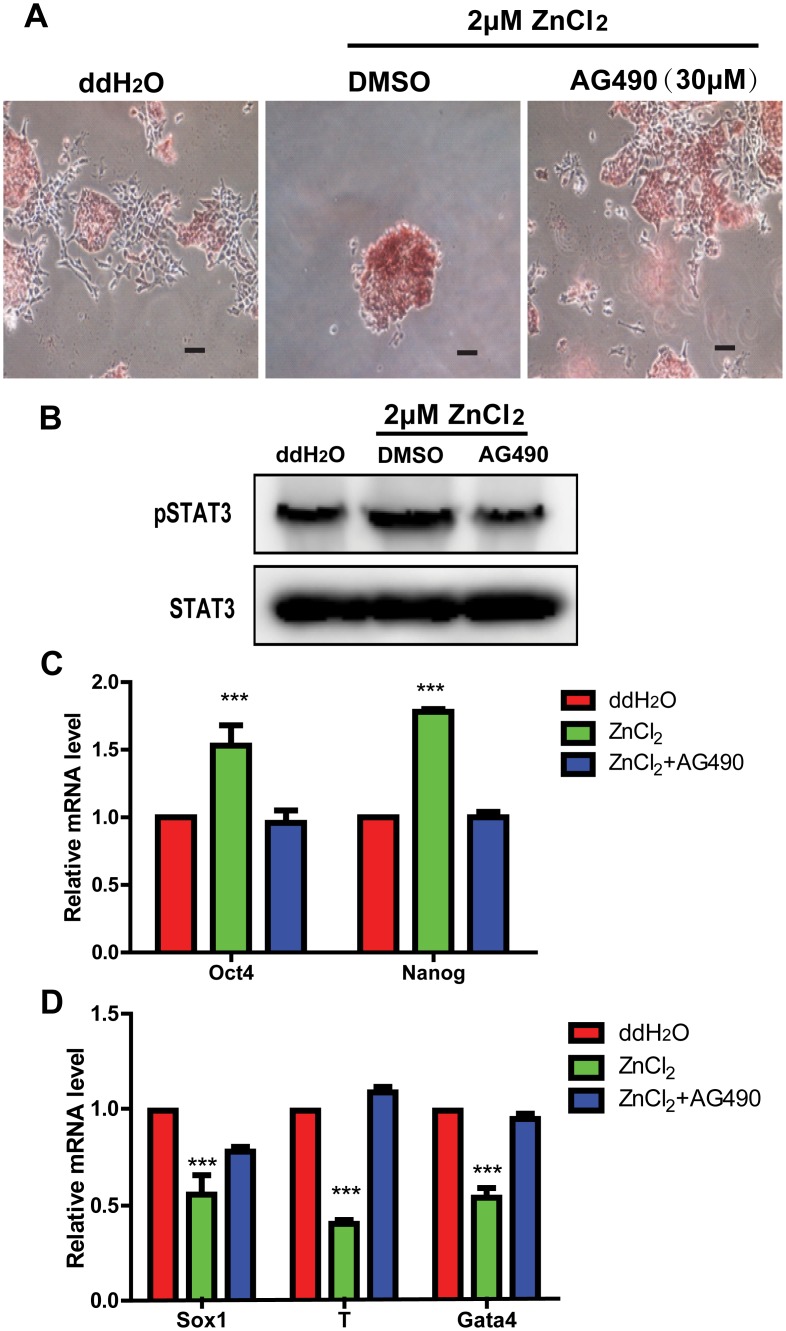
An improved understanding of the pluripotency maintenance of embryonic stem (ES) cells is important for investigations of early embryo development and for cell replacement therapy, but the mechanism behind pluripotency is still incompletely understood. Recent findings show that zinc, an essential trace element in humans, is critically involved in regulating various signaling pathways and genes expression. However, its role in ES cell fate determination remains to be further explored. Here we showed that 2μM zinc chloride (ZnCl2) transiently maintained mouse ES cell pluripotency in vitro. The cultured mouse ES cells remained undifferentiated under 2μM ZnCl2 treatment in leukemia inhibitory factor (LIF) withdrawal, retinoic acid (RA) or embryoid bodies (EBs) differentiation assays. In addition, ZnCl2 increased pluripotency genes expression and inhibited differentiation genes expression. Further mechanistic studies revealed that ZnCl2 transiently activated signal transducers and activators of transcription 3 (Stat3) signaling through promoting Stat3 phosphorylation. Inhibition of Stat3 signaling abrogated the effects of ZnCl2 on mouse ES cell pluripotency. Taken together, this study demonstrated a critical role of zinc in the pluripotency maintenance of mouse ES cells, as well as an important regulator of Stat3 signaling.
深入了解胚胎干细胞(ES细胞)多能性的维持机制对于早期胚胎发育研究和细胞替代疗法至关重要,但多能性背后的机制仍未完全明确。最近的研究发现,锌作为人体必需的微量元素,在调节各种信号通路和基因表达方面起着关键作用。然而,其在ES细胞命运决定中的作用仍有待进一步探索。在此,我们表明2μM氯化锌(ZnCl2)可在体外短暂维持小鼠ES细胞的多能性。在白血病抑制因子(LIF)缺失、视黄酸(RA)或胚状体(EBs)分化试验中,经2μM ZnCl2处理的培养小鼠ES细胞保持未分化状态。此外,ZnCl2增加了多能性基因的表达并抑制了分化基因的表达。进一步的机制研究表明,ZnCl2通过促进信号转导和转录激活因子3(Stat3)磷酸化来短暂激活Stat3信号通路。抑制Stat3信号通路可消除ZnCl2对小鼠ES细胞多能性的影响。综上所述,本研究证明了锌在小鼠ES细胞多能性维持中的关键作用,以及作为Stat3信号通路的重要调节因子的作用。