Meleshina Aleksandra V, Dudenkova Varvara V, Shirmanova Marina V, Shcheslavskiy Vladislav I, Becker Wolfgang, Bystrova Alena S, Cherkasova Elena I, Zagaynova Elena V
Institute of Biomedical technologies, Nizhny Novgorod State Medical Academy, Minin and Pozharsky Square, 10/1, Nizhny Novgorod, 603005, Russia.
Institute of Biology and Biomedicine, Nizhny Novgorod State University, Gagarin Avenue, 23, Nizhny Novgorod, 603950, Russia.
Sci Rep. 2016 Feb 25;6:21853. doi: 10.1038/srep21853.
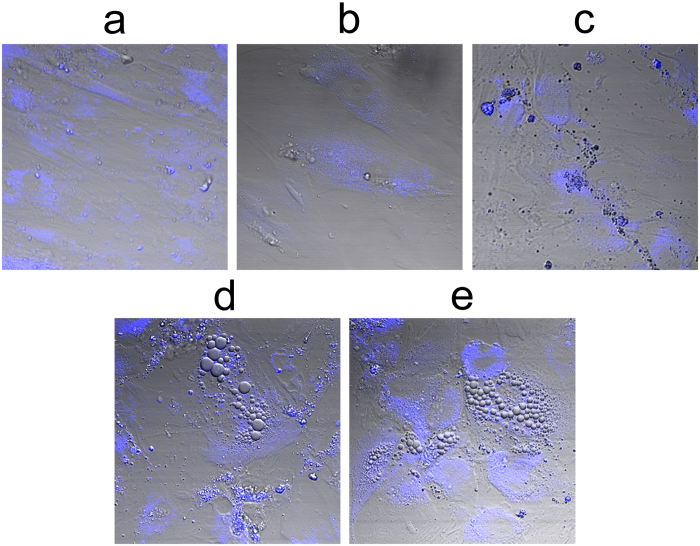
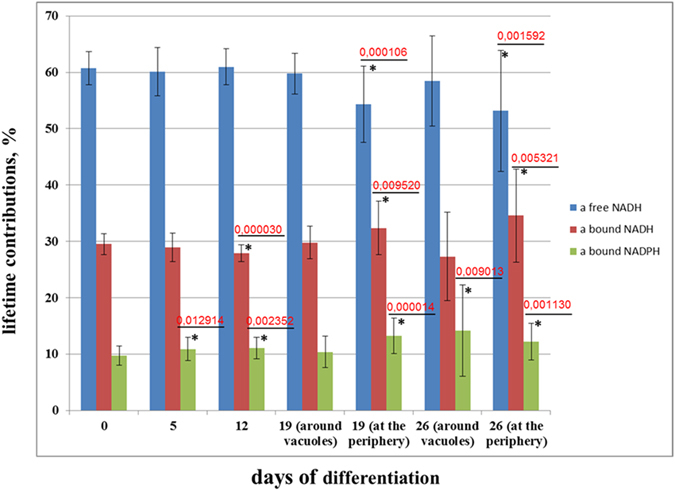
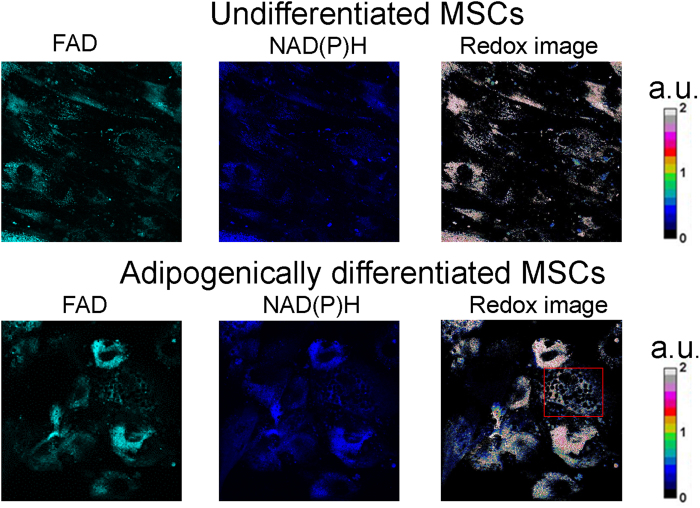
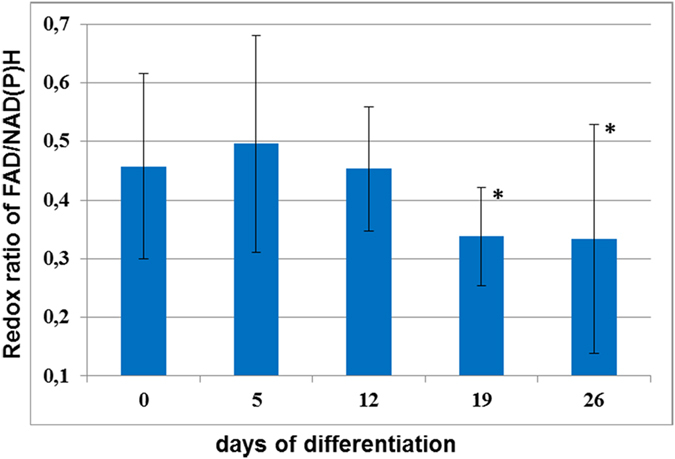
The ability of stem cells to differentiate into specialized cell types presents a number of opportunities for regenerative medicine, stem cell therapy and developmental biology. Because traditional assessments of stem cells are destructive, time consuming, and logistically intensive, the use of a non-invasive, label-free approach to study of cell differentiation provides a powerful tool for rapid, high-content characterization of cell and tissue cultures. Here, we elucidate the metabolic changes in MSCs during adipogenic differentiation, based on the fluorescence of the metabolic co-factors NADH, NADPH, and FAD using the methods of two-photon fluorescence microscopy combined with FLIM. To estimate the contribution of energy metabolism and lipogenesis in the observed changes of the metabolic profile, a separate analysis of NADH and NADPH is required. In our study we demonstrated, for the first time, an increased contribution of protein-bound NADPH in adipocytes that is associated with lipogenesis. The optical redox ratio FAD/NAD(P)H decreased during adipogenic differentiation, and that this was likely to be explained by the intensive biosynthesis of lipids and the enhanced NADPH production associated with this. Based on the data on the fluorescence lifetime contribution of protein-bound NAD(P)H, we registered a metabolic switch from glycolysis to oxidative phosphorylation in adipocytes.
干细胞分化为特定细胞类型的能力为再生医学、干细胞治疗和发育生物学带来了诸多机遇。由于传统的干细胞评估具有破坏性、耗时且在后勤方面要求较高,因此采用非侵入性、无标记的方法来研究细胞分化,为快速、高内涵地表征细胞和组织培养物提供了一个强大的工具。在此,我们基于代谢辅助因子NADH、NADPH和FAD的荧光,运用双光子荧光显微镜结合荧光寿命成像(FLIM)的方法,阐明了间充质干细胞(MSCs)在成脂分化过程中的代谢变化。为了评估能量代谢和脂肪生成在观察到的代谢谱变化中的作用,需要分别对NADH和NADPH进行分析。在我们的研究中,我们首次证明了脂肪细胞中与脂肪生成相关的蛋白质结合型NADPH的贡献增加。在成脂分化过程中,光学氧化还原比FAD/NAD(P)H降低,这可能是由于脂质的大量生物合成以及与之相关的NADPH生成增加所致。基于蛋白质结合型NAD(P)H荧光寿命贡献的数据,我们记录到脂肪细胞中发生了从糖酵解到氧化磷酸化的代谢转变。