Zhang Shaojun, Yang Wenzhu, Zhao Qianqian, Zhou Xiaojin, Jiang Ling, Ma Shuai, Liu Xiaoqing, Li Ye, Zhang Chunyi, Fan Yunliu, Chen Rumei
Biotechnology Research Institute, Chinese Academy of Agricultural Sciences, 100081, Beijing, China.
National Key Facility for Crop Gene Resources and Genetic Improvement (NFCRI), 100081, Beijing, China.
BMC Genomics. 2016 Feb 24;17:129. doi: 10.1186/s12864-016-2476-x.
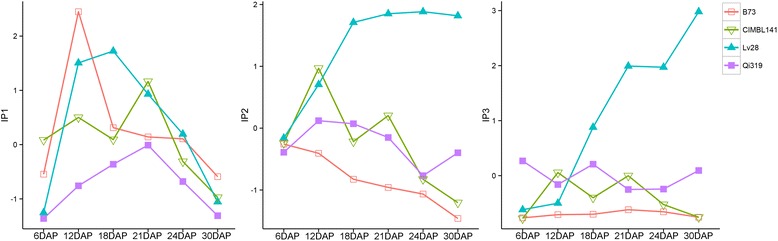
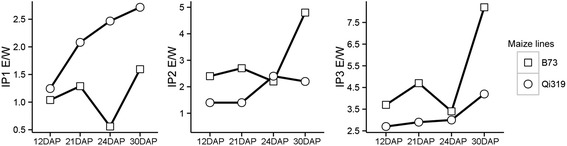
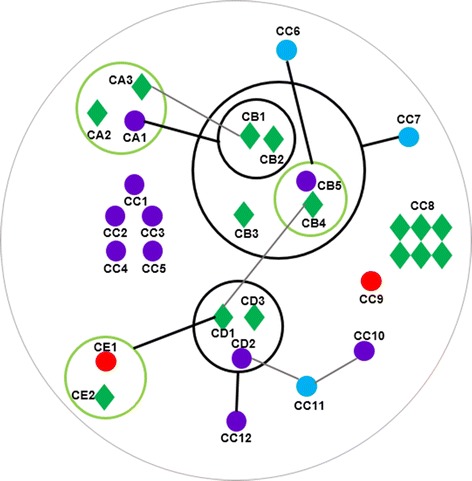
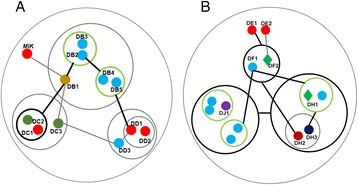
D-myo-inositol phosphates (IPs) are a series of phosphate esters. Myo-inositol hexakisphosphate (phytic acid, IP6) is the most abundant IP and has negative effects on animal and human nutrition. IPs play important roles in plant development, stress responses, and signal transduction. However, the metabolic pathways and possible regulatory mechanisms of IPs in maize are unclear. In this study, the B73 (high in phytic acid) and Qi319 (low in phytic acid) lines were selected for RNA-Seq analysis from 427 inbred lines based on a screening of IP levels. By integrating the metabolite data with the RNA-Seq data at three different kernel developmental stages (12, 21 and 30 days after pollination), co-regulatory networks were constructed to explore IP metabolism and its interactions with other pathways.
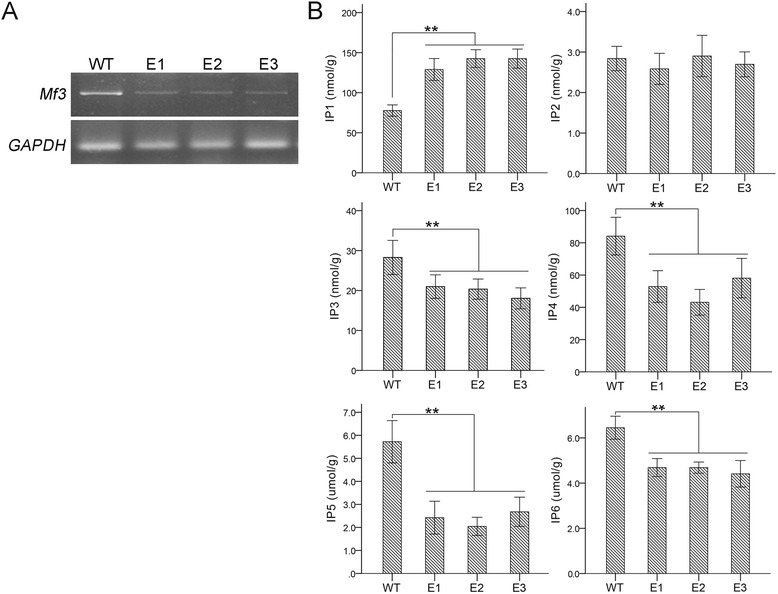
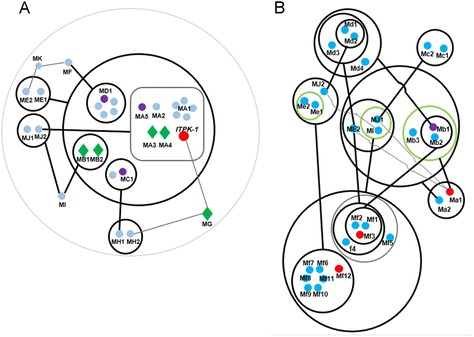
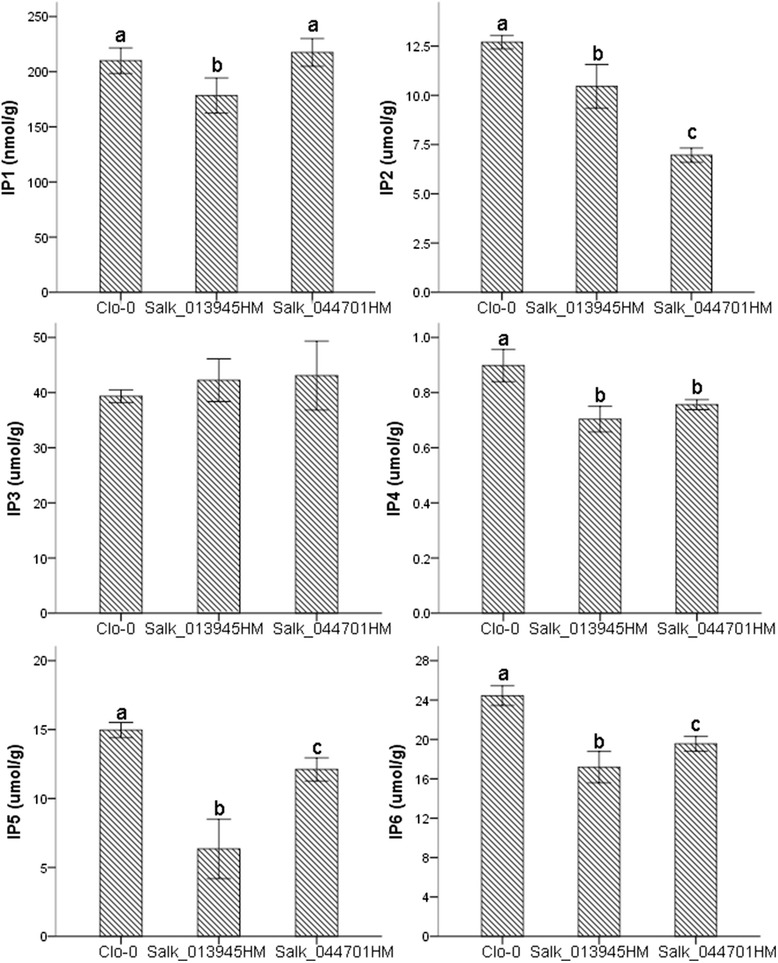
Differentially expressed gene analyses showed that the expression of MIPS and ITPK was related to differences in IP metabolism in Qi319 and B73. Moreover, WRKY and ethylene-responsive transcription factors (TFs) were common among the differentially expressed TFs, and are likely to be involved in the regulation of IP metabolism. Six co-regulatory networks were constructed, and three were chosen for further analysis. Based on network analyses, we proposed that the GA pathway interacts with the IP pathway through the ubiquitination pathway, and that Ca(2+) signaling functions as a bridge between IPs and other pathways. IP pools were found to be transported by specific ATP-binding cassette (ABC) transporters. Finally, three candidate genes (Mf3, DH2 and CB5) were identified and validated using Arabidopsis lines with mutations in orthologous genes or RNA interference (RNAi)-transgenic maize lines. Some mutant or RNAi lines exhibited seeds with a low-phytic-acid phenotype, indicating perturbation of IP metabolism. Mf3 likely encodes an enzyme involved in IP synthesis, DH2 encodes a transporter responsible for IP transport across organs and CB5 encodes a transporter involved in IP co-transport into vesicles.
This study provides new insights into IP metabolism and regulation, and facilitates our development of a better understanding of the functions of IPs and how they interact with other pathways involved in plant development and stress responses. Three new genes were discovered and preliminarily validated, thereby increasing our knowledge of IP metabolism.
D-肌醇磷酸酯(IPs)是一系列磷酸酯。肌醇六磷酸(植酸,IP6)是最丰富的IP,对动物和人类营养有负面影响。IPs在植物发育、应激反应和信号转导中发挥重要作用。然而,IPs在玉米中的代谢途径和可能的调控机制尚不清楚。在本研究中,基于IP水平筛选,从427个自交系中选择了B73(植酸含量高)和齐319(植酸含量低)两个品系进行RNA测序分析。通过整合三个不同籽粒发育阶段(授粉后12、21和30天)的代谢物数据和RNA测序数据,构建了共调控网络,以探索IP代谢及其与其他途径的相互作用。
差异表达基因分析表明,MIPS和ITPK的表达与齐319和B73中IP代谢的差异有关。此外,WRKY和乙烯响应转录因子(TFs)在差异表达的TFs中很常见,可能参与IP代谢的调控。构建了六个共调控网络,选择了三个进行进一步分析。基于网络分析,我们提出GA途径通过泛素化途径与IP途径相互作用,并且Ca(2+)信号作为IPs与其他途径之间的桥梁。发现IP库由特定的ATP结合盒(ABC)转运蛋白运输。最后,利用直系同源基因突变的拟南芥品系或RNA干扰(RNAi)转基因玉米品系鉴定并验证了三个候选基因(Mf3、DH2和CB5)。一些突变体或RNAi品系表现出低植酸表型的种子,表明IP代谢受到干扰。Mf3可能编码一种参与IP合成的酶,DH2编码一种负责IP跨器官运输的转运蛋白,CB5编码一种参与IP共转运到囊泡中的转运蛋白。
本研究为IP代谢和调控提供了新的见解,有助于我们更好地理解IPs的功能以及它们如何与参与植物发育和应激反应的其他途径相互作用。发现并初步验证了三个新基因,从而增加了我们对IP代谢的认识。