Whitten Miranda M A, Facey Paul D, Del Sol Ricardo, Fernández-Martínez Lorena T, Evans Meirwyn C, Mitchell Jacob J, Bodger Owen G, Dyson Paul J
Institute of Life Science, College of Medicine, Swansea University, Singleton Park, Swansea SA2 8PP, UK.
Institute of Life Science, College of Medicine, Swansea University, Singleton Park, Swansea SA2 8PP, UK
Proc Biol Sci. 2016 Feb 24;283(1825):20160042. doi: 10.1098/rspb.2016.0042.
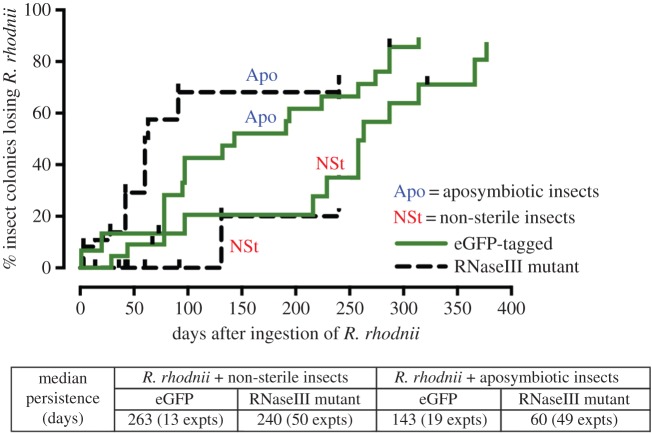
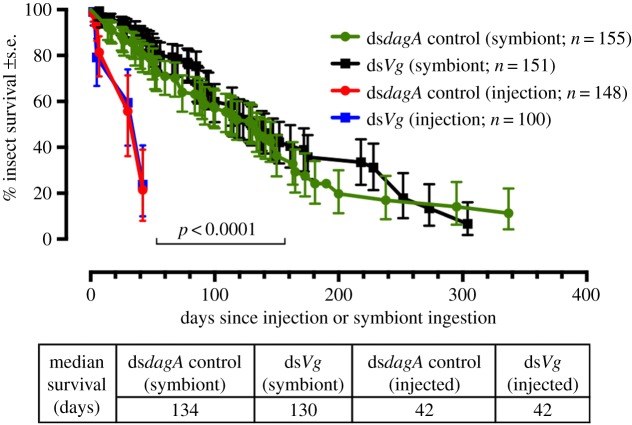
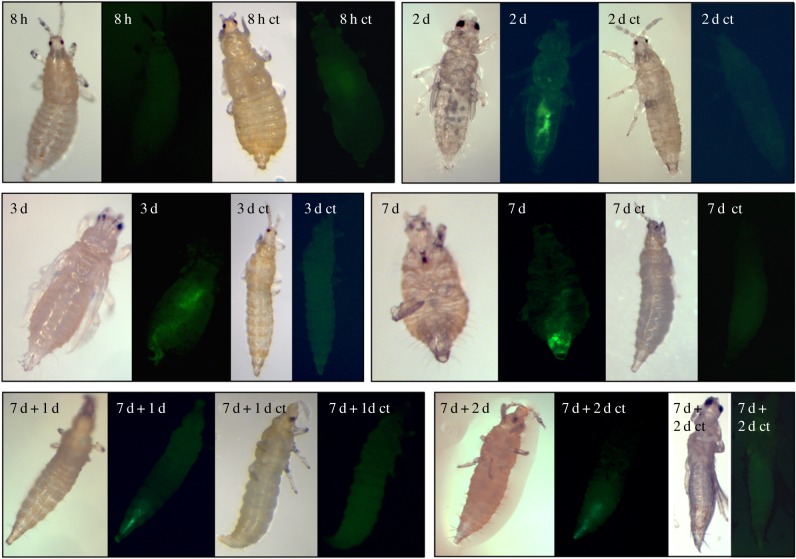
RNA interference (RNAi) methods for insects are often limited by problems with double-stranded (ds) RNA delivery, which restricts reverse genetics studies and the development of RNAi-based biocides. We therefore delegated to insect symbiotic bacteria the task of: (i) constitutive dsRNA synthesis and (ii) trauma-free delivery. RNaseIII-deficient, dsRNA-expressing bacterial strains were created from the symbionts of two very diverse pest species: a long-lived blood-sucking bug, Rhodnius prolixus, and a short-lived globally invasive polyphagous agricultural pest, western flower thrips (Frankliniella occidentalis). When ingested, the manipulated bacteria colonized the insects, successfully competed with the wild-type microflora, and sustainably mediated systemic knockdown phenotypes that were horizontally transmissible. This represents a significant advance in the ability to deliver RNAi, potentially to a large range of non-model insects.
昆虫的RNA干扰(RNAi)方法常常受限于双链(ds)RNA递送问题,这限制了反向遗传学研究以及基于RNAi的杀生物剂的开发。因此,我们将以下任务交给昆虫共生细菌:(i)组成型dsRNA合成和(ii)无创伤递送。从两种截然不同的害虫物种的共生体中创建了缺乏RNaseIII、表达dsRNA的细菌菌株:一种是寿命长的吸血臭虫,即致倦库蚊,另一种是寿命短的全球入侵多食性农业害虫,即西花蓟马(Frankliniella occidentalis)。当被摄入后,经过改造的细菌在昆虫体内定殖,成功地与野生型微生物群落竞争,并可持续地介导水平可传播的全身性基因敲低表型。这代表了在向大量非模式昆虫递送RNAi的能力方面取得了重大进展。