Taracena Mabel L, Oliveira Pedro L, Almendares Olivia, Umaña Claudia, Lowenberger Carl, Dotson Ellen M, Paiva-Silva Gabriela O, Pennington Pamela M
Instituto de Bioquímica Médica Leopoldo de Meis, Programa de Biologia Molecular e Biotecnologia, Universidade Federal do Rio de Janeiro, CCS, Ilha do Fundão, Rio de Janeiro, Brasil; eCentro de Estudios en Salud. Universidad del Valle de Guatemala, Guatemala City, Guatemala.
Instituto de Bioquímica Médica Leopoldo de Meis, Programa de Biologia Molecular e Biotecnologia, Universidade Federal do Rio de Janeiro, CCS, Ilha do Fundão, Rio de Janeiro, Brasil; Instituto Nacional de Ciência e Tecnologia em Entomologia Molecular (INCT-EM), Brasil.
PLoS Negl Trop Dis. 2015 Feb 12;9(2):e0003358. doi: 10.1371/journal.pntd.0003358. eCollection 2015 Feb.
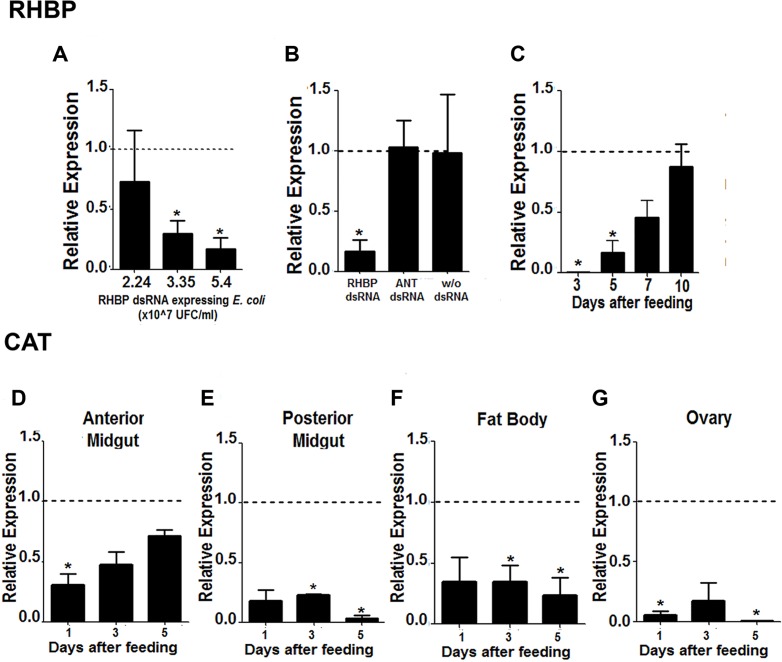
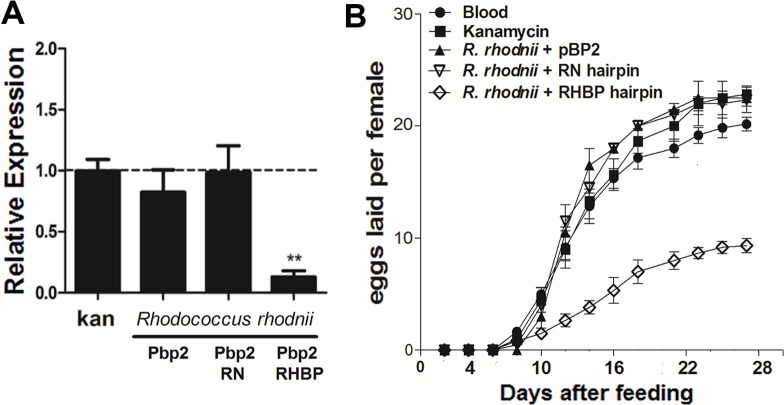
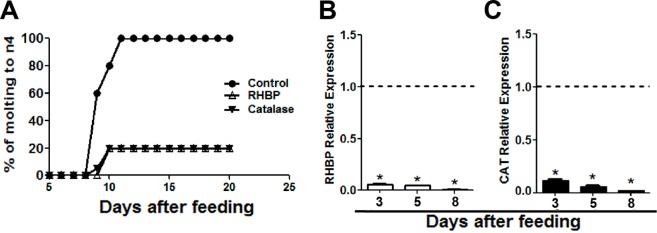
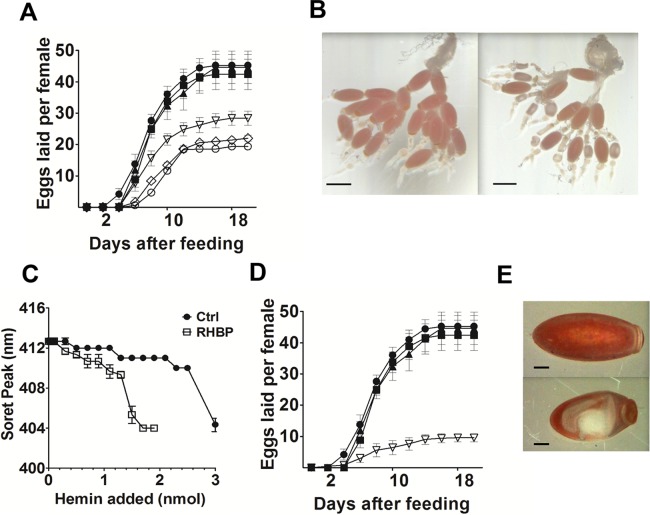
Technologies based on RNA interference may be used for insect control. Sustainable strategies are needed to control vectors of Chagas disease such as Rhodnius prolixus. The insect microbiota can be modified to deliver molecules to the gut. Here, Escherichia coli HT115(DE3) expressing dsRNA for the Rhodnius heme-binding protein (RHBP) and for catalase (CAT) were fed to nymphs and adult triatomine stages. RHBP is an egg protein and CAT is an antioxidant enzyme expressed in all tissues by all developmental stages. The RNA interference effect was systemic and temporal. Concentrations of E. coli HT115(DE3) above 3.35 × 10(7) CFU/mL produced a significant RHBP and CAT gene knockdown in nymphs and adults. RHBP expression in the fat body was reduced by 99% three days after feeding, returning to normal levels 10 days after feeding. CAT expression was reduced by 99% and 96% in the ovary and the posterior midgut, respectively, five days after ingestion. Mortality rates increased by 24-30% in first instars fed RHBP and CAT bacteria. Molting rates were reduced by 100% in first instars and 80% in third instars fed bacteria producing RHBP or CAT dsRNA. Oviposition was reduced by 43% (RHBP) and 84% (CAT). Embryogenesis was arrested in 16% (RHBP) and 20% (CAT) of laid eggs. Feeding females 105 CFU/mL of the natural symbiont, Rhodococcus rhodnii, transformed to express RHBP-specific hairpin RNA reduced RHBP expression by 89% and reduced oviposition. Modifying the insect microbiota to induce systemic RNAi in R. prolixus may result in a paratransgenic strategy for sustainable vector control.
基于RNA干扰的技术可用于害虫防治。需要可持续的策略来控制恰加斯病的传播媒介,如长红猎蝽。可以对昆虫微生物群进行改造,以便向肠道输送分子。在此,将表达长红猎蝽血红素结合蛋白(RHBP)和过氧化氢酶(CAT)的dsRNA的大肠杆菌HT115(DE3)喂食给若虫和成年锥蝽阶段。RHBP是一种卵蛋白,CAT是一种在所有发育阶段的所有组织中都表达的抗氧化酶。RNA干扰效应具有全身性和时效性。大肠杆菌HT115(DE3)浓度高于3.35×10(7) CFU/mL时,若虫和成虫体内的RHBP和CAT基因显著敲低。喂食三天后,脂肪体中的RHBP表达降低了99%,喂食十天后恢复到正常水平。摄入五天后,卵巢和中肠后部的CAT表达分别降低了99%和96%。喂食表达RHBP和CAT细菌的一龄若虫死亡率增加了24 - 30%。喂食产生RHBP或CAT dsRNA细菌的一龄若虫蜕皮率降低了100%,三龄若虫降低了80%。产卵量分别降低了43%(RHBP)和84%(CAT)。16%(RHBP)和20%(CAT)的产下的卵胚胎发育停滞。给雌性喂食105 CFU/mL经改造以表达RHBP特异性发夹RNA的天然共生菌红球菌,可使RHBP表达降低89%并减少产卵量。改造昆虫微生物群以在长红猎蝽中诱导系统性RNAi可能会产生一种用于可持续病媒控制的共生转基因策略。