Beamer Gillian L, Seaver Benjamin P, Jessop Forrest, Shepherd David M, Beamer Celine A
Department of Infectious Diseases and Global Health, Cummings School of Veterinary Medicine, Tufts University , North Grafton, MA , USA.
Department of Biomedical and Pharmaceutical Sciences, University of Montana , Missoula, MT , USA.
Front Immunol. 2016 Feb 15;7:49. doi: 10.3389/fimmu.2016.00049. eCollection 2016.
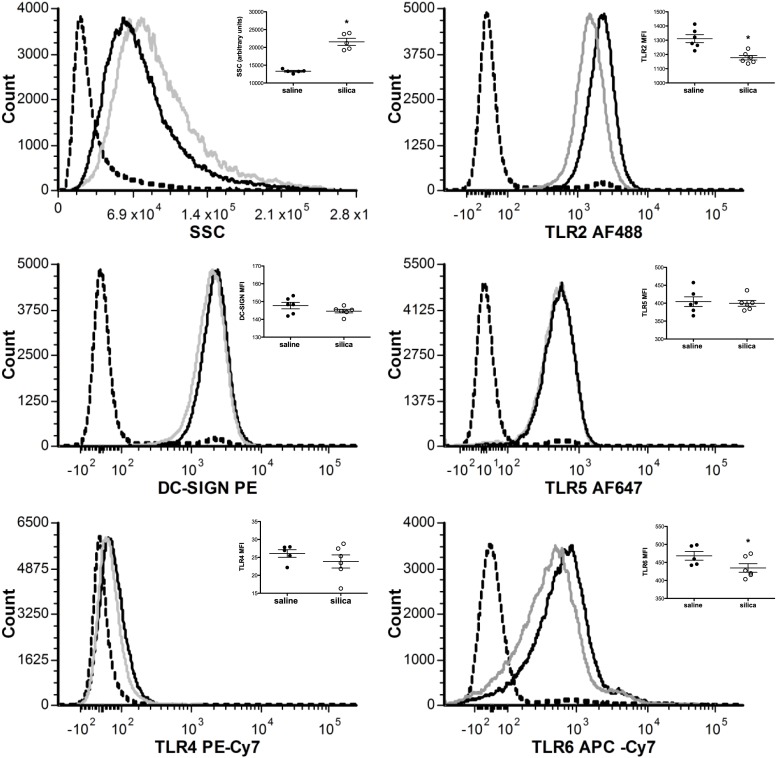
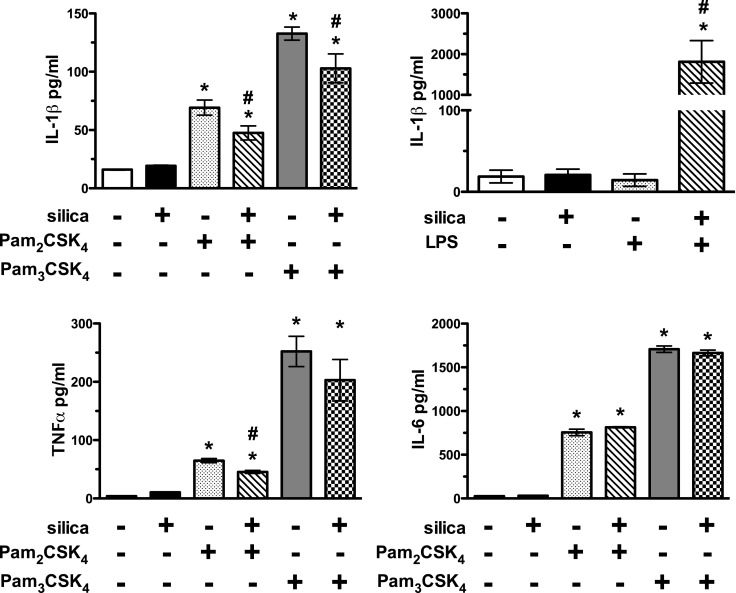
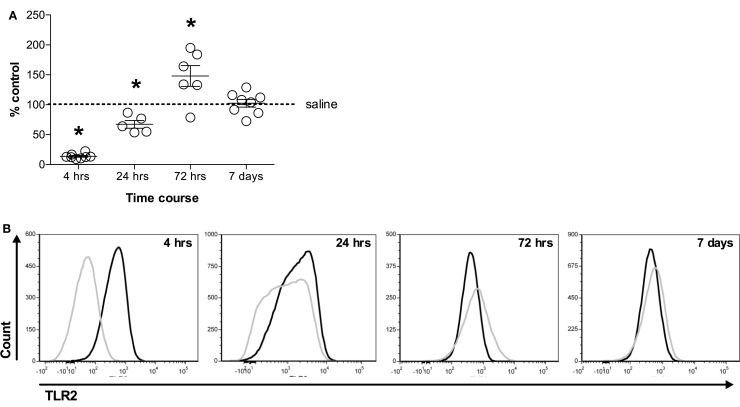
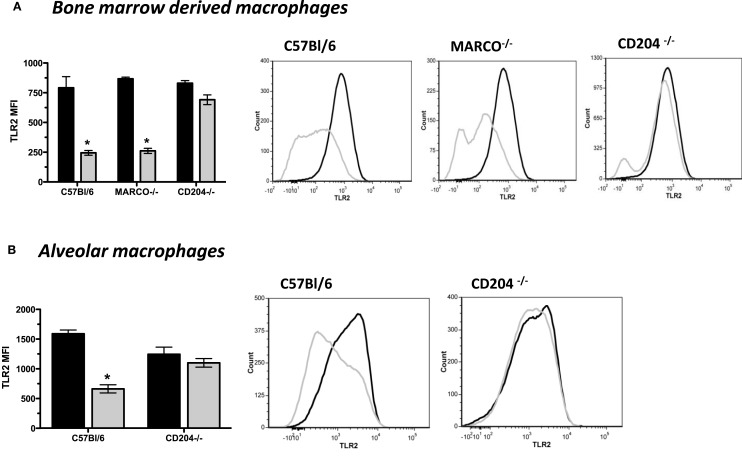
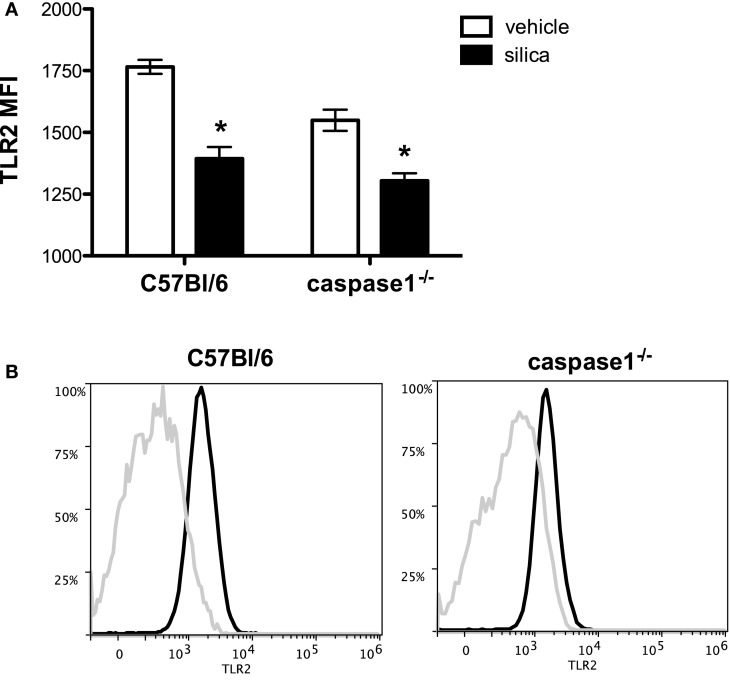
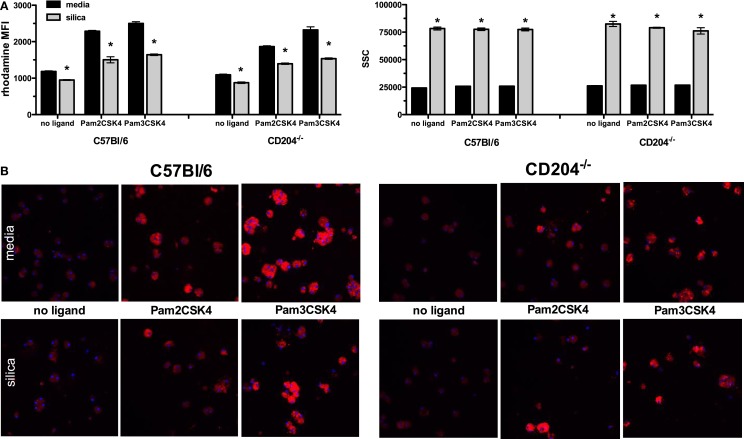
Numerous studies have examined the relationship between alveolar macrophages (AMs) and crystalline silica (SiO2) using in vitro and in vivo immunotoxicity models; however, exactly how exposure to SiO2 alters the functionality of AM and the potential consequences for immunity to respiratory pathogens remains largely unknown. Because recognition and clearance of inhaled particulates and microbes are largely mediated by pattern recognition receptors (PRRs) on the surface of AM, we hypothesized that exposure to SiO2 limits the ability of AM to respond to bacterial challenge by altering PRR expression. Alveolar and bone marrow-derived macrophages downregulate TLR2 expression following acute SiO2 exposure (e.g., 4 h). Interestingly, these responses were dependent on interactions between SiO2 and the class A scavenger receptor CD204, but not MARCO. Furthermore, SiO2 exposure decreased uptake of fluorescently labeled Pam2CSK4 and Pam3CSK4, resulting in reduced secretion of IL-1β, but not IL-6. Collectively, our data suggest that SiO2 exposure alters AM phenotype, which in turn affects their ability to uptake and respond to bacterial lipoproteins.
许多研究使用体外和体内免疫毒性模型研究了肺泡巨噬细胞(AM)与结晶二氧化硅(SiO2)之间的关系;然而,暴露于SiO2究竟如何改变AM的功能以及对呼吸道病原体免疫的潜在后果在很大程度上仍不清楚。由于吸入颗粒和微生物的识别与清除主要由AM表面的模式识别受体(PRR)介导,我们推测暴露于SiO2会通过改变PRR表达来限制AM对细菌攻击的反应能力。急性暴露于SiO2(例如4小时)后,肺泡和骨髓来源的巨噬细胞会下调TLR2表达。有趣的是,这些反应依赖于SiO2与A类清道夫受体CD204之间的相互作用,而不是MARCO。此外,暴露于SiO2会减少荧光标记的Pam2CSK4和Pam3CSK4的摄取,导致IL-1β分泌减少,但IL-6分泌未减少。总体而言,我们的数据表明,暴露于SiO2会改变AM表型,进而影响其摄取和应对细菌脂蛋白的能力。