Patel Anand G, Flatten Karen S, Peterson Kevin L, Beito Thomas G, Schneider Paula A, Perkins Angela L, Harki Daniel A, Kaufmann Scott H
Department of Molecular Pharmacology and Experimental Therapeutics, Mayo Clinic, Rochester, MN 55905, USA.
Division of Oncology Research, Mayo Clinic, Rochester, MN 55905, USA.
Nucleic Acids Res. 2016 Apr 7;44(6):2816-26. doi: 10.1093/nar/gkw109. Epub 2016 Feb 24.
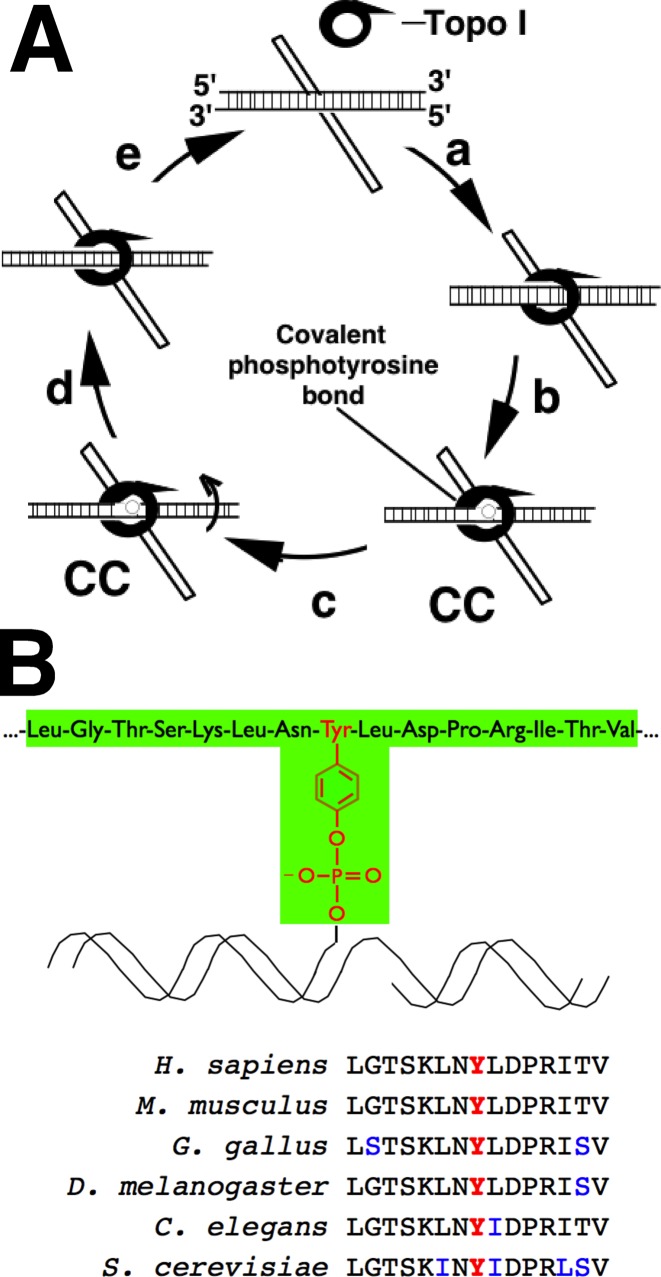
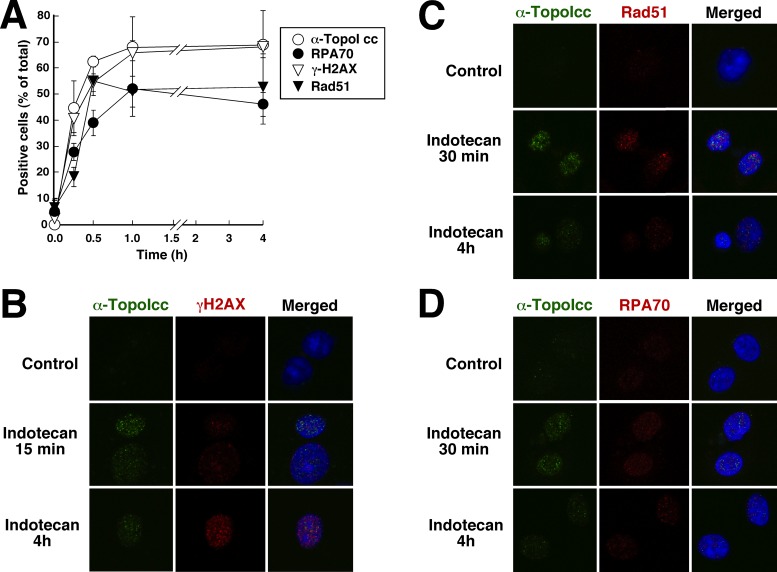
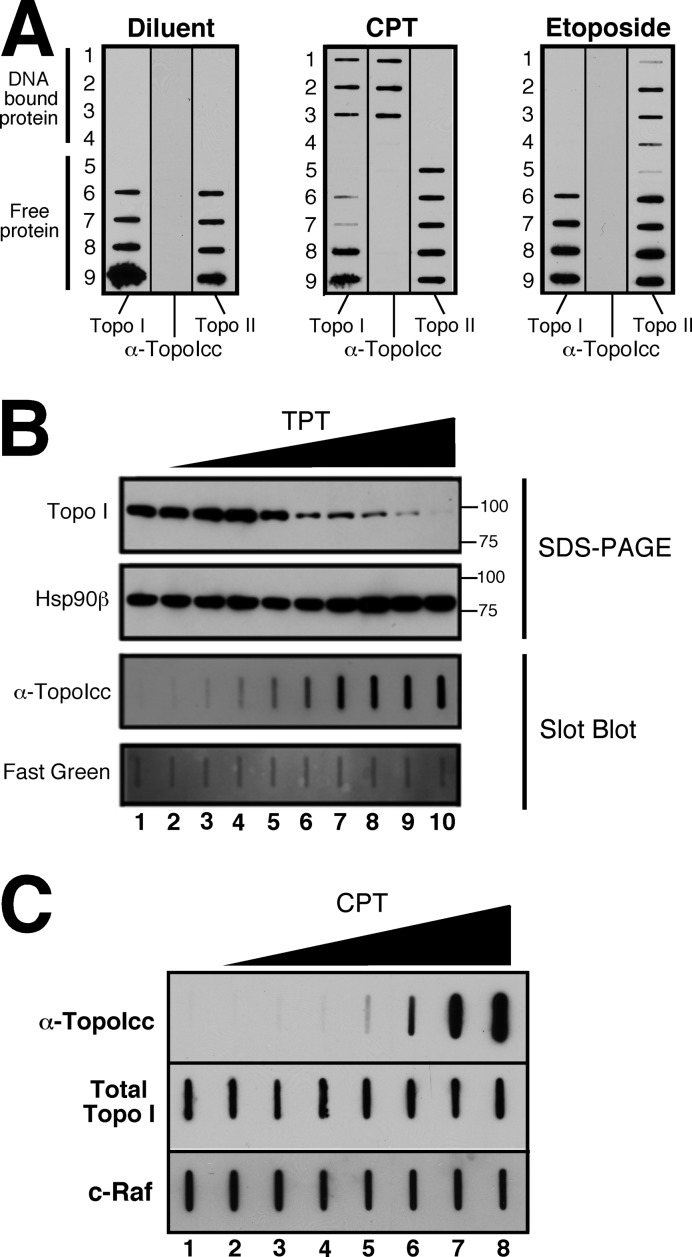
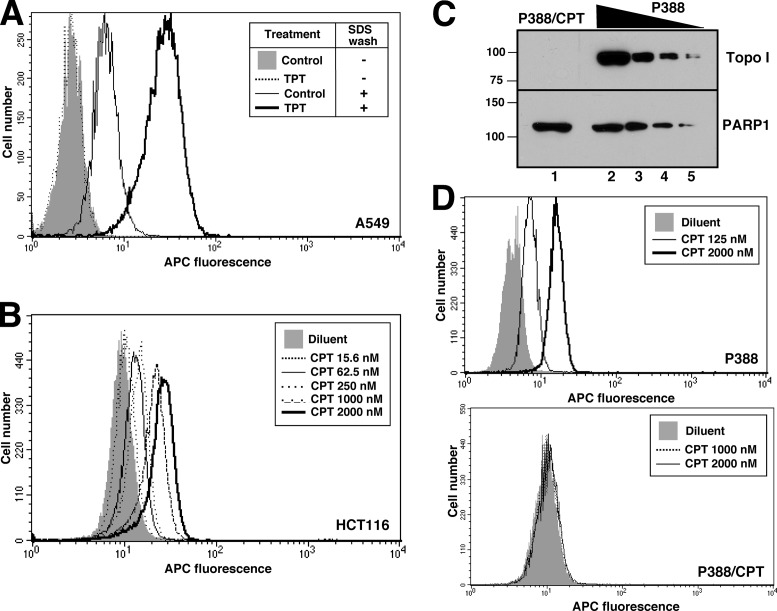
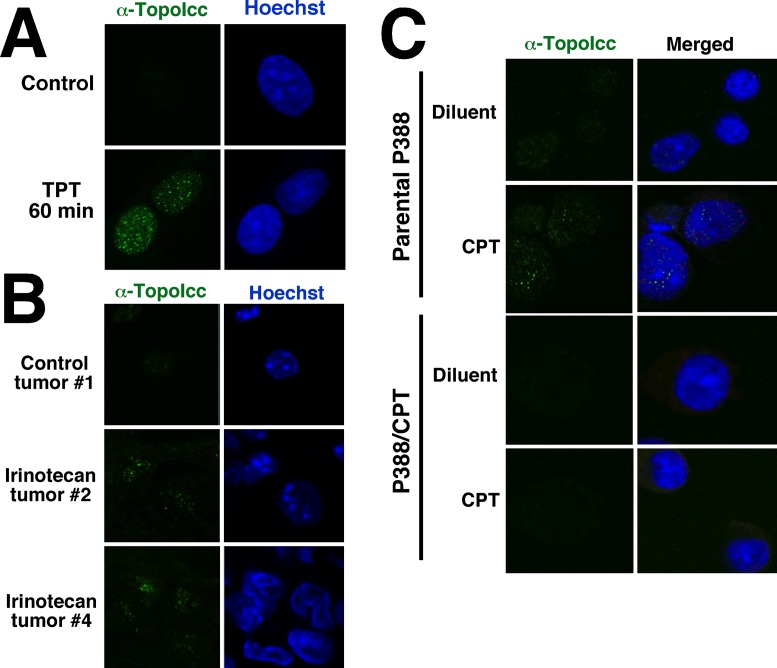
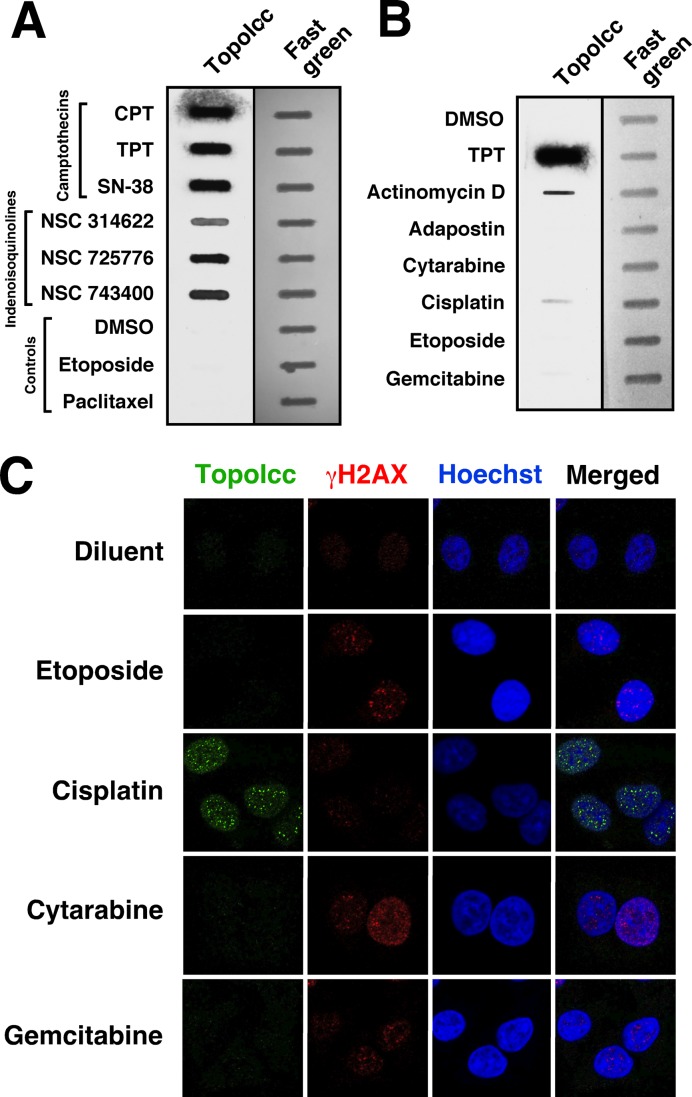
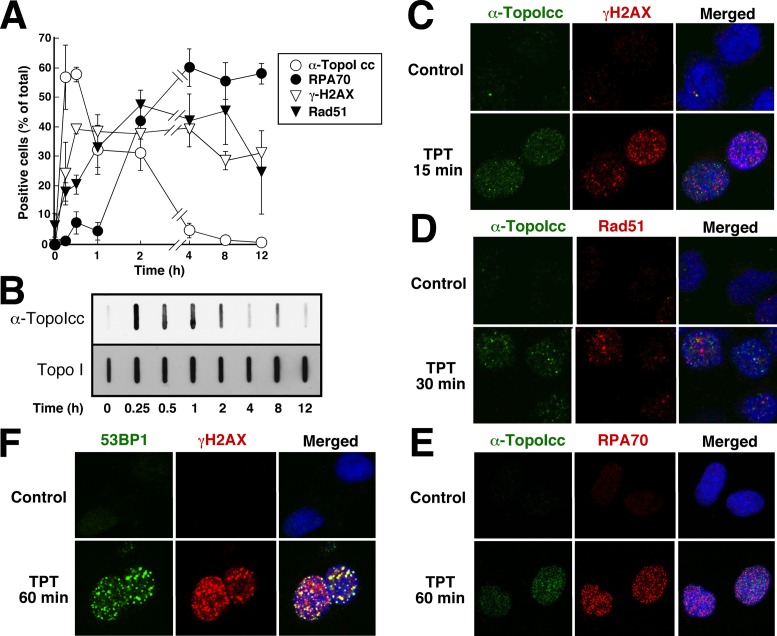
A number of established and investigational anticancer drugs slow the religation step of DNA topoisomerase I (topo I). These agents induce cytotoxicity by stabilizing topo I-DNA covalent complexes, which in turn interact with advancing replication forks or transcription complexes to generate lethal lesions. Despite the importance of topo I-DNA covalent complexes, it has been difficult to detect these lesions within intact cells and tumors. Here, we report development of a monoclonal antibody that specifically recognizes covalent topo I-DNA complexes, but not free topo I or DNA, by immunoblotting, immunofluorescence or flow cytometry. Utilizing this antibody, we demonstrate readily detectable topo I-DNA covalent complexes after treatment with camptothecins, indenoisoquinolines and cisplatin but not nucleoside analogues. Topotecan-induced topo I-DNA complexes peak at 15-30 min after drug addition and then decrease, whereas indotecan-induced complexes persist for at least 4 h. Interestingly, simultaneous staining for covalent topo I-DNA complexes, phospho-H2AX and Rad51 suggests that topotecan-induced DNA double-strand breaks occur at sites distinct from stabilized topo I-DNA covalent complexes. These studies not only provide new insight into the action of topo I-directed agents, but also illustrate a strategy that can be applied to study additional topoisomerases and their inhibitors in vitro and in vivo.
许多已确立的和正在研究的抗癌药物会减缓DNA拓扑异构酶I(拓扑异构酶I)的重新连接步骤。这些药物通过稳定拓扑异构酶I-DNA共价复合物来诱导细胞毒性,而该复合物又会与前进中的复制叉或转录复合物相互作用,从而产生致命性损伤。尽管拓扑异构酶I-DNA共价复合物很重要,但在完整细胞和肿瘤中检测这些损伤一直很困难。在此,我们报告了一种单克隆抗体的研发情况,该抗体可通过免疫印迹、免疫荧光或流式细胞术特异性识别共价拓扑异构酶I-DNA复合物,而不识别游离的拓扑异构酶I或DNA。利用这种抗体,我们证明在用喜树碱、茚并异喹啉和顺铂处理后可轻易检测到拓扑异构酶I-DNA共价复合物,但核苷类似物处理后则检测不到。拓扑替康诱导的拓扑异构酶I-DNA复合物在添加药物后15 - 30分钟达到峰值,然后下降,而茚托替康诱导的复合物持续至少4小时。有趣的是,对共价拓扑异构酶I-DNA复合物、磷酸化H2AX和Rad51进行同时染色表明,拓扑替康诱导的DNA双链断裂发生在与稳定的拓扑异构酶I-DNA共价复合物不同的位点。这些研究不仅为拓扑异构酶I导向药物的作用提供了新的见解,还阐明了一种可用于在体外和体内研究其他拓扑异构酶及其抑制剂的策略。