Zhou Changcheng
Department of Pharmacology and Nutritional Sciences, University of Kentucky, Lexington, KY 40536, USA; Saha Cardiovascular Research Center, University of Kentucky, Lexington, KY 40536, USA.
Biochim Biophys Acta. 2016 Sep;1859(9):1112-1120. doi: 10.1016/j.bbagrm.2016.02.015. Epub 2016 Feb 26.
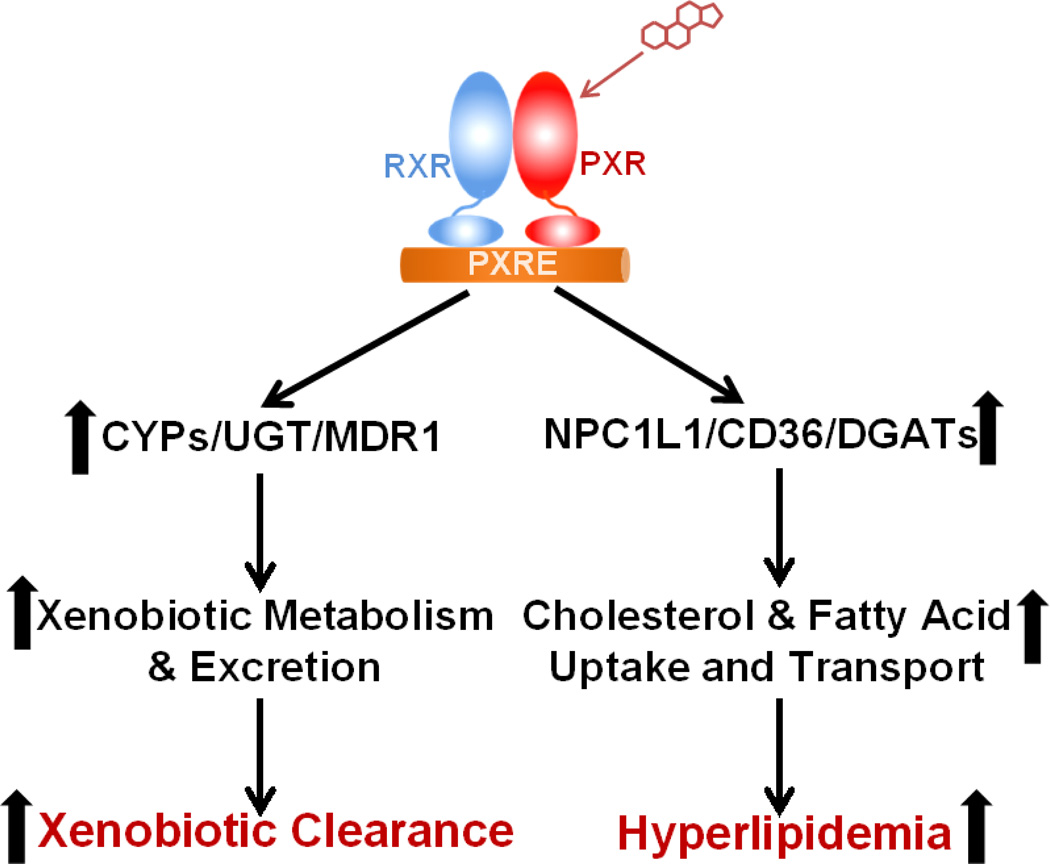
Cardiometabolic disease emerges as a worldwide epidemic and there is urgent need to understand the molecular mechanisms underlying this chronic disease. The chemical environment to which we are exposed has significantly changed in the past few decades and recent research has implicated its contribution to the development of many chronic human diseases. However, the mechanisms of how exposure to chemicals contributes to the development of cardiometabolic disease are poorly understood. Numerous chemicals have been identified as ligands for the pregnane X receptor (PXR), a nuclear receptor functioning as a xenobiotic sensor to coordinately regulate xenobiotic metabolism via transcriptional regulation of xenobiotic-detoxifying enzymes and transporters. In the past decade, the function of PXR in the regulation of xenobiotic metabolism has been extensively studied by many laboratories and the role of PXR as a xenobiotic sensor has been well-established. The identification of PXR as a xenobiotic sensor has provided an important tool for the study of new mechanisms through which xenobiotic exposure impacts human chronic diseases. Recent studies have revealed novel and unexpected roles of PXR in modulating obesity, insulin sensitivity, lipid homeostasis, atherogenesis, and vascular functions. These studies suggest that PXR signaling may contribute significantly to the pathophysiological effects of many known xenobiotics on cardiometabolic disease in humans. The discovery of novel functions of PXR in cardiometabolic disease not only contributes to our understanding of "gene-environment interactions" in predisposing individuals to chronic diseases but also provides strong evidence to inform future risk assessment for relevant chemicals. This article is part of a Special Issue entitled: Xenobiotic nuclear receptors: New Tricks for An Old Dog, edited by Dr. Wen Xie.
心血管代谢疾病已成为一种全球性流行病,迫切需要了解这种慢性疾病背后的分子机制。在过去几十年中,我们所接触的化学环境发生了显著变化,最近的研究表明其对许多人类慢性疾病的发展有影响。然而,化学物质暴露如何导致心血管代谢疾病发展的机制却知之甚少。许多化学物质已被确定为孕烷X受体(PXR)的配体,PXR是一种核受体,作为一种外源性物质传感器,通过对外源性物质解毒酶和转运蛋白的转录调控来协调调节外源性物质代谢。在过去十年中,许多实验室广泛研究了PXR在调节外源性物质代谢中的功能,PXR作为外源性物质传感器的作用已得到充分确立。PXR作为外源性物质传感器的鉴定为研究外源性物质暴露影响人类慢性疾病的新机制提供了重要工具。最近的研究揭示了PXR在调节肥胖、胰岛素敏感性、脂质稳态、动脉粥样硬化形成和血管功能方面的新的意想不到的作用。这些研究表明,PXR信号可能对许多已知外源性物质对人类心血管代谢疾病的病理生理影响有显著贡献。PXR在心血管代谢疾病中的新功能的发现不仅有助于我们理解个体易患慢性疾病的“基因-环境相互作用”,也为未来相关化学物质的风险评估提供了有力证据。本文是名为《外源性核受体:老狗新把戏》特刊的一部分,由谢文博士编辑。