Alhusban Manal, Pandey Pankaj, Ahn Jongmin, Avula Bharathi, Haider Saqlain, Avonto Cristina, Ali Zulfiqar, Khan Shabana I, Ferreira Daneel, Khan Ikhlas A, Chittiboyina Amar G
Department of BioMolecular Sciences, Division of Pharmacognosy, University of Mississippi, University, Mississippi 38677, United States.
National Center for Natural Products Research, School of Pharmacy, University of Mississippi, University, Mississippi 38677, United States.
ACS Omega. 2022 Jul 21;7(30):26824-26843. doi: 10.1021/acsomega.2c03240. eCollection 2022 Aug 2.
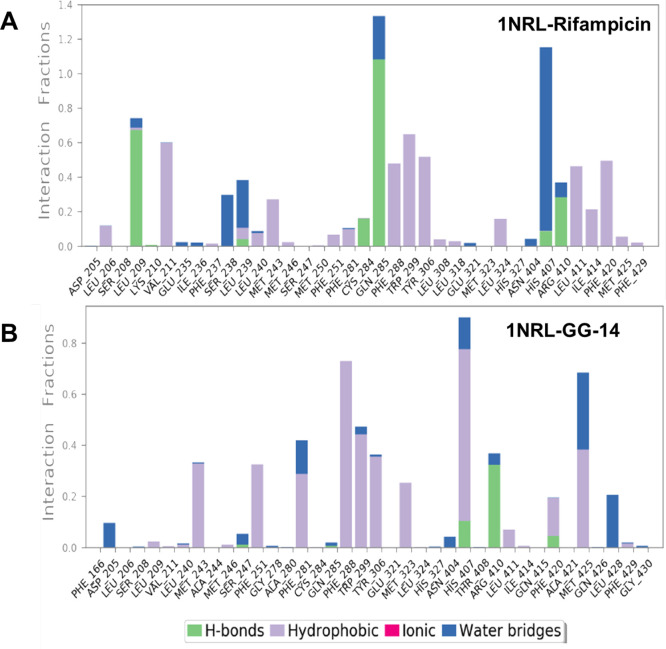
The genus , comprising approximately 36 spp., possesses complex structural diversity and is documented to possess a wide spectrum of biological activities. Understanding and finding the mechanisms of efficacy or safety for a plant-based therapy is very challenging, yet it is crucial and necessary to understand the polypharmacology of traditional medicines. Licorice extract was shown to modulate the xenobiotic receptors, which might manifest as a potential route for natural product-induced drug interactions. However, different mechanisms could be involved in this phenomenon. Since the induced herb-drug interaction of licorice supplements via Pregnane X receptor (PXR) is understudied, we ventured out to analyze the potential modulators of PXR in complex mixtures such as whole extracts by applying computational mining tools. A total of 518 structures from five species of : 183 (), 180 (), 100 (), 33 (), and 22 () were collected and post-processed to yield 387 unique compounds. Visual inspection of top candidates with favorable ligand-PXR interactions and the highest docking scores were identified. The testing revealed that glabridin (GG-14) is the most potent PXR activator among the tested compounds, followed by licoisoflavone A, licoisoflavanone, and glycycoumarin. A 200 ns molecular dynamics study with glabridin confirmed the stability of the glabridin-PXR complex, highlighting the importance of computational methods for rapid dereplication of potential xenobiotic modulators in a complex mixture instead of undertaking time-consuming classical biological testing of all compounds in a given botanical.
该属包含约36个物种,具有复杂的结构多样性,并有文献记载其具有广泛的生物活性。理解并找到基于植物疗法的疗效或安全性机制极具挑战性,但了解传统药物的多药理学至关重要且必要。甘草提取物被证明可调节外源性物质受体,这可能是天然产物诱导药物相互作用的潜在途径。然而,这一现象可能涉及不同机制。由于甘草补充剂通过孕烷X受体(PXR)诱导的草药 - 药物相互作用研究不足,我们通过应用计算挖掘工具,着手分析复杂混合物(如全提取物)中PXR的潜在调节剂。从该属五个物种中总共收集了518个结构:183个(光果甘草)、180个(胀果甘草)、100个(乌拉尔甘草)、33个(云南甘草)和22个(刺果甘草),并进行后处理以产生387种独特化合物。通过目视检查确定了具有良好配体 - PXR相互作用和最高对接分数的顶级候选物。测试表明,光甘草定(GG - 14)是测试化合物中最有效的PXR激活剂,其次是异甘草黄酮A、异甘草黄酮和甘草香豆素。对光甘草定进行的200纳秒分子动力学研究证实了光甘草定 - PXR复合物的稳定性,突出了计算方法对于在复杂混合物中快速排除潜在外源性物质调节剂的重要性,而不是对给定植物中的所有化合物进行耗时的经典生物学测试。