Mohanty Smita, Oruganty Krishnadev, Kwon Annie, Byrne Dominic P, Ferries Samantha, Ruan Zheng, Hanold Laura E, Katiyar Samiksha, Kennedy Eileen J, Eyers Patrick A, Kannan Natarajan
Department of Biochemistry & Molecular Biology, University of Georgia, Athens, Georgia, United States of America.
Institute of Bioinformatics, University of Georgia, Athens, Georgia, United States of America.
PLoS Genet. 2016 Feb 29;12(2):e1005885. doi: 10.1371/journal.pgen.1005885. eCollection 2016 Feb.
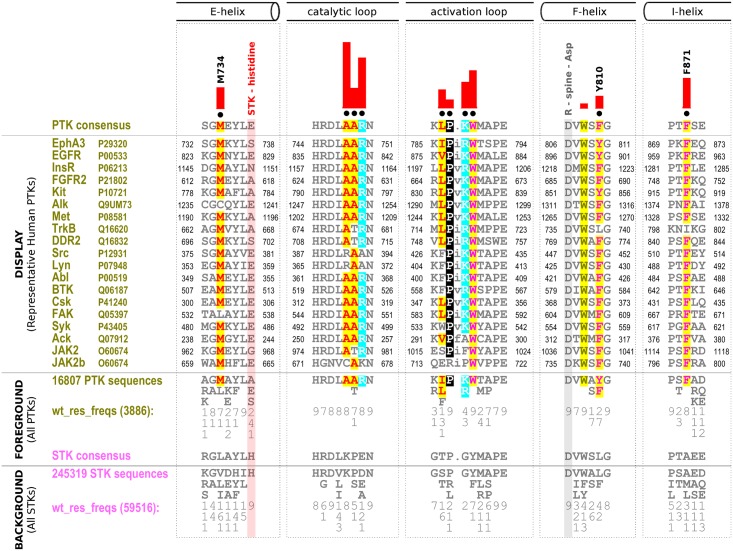
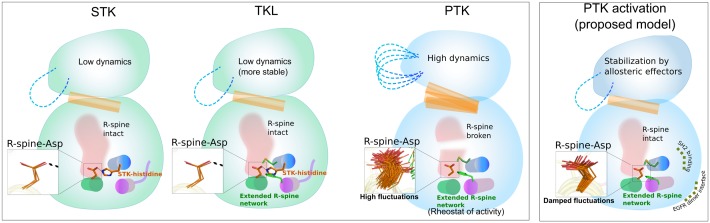
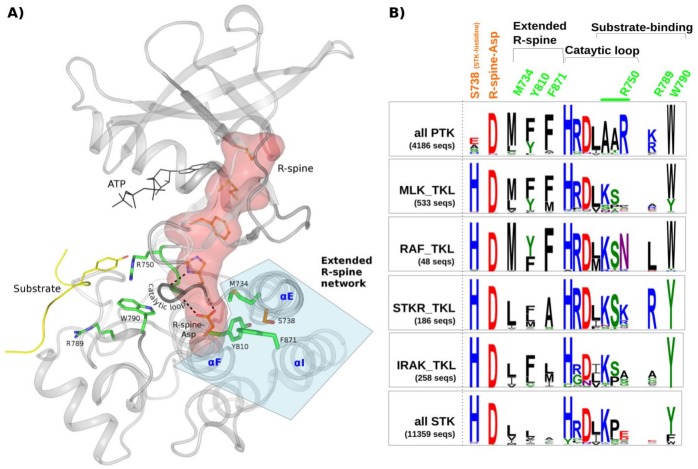
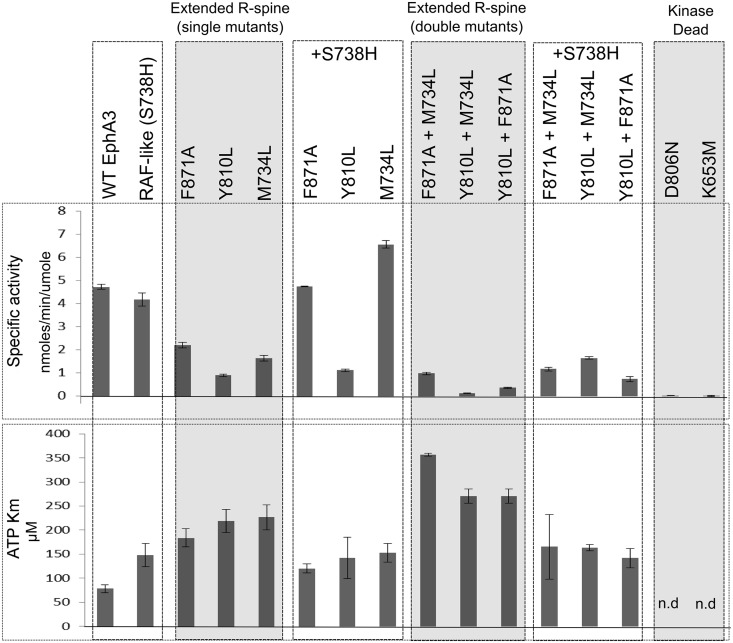
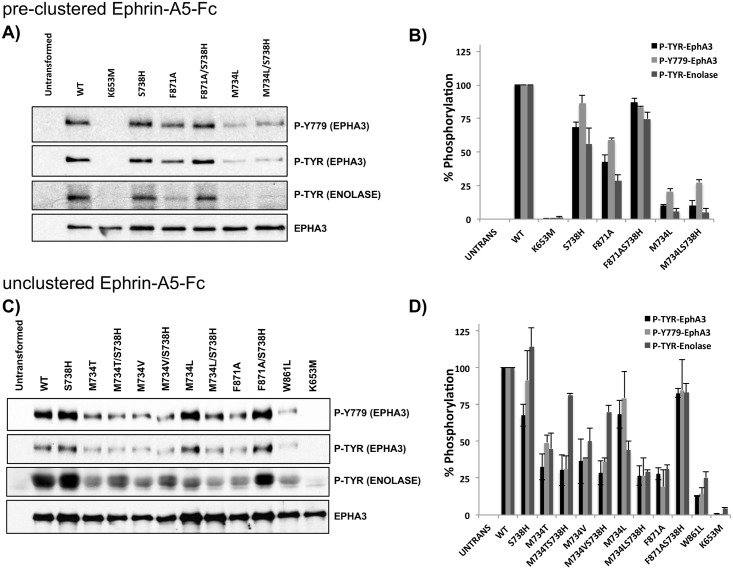
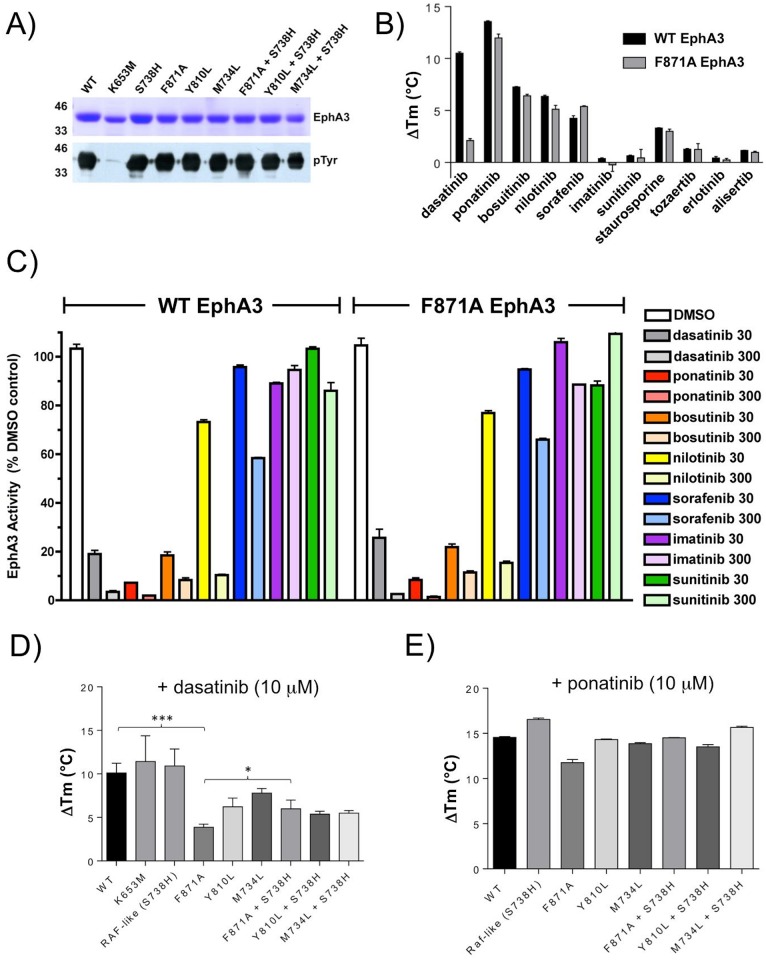
Protein tyrosine kinases (PTKs) are a group of closely related enzymes that have evolutionarily diverged from serine/threonine kinases (STKs) to regulate pathways associated with multi-cellularity. Evolutionary divergence of PTKs from STKs has occurred through accumulation of mutations in the active site as well as in the commonly conserved hydrophobic core. While the functional significance of active site variations is well understood, relatively little is known about how hydrophobic core variations contribute to PTK evolutionary divergence. Here, using a combination of statistical sequence comparisons, molecular dynamics simulations, mutational analysis and in vitro thermostability and kinase assays, we investigate the structural and functional significance of key PTK-specific variations in the kinase core. We find that the nature of residues and interactions in the hydrophobic core of PTKs is strikingly different from other protein kinases, and PTK-specific variations in the core contribute to functional divergence by altering the stability and dynamics of the kinase domain. In particular, a functionally critical STK-conserved histidine that stabilizes the regulatory spine in STKs is selectively mutated to an alanine, serine or glutamate in PTKs, and this loss-of-function mutation is accommodated, in part, through compensatory PTK-specific interactions in the core. In particular, a PTK-conserved phenylalanine in the I-helix appears to structurally and functionally compensate for the loss of STK-histidine by interacting with the regulatory spine, which has far-reaching effects on enzyme activity, inhibitor sensing, and stability. We propose that hydrophobic core variations provide a selective advantage during PTK evolution by increasing the conformational flexibility, and therefore the allosteric potential of the kinase domain. Our studies also suggest that Tyrosine Kinase Like kinases such as RAF are intermediates in PTK evolutionary divergence inasmuch as they share features of both PTKs and STKs in the core. Finally, our studies provide an evolutionary framework for identifying and characterizing disease and drug resistance mutations in the kinase core.
蛋白质酪氨酸激酶(PTK)是一组密切相关的酶,它们在进化过程中从丝氨酸/苏氨酸激酶(STK)分化出来,以调节与多细胞性相关的信号通路。PTK从STK的进化分化是通过活性位点以及通常保守的疏水核心中的突变积累而发生的。虽然活性位点变异的功能意义已得到充分理解,但关于疏水核心变异如何促进PTK进化分化的了解相对较少。在这里,我们结合统计序列比较、分子动力学模拟、突变分析以及体外热稳定性和激酶测定,研究激酶核心中关键PTK特异性变异的结构和功能意义。我们发现,PTK疏水核心中的残基性质和相互作用与其他蛋白激酶显著不同,核心中的PTK特异性变异通过改变激酶结构域的稳定性和动力学来促进功能分化。特别是,在STK中稳定调节脊柱的功能关键的STK保守组氨酸在PTK中被选择性突变为丙氨酸、丝氨酸或谷氨酸,这种功能丧失突变部分通过核心中补偿性的PTK特异性相互作用得到缓解。特别是,I螺旋中PTK保守的苯丙氨酸似乎通过与调节脊柱相互作用在结构和功能上补偿了STK组氨酸的缺失,这对酶活性、抑制剂感知和稳定性产生了深远影响。我们提出,疏水核心变异通过增加构象灵活性,从而增加激酶结构域的变构潜力,在PTK进化过程中提供了一种选择优势。我们的研究还表明,像RAF这样的酪氨酸激酶样激酶是PTK进化分化的中间体,因为它们在核心中兼具PTK和STK的特征。最后,我们的研究为识别和表征激酶核心中的疾病和耐药性突变提供了一个进化框架。