Elkhal Abdallah, Rodriguez Cetina Biefer Hector, Heinbokel Timm, Uehara Hirofumi, Quante Markus, Seyda Midas, Schuitenmaker Jeroen M, Krenzien Felix, Camacho Virginia, de la Fuente Miguel A, Ghiran Ionita, Tullius Stefan G
Division of Transplant Surgery and Transplantation Surgery Research Laboratory, Brigham and Women's Hospital, Harvard Medical School, Boston-02115, MA, USA.
Clinic for Cardiovascular Surgery, University Hospital Zurich, Zurich-8006, Switzerland.
Sci Rep. 2016 Mar 1;6:22325. doi: 10.1038/srep22325.
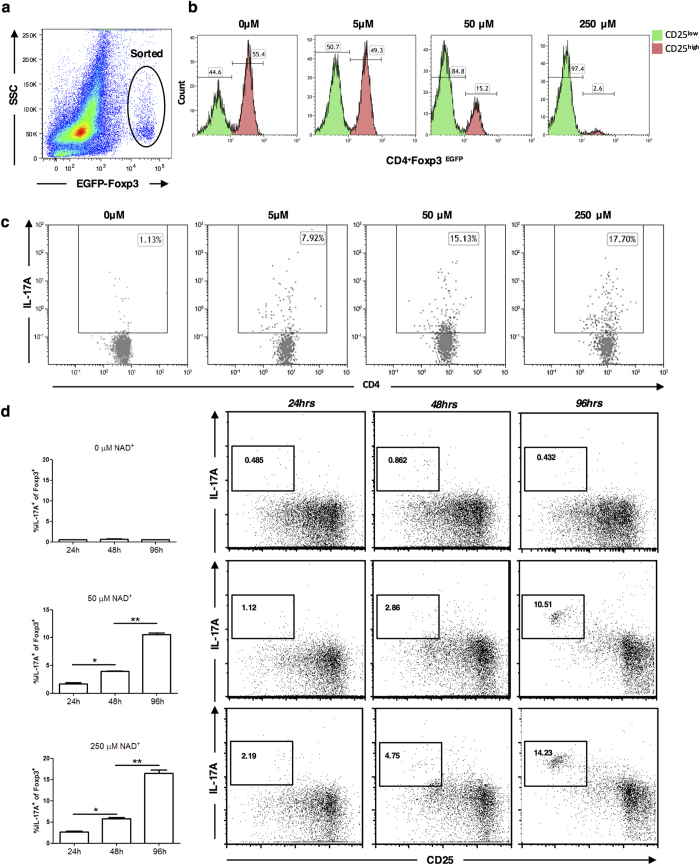
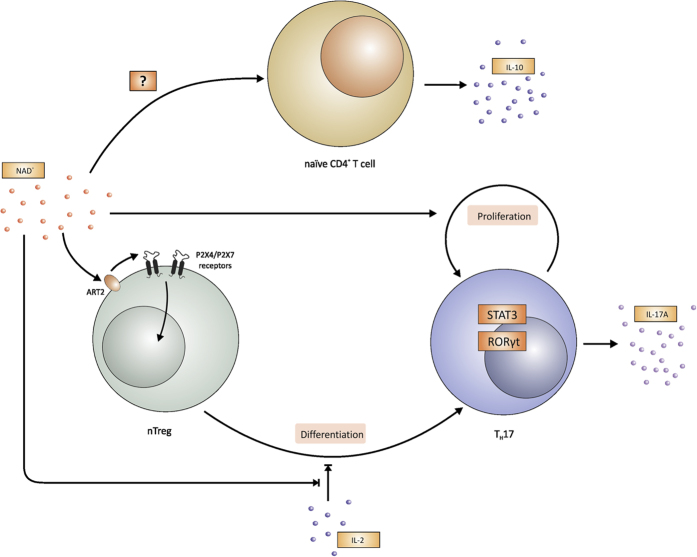
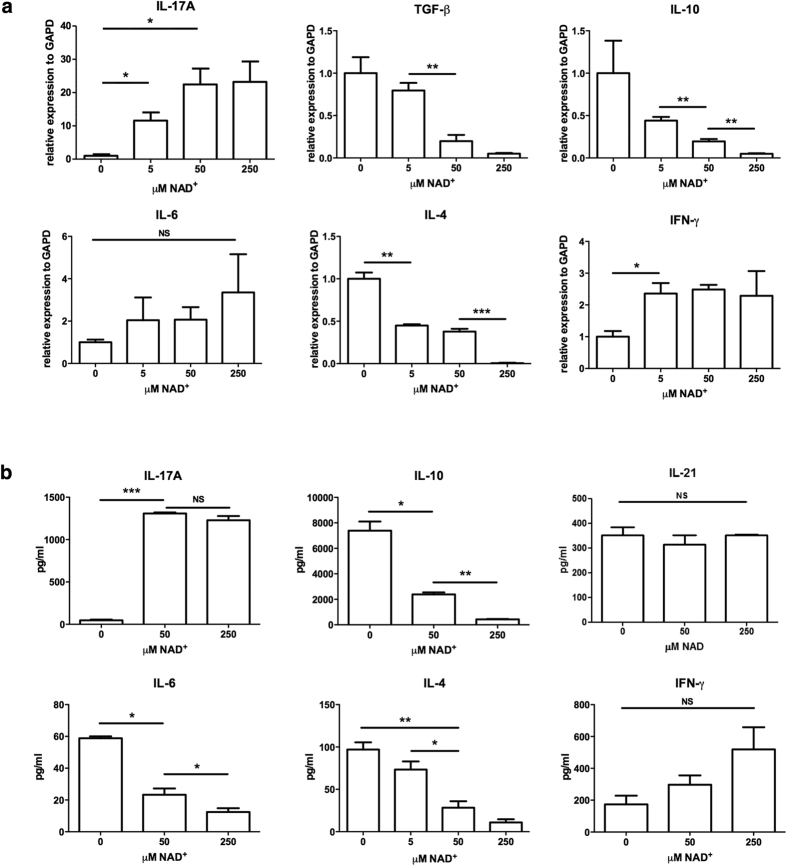
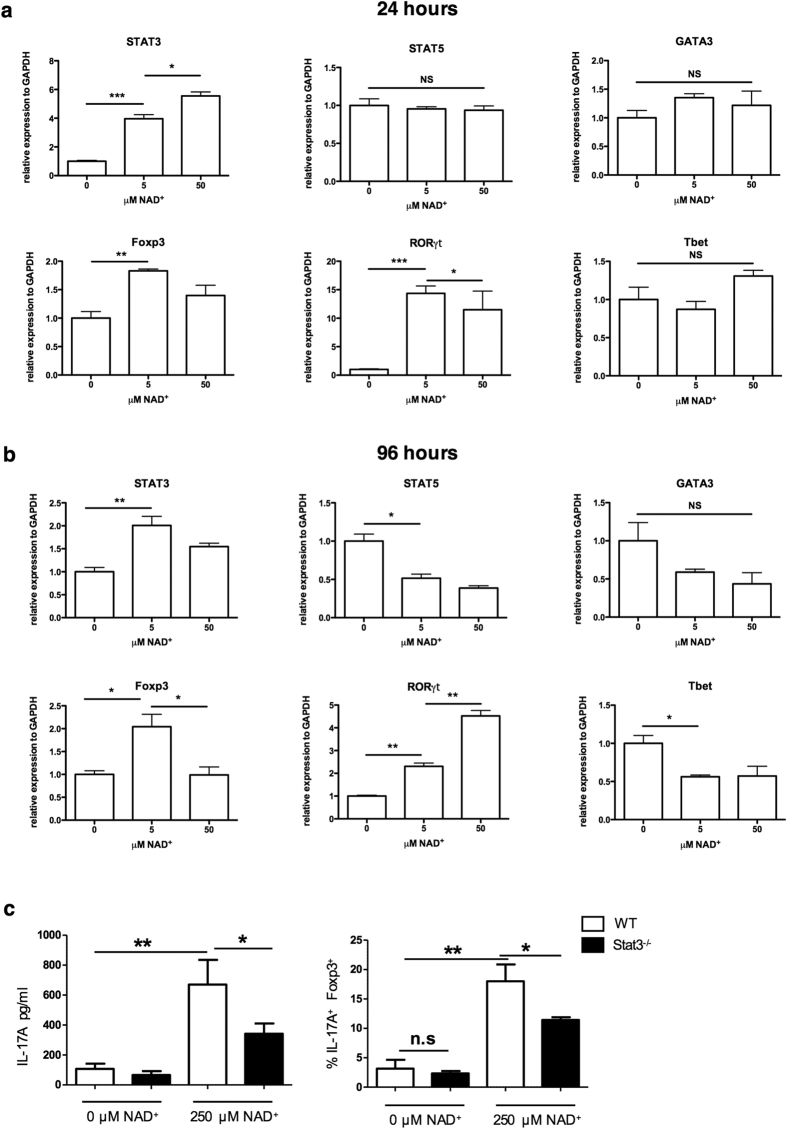
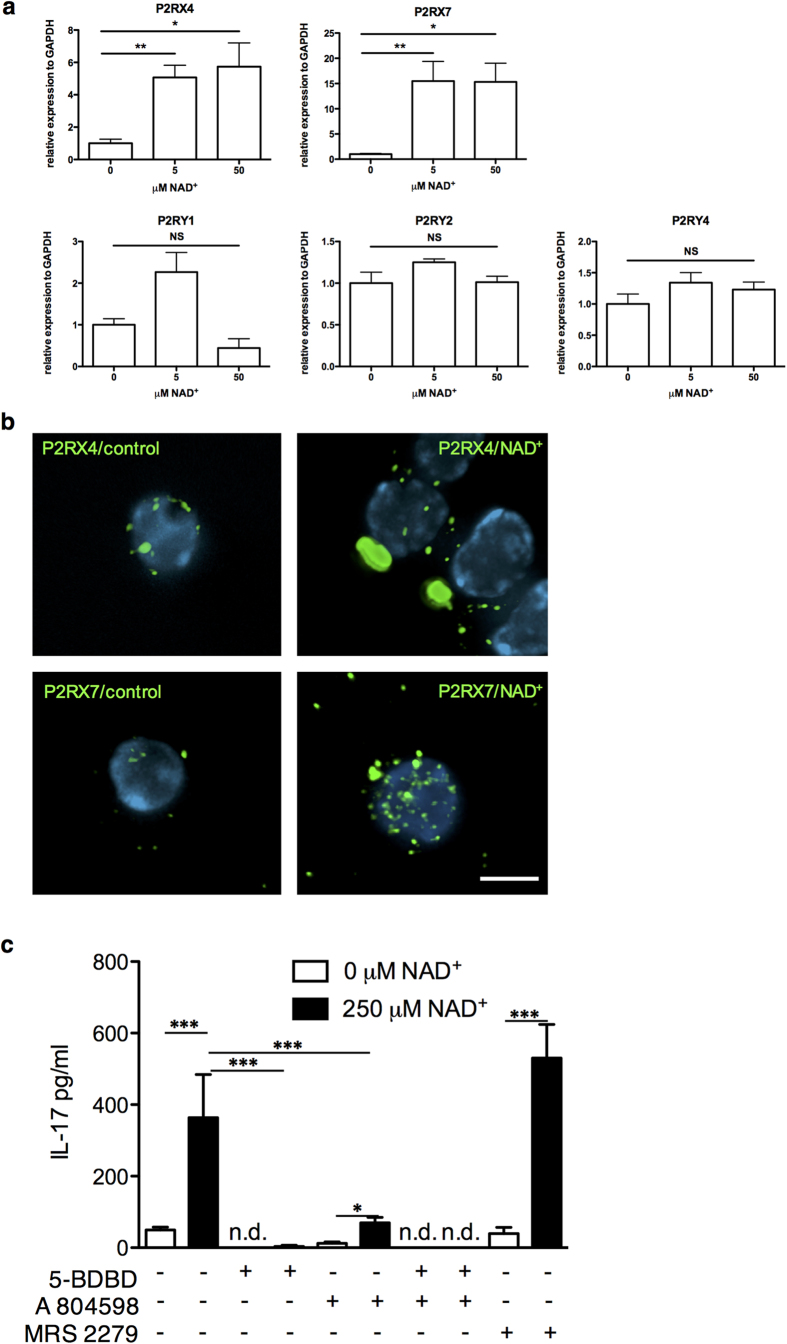
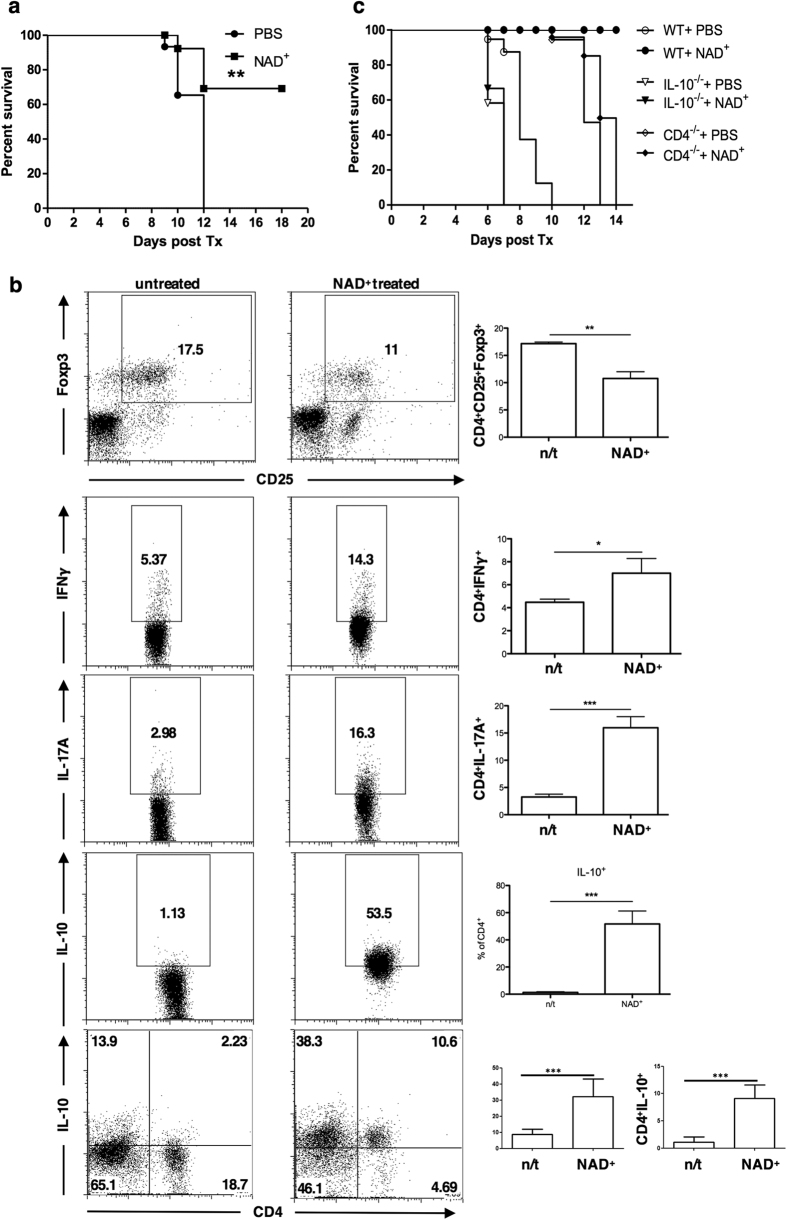
CD4(+) CD25(+) Foxp3(+) Tregs have been shown to play a central role in immune homeostasis while preventing from fatal inflammatory responses, while Th17 cells have traditionally been recognized as pro-inflammatory mediators implicated in a myriad of diseases. Studies have shown the potential of Tregs to convert into Th17 cells, and Th17 cells into Tregs. Increasing evidence have pointed out CD25 as a key molecule during this transdifferentiation process, however molecules that allow such development remain unknown. Here, we investigated the impact of NAD(+) on the fate of CD4(+) CD25(+) Foxp3(+) Tregs in-depth, dissected their transcriptional signature profile and explored mechanisms underlying their conversion into IL-17A producing cells. Our results demonstrate that NAD(+) promotes Treg conversion into Th17 cells in vitro and in vivo via CD25 cell surface marker. Despite the reduced number of Tregs, known to promote homeostasis, and an increased number of pro-inflammatory Th17 cells, NAD(+) was able to promote an impressive allograft survival through a robust systemic IL-10 production that was CD4(+) CD25(+) Foxp3(+) independent. Collectively, our study unravels a novel immunoregulatory mechanism of NAD(+) that regulates Tregs fate while promoting allograft survival that may have clinical applications in alloimmunity and in a wide spectrum of inflammatory conditions.
已证明CD4(+)CD25(+)Foxp3(+)调节性T细胞(Tregs)在免疫稳态中发挥核心作用,同时预防致命的炎症反应,而传统上Th17细胞被认为是参与多种疾病的促炎介质。研究表明Tregs有转化为Th17细胞的潜力,Th17细胞也可转化为Tregs。越来越多的证据指出CD25是这种转分化过程中的关键分子,然而允许这种发育的分子仍不清楚。在此,我们深入研究了烟酰胺腺嘌呤二核苷酸(NAD(+))对CD4(+)CD25(+)Foxp3(+)Tregs命运的影响,剖析了它们的转录特征谱,并探索了它们转化为产生白细胞介素-17A(IL-17A)细胞的潜在机制。我们的结果表明,NAD(+)在体外和体内通过CD25细胞表面标志物促进Tregs转化为Th17细胞。尽管已知促进稳态的Tregs数量减少,促炎的Th17细胞数量增加,但NAD(+)能够通过强大的全身性IL-10产生促进同种异体移植物的显著存活,且这种存活不依赖于CD4(+)CD25(+)Foxp3(+)。总的来说,我们的研究揭示了NAD(+)的一种新型免疫调节机制,该机制在促进同种异体移植物存活的同时调节Tregs命运,这可能在同种免疫和广泛的炎症性疾病中具有临床应用价值。