Sheikh Saba, Siddiqui Sahabjada, Dhasmana Anupam, Haque Ejazul, Kamil Mohammed, Lohani Mohtashim, Arshad Mohammad, Mir Snober Shabnam
Department of Bioengineering and Biosciences, Integral University, Lucknow, Uttar Pradesh, India.
Department of Zoology, Lucknow University, Lucknow, Uttar Pradesh, India.
Pharmacogn Mag. 2015 Oct;11(Suppl 3):S365-74. doi: 10.4103/0973-1296.168972.
Cissus quadrangularis Linn. (CQ) commonly known as Hadjod (Family: Vitaceae) is usually distributed in India and Sri Lanka and contains several bioactive compounds responsible for various metabolic and physiologic effects.
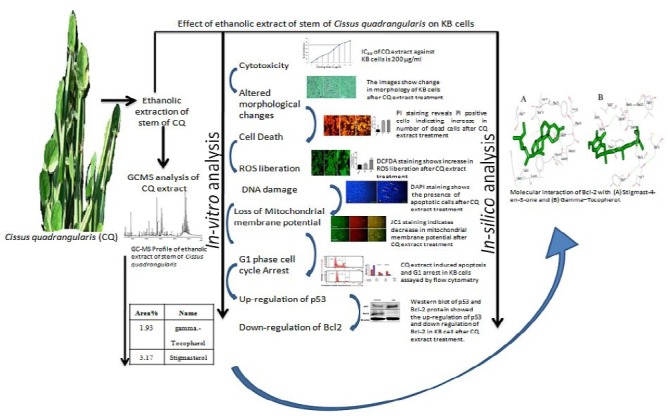
In this study, the biological effects of CQ ethanolic extract were evaluated by in vitro and supported by in silico analysis on KB oral epidermoid cancer cell line.
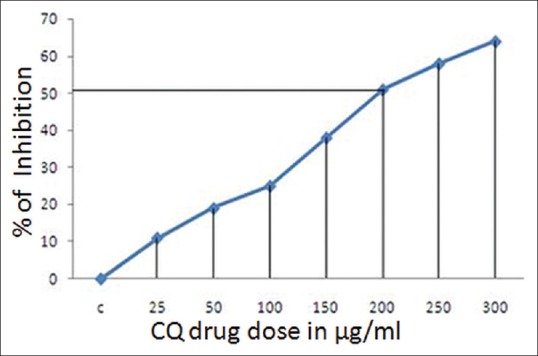
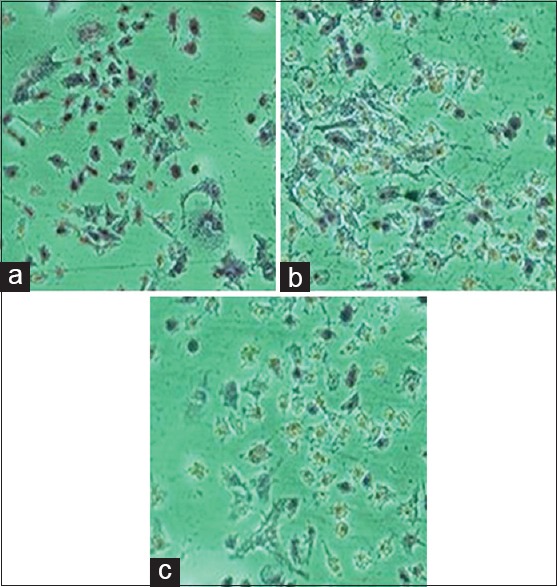
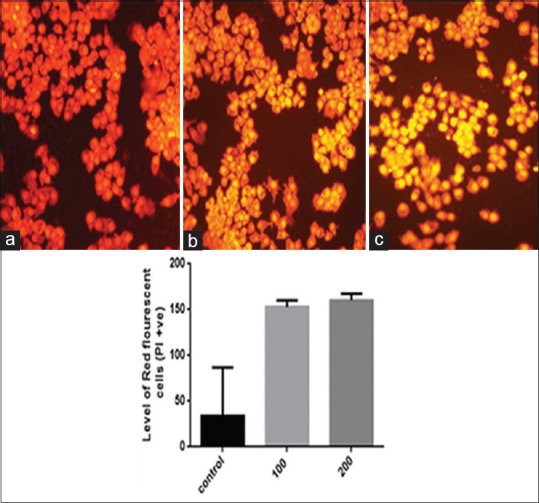
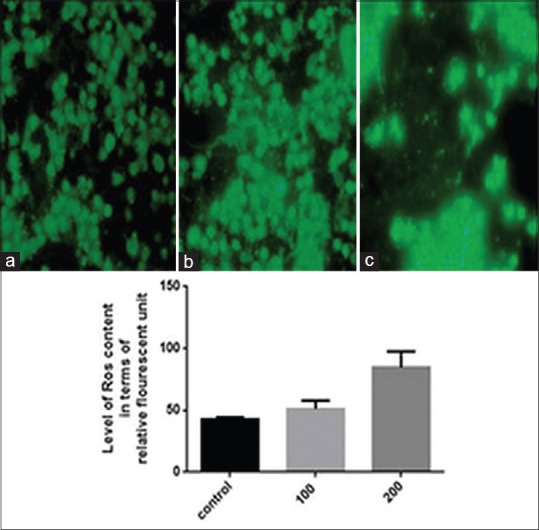
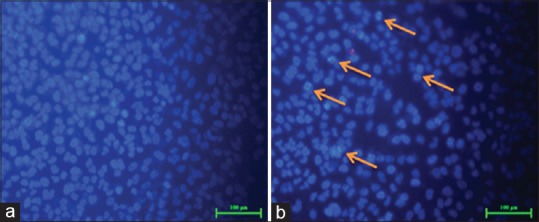
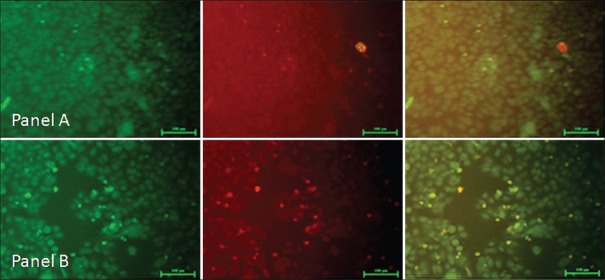
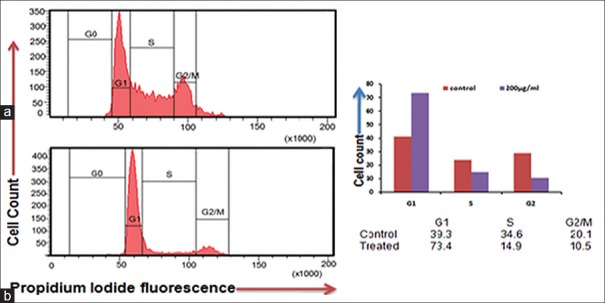
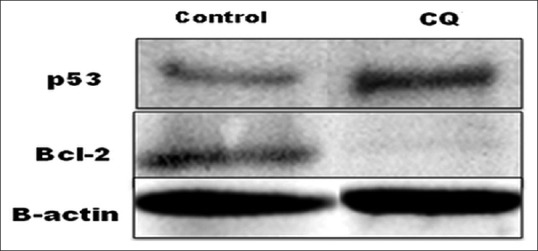
Anti-cancer potential of ethanolic extract of CQ stem against KB oral epidermoid cancer cells was evaluated in terms of morphological analysis, nuclei staining, liberation of reactive oxygen species (ROS), cell cycle arrest, mitochondrial membrane potential (MMP) and p53 and Bcl-2 protein expression which reveal the induction of apoptosis along with supporting in silico analysis.
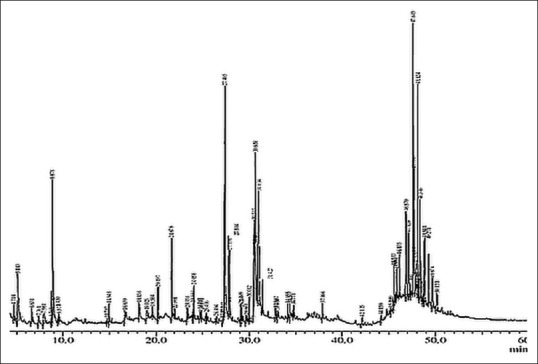
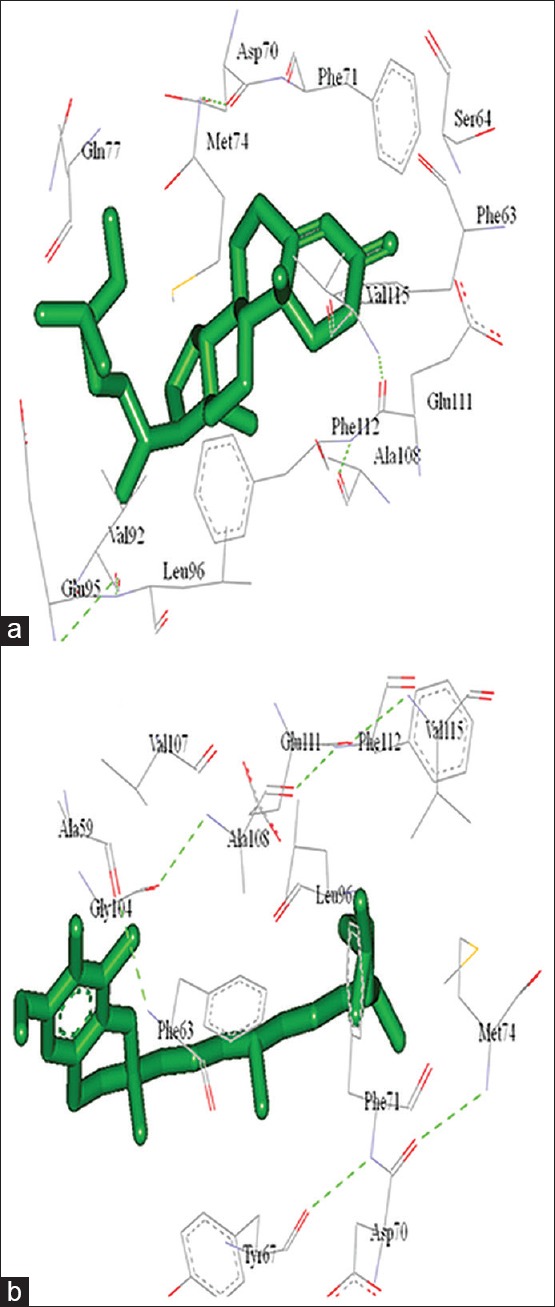
Ethanolic extract of CQ stem contains various bioactive compounds responsible for cancer cell morphological alterations, liberation of ROS, G1 phase cell cycle arrest and decreased MMP along with up-regulation of p53 and down-regulation of Bcl-2. By employing in silico approach, we have also postulated that the CQ extract active constituents sequester Bcl-2 with higher affinity as compared to p53, which may be the reason for induction of growth arrest and apoptosis in KB cells.
Our data indicate that the CQ extract has a remarkable apoptotic effect that suggests that it could be a viable treatment option for specific types of cancers.
Cissus quadrangularis stem ethanolic extract induces apoptosis and cell cycle arrest at G1 phaseIt liberates (ROS) and mitochondria mediated apoptosisIt upregulates p53 and down-regulates Bcl-2 protein expressionIn silico studies indicates that the active constituents of CQ binds Bcl-2 with higher affinity as compared to p53.
四角乌蔹莓(CQ),俗称哈乔德(葡萄科),通常分布于印度和斯里兰卡,含有多种具有多种代谢和生理作用的生物活性化合物。
本研究通过体外实验评估了CQ乙醇提取物的生物学效应,并通过计算机模拟分析对KB口腔表皮样癌细胞系进行了支持。
从形态学分析、细胞核染色、活性氧(ROS)释放、细胞周期阻滞、线粒体膜电位(MMP)以及p53和Bcl-2蛋白表达等方面评估了CQ茎乙醇提取物对KB口腔表皮样癌细胞的抗癌潜力,这些指标揭示了细胞凋亡的诱导情况,并辅以计算机模拟分析。
CQ茎乙醇提取物含有多种生物活性化合物,可导致癌细胞形态改变、ROS释放、G1期细胞周期阻滞和MMP降低,同时上调p53并下调Bcl-2。通过计算机模拟方法,我们还推测CQ提取物的活性成分与p53相比,对Bcl-2具有更高的亲和力,这可能是诱导KB细胞生长停滞和凋亡的原因。
我们的数据表明,CQ提取物具有显著的凋亡作用,这表明它可能是特定类型癌症的一种可行治疗选择。
四角乌蔹莓茎乙醇提取物诱导细胞凋亡并使细胞周期阻滞于G1期
它释放(ROS)并介导线粒体凋亡
它上调p53并下调Bcl-2蛋白表达
计算机模拟研究表明,CQ的活性成分与p53相比,对Bcl-2具有更高的亲和力。