• 文献检索
  • 文档翻译
  • 深度研究
  • 学术资讯
  • Suppr Zotero 插件Zotero 插件
  • 邀请有礼
  • 套餐&价格
  • 历史记录
应用&插件
Suppr Zotero 插件Zotero 插件浏览器插件Mac 客户端Windows 客户端微信小程序
定价
高级版会员购买积分包购买API积分包
服务
文献检索文档翻译深度研究API 文档MCP 服务
关于我们
关于 Suppr公司介绍联系我们用户协议隐私条款
关注我们

Suppr 超能文献

核心技术专利:CN118964589B侵权必究
粤ICP备2023148730 号-1Suppr @ 2026

文献检索

告别复杂PubMed语法,用中文像聊天一样搜索,搜遍4000万医学文献。AI智能推荐,让科研检索更轻松。

立即免费搜索

文件翻译

保留排版,准确专业,支持PDF/Word/PPT等文件格式,支持 12+语言互译。

免费翻译文档

深度研究

AI帮你快速写综述,25分钟生成高质量综述,智能提取关键信息,辅助科研写作。

立即免费体验

解读石片石器上的残留物:从盲测中学习

Making Sense of Residues on Flaked Stone Artefacts: Learning from Blind Tests.

作者信息

Rots Veerle, Hayes Elspeth, Cnuts Dries, Lepers Christian, Fullagar Richard

机构信息

TraceoLab / Préhistoire, University of Liège, Liège, Belgium.

Centre for Archaeological Science, University of Wollongong, Wollongong, Australia.

出版信息

PLoS One. 2016 Mar 1;11(3):e0150437. doi: 10.1371/journal.pone.0150437. eCollection 2016.

DOI:10.1371/journal.pone.0150437
PMID:26930210
原文链接:https://pmc.ncbi.nlm.nih.gov/articles/PMC4773257/
Abstract

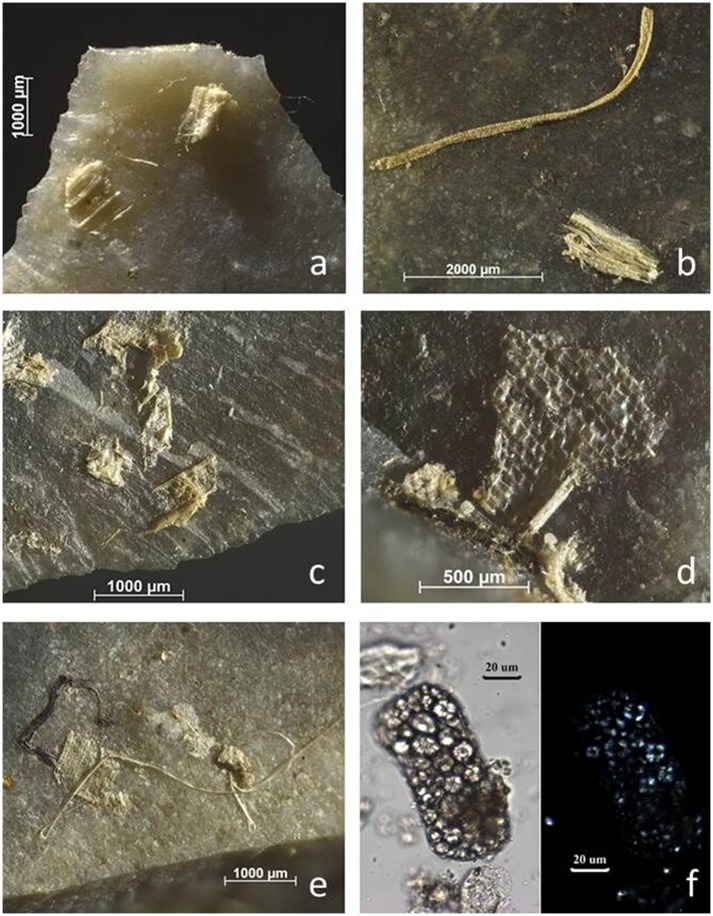
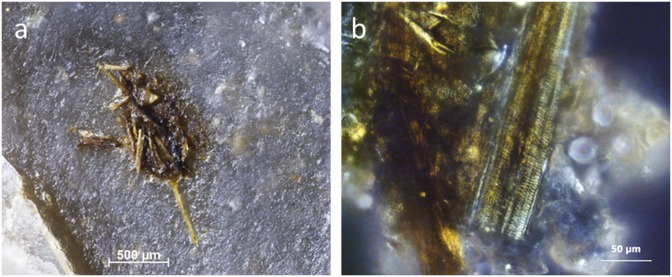
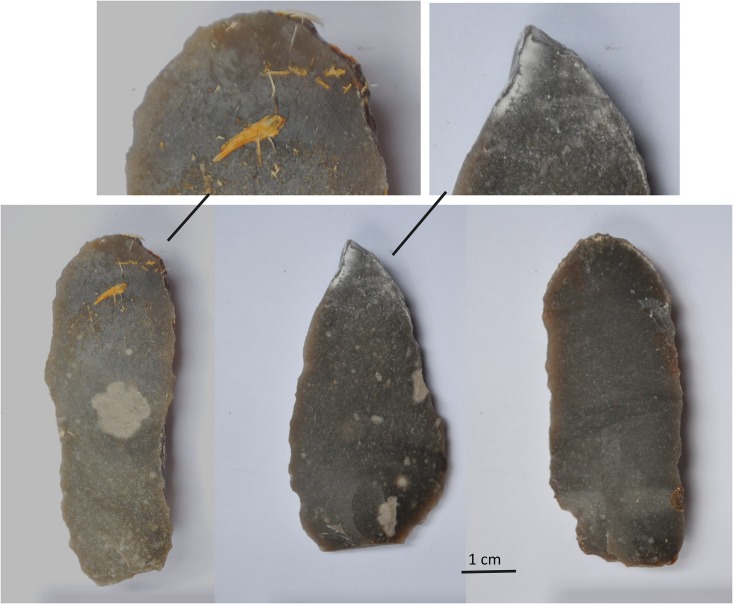
Residue analysis has become a frequently applied method for identifying prehistoric stone tool use. Residues adhering to the stone tool with varying frequencies are interpreted as being the result of an intentional contact with the worked material during use. Yet, other processes during the life cycle of a stone tool or after deposition may leave residues and these residues may potentially lead to misinterpretations. We present a blind test that was designed to examine this issue. Results confirm that production, retouch, prehension, hafting, various incidental contacts during use and deposition may lead to residue depositions that significantly affect the accurateness of identifications of tool-use. All currently applied residue approaches are concerned. We therefore argue for a closer interaction with independent wear studies and a step-wise procedure in which a low magnification of wear traces is used as a first step for selecting potentially used flakes in archaeological contexts. In addition, residue concentrations on a tool's edge should be sufficiently dense before linking them with use.

摘要

残留物分析已成为识别史前石器用途的一种常用方法。以不同频率附着在石器上的残留物被解释为在使用过程中与加工材料有意接触的结果。然而,石器生命周期中或沉积后的其他过程可能会留下残留物,这些残留物可能会导致误解。我们提出了一项旨在检验此问题的盲测。结果证实,生产、修整、握持、 hafting、使用和沉积过程中的各种偶然接触可能会导致残留物沉积,从而显著影响工具使用鉴定的准确性。所有目前应用的残留物方法都受到关注。因此,我们主张与独立的磨损研究进行更密切的互动,并采用逐步程序,其中第一步是使用低倍放大观察磨损痕迹,以在考古背景中选择可能被使用过的石片。此外,在将工具边缘的残留物浓度与使用联系起来之前,其浓度应足够高。
https://cdn.ncbi.nlm.nih.gov/pmc/blobs/856b/4773257/6a5de356c6b4/pone.0150437.g015.jpg
https://cdn.ncbi.nlm.nih.gov/pmc/blobs/856b/4773257/8b6baa31f005/pone.0150437.g001.jpg
https://cdn.ncbi.nlm.nih.gov/pmc/blobs/856b/4773257/a6545a1b57e0/pone.0150437.g002.jpg
https://cdn.ncbi.nlm.nih.gov/pmc/blobs/856b/4773257/c99cef982e58/pone.0150437.g003.jpg
https://cdn.ncbi.nlm.nih.gov/pmc/blobs/856b/4773257/943697a64a44/pone.0150437.g004.jpg
https://cdn.ncbi.nlm.nih.gov/pmc/blobs/856b/4773257/822e0a5e7737/pone.0150437.g005.jpg
https://cdn.ncbi.nlm.nih.gov/pmc/blobs/856b/4773257/3fd8b64c8047/pone.0150437.g006.jpg
https://cdn.ncbi.nlm.nih.gov/pmc/blobs/856b/4773257/3b1bdd8540b0/pone.0150437.g007.jpg
https://cdn.ncbi.nlm.nih.gov/pmc/blobs/856b/4773257/9247d8a41e73/pone.0150437.g008.jpg
https://cdn.ncbi.nlm.nih.gov/pmc/blobs/856b/4773257/6f4e7e2da1d8/pone.0150437.g009.jpg
https://cdn.ncbi.nlm.nih.gov/pmc/blobs/856b/4773257/40ed5d7d2cec/pone.0150437.g010.jpg
https://cdn.ncbi.nlm.nih.gov/pmc/blobs/856b/4773257/fee748e8dc49/pone.0150437.g011.jpg
https://cdn.ncbi.nlm.nih.gov/pmc/blobs/856b/4773257/7e302a13f7b1/pone.0150437.g012.jpg
https://cdn.ncbi.nlm.nih.gov/pmc/blobs/856b/4773257/a849ce215f95/pone.0150437.g013.jpg
https://cdn.ncbi.nlm.nih.gov/pmc/blobs/856b/4773257/327ee4ff5289/pone.0150437.g014.jpg
https://cdn.ncbi.nlm.nih.gov/pmc/blobs/856b/4773257/6a5de356c6b4/pone.0150437.g015.jpg
https://cdn.ncbi.nlm.nih.gov/pmc/blobs/856b/4773257/8b6baa31f005/pone.0150437.g001.jpg
https://cdn.ncbi.nlm.nih.gov/pmc/blobs/856b/4773257/a6545a1b57e0/pone.0150437.g002.jpg
https://cdn.ncbi.nlm.nih.gov/pmc/blobs/856b/4773257/c99cef982e58/pone.0150437.g003.jpg
https://cdn.ncbi.nlm.nih.gov/pmc/blobs/856b/4773257/943697a64a44/pone.0150437.g004.jpg
https://cdn.ncbi.nlm.nih.gov/pmc/blobs/856b/4773257/822e0a5e7737/pone.0150437.g005.jpg
https://cdn.ncbi.nlm.nih.gov/pmc/blobs/856b/4773257/3fd8b64c8047/pone.0150437.g006.jpg
https://cdn.ncbi.nlm.nih.gov/pmc/blobs/856b/4773257/3b1bdd8540b0/pone.0150437.g007.jpg
https://cdn.ncbi.nlm.nih.gov/pmc/blobs/856b/4773257/9247d8a41e73/pone.0150437.g008.jpg
https://cdn.ncbi.nlm.nih.gov/pmc/blobs/856b/4773257/6f4e7e2da1d8/pone.0150437.g009.jpg
https://cdn.ncbi.nlm.nih.gov/pmc/blobs/856b/4773257/40ed5d7d2cec/pone.0150437.g010.jpg
https://cdn.ncbi.nlm.nih.gov/pmc/blobs/856b/4773257/fee748e8dc49/pone.0150437.g011.jpg
https://cdn.ncbi.nlm.nih.gov/pmc/blobs/856b/4773257/7e302a13f7b1/pone.0150437.g012.jpg
https://cdn.ncbi.nlm.nih.gov/pmc/blobs/856b/4773257/a849ce215f95/pone.0150437.g013.jpg
https://cdn.ncbi.nlm.nih.gov/pmc/blobs/856b/4773257/327ee4ff5289/pone.0150437.g014.jpg
https://cdn.ncbi.nlm.nih.gov/pmc/blobs/856b/4773257/6a5de356c6b4/pone.0150437.g015.jpg

相似文献

1
Making Sense of Residues on Flaked Stone Artefacts: Learning from Blind Tests.解读石片石器上的残留物:从盲测中学习
PLoS One. 2016 Mar 1;11(3):e0150437. doi: 10.1371/journal.pone.0150437. eCollection 2016.
2
The archaeology, chronology and stratigraphy of Madjedbebe (Malakunanja II): A site in northern Australia with early occupation.马杰德贝贝(马拉库南贾二号)的考古学、年代学与地层学:澳大利亚北部一处有早期人类居住的遗址
J Hum Evol. 2015 Jun;83:46-64. doi: 10.1016/j.jhevol.2015.03.014. Epub 2015 May 7.
3
Towards an understanding of retouch flakes: A use-wear blind test on knapped stone microdebitage.探讨关于修疤片的认识:关于石片石器微痕的使用痕迹盲测。
PLoS One. 2020 Dec 7;15(12):e0243101. doi: 10.1371/journal.pone.0243101. eCollection 2020.
4
Quantitative use-wear analysis of stone tools: Measuring how the intensity of use affects the identification of the worked material.石器的定量使用痕迹分析:测量使用强度如何影响加工材料的识别。
PLoS One. 2021 Sep 20;16(9):e0257266. doi: 10.1371/journal.pone.0257266. eCollection 2021.
5
Residue and microwear analyses of the stone artifacts from Schöningen.施宁根石器的残留物与微痕分析。
J Hum Evol. 2015 Dec;89:298-308. doi: 10.1016/j.jhevol.2015.07.005. Epub 2015 Sep 16.
6
Combined organic biomarker and use-wear analyses of stone artefacts from Liang Bua, Flores, Indonesia.印度尼西亚弗洛雷斯岛梁布亚出土石器的综合有机生物标志物和使用痕迹分析。
Sci Rep. 2019 Nov 26;9(1):17553. doi: 10.1038/s41598-019-53782-2.
7
Putting ochre to the test: replication studies of adhesives that may have been used for hafting tools in the Middle Stone Age.对赭石进行测试:对可能在中石器时代用于 hafting 工具的粘合剂的复制研究。 注:hafting 这个词在中文里可能没有完全对应的精确词汇,这里保留英文以便准确传达原文意思。
J Hum Evol. 2005 Nov;49(5):587-601. doi: 10.1016/j.jhevol.2005.06.007. Epub 2005 Aug 26.
8
Correction: Making Sense of Residues on Flaked Stone Artefacts: Learning from Blind Tests.更正:理解片状石器上的残留物:从盲测中学习。
PLoS One. 2017 May 18;12(5):e0178311. doi: 10.1371/journal.pone.0178311. eCollection 2017.
9
Stone tool analysis and human origins research: some advice from Uncle Screwtape.石器分析与人类起源研究:来自斯库普叔叔的一些建议。
Evol Anthropol. 2011 Mar-Apr;20(2):48-53. doi: 10.1002/evan.20290.
10
New method development in prehistoric stone tool research: evaluating use duration and data analysis protocols.史前石器工具研究中的新方法开发:评估使用时长及数据分析方案。
Micron. 2014 Oct;65:69-75. doi: 10.1016/j.micron.2014.04.006. Epub 2014 Apr 18.

引用本文的文献

1
When the hammer drops: Identification of knapping techniques in blade production based on a multi-scale study of knapping traces.当锤落之时:基于对敲击痕迹的多尺度研究确定刀片制作中的敲击技术
PLoS One. 2025 Aug 27;20(8):e0329848. doi: 10.1371/journal.pone.0329848. eCollection 2025.
2
Examining the effect of post-depositional processes on the preservation and identification of stone tool residues from temperate environments: An experimental approach.考察成壤作用对温带环境下石器残留物保存和识别的影响:一种实验方法。
PLoS One. 2024 Oct 21;19(10):e0309060. doi: 10.1371/journal.pone.0309060. eCollection 2024.
3

本文引用的文献

1
Residue and microwear analyses of the stone artifacts from Schöningen.施宁根石器的残留物与微痕分析。
J Hum Evol. 2015 Dec;89:298-308. doi: 10.1016/j.jhevol.2015.07.005. Epub 2015 Sep 16.
2
Neanderthal use of fish, mammals, birds, starchy plants and wood 125-250,000 years ago.尼安德特人在 12.5 万至 25 万年前使用鱼类、哺乳动物、鸟类、含淀粉植物和木材。
PLoS One. 2011;6(8):e23768. doi: 10.1371/journal.pone.0023768. Epub 2011 Aug 24.
3
Human adaptation and plant use in highland New Guinea 49,000 to 44,000 years ago.4.9 万至 4.4 万年前的高地新几内亚的人类适应和植物利用
Rope making in the Aurignacian of Central Europe more than 35,000 years ago.
三万五千多年前中欧奥瑞纳文化时期的制绳工艺。
Sci Adv. 2024 Feb 2;10(5):eadh5217. doi: 10.1126/sciadv.adh5217. Epub 2024 Jan 31.
4
Using microartifacts to infer Middle Pleistocene lifeways at Schöningen, Germany.利用微痕分析推断德国申宁根地区中更新世的生活方式。
Sci Rep. 2022 Dec 15;12(1):21148. doi: 10.1038/s41598-022-24769-3.
5
Aurignacian dynamics in Southeastern Europe based on spatial analysis, sediment geochemistry, raw materials, lithic analysis, and use-wear from Românești-Dumbrăvița.基于空间分析、沉积物地球化学、原材料、石器分析和 Românești-Dumbrăvița 的使用痕迹的东南欧奥瑞纳文化动态。
Sci Rep. 2022 Aug 19;12(1):14152. doi: 10.1038/s41598-022-15544-5.
6
Every contact leaves a trace: Documenting contamination in lithic residue studies at the Middle Palaeolithic sites of Lusakert Cave 1 (Armenia) and Crvena Stijena (Montenegro).每一次接触都会留下痕迹:记录卢萨卡特 1 号洞穴(亚美尼亚)和红石山(黑山)中石器时代遗址中石器残留物的污染情况。
PLoS One. 2022 Apr 7;17(4):e0266362. doi: 10.1371/journal.pone.0266362. eCollection 2022.
7
The effect of eraser sampling for proteomic analysis on Palaeolithic bone surface microtopography.擦取采样对旧石器时代骨表面微观形貌的蛋白质组学分析的影响。
Sci Rep. 2021 Dec 8;11(1):23611. doi: 10.1038/s41598-021-02823-w.
8
An integrated study discloses chopping tools use from Late Acheulean Revadim (Israel).一项综合研究揭示了来自晚期阿舍利时代的雷瓦迪姆(以色列)的砍砸器使用情况。
PLoS One. 2021 Jan 19;16(1):e0245595. doi: 10.1371/journal.pone.0245595. eCollection 2021.
9
The use of ash at Late Lower Paleolithic Qesem Cave, Israel-An integrated study of use-wear and residue analysis.以色列下旧石器时代晚期 Qesem 洞穴中的灰烬使用情况——使用痕迹与残留物分析的综合研究。
PLoS One. 2020 Sep 21;15(9):e0237502. doi: 10.1371/journal.pone.0237502. eCollection 2020.
10
Shaped stone balls were used for bone marrow extraction at Lower Paleolithic Qesem Cave, Israel.形状规整的石球曾被用于在以色列旧石器时代下切斯姆洞(Lower Paleolithic Qesem Cave)提取骨髓。
PLoS One. 2020 Apr 9;15(4):e0230972. doi: 10.1371/journal.pone.0230972. eCollection 2020.
Science. 2010 Oct 1;330(6000):78-81. doi: 10.1126/science.1193130.
4
Prehistoric blood residues: detection on tool surfaces and identification of species of origin.史前血液残留:工具表面的检测及来源物种的鉴定
Science. 1983 Jun 17;220(4603):1269-71. doi: 10.1126/science.220.4603.1269.
5
The gripping nature of ochre: the association of ochre with Howiesons Poort adhesives and Later Stone Age mastics from South Africa.赭石的黏性:赭石与南非豪伊森斯波特粘合剂及晚石器时代胶粘剂的关联
J Hum Evol. 2007 Oct;53(4):406-19. doi: 10.1016/j.jhevol.2007.05.004. Epub 2007 Jul 23.
6
The artifact as site: an example of the biomolecular analysis of organic residues on prehistoric tools.作为场所的人工制品:史前工具上有机残留物生物分子分析的一个实例
World Archaeol. 1993 Jun;25(1):44-63. doi: 10.1080/00438243.1993.9980227.
7
Evidence of hunting and hafting during the Middle Stone Age at Sibidu Cave, KwaZulu-Natal, South Africa: a multianalytical approach.南非夸祖鲁 - 纳塔尔省西比杜洞穴中石器时代狩猎与 hafting 的证据:一种多分析方法。 (注:hafting 这个词可能有误,推测应该是hafting,意为“安装柄把”,但按照要求未做修正直接翻译)
J Hum Evol. 2005 Mar;48(3):279-300. doi: 10.1016/j.jhevol.2004.11.006. Epub 2005 Jan 25.
8
The Early to Middle Stone Age transition and the emergence of modern human behaviour at site 8-B-11, Sai Island, Sudan.苏丹赛义德岛8 - B - 11遗址的旧石器时代早期到中期过渡以及现代人类行为的出现。
J Hum Evol. 2003 Aug;45(2):187-93. doi: 10.1016/s0047-2484(03)00103-9.
9
Origins of agriculture at Kuk Swamp in the highlands of New Guinea.新几内亚高地库克沼泽地的农业起源
Science. 2003 Jul 11;301(5630):189-93. doi: 10.1126/science.1085255. Epub 2003 Jun 19.
10
Differential staining of aborted and nonaborted pollen.流产花粉与未流产花粉的差异染色。
Stain Technol. 1969 May;44(3):117-22. doi: 10.3109/10520296909063335.