Byron Adam, Frame Margaret C
Edinburgh Cancer Research UK Centre, Institute of Genetics and Molecular Medicine, University of Edinburgh, Edinburgh, United Kingdom.
Edinburgh Cancer Research UK Centre, Institute of Genetics and Molecular Medicine, University of Edinburgh, Edinburgh, United Kingdom.
Curr Opin Cell Biol. 2016 Apr;39:93-100. doi: 10.1016/j.ceb.2016.02.013. Epub 2016 Feb 27.
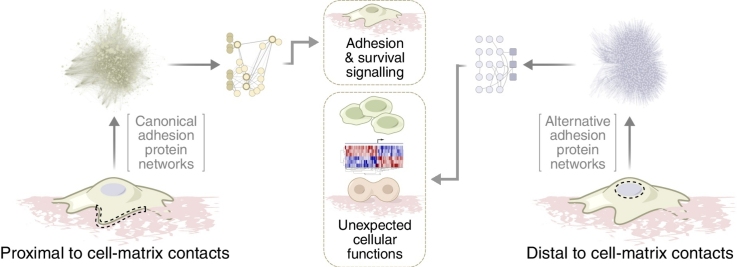
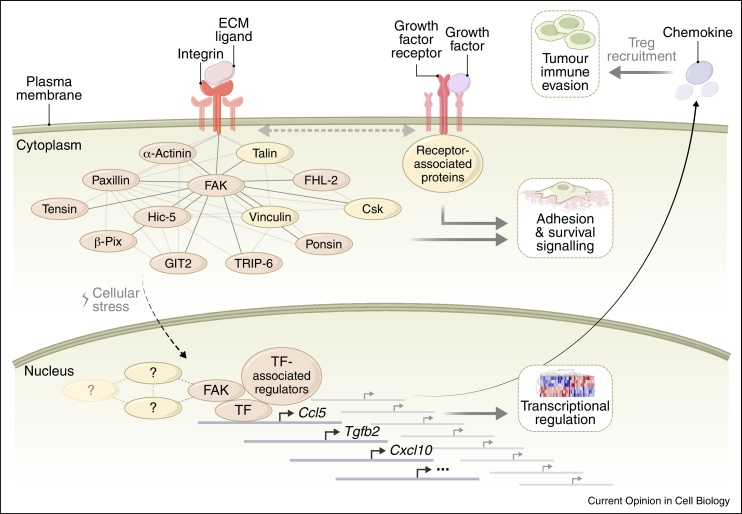
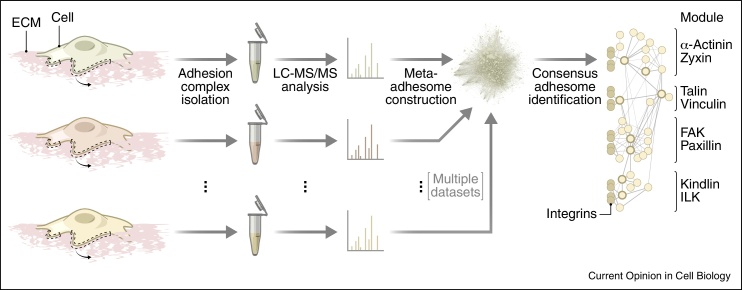
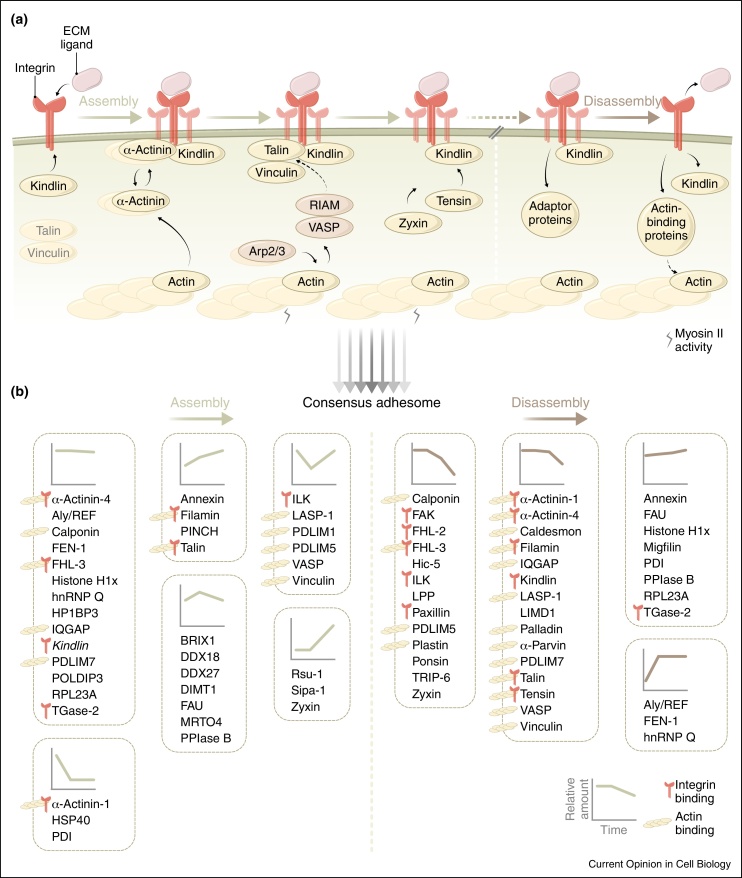
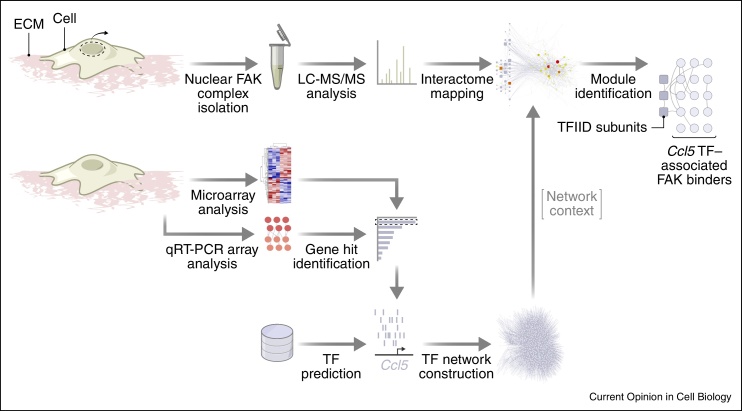
Cell adhesion to the extracellular matrix is generally mediated by integrin receptors, which bind to intracellular adhesion proteins that form multi-molecular scaffolding and signalling complexes. The networks of proteins, and their interactions, are dynamic, mechanosensitive and extremely complex. Recent efforts to characterise adhesions using a variety of technologies, including imaging, proteomics and bioinformatics, have provided new insights into their composition, organisation and how they are regulated, and have also begun to reveal unexpected roles for so-called adhesion proteins in other cellular compartments (for example, the nucleus or centrosomes) in diseases such as cancer. We believe this is opening a new chapter on understanding the wider functions of adhesion proteins, both proximal and distal to cell-matrix contacts.
细胞与细胞外基质的黏附通常由整合素受体介导,整合素受体与细胞内黏附蛋白结合,这些细胞内黏附蛋白形成多分子支架和信号复合物。蛋白质网络及其相互作用是动态的、机械敏感的且极其复杂的。最近,人们利用包括成像、蛋白质组学和生物信息学在内的多种技术对黏附进行表征,这为黏附的组成、组织及其调控方式提供了新的见解,同时也开始揭示所谓的黏附蛋白在癌症等疾病的其他细胞区室(如细胞核或中心体)中的意外作用。我们认为,这正在开启理解黏附蛋白更广泛功能的新篇章,这些功能既包括细胞与基质接触近端的,也包括远端的。