Ferguson William J, Kemp Karen, Kost Gerald
UC Davis Point of Care Testing Center for Teaching and Research, School of Medicine, University of California, Davis, 3488 Tupper Hall, Davis, CA, 95616, USA.
Spatial Sciences Institute, Dana and Davis Dornsife College of Letters, Arts, and Sciences, University of Southern California, Los Angeles, CA, USA.
Int J Health Geogr. 2016 Mar 1;15:10. doi: 10.1186/s12942-016-0037-9.
Rapid and accurate diagnosis drives evidence-based care in health. Point-of-care testing (POCT) aids diagnosis by bringing advanced technologies closer to patients. Health small-world networks are constrained by natural connectivity in the interactions between geography of resources and social forces. Using a geographic information system (GIS) we can understand how populations utilize their health networks, visualize their inefficiencies, and compare alternatives.
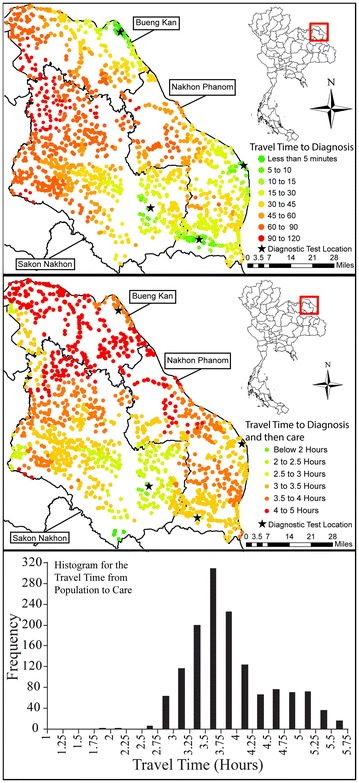
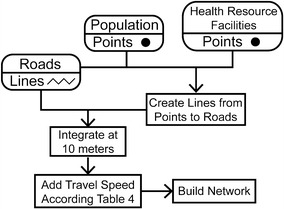
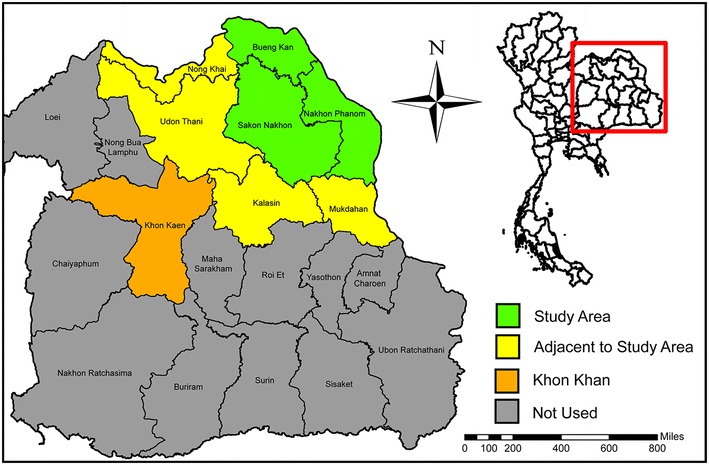
This project focuses on cardiac care resource in rural Isaan, Thailand. A health care access analysis was created using ArcGIS Network Analyst 10.1 from data representing aggregated population, roads, health resource facilities, and diagnostic technologies. The analysis quantified cardiac health care access and identified ways to improve it using both widespread and resource-limited strategies.
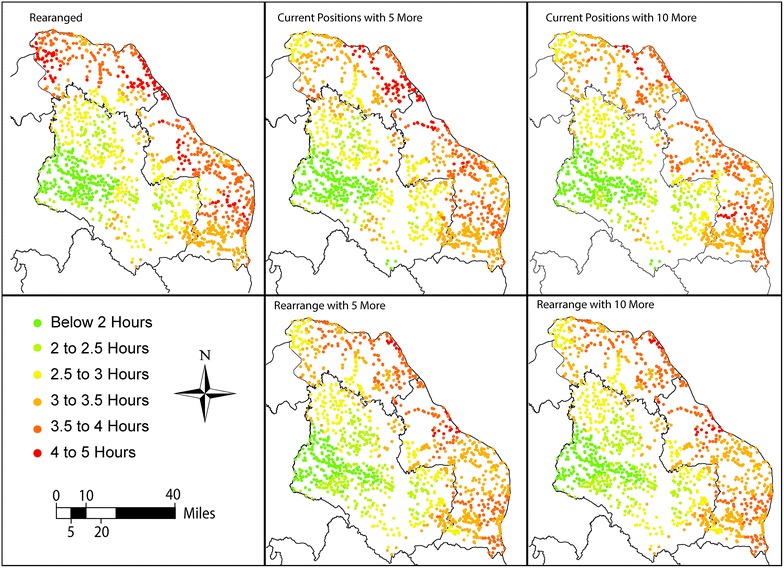
Results indicated that having diagnostic technologies closer to populations streamlines critical care paths. GIS allowed us to compare the effectiveness of the implementation strategies and put into perspective the benefits of adopting rapid POCT within health networks.
Geospatial analyses derive high impact by improving alternative diagnostic placement strategies in limited-resource settings and by revealing deficiencies in health care access pathways. Additionally, the GIS provides a platform for comparing relative costs, assessing benefits, and improving outcomes. This approach can be implemented effectively by health ministries seeking to enhance cardiac care despite limited resources.
快速准确的诊断推动着基于证据的医疗保健。即时检验(POCT)通过将先进技术带到患者身边来辅助诊断。健康小世界网络在资源地理与社会力量之间的互动中受到自然连通性的限制。利用地理信息系统(GIS),我们能够了解人群如何利用其健康网络,直观呈现其低效之处,并比较不同方案。
本项目聚焦于泰国伊桑农村地区的心脏护理资源。利用ArcGIS Network Analyst 10.1,根据代表总人口、道路、卫生资源设施及诊断技术的数据,创建了医疗保健可及性分析。该分析量化了心脏保健可及性,并确定了使用广泛和资源有限策略来改善它的方法。
结果表明,让诊断技术更靠近人群可简化重症护理路径。GIS使我们能够比较实施策略的有效性,并正确看待在健康网络中采用快速POCT的益处。
地理空间分析通过在资源有限的环境中改进替代诊断布局策略以及揭示医疗保健可及性途径中的缺陷,产生了重大影响。此外,GIS提供了一个比较相对成本、评估效益和改善结果的平台。卫生部在资源有限的情况下寻求加强心脏护理时,可以有效地实施这种方法。