Chin Chee Jia, Cooper Aaron R, Lill Georgia R, Evseenko Denis, Zhu Yuhua, He Chong Bin, Casero David, Pellegrini Matteo, Kohn Donald B, Crooks Gay M
Department of Pathology & Laboratory Medicine, David Geffen School of Medicine (DGSOM).
Molecular Biology Interdepartmental PhD Program, DGSOM University of California Los Angeles.
Stem Cells. 2016 May;34(5):1239-50. doi: 10.1002/stem.2351. Epub 2016 Mar 28.
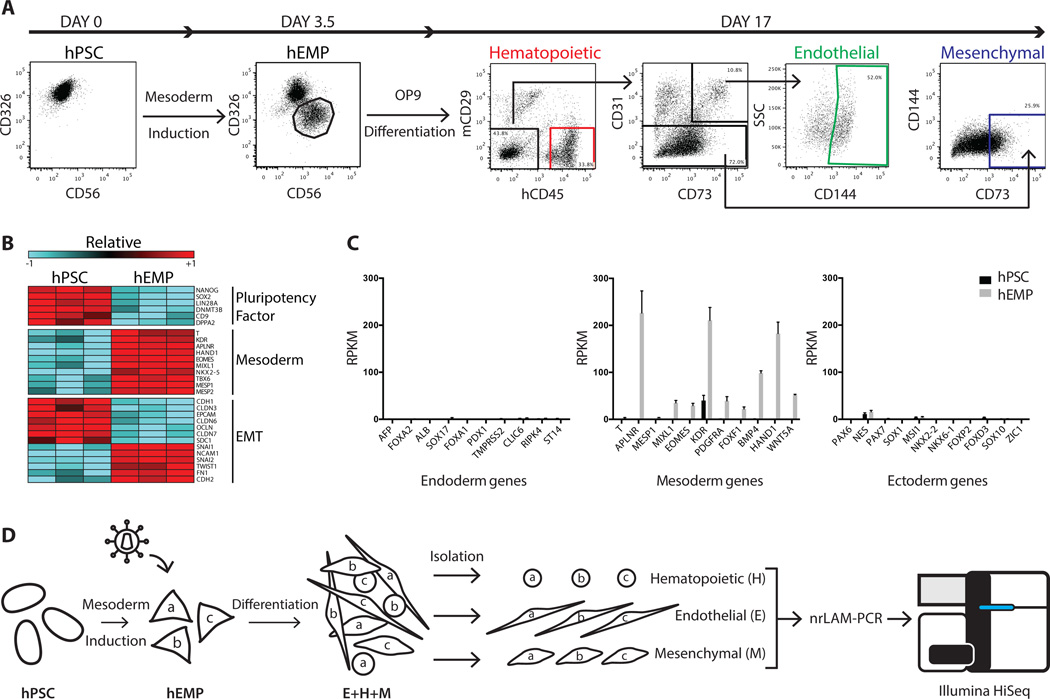
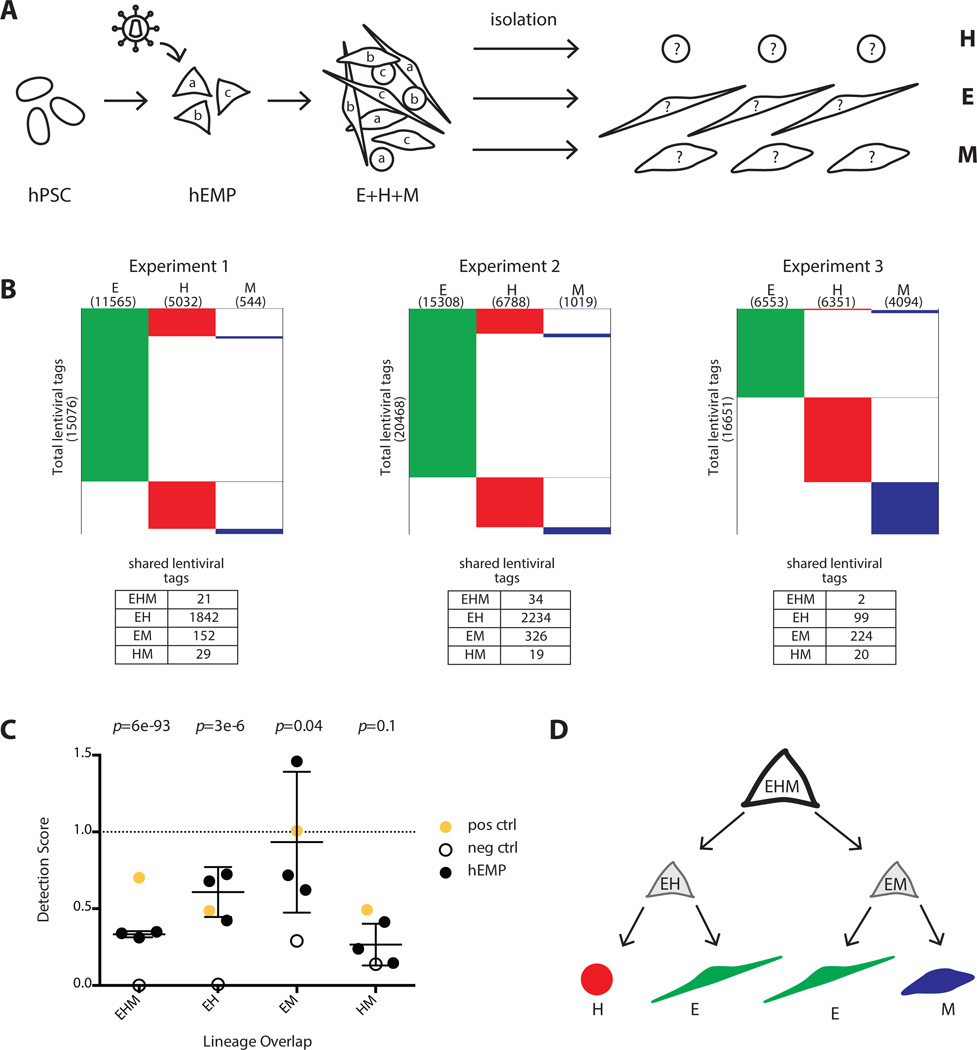
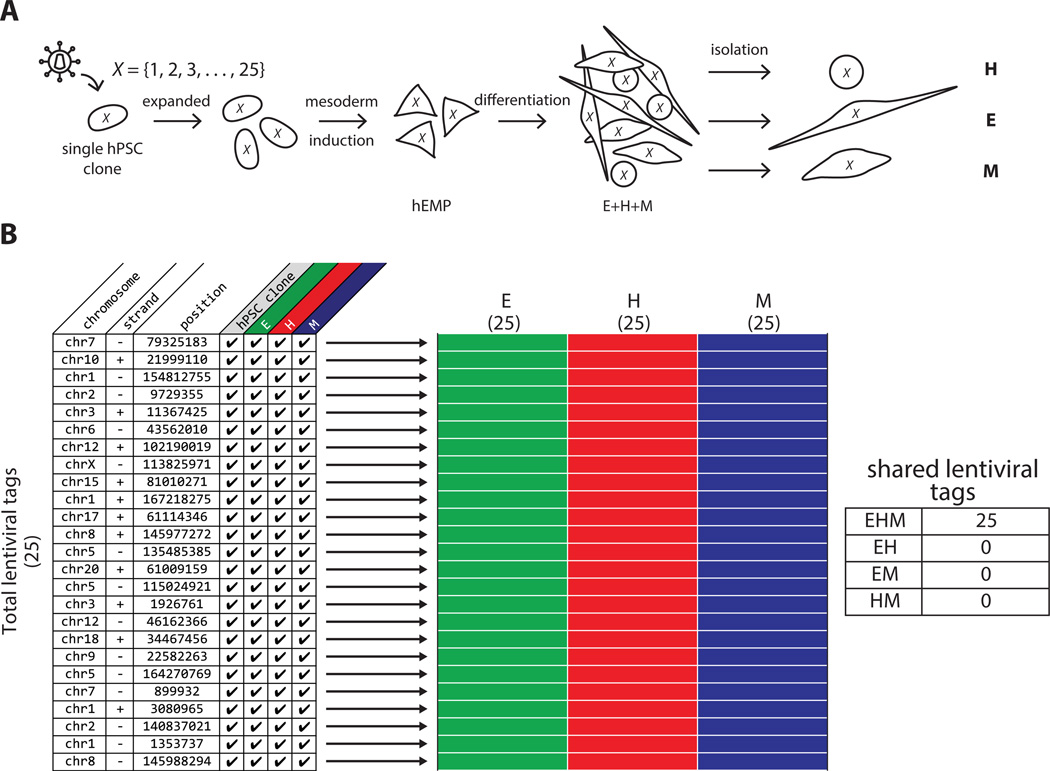
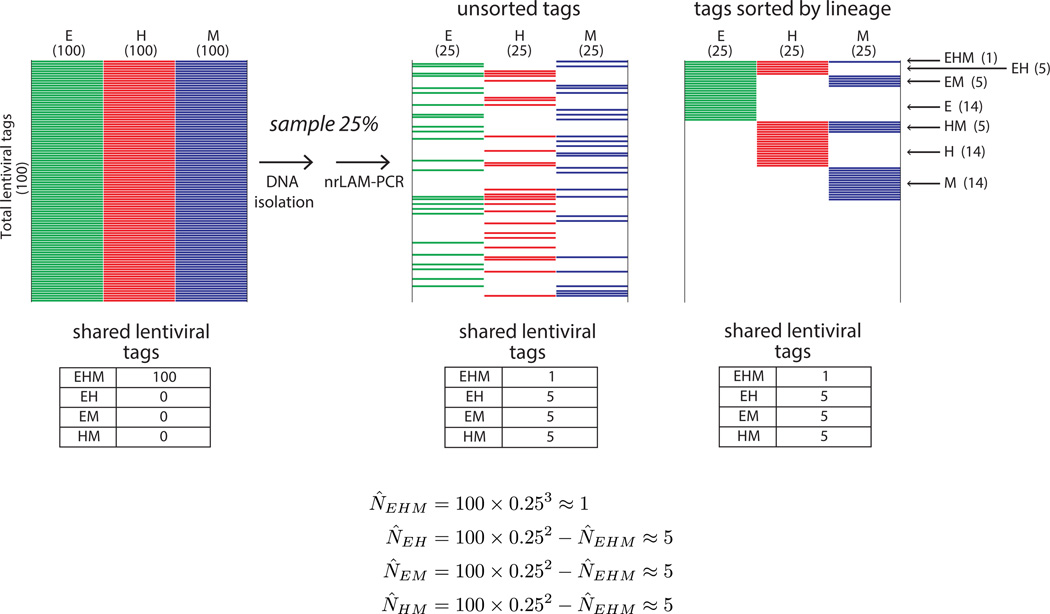
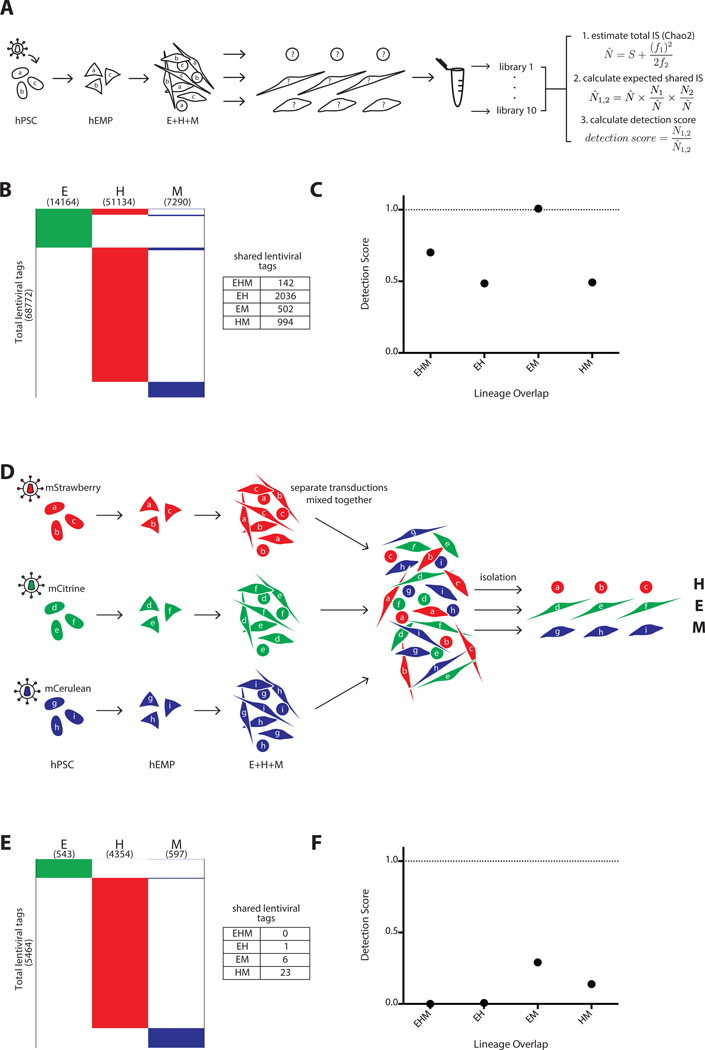
Although clonal studies of lineage potential have been extensively applied to organ specific stem and progenitor cells, much less is known about the clonal origins of lineages formed from the germ layers in early embryogenesis. We applied lentiviral tagging followed by vector integration site analysis (VISA) with high-throughput sequencing to investigate the ontogeny of the hematopoietic, endothelial and mesenchymal lineages as they emerge from human embryonic mesoderm. In contrast to studies that have used VISA to track differentiation of self-renewing stem cell clones that amplify significantly over time, we focused on a population of progenitor clones with limited self-renewal capability. Our analyses uncovered the critical influence of sampling on the interpretation of lentiviral tag sharing, particularly among complex populations with minimal clonal duplication. By applying a quantitative framework to estimate the degree of undersampling we revealed the existence of tripotent mesodermal progenitors derived from pluripotent stem cells, and the subsequent bifurcation of their differentiation into bipotent endothelial/hematopoietic or endothelial/mesenchymal progenitors. Stem Cells 2016;34:1239-1250.
尽管谱系潜能的克隆研究已广泛应用于器官特异性干细胞和祖细胞,但对于早期胚胎发育中由胚层形成的谱系的克隆起源却知之甚少。我们应用慢病毒标记,随后通过高通量测序进行载体整合位点分析(VISA),以研究造血、内皮和间充质谱系从人胚胎中胚层出现时的个体发生。与使用VISA追踪随着时间显著扩增的自我更新干细胞克隆分化的研究不同,我们专注于具有有限自我更新能力的祖细胞克隆群体。我们的分析揭示了采样对慢病毒标签共享解释的关键影响,特别是在克隆复制极少的复杂群体中。通过应用定量框架来估计欠采样程度,我们揭示了源自多能干细胞的三能中胚层祖细胞的存在,以及它们随后分化为双能内皮/造血或内皮/间充质祖细胞的分支情况。《干细胞》2016年;34卷:1239 - 1250页