Hill Yolanda R, Child Nick, Hanson Ben, Wallman Mikael, Coronel Ruben, Plank Gernot, Rinaldi Christopher A, Gill Jaswinder, Smith Nicolas P, Taggart Peter, Bishop Martin J
Department of Biomedical Engineering, Division of Imaging Sciences & Biomedical Engineering, King's College London, London, United Kingdom.
Department of Mechanical Engineering, University College London, London, United Kingdom.
PLoS One. 2016 Mar 2;11(3):e0149342. doi: 10.1371/journal.pone.0149342. eCollection 2016.
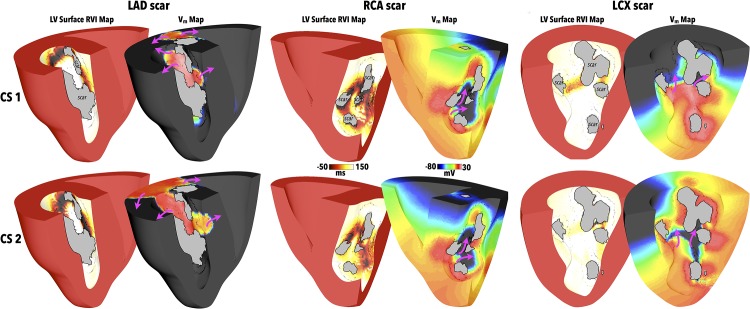
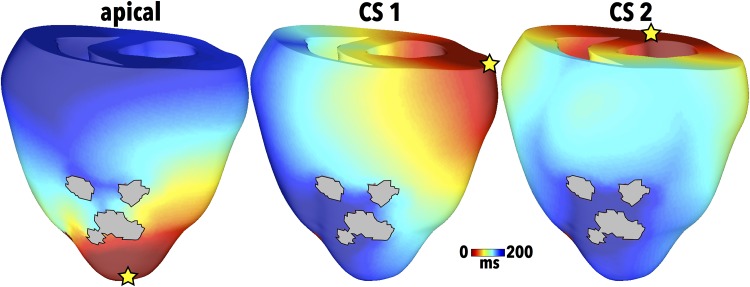
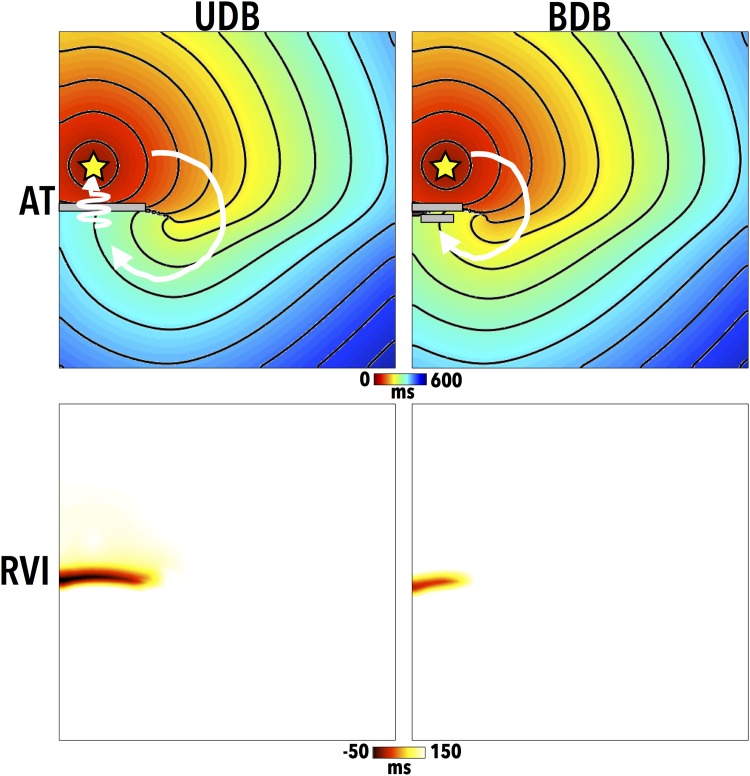
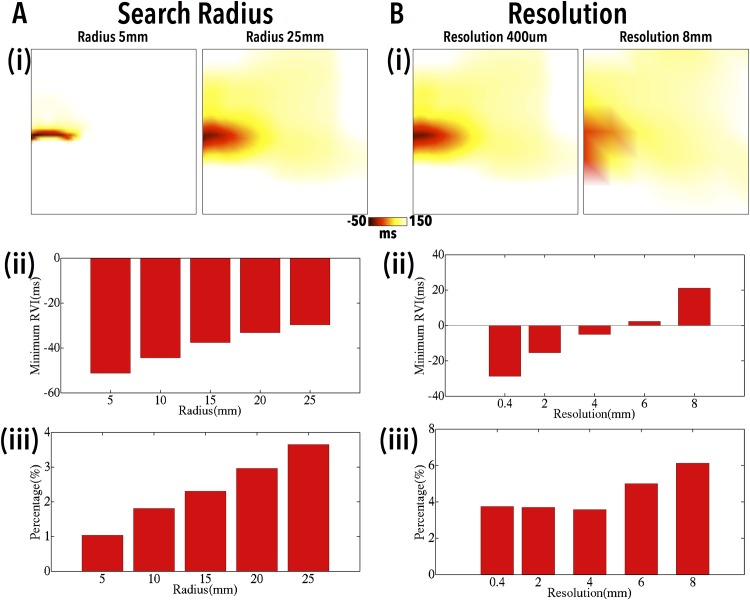
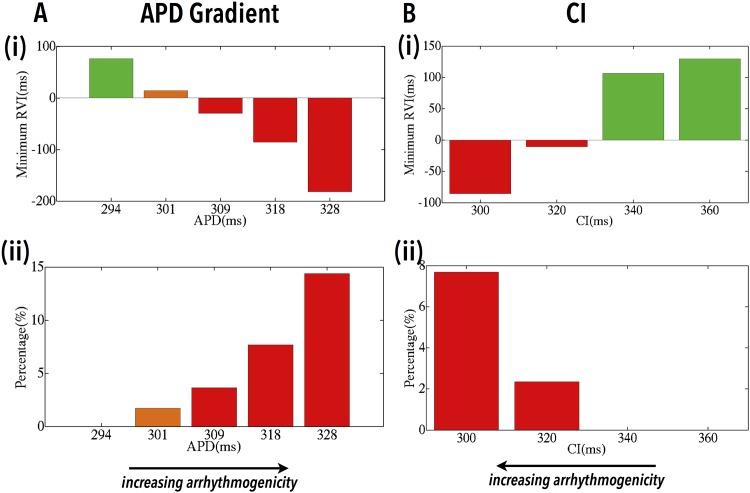
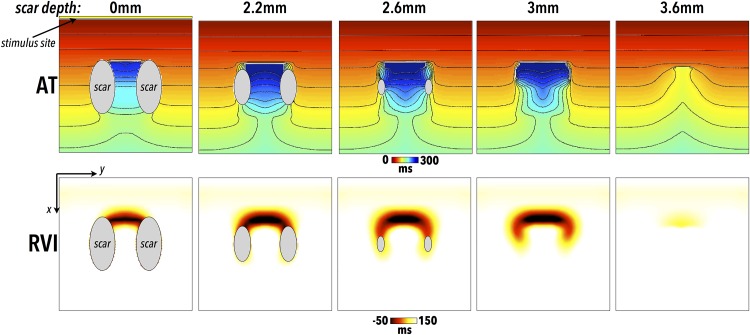
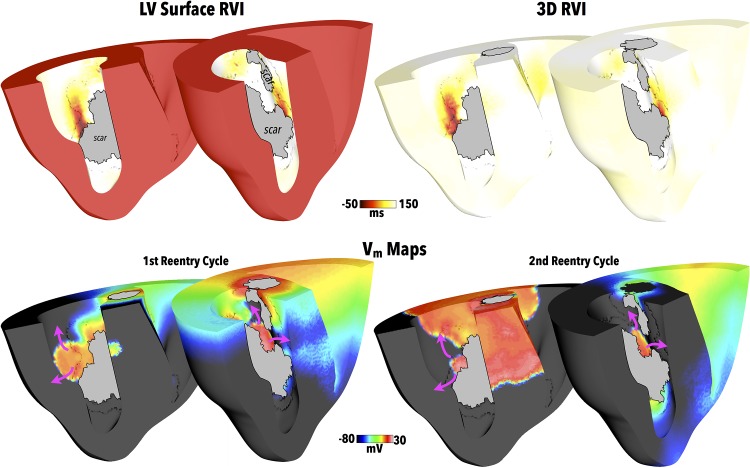
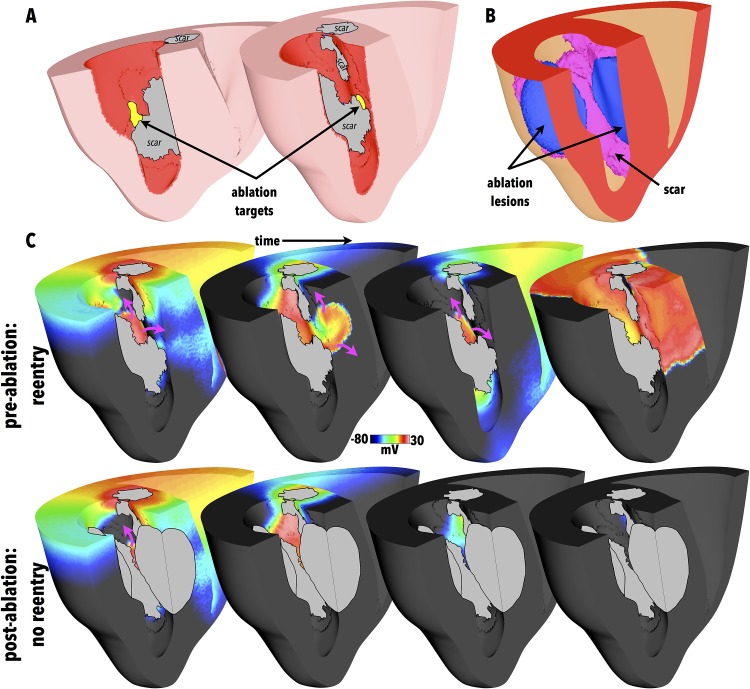
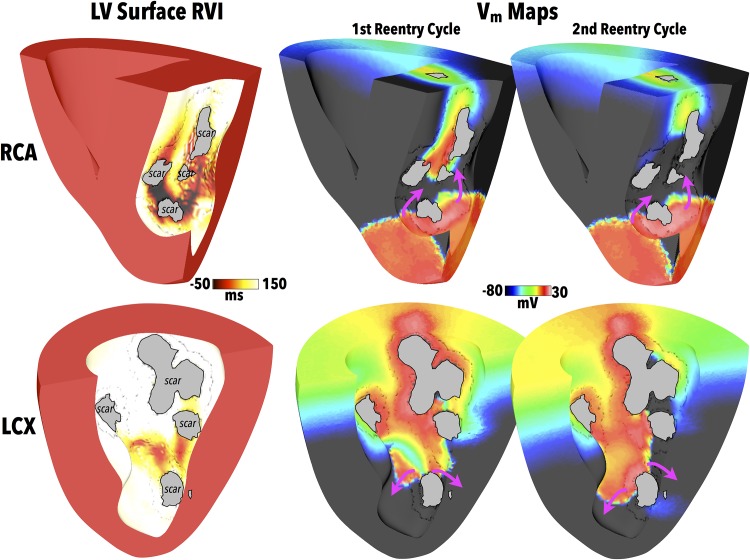
Exit sites associated with scar-related reentrant arrhythmias represent important targets for catheter ablation therapy. However, their accurate location in a safe and robust manner remains a significant clinical challenge. We recently proposed a novel quantitative metric (termed the Reentry Vulnerability Index, RVI) to determine the difference between activation and repolarisation intervals measured from pairs of spatial locations during premature stimulation to accurately locate the critical site of reentry formation. In the clinic, the method showed potential to identify regions of low RVI corresponding to areas vulnerable to reentry, subsequently identified as ventricular tachycardia (VT) circuit exit sites. Here, we perform an in silico investigation of the RVI metric in order to aid the acquisition and interpretation of RVI maps and optimise its future usage within the clinic. Within idealised 2D sheet models we show that the RVI produces lower values under correspondingly more arrhythmogenic conditions, with even low resolution (8 mm electrode separation) recordings still able to locate vulnerable regions. When applied to models of infarct scars, the surface RVI maps successfully identified exit sites of the reentrant circuit, even in scenarios where the scar was wholly intramural. Within highly complex infarct scar anatomies with multiple reentrant pathways, the identified exit sites were dependent upon the specific pacing location used to compute the endocardial RVI maps. However, simulated ablation of these sites successfully prevented the reentry re-initiation. We conclude that endocardial surface RVI maps are able to successfully locate regions vulnerable to reentry corresponding to critical exit sites during sustained scar-related VT. The method is robust against highly complex and intramural scar anatomies and low resolution clinical data acquisition. Optimal location of all relevant sites requires RVI maps to be computed from multiple pacing locations.
与瘢痕相关的折返性心律失常相关的出口部位是导管消融治疗的重要靶点。然而,以安全可靠的方式准确确定其位置仍然是一项重大的临床挑战。我们最近提出了一种新的定量指标(称为折返易损性指数,RVI),用于确定在早搏刺激期间从成对的空间位置测量的激活和复极间隔之间的差异,以准确确定折返形成的关键部位。在临床上,该方法显示出识别低RVI区域的潜力,这些区域对应于易发生折返的区域,随后被确定为室性心动过速(VT)环路出口部位。在此,我们对RVI指标进行了计算机模拟研究,以帮助获取和解释RVI图,并优化其在临床中的未来应用。在理想化的二维薄片模型中,我们表明,在相应更多的致心律失常条件下,RVI产生较低的值,即使是低分辨率(电极间距8mm)记录仍能够定位易损区域。当应用于梗死瘢痕模型时,表面RVI图成功识别了折返环路的出口部位,即使在瘢痕完全位于心肌内的情况下也是如此。在具有多条折返路径的高度复杂梗死瘢痕解剖结构中,识别出的出口部位取决于用于计算心内膜RVI图的特定起搏位置。然而,对这些部位进行模拟消融成功地防止了折返的重新启动。我们得出结论,心内膜表面RVI图能够成功定位与持续性瘢痕相关VT期间关键出口部位相对应的易发生折返的区域。该方法对高度复杂和心肌内瘢痕解剖结构以及低分辨率临床数据采集具有鲁棒性。所有相关部位的最佳定位需要从多个起搏位置计算RVI图。