Lopez-Perez Alejandro, Sebastian Rafael, Izquierdo M, Ruiz Ricardo, Bishop Martin, Ferrero Jose M
Center for Research and Innovation in Bioengineering (Ci2B), Universitat Politècnica de València, Valencia, Spain.
Computational Multiscale Simulation Lab (CoMMLab), Universitat de València, Valencia, Spain.
Front Physiol. 2019 May 15;10:580. doi: 10.3389/fphys.2019.00580. eCollection 2019.
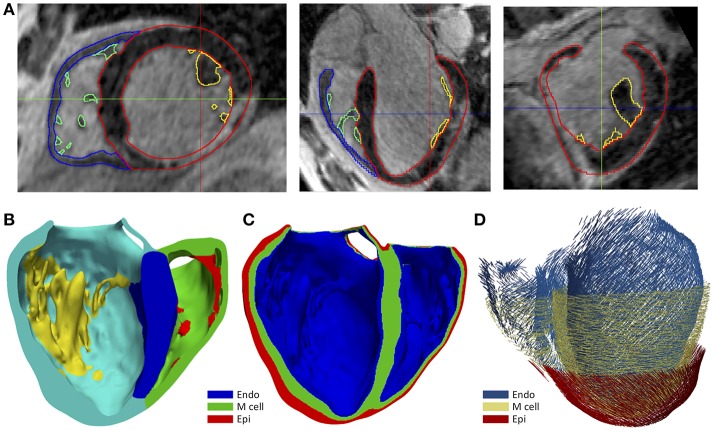
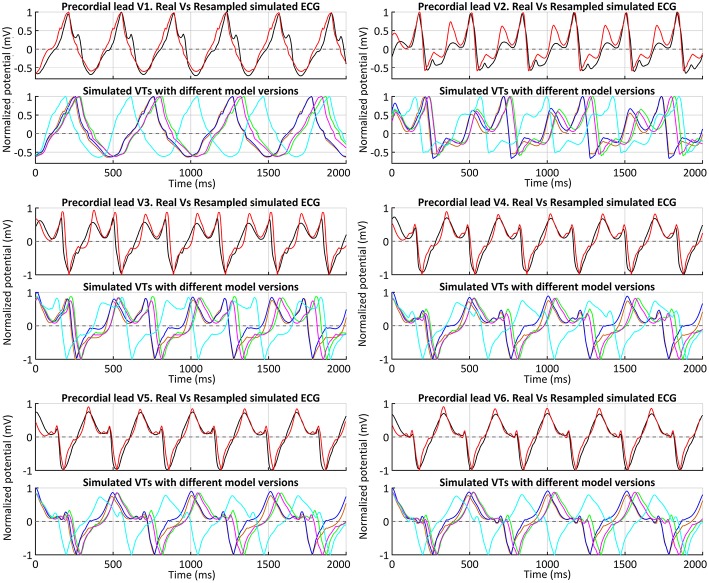
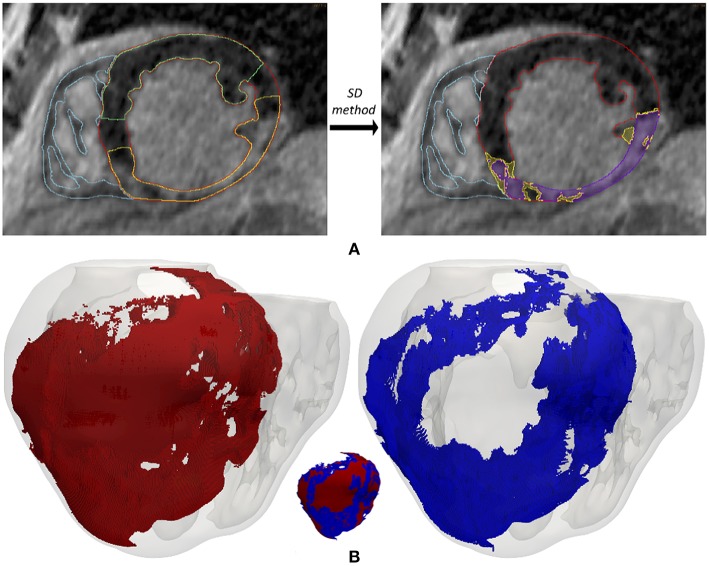
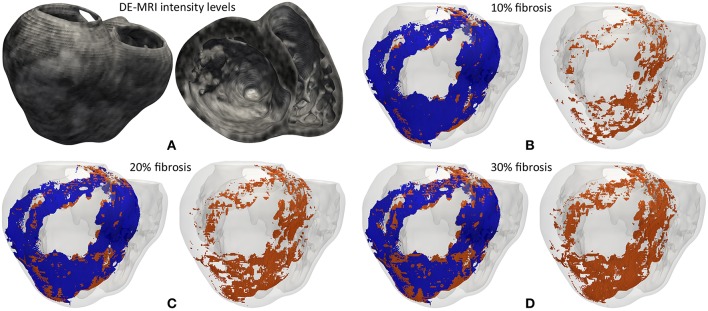
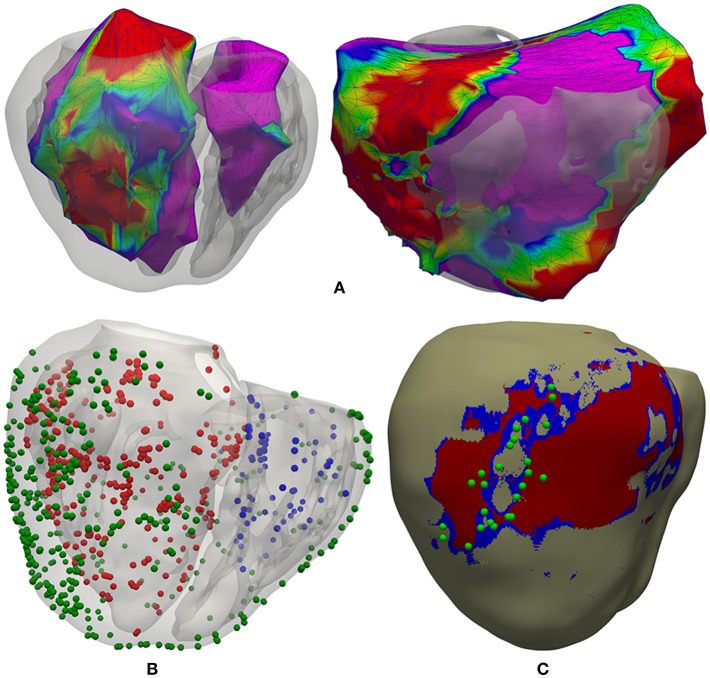
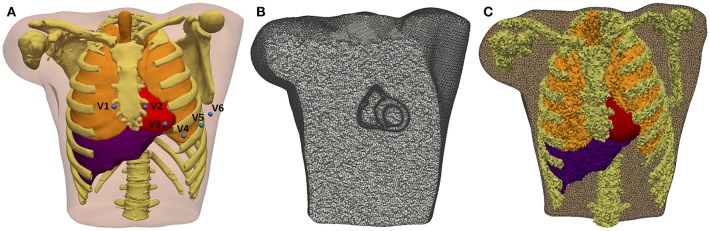
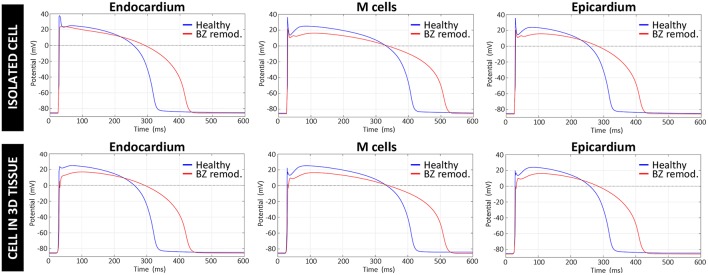
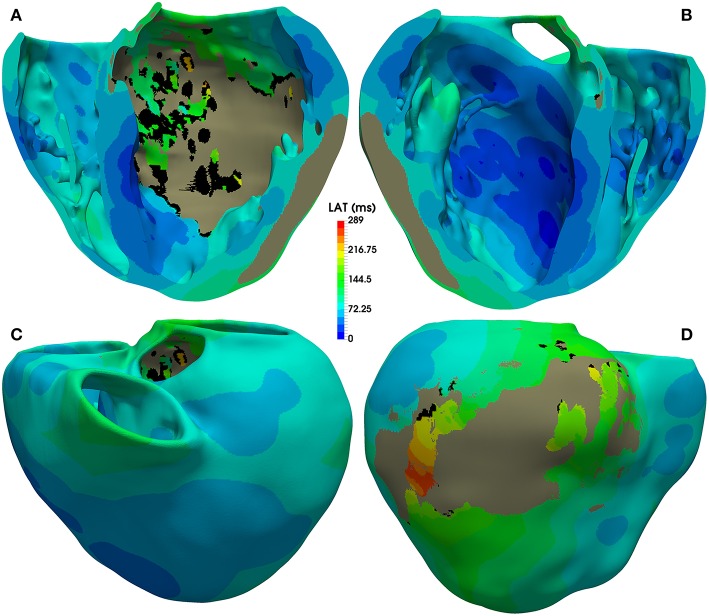
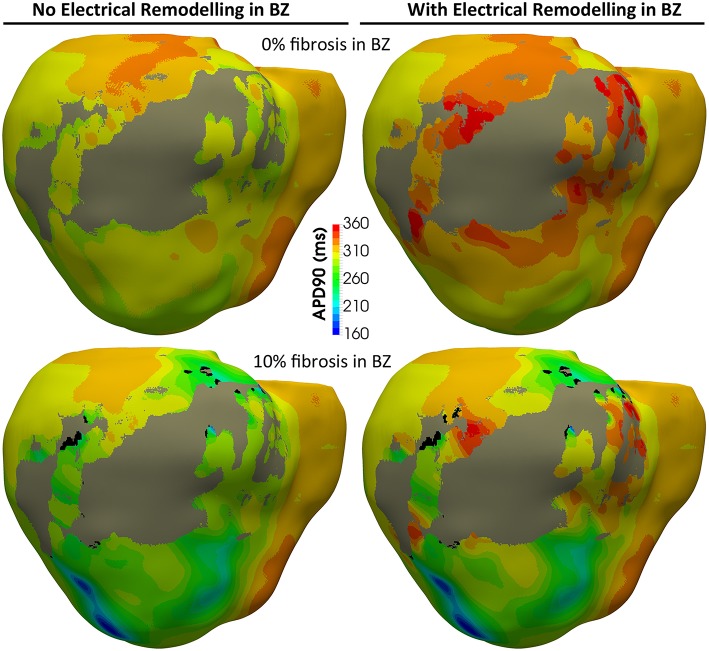
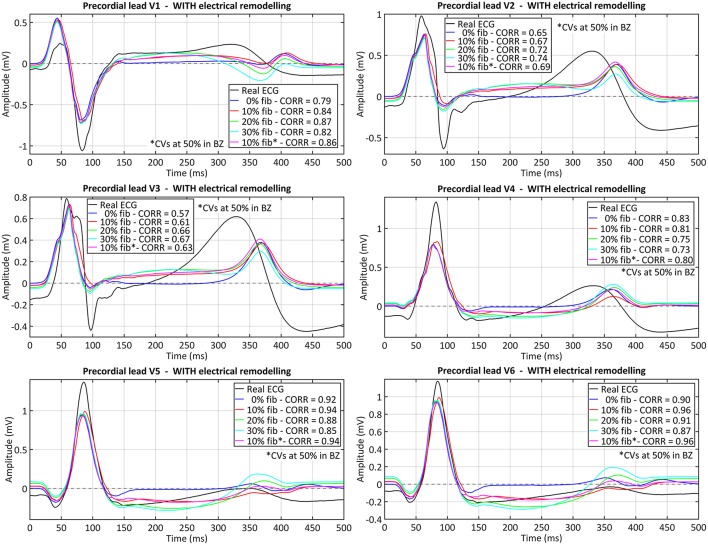
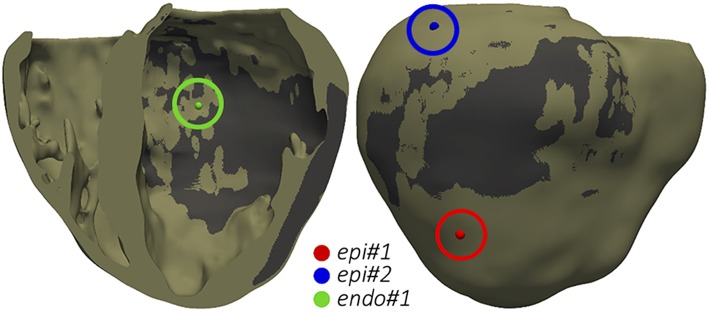
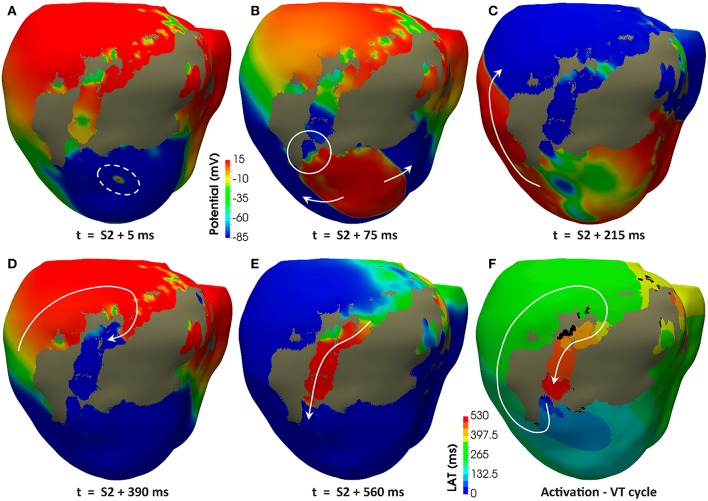
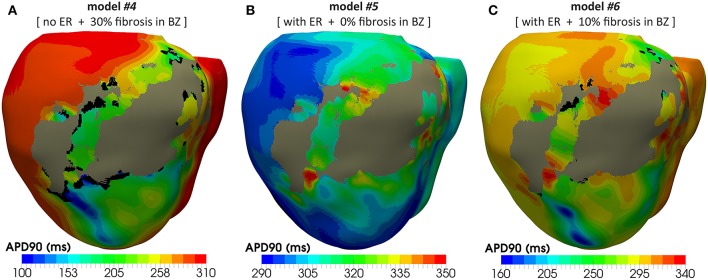
In the chronic stage of myocardial infarction, a significant number of patients develop life-threatening ventricular tachycardias (VT) due to the arrhythmogenic nature of the remodeled myocardium. Radiofrequency ablation (RFA) is a common procedure to isolate reentry pathways across the infarct scar that are responsible for VT. Unfortunately, this strategy show relatively low success rates; up to 50% of patients experience recurrent VT after the procedure. In the last decade, intensive research in the field of computational cardiac electrophysiology (EP) has demonstrated the ability of three-dimensional (3D) cardiac computational models to perform EP studies. However, the personalization and modeling of certain key components remain challenging, particularly in the case of the infarct border zone (BZ). In this study, we used a clinical dataset from a patient with a history of infarct-related VT to build an image-based 3D ventricular model aimed at computational simulation of cardiac EP, including detailed cardiac anatomy and infarct scar geometry. We modeled the BZ in eight different ways by combining the presence or absence of electrical remodeling with four different levels of image-based patchy fibrosis (0, 10, 20, and 30%). A 3D torso model was also constructed to compute the ECG. sinus activation patterns were simulated and validated against the patient's ECG. Subsequently, the pacing protocol used to induce reentrant VTs in the EP laboratory was reproduced . The clinical VT was induced with different versions of the model and from different pacing points, thus identifying the slow conducting channel responsible for such VT. Finally, the real patient's ECG recorded during VT episodes was used to validate our simulation results and to assess different strategies to model the BZ. Our study showed that reduced conduction velocities and heterogeneity in action potential duration in the BZ are the main factors in promoting reentrant activity. Either electrical remodeling or fibrosis in a degree of at least 30% in the BZ were required to initiate VT. Moreover, this proof-of-concept study confirms the feasibility of developing 3D computational models for cardiac EP able to reproduce cardiac activation in sinus rhythm and during VT, using exclusively non-invasive clinical data.
在心肌梗死的慢性阶段,由于心肌重构的致心律失常特性,相当数量的患者会发生危及生命的室性心动过速(VT)。射频消融(RFA)是一种常见的手术,用于隔离导致VT的梗死瘢痕周围的折返路径。不幸的是,这种策略的成功率相对较低;高达50%的患者在手术后会经历VT复发。在过去十年中,心脏计算电生理学(EP)领域的深入研究表明,三维(3D)心脏计算模型能够进行EP研究。然而,某些关键组件的个性化和建模仍然具有挑战性,特别是在梗死边界区(BZ)的情况下。在本研究中,我们使用了一名有梗死相关VT病史患者的临床数据集,构建了一个基于图像的3D心室模型,旨在进行心脏EP的计算模拟,包括详细的心脏解剖结构和梗死瘢痕几何形状。我们通过将电重构的有无与四种不同水平的基于图像的片状纤维化(0%、10%、20%和30%)相结合,以八种不同方式对BZ进行建模。还构建了一个3D躯干模型来计算心电图。模拟窦性激活模式并与患者的心电图进行验证。随后,重现了用于在EP实验室诱发折返性VT的起搏方案。使用不同版本的模型并从不同起搏点诱发临床VT,从而确定导致此类VT的缓慢传导通道。最后,使用VT发作期间记录的真实患者心电图来验证我们的模拟结果,并评估对BZ进行建模的不同策略。我们的研究表明,BZ中传导速度降低和动作电位持续时间的异质性是促进折返活动的主要因素。BZ中至少30%程度的电重构或纤维化是启动VT所必需的。此外,这项概念验证研究证实了仅使用非侵入性临床数据开发用于心脏EP的3D计算模型的可行性,该模型能够在窦性心律和VT期间重现心脏激活。