Maeda Tomoji, Inagaki Manato, Fujita Yu, Kimoto Takehiro, Tanabe-Fujimura Chiaki, Zou Kun, Liu Junjun, Liu Shuyu, Komano Hiroto
Department of Neuroscience, School of Pharmacy, Iwate Medical University, 2-1-1 Yahaba-cho, Shiwa-gun, Iwate 020-3994, Japan
Department of Neuroscience, School of Pharmacy, Iwate Medical University, 2-1-1 Yahaba-cho, Shiwa-gun, Iwate 020-3994, Japan.
Biosci Rep. 2016 Apr 15;36(2). doi: 10.1042/BSR20160054. Print 2016.
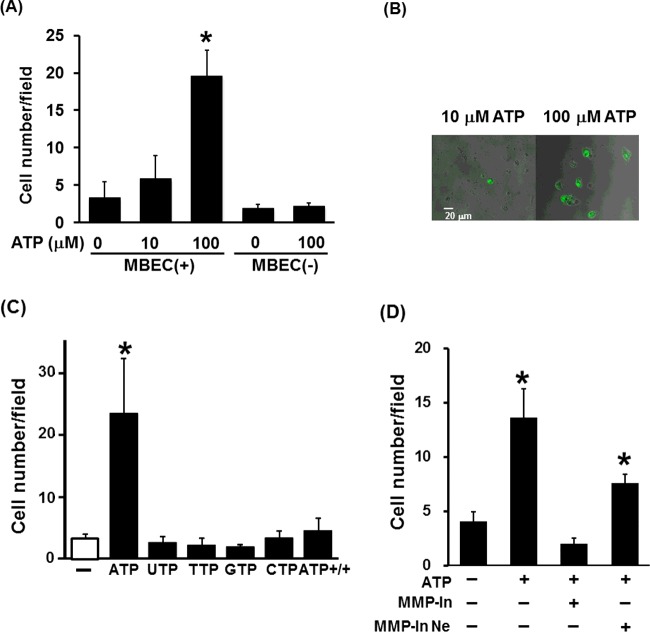
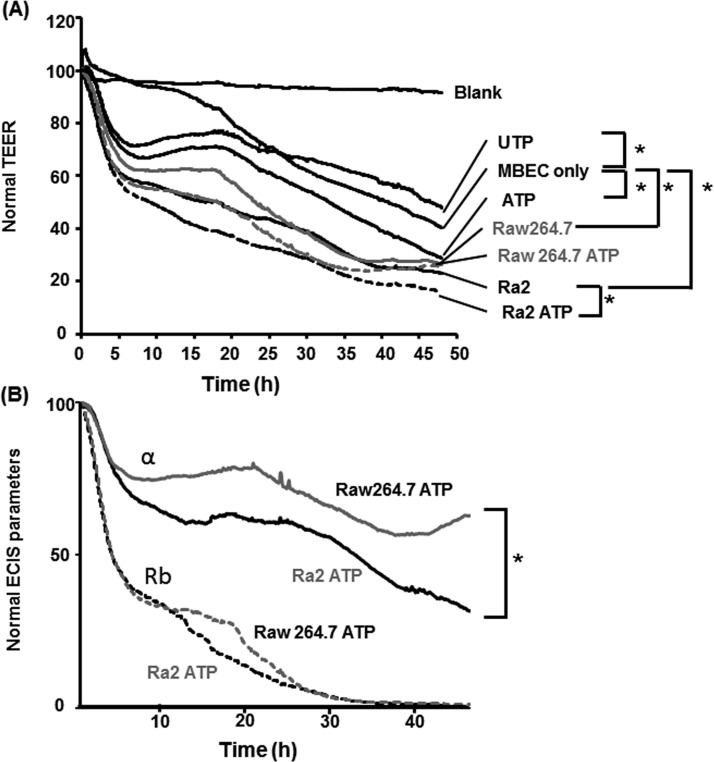
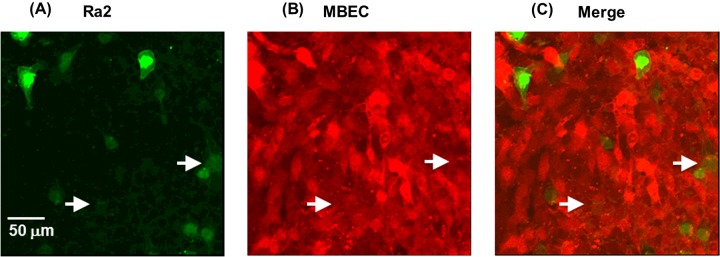
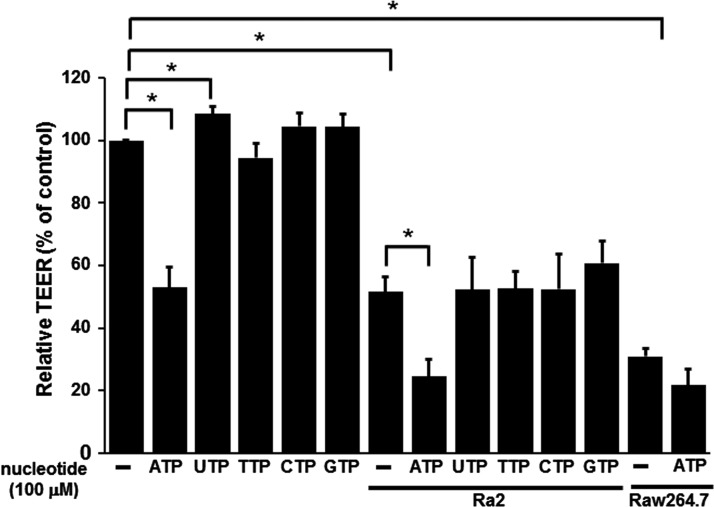
The cerebral microcapillary endothelium, known as the blood-brain barrier (BBB), acts as a barrier between the blood and the interstitial fluid of the brain. The BBB therefore controls the passage of nutrients into the central nervous system (CNS). Microglia show a specific affinity for migration into the CNS, and this migration appears to occur independently of BBB integrity. To study the migration of microglia across the BBB, we developed an in vitro co-culture system of mouse brain endothelial cells (MBECs) and Ra2 microglia using Transwell inserts. We first investigated the influence of microglia or ATP, a microglial chemotactic factor, on MBEC barrier integrity. The addition of microglia or ATP led to the disruption of the MBEC monolayer and significantly decreased barrier function as measured by trans-endothelial electrical resistance (TEER) and electric cell-substrate impedance sensing (ECIS). Furthermore, ATP promoted the migration of microglia but not macrophages across the MBEC monolayer. An inhibitor of matrix metalloproteinases (MMPs) decreased the transmigration of microglia in our system, indicating that MMPs play a role in microglial chemotaxis. We specifically identify a role for microglia-derived MMP-2. In conclusion, we offer evidence that microglia migration across the brain endothelial cell monolayer is increased in the presence of ATP in a manner that involves MMP secretion.
脑微血管内皮细胞,即血脑屏障(BBB),在血液与脑间质液之间起屏障作用。因此,血脑屏障控制着营养物质进入中枢神经系统(CNS)。小胶质细胞对迁移至中枢神经系统表现出特定的亲和力,且这种迁移似乎独立于血脑屏障的完整性而发生。为研究小胶质细胞穿越血脑屏障的迁移情况,我们使用Transwell小室构建了小鼠脑内皮细胞(MBECs)与Ra2小胶质细胞的体外共培养系统。我们首先研究了小胶质细胞或小胶质细胞趋化因子ATP对MBEC屏障完整性的影响。添加小胶质细胞或ATP会导致MBEC单层的破坏,并通过跨内皮电阻(TEER)和细胞-基质阻抗传感(ECIS)测量发现屏障功能显著降低。此外,ATP促进小胶质细胞而非巨噬细胞穿越MBEC单层的迁移。基质金属蛋白酶(MMPs)抑制剂可减少我们系统中小胶质细胞的迁移,表明MMPs在小胶质细胞趋化中发挥作用。我们明确了小胶质细胞衍生的MMP-2的作用。总之,我们提供的证据表明,在ATP存在的情况下,小胶质细胞穿越脑内皮细胞单层的迁移以涉及MMP分泌的方式增加。