O'Gorman Eoin J, Ólafsson Ólafur P, Demars Benoît O L, Friberg Nikolai, Guðbergsson Guðni, Hannesdóttir Elísabet R, Jackson Michelle C, Johansson Liselotte S, McLaughlin Órla B, Ólafsson Jón S, Woodward Guy, Gíslason Gísli M
Department of Life Sciences, Imperial College London, Silwood Park Campus, Buckhurst Road, Ascot, Berkshire, SL5 7PY, UK.
Institute of Life and Environmental Sciences, University of Iceland, Askja, Sturlugata 7, Reykjavík, 101, Iceland.
Glob Chang Biol. 2016 Sep;22(9):3206-20. doi: 10.1111/gcb.13233. Epub 2016 Mar 3.
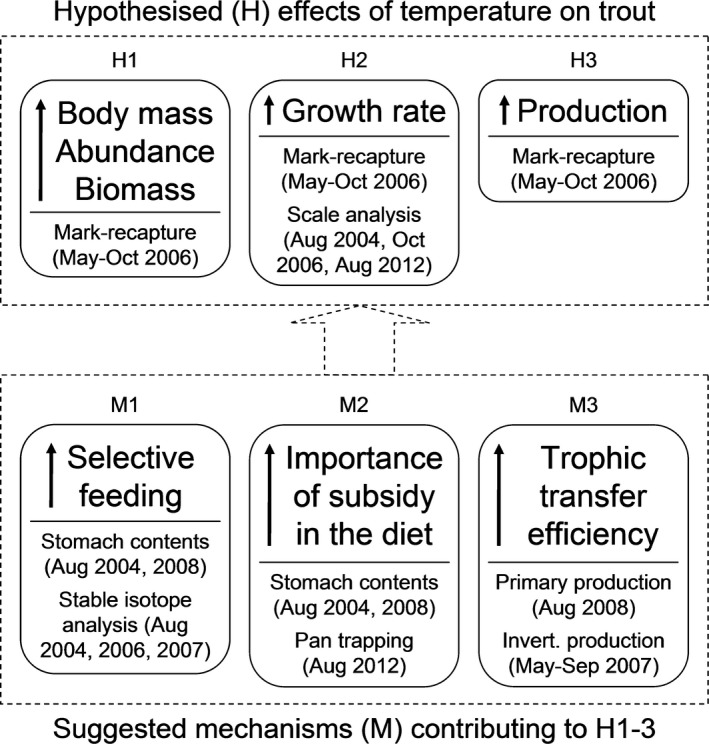
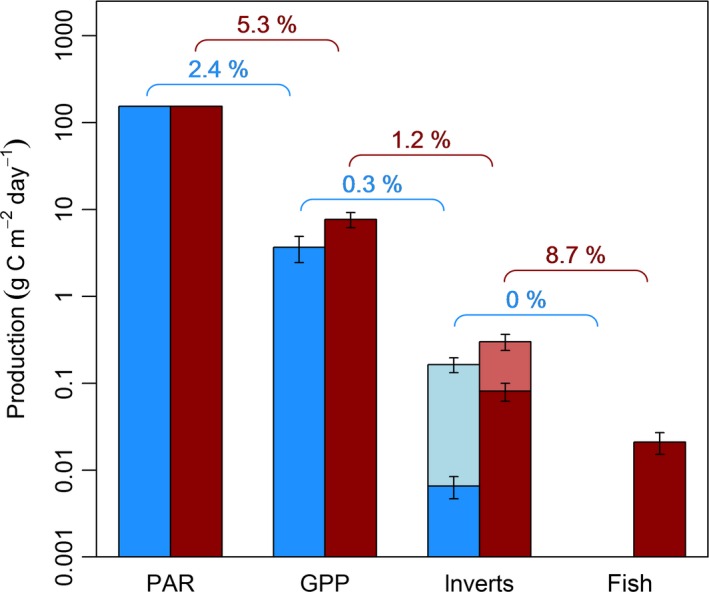
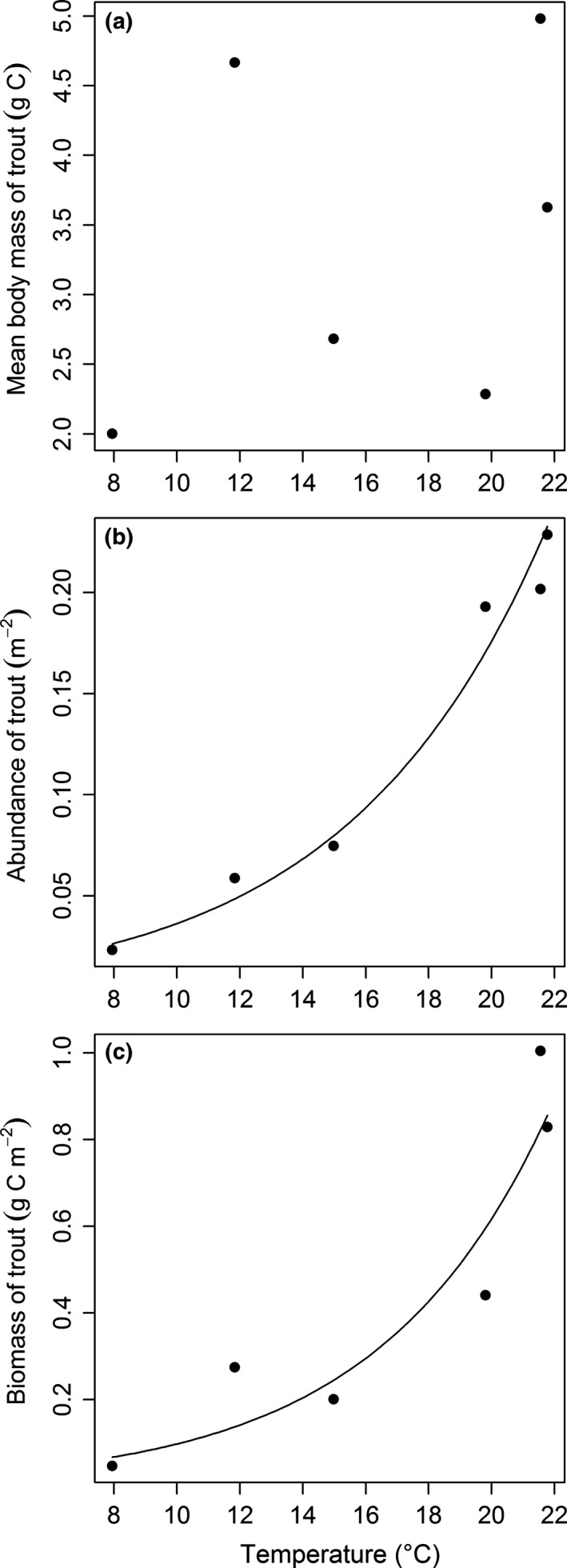
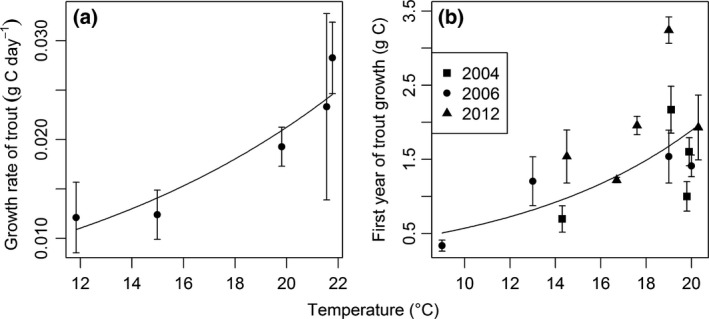
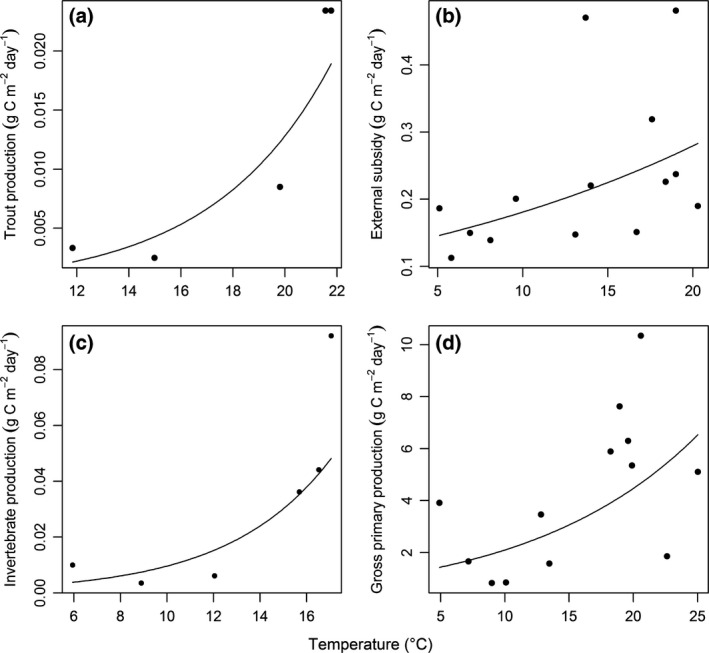
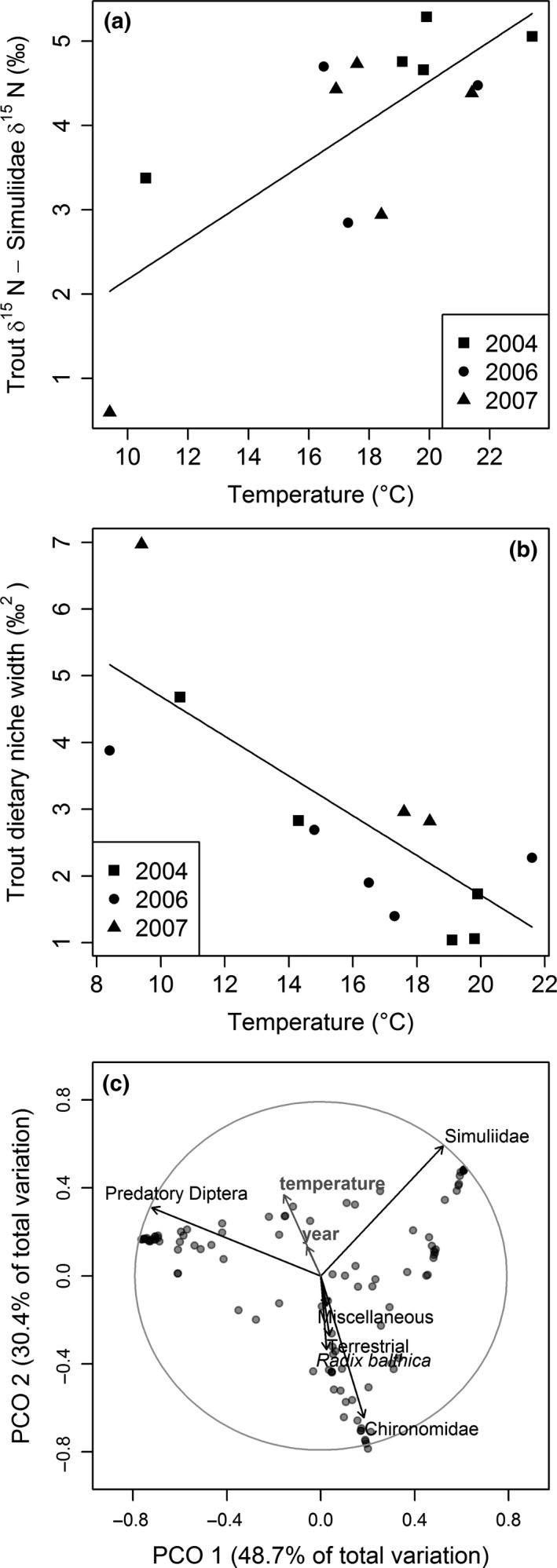
Global warming is widely predicted to reduce the biomass production of top predators, or even result in species loss. Several exceptions to this expectation have been identified, however, and it is vital that we understand the underlying mechanisms if we are to improve our ability to predict future trends. Here, we used a natural warming experiment in Iceland and quantitative theoretical predictions to investigate the success of brown trout as top predators across a stream temperature gradient (4-25 °C). Brown trout are at the northern limit of their geographic distribution in this system, with ambient stream temperatures below their optimum for maximal growth, and above it in the warmest streams. A five-month mark-recapture study revealed that population abundance, biomass, growth rate, and production of trout all increased with stream temperature. We identified two mechanisms that contributed to these responses: (1) trout became more selective in their diet as stream temperature increased, feeding higher in the food web and increasing in trophic position; and (2) trophic transfer through the food web was more efficient in the warmer streams. We found little evidence to support a third potential mechanism: that external subsidies would play a more important role in the diet of trout with increasing stream temperature. Resource availability was also amplified through the trophic levels with warming, as predicted by metabolic theory in nutrient-replete systems. These results highlight circumstances in which top predators can thrive in warmer environments and contribute to our knowledge of warming impacts on natural communities and ecosystem functioning.
普遍预测全球变暖会降低顶级捕食者的生物量产量,甚至导致物种灭绝。然而,已经发现了一些与这一预期不符的情况,而且如果我们想要提高预测未来趋势的能力,了解其潜在机制至关重要。在此,我们利用冰岛的一项自然升温实验和定量理论预测,来研究褐鳟作为顶级捕食者在溪流温度梯度(4-25°C)范围内的生存情况。在这个系统中,褐鳟处于其地理分布的北界,周围溪流温度低于其最大生长的最适温度,而在最温暖的溪流中则高于该温度。一项为期五个月的标记重捕研究表明,鳟鱼的种群数量、生物量、生长率和产量均随溪流温度升高而增加。我们确定了促成这些反应的两种机制:(1)随着溪流温度升高,鳟鱼在饮食上变得更具选择性,在食物网中处于更高位置觅食,营养级升高;(2)在较温暖的溪流中,通过食物网的营养传递效率更高。我们几乎没有找到证据支持第三种潜在机制:随着溪流温度升高,外部补贴在鳟鱼的饮食中会发挥更重要的作用。如营养充足系统中的代谢理论所预测的那样,随着温度升高,资源可用性在各营养级中也得到增强。这些结果突出了顶级捕食者能够在更温暖环境中茁壮成长的情况,并有助于我们了解变暖对自然群落和生态系统功能的影响。