Wang Shuangshou, Yin Danyang, Wang Wenjing, Shen Xiaojing, Zhu Jun-Jie, Chen Hong-Yuan, Liu Zhen
State Key Laboratory of Analytical Chemistry for Life Science, School of Chemistry and Chemical Engineering, Nanjing University, Nanjing 210023, China.
Collaborative Innovation Center of Chemistry for Life Sciences, School of Chemistry and Chemical Engineering, Nanjing University, Nanjing 210023, China.
Sci Rep. 2016 Mar 7;6:22757. doi: 10.1038/srep22757.
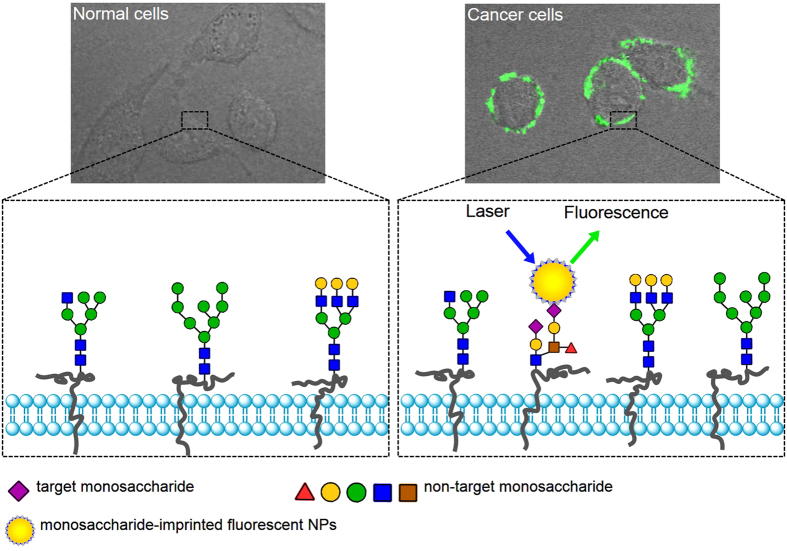
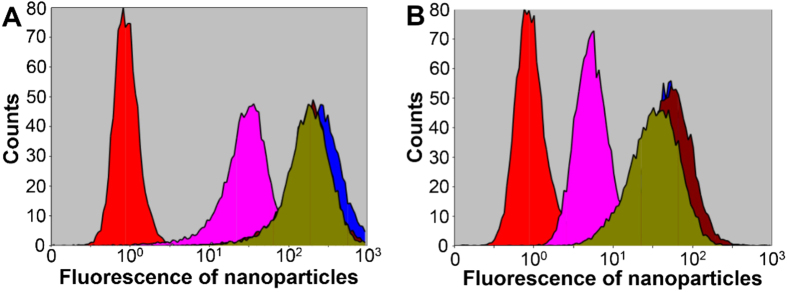
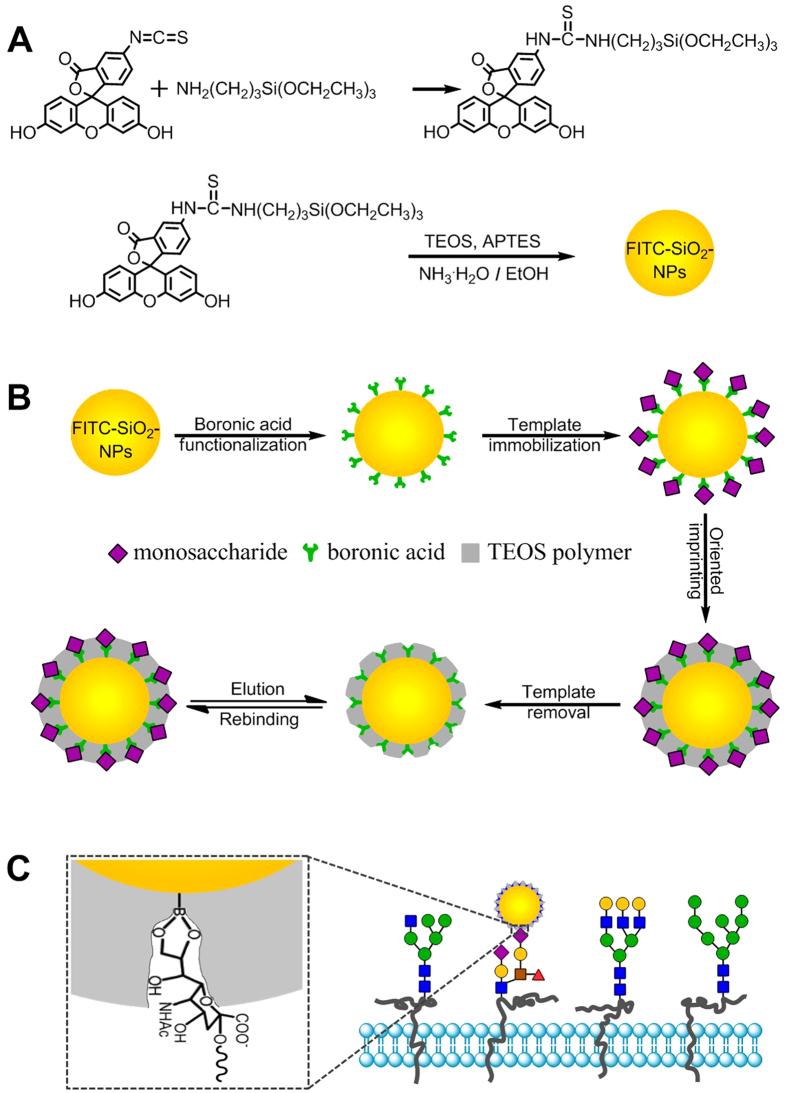
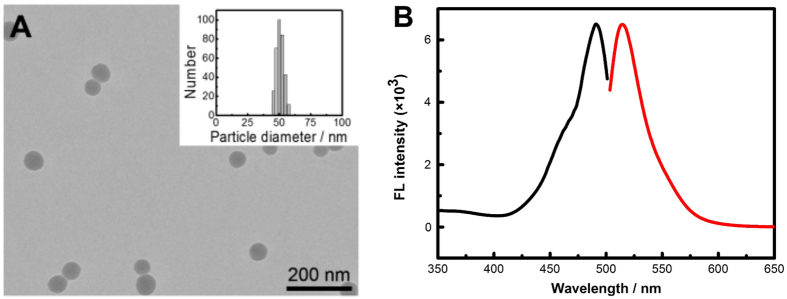
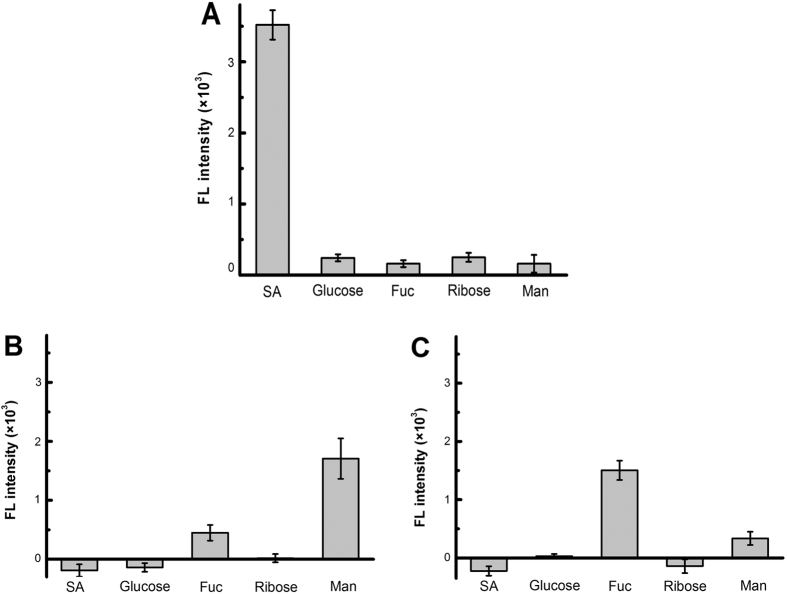
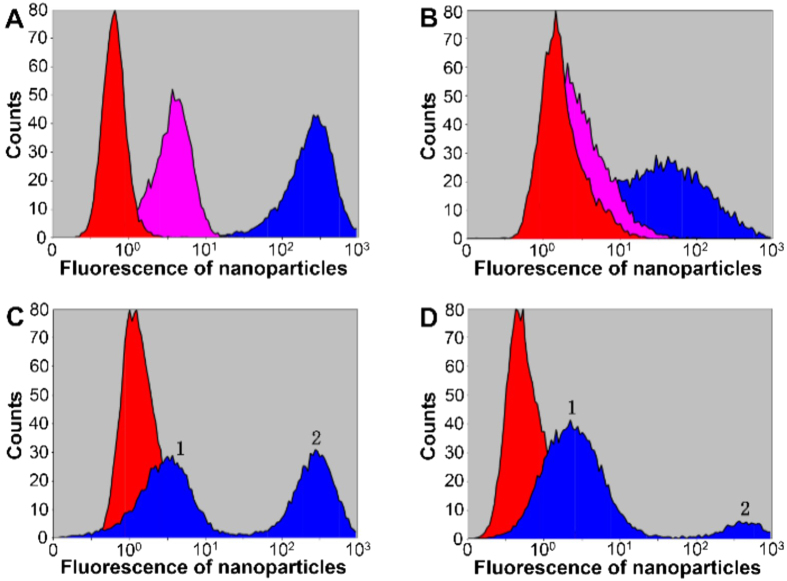
The recognition of cancer cells is a key for cancer diagnosis and therapy, but the specificity highly relies on the use of biorecognition molecules particularly antibodies. Because biorecognition molecules suffer from some apparent disadvantages, such as hard to prepare and poor storage stability, novel alternatives that can overcome these disadvantages are highly important. Here we present monosaccharide-imprinted fluorescent nanoparticles (NPs) for targeting and imaging of cancer cells. The molecularly imprinted polymer (MIP) probe was fluorescein isothiocyanate (FITC) doped silica NPs with a shell imprinted with sialic acid, fucose or mannose as the template. The monosaccharide-imprinted NPs exhibited high specificity toward the target monosaccharides. As the template monosaccharides used are over-expressed on cancer cells, these monosaccharide-imprinted NPs allowed for specific targeting cancer cells over normal cells. Fluorescence imaging of human hepatoma carcinoma cells (HepG-2) over normal hepatic cells (L-02) and mammary cancer cells (MCF-7) over normal mammary epithelial cells (MCF-10A) by these NPs was demonstrated. As the imprinting approach employed herein is generally applicable and highly efficient, monosaccharide-imprinted NPs can be promising probes for targeting cancer cells.
癌细胞的识别是癌症诊断和治疗的关键,但特异性高度依赖于生物识别分子尤其是抗体的使用。由于生物识别分子存在一些明显的缺点,如难以制备和储存稳定性差,因此能够克服这些缺点的新型替代物非常重要。在此,我们展示了用于癌细胞靶向和成像的单糖印迹荧光纳米颗粒(NPs)。分子印迹聚合物(MIP)探针是异硫氰酸荧光素(FITC)掺杂的二氧化硅纳米颗粒,其外壳以唾液酸、岩藻糖或甘露糖为模板进行印迹。单糖印迹纳米颗粒对目标单糖表现出高特异性。由于所使用的模板单糖在癌细胞上过度表达,这些单糖印迹纳米颗粒能够特异性地靶向癌细胞而非正常细胞。通过这些纳米颗粒对人肝癌细胞(HepG - 2)相对于正常肝细胞(L - 02)以及乳腺癌细胞(MCF - 7)相对于正常乳腺上皮细胞(MCF - 10A)进行荧光成像得到了证实。由于本文采用的印迹方法普遍适用且高效,单糖印迹纳米颗粒有望成为靶向癌细胞的探针。