Li Wen-Ru, Shi Qing-Shan, Dai Huan-Qin, Liang Qing, Xie Xiao-Bao, Huang Xiao-Mo, Zhao Guang-Ze, Zhang Li-Xin
State Key Laboratory of Applied Microbiology Southern China, Guangdong Provincial Key Laboratory of Microbial Culture Collection and Application, Guangdong Institute of Microbiology, Guangzhou, 510070, China.
Institute of Microbiology, Chinese Academy of Sciences (CAS), Beijing, 100101, China.
Sci Rep. 2016 Mar 7;6:22805. doi: 10.1038/srep22805.
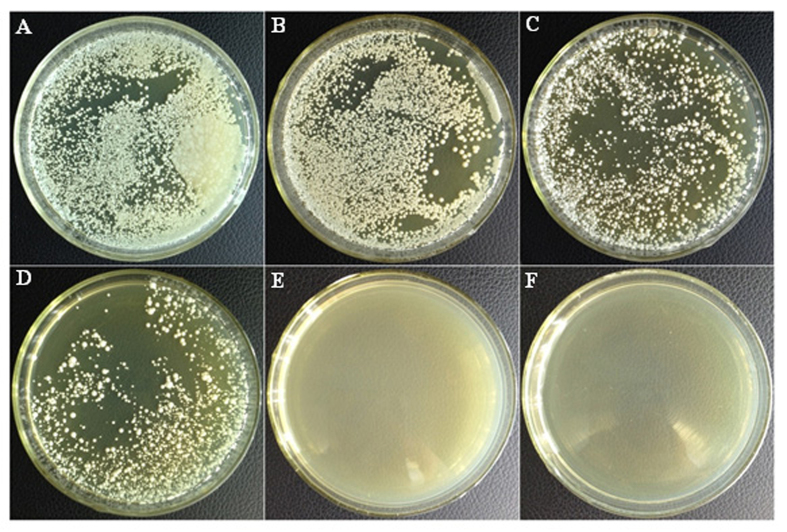
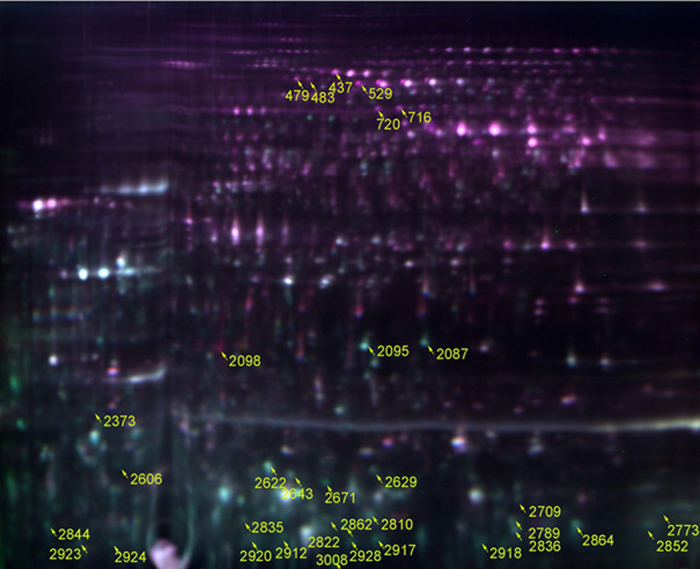
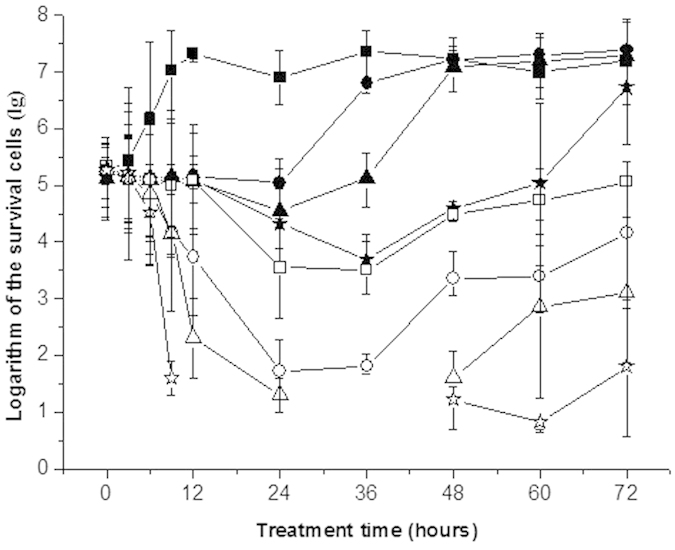
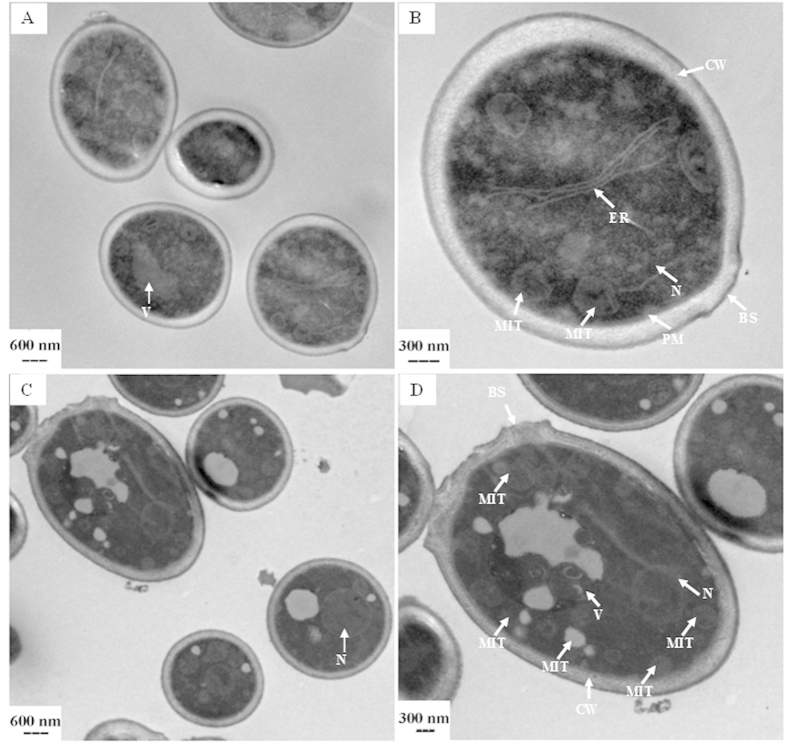
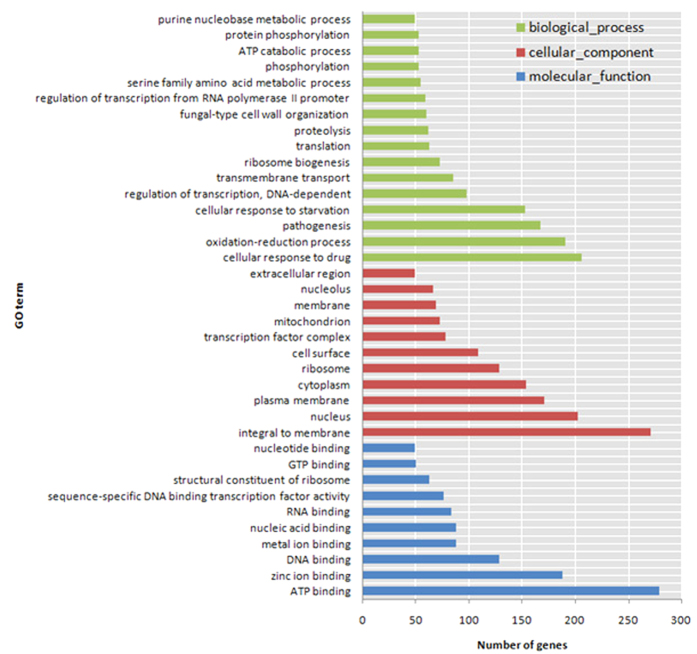
The antifungal activity, kinetics, and molecular mechanism of action of garlic oil against Candida albicans were investigated in this study using multiple methods. Using the poisoned food technique, we determined that the minimum inhibitory concentration of garlic oil was 0.35 μg/mL. Observation by transmission electron microscopy indicated that garlic oil could penetrate the cellular membrane of C. albicans as well as the membranes of organelles such as the mitochondria, resulting in organelle destruction and ultimately cell death. RNA sequencing analysis showed that garlic oil induced differential expression of critical genes including those involved in oxidation-reduction processes, pathogenesis, and cellular response to drugs and starvation. Moreover, the differentially expressed genes were mainly clustered in 19 KEGG pathways, representing vital cellular processes such as oxidative phosphorylation, the spliceosome, the cell cycle, and protein processing in the endoplasmic reticulum. In addition, four upregulated proteins selected after two-dimensional fluorescence difference in gel electrophoresis (2D-DIGE) analysis were identified with high probability by mass spectrometry as putative cytoplasmic adenylate kinase, pyruvate decarboxylase, hexokinase, and heat shock proteins. This is suggestive of a C. albicans stress responses to garlic oil treatment. On the other hand, a large number of proteins were downregulated, leading to significant disruption of the normal metabolism and physical functions of C. albicans.
本研究采用多种方法,对大蒜油抗白色念珠菌的抗真菌活性、动力学及分子作用机制进行了研究。采用毒饵技术,我们测定出大蒜油的最低抑菌浓度为0.35μg/mL。透射电子显微镜观察表明,大蒜油能够穿透白色念珠菌的细胞膜以及线粒体等细胞器膜,导致细胞器破坏并最终引起细胞死亡。RNA测序分析表明,大蒜油诱导了包括参与氧化还原过程、致病机制以及细胞对药物和饥饿反应等关键基因的差异表达。此外,差异表达基因主要聚集在19条京都基因与基因组百科全书(KEGG)通路中,代表了诸如氧化磷酸化、剪接体、细胞周期以及内质网中的蛋白质加工等重要细胞过程。另外,二维荧光差异凝胶电泳(2D-DIGE)分析后选出的4种上调蛋白,通过质谱法被高度鉴定为推定的细胞质腺苷酸激酶、丙酮酸脱羧酶、己糖激酶和热休克蛋白。这表明白色念珠菌对大蒜油处理产生了应激反应。另一方面,大量蛋白质表达下调,导致白色念珠菌的正常代谢和生理功能受到显著破坏。