Wölfle Ute, Elsholz Floriana A, Kersten Astrid, Haarhaus Birgit, Schumacher Udo, Schempp Christoph M
Department of Dermatology, University Medical Center, Freiburg 79104, Germany.
Department of Pharmacology, Biocenter, Goethe-University, Frankfurt 60438, Germany.
Molecules. 2016 Mar 3;21(3):306. doi: 10.3390/molecules21030306.
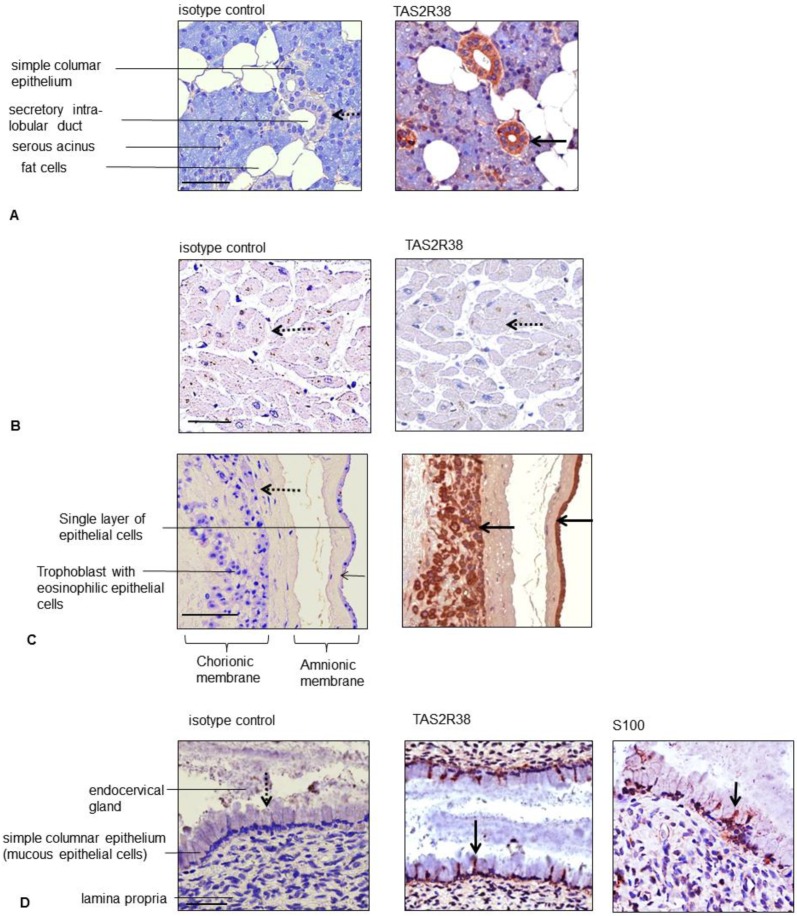
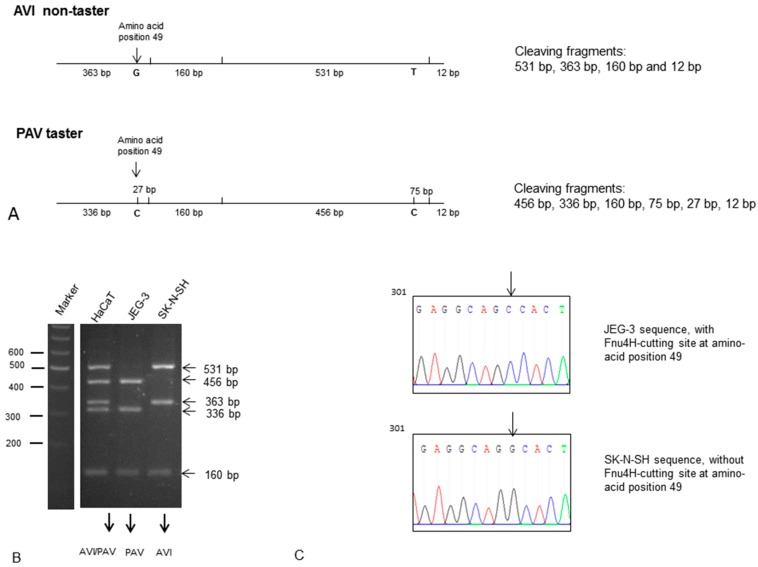
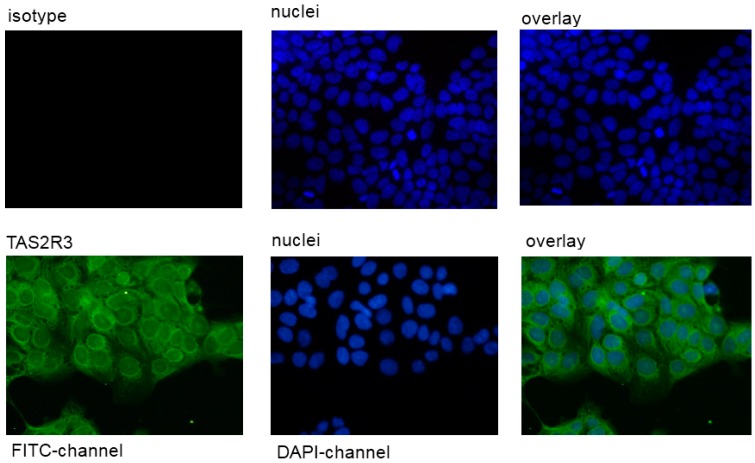
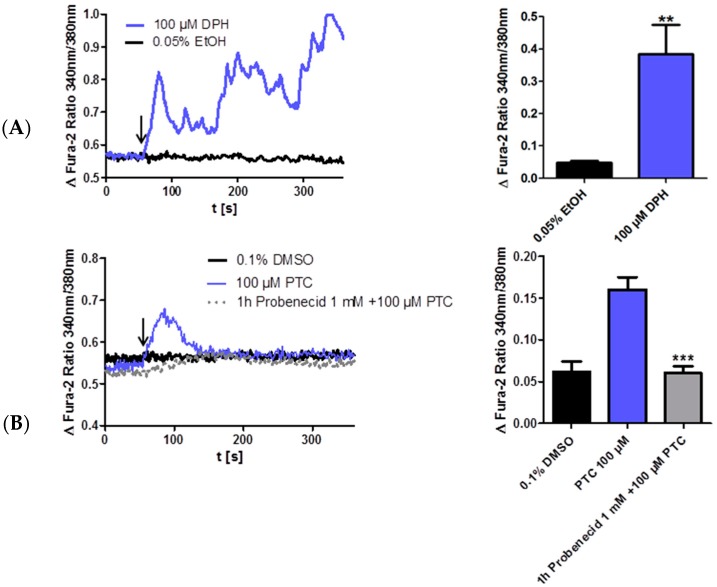
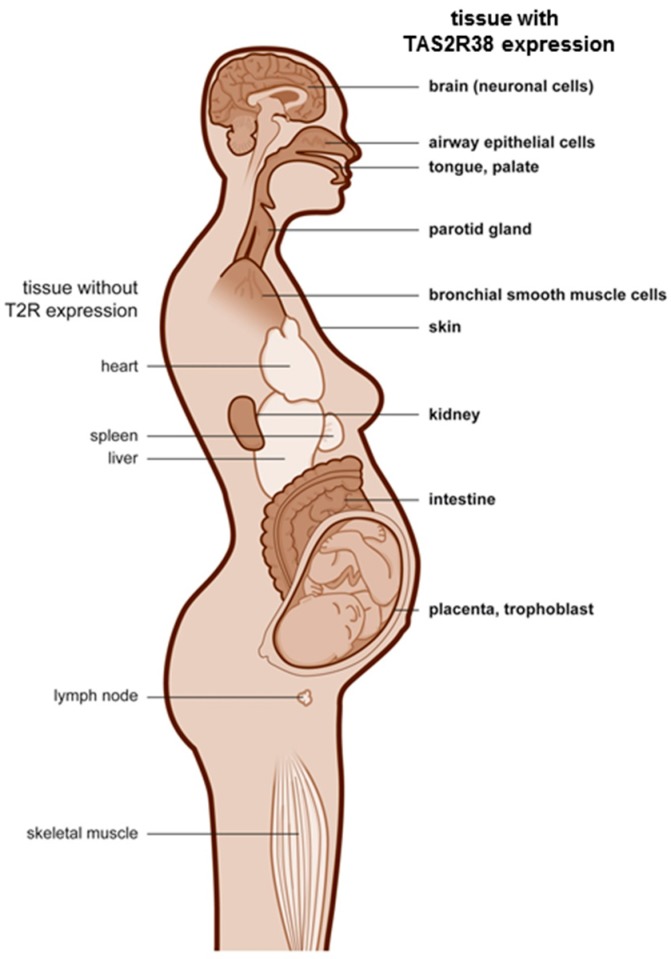
Bitter taste receptors (TAS2Rs) are expressed in mucous epithelial cells of the tongue but also outside the gustatory system in epithelial cells of the colon, stomach and bladder, in the upper respiratory tract, in the cornified squamous epithelium of the skin as well as in airway smooth muscle cells, in the testis and in the brain. In the present work we addressed the question if bitter taste receptors might also be expressed in other epithelial tissues as well. By staining a tissue microarray with 45 tissue spots from healthy human donors with an antibody directed against the best characterized bitter taste receptor TAS2R38, we observed an unexpected strong TAS2R38 expression in the amniotic epithelium, syncytiotrophoblast and decidua cells of the human placenta. To analyze the functionality we first determined the TAS2R38 expression in the placental cell line JEG-3. Stimulation of these cells with diphenidol, a clinically used antiemetic agent that binds TAS2Rs including TAS2R38, demonstrated the functionality of the TAS2Rs by inducing calcium influx. Restriction enzyme based detection of the TAS2R38 gene allele identified JEG-3 cells as PTC (phenylthiocarbamide)-taster cell line. Calcium influx induced by PTC in JEG-3 cells could be inhibited with the recently described TAS2R38 inhibitor probenecid and proved the specificity of the TAS2R38 activation. The expression of TAS2R38 in human placental tissues points to further new functions and hitherto unknown endogenous ligands of TAS2Rs far beyond bitter tasting.
苦味受体(TAS2Rs)表达于舌部的黏液上皮细胞,但也存在于味觉系统之外,如结肠、胃和膀胱的上皮细胞、上呼吸道、皮肤的角质化鳞状上皮以及气道平滑肌细胞、睾丸和大脑中。在本研究中,我们探讨了苦味受体是否也可能在其他上皮组织中表达这一问题。通过用针对特征最明确的苦味受体TAS2R38的抗体对来自健康人类供体的45个组织斑点的组织微阵列进行染色,我们观察到人类胎盘的羊膜上皮、合体滋养层和蜕膜细胞中存在意外的强烈TAS2R38表达。为了分析其功能,我们首先测定了胎盘细胞系JEG-3中的TAS2R38表达。用二苯哌丁醇刺激这些细胞,二苯哌丁醇是一种临床上使用的止吐药,可结合包括TAS2R38在内的TAS2Rs,通过诱导钙内流证明了TAS2Rs的功能。基于限制性内切酶的TAS2R38基因等位基因检测确定JEG-3细胞为苯硫脲(PTC)尝味者细胞系。PTC在JEG-3细胞中诱导的钙内流可被最近描述的TAS2R38抑制剂丙磺舒抑制,证明了TAS2R38激活的特异性。TAS2R38在人胎盘组织中的表达表明TAS2Rs具有进一步的新功能以及迄今未知的内源性配体,远远超出了苦味感知。