Nie Xiao-hu, Ou-yang Jia, Xing Ying, Li Dan-yan, Liu Ru-en, Xu Ru-xiang
Department of Neurosurgery, Huzhou Central Hospital, Huzhou, Zhejiang, People's Republic of China.
Nanchang University Medical College, Nanchang, Jiangxi, People's Republic of China.
Drug Des Devel Ther. 2016 Feb 22;10:767-79. doi: 10.2147/DDDT.S90457. eCollection 2016.
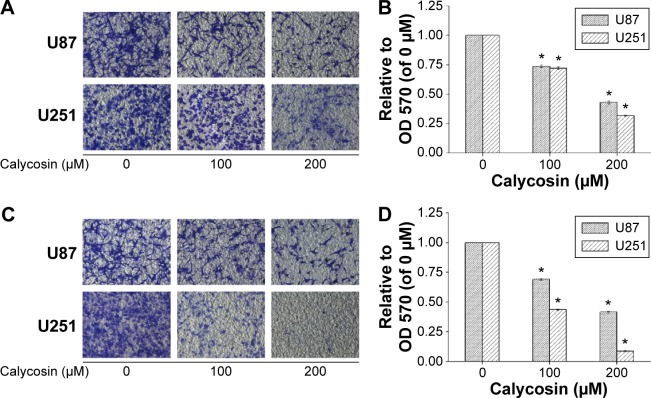
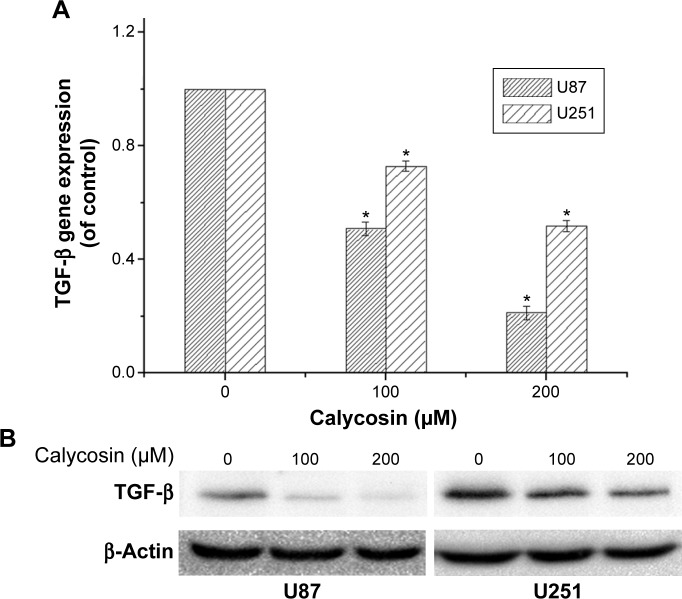
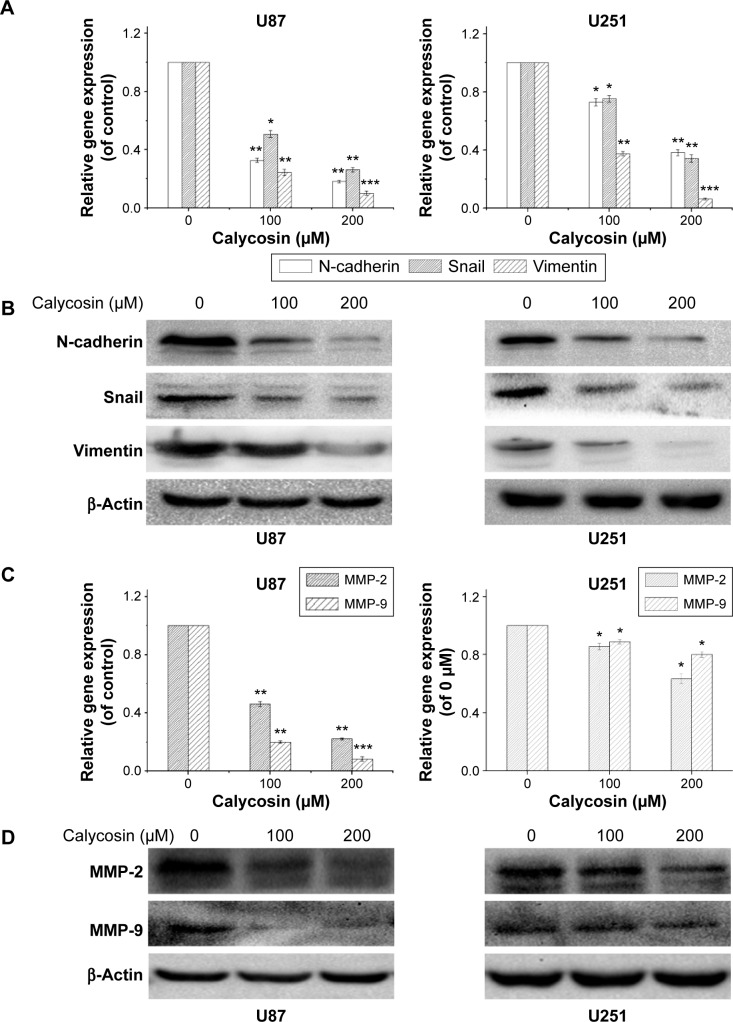
In this study, we investigated the potential anticancer effects of calycosin against human glioblastoma cells, including the impacts on cell proliferation, apoptosis, and cell cycle distribution. We further studied its inhibitory activity on migration and invasion in U87 and U251 cells. Furthermore, transforming growth factor beta-mediated reductions of mesenchymal-associated genes/activators, matrix metalloproteinases-2, and -9 were detected in this process. Administration of calycosin in a glioblastoma xenograft model showed that calycosin could not only reduce tumor volume but also suppress transforming growth factor beta as well as its downstream molecules. These results revealed calycosin as a potential antitumor agent in human glioblastoma.
在本研究中,我们研究了毛蕊异黄酮对人胶质母细胞瘤细胞的潜在抗癌作用,包括对细胞增殖、凋亡和细胞周期分布的影响。我们进一步研究了其对U87和U251细胞迁移和侵袭的抑制活性。此外,在此过程中检测到转化生长因子β介导的间充质相关基因/激活剂、基质金属蛋白酶-2和-9的减少。在胶质母细胞瘤异种移植模型中给予毛蕊异黄酮表明,毛蕊异黄酮不仅可以减小肿瘤体积,还可以抑制转化生长因子β及其下游分子。这些结果表明毛蕊异黄酮是一种潜在的人胶质母细胞瘤抗肿瘤药物。