• 文献检索
  • 文档翻译
  • 深度研究
  • 学术资讯
  • Suppr Zotero 插件Zotero 插件
  • 邀请有礼
  • 套餐&价格
  • 历史记录
应用&插件
Suppr Zotero 插件Zotero 插件浏览器插件Mac 客户端Windows 客户端微信小程序
定价
高级版会员购买积分包购买API积分包
服务
文献检索文档翻译深度研究API 文档MCP 服务
关于我们
关于 Suppr公司介绍联系我们用户协议隐私条款
关注我们

Suppr 超能文献

核心技术专利:CN118964589B侵权必究
粤ICP备2023148730 号-1Suppr @ 2026

文献检索

告别复杂PubMed语法,用中文像聊天一样搜索,搜遍4000万医学文献。AI智能推荐,让科研检索更轻松。

立即免费搜索

文件翻译

保留排版,准确专业,支持PDF/Word/PPT等文件格式,支持 12+语言互译。

免费翻译文档

深度研究

AI帮你快速写综述,25分钟生成高质量综述,智能提取关键信息,辅助科研写作。

立即免费体验

将团簇组装氧化锆表面的纳米级形貌信息转化为机械转导事件可促进神经元分化。

Conversion of nanoscale topographical information of cluster-assembled zirconia surfaces into mechanotransductive events promotes neuronal differentiation.

作者信息

Schulte Carsten, Rodighiero Simona, Cappelluti Martino Alfredo, Puricelli Luca, Maffioli Elisa, Borghi Francesca, Negri Armando, Sogne Elisa, Galluzzi Massimiliano, Piazzoni Claudio, Tamplenizza Margherita, Podestà Alessandro, Tedeschi Gabriella, Lenardi Cristina, Milani Paolo

机构信息

CIMAINA, Dipartimento di Fisica, Università degli Studi di Milano, via Celoria 16, Milan, 20133, Italy.

Fondazione Filarete, via le Ortles 22/4, Milan, 20139, Italy.

出版信息

J Nanobiotechnology. 2016 Mar 9;14:18. doi: 10.1186/s12951-016-0171-3.

DOI:10.1186/s12951-016-0171-3
PMID:26955876
原文链接:https://pmc.ncbi.nlm.nih.gov/articles/PMC4784317/
Abstract

BACKGROUND

Thanks to mechanotransductive components cells are competent to perceive nanoscale topographical features of their environment and to convert the immanent information into corresponding physiological responses. Due to its complex configuration, unraveling the role of the extracellular matrix is particularly challenging. Cell substrates with simplified topographical cues, fabricated by top-down micro- and nanofabrication approaches, have been useful in order to identify basic principles. However, the underlying molecular mechanisms of this conversion remain only partially understood.

RESULTS

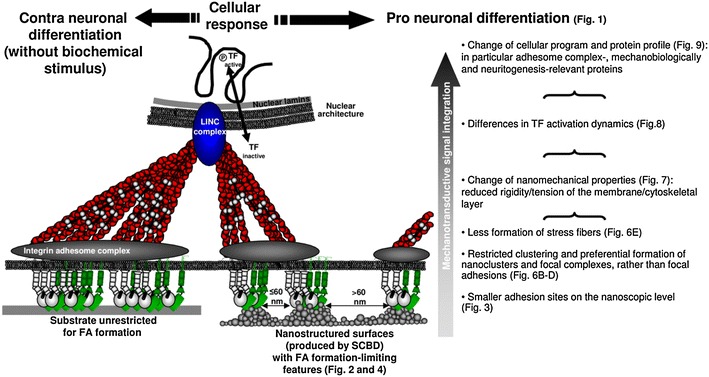
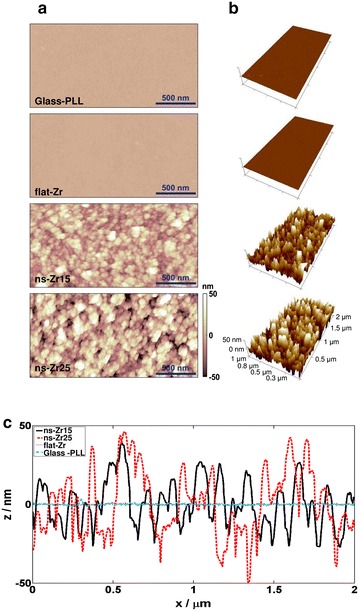
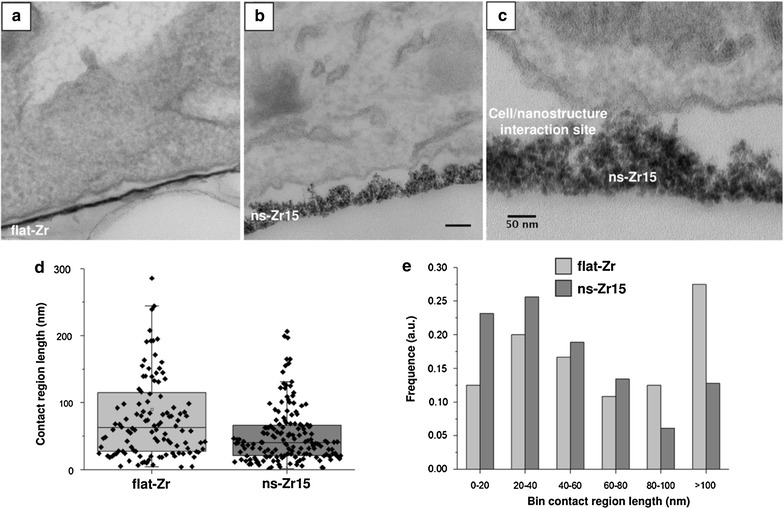
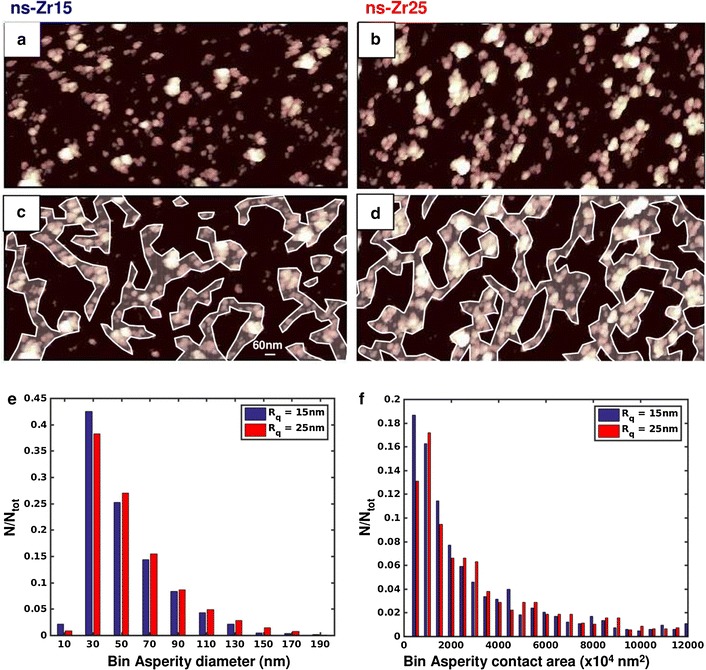
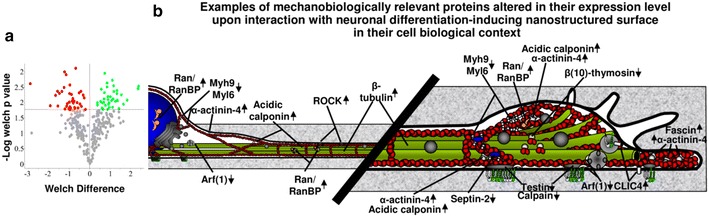
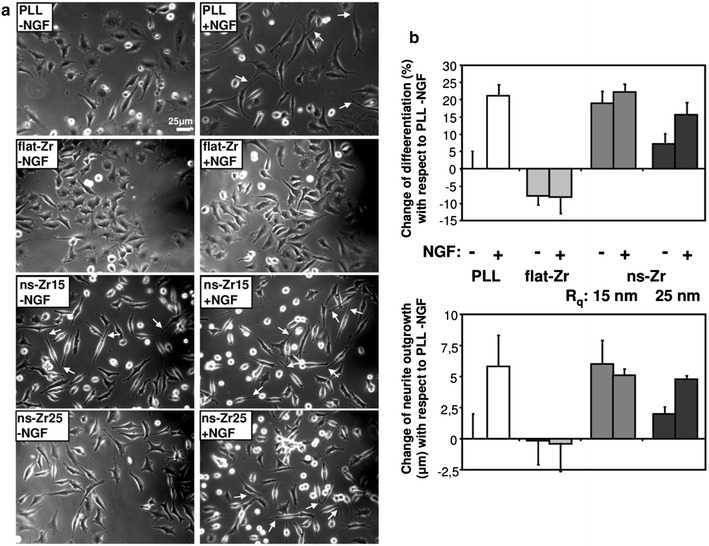
Here we present the results of a broad, systematic and quantitative approach aimed at understanding how the surface nanoscale information is converted into cell response providing a profound causal link between mechanotransductive events, proceeding from the cell/nanostructure interface to the nucleus. We produced nanostructured ZrO2 substrates with disordered yet controlled topographic features by the bottom-up technique supersonic cluster beam deposition, i.e. the assembling of zirconia nanoparticles from the gas phase on a flat substrate through a supersonic expansion. We used PC12 cells, a well-established model in the context of neuronal differentiation. We found that the cell/nanotopography interaction enforces a nanoscopic architecture of the adhesion regions that affects the focal adhesion dynamics and the cytoskeletal organization, which thereby modulates the general biomechanical properties by decreasing the rigidity of the cell. The mechanotransduction impacts furthermore on transcription factors relevant for neuronal differentiation (e.g. CREB), and eventually the protein expression profile. Detailed proteomic data validated the observed differentiation. In particular, the abundance of proteins that are involved in adhesome and/or cytoskeletal organization is striking, and their up- or downregulation is in line with their demonstrated functions in neuronal differentiation processes.

CONCLUSION

Our work provides a deep insight into the molecular mechanotransductive mechanisms that realize the conversion of the nanoscale topographical information of SCBD-fabricated surfaces into cellular responses, in this case neuronal differentiation. The results lay a profound cell biological foundation indicating the strong potential of these surfaces in promoting neuronal differentiation events which could be exploited for the development of prospective research and/or biomedical applications. These applications could be e.g. tools to study mechanotransductive processes, improved neural interfaces and circuits, or cell culture devices supporting neurogenic processes.

摘要

背景

借助机械转导组件,细胞能够感知其周围环境的纳米级地形特征,并将内在信息转化为相应的生理反应。由于细胞外基质的结构复杂,阐明其作用极具挑战性。通过自上而下的微纳加工方法制造的具有简化地形线索的细胞基质,有助于确定基本原理。然而,这种转化的潜在分子机制仍仅被部分理解。

结果

在此,我们展示了一种广泛、系统且定量的方法的结果,旨在理解表面纳米级信息如何转化为细胞反应,从而在从细胞/纳米结构界面到细胞核的机械转导事件之间建立起深刻的因果联系。我们通过自下而上的超音速团簇束沉积技术制备了具有无序但可控地形特征的纳米结构二氧化锆基底,即通过超音速膨胀使气相中的氧化锆纳米颗粒在平坦基底上组装。我们使用了PC12细胞,这是神经元分化领域中一个成熟的模型。我们发现细胞/纳米地形相互作用强化了粘附区域的纳米级结构,这影响了粘着斑动力学和细胞骨架组织,进而通过降低细胞的刚性来调节一般生物力学特性。机械转导还会影响与神经元分化相关的转录因子(如CREB),最终影响蛋白质表达谱。详细的蛋白质组学数据验证了观察到的分化情况。特别是,参与粘着斑和/或细胞骨架组织的蛋白质丰度显著,它们的上调或下调与它们在神经元分化过程中已证实的功能一致。

结论

我们的工作深入洞察了分子机械转导机制,该机制实现了将SCBD制造表面的纳米级地形信息转化为细胞反应,在本研究中即神经元分化。这些结果奠定了深厚的细胞生物学基础,表明这些表面在促进神经元分化事件方面具有强大潜力,可用于前瞻性研究和/或生物医学应用的开发。这些应用例如可以是研究机械转导过程的工具、改进的神经接口和电路,或支持神经发生过程的细胞培养装置。
https://cdn.ncbi.nlm.nih.gov/pmc/blobs/7bff/4784317/df37155f2685/12951_2016_171_Fig10_HTML.jpg
https://cdn.ncbi.nlm.nih.gov/pmc/blobs/7bff/4784317/a782a4e74f6e/12951_2016_171_Fig1_HTML.jpg
https://cdn.ncbi.nlm.nih.gov/pmc/blobs/7bff/4784317/6fc1afddb1fe/12951_2016_171_Fig2_HTML.jpg
https://cdn.ncbi.nlm.nih.gov/pmc/blobs/7bff/4784317/ae0c87d6ff24/12951_2016_171_Fig3_HTML.jpg
https://cdn.ncbi.nlm.nih.gov/pmc/blobs/7bff/4784317/ffc9ae04635a/12951_2016_171_Fig4_HTML.jpg
https://cdn.ncbi.nlm.nih.gov/pmc/blobs/7bff/4784317/c6fe1c4abaf2/12951_2016_171_Fig5_HTML.jpg
https://cdn.ncbi.nlm.nih.gov/pmc/blobs/7bff/4784317/d3ff0da6ad5b/12951_2016_171_Fig6_HTML.jpg
https://cdn.ncbi.nlm.nih.gov/pmc/blobs/7bff/4784317/465bff9b5dfd/12951_2016_171_Fig7_HTML.jpg
https://cdn.ncbi.nlm.nih.gov/pmc/blobs/7bff/4784317/b481f24acce4/12951_2016_171_Fig8_HTML.jpg
https://cdn.ncbi.nlm.nih.gov/pmc/blobs/7bff/4784317/0f726418ca40/12951_2016_171_Fig9_HTML.jpg
https://cdn.ncbi.nlm.nih.gov/pmc/blobs/7bff/4784317/df37155f2685/12951_2016_171_Fig10_HTML.jpg
https://cdn.ncbi.nlm.nih.gov/pmc/blobs/7bff/4784317/a782a4e74f6e/12951_2016_171_Fig1_HTML.jpg
https://cdn.ncbi.nlm.nih.gov/pmc/blobs/7bff/4784317/6fc1afddb1fe/12951_2016_171_Fig2_HTML.jpg
https://cdn.ncbi.nlm.nih.gov/pmc/blobs/7bff/4784317/ae0c87d6ff24/12951_2016_171_Fig3_HTML.jpg
https://cdn.ncbi.nlm.nih.gov/pmc/blobs/7bff/4784317/ffc9ae04635a/12951_2016_171_Fig4_HTML.jpg
https://cdn.ncbi.nlm.nih.gov/pmc/blobs/7bff/4784317/c6fe1c4abaf2/12951_2016_171_Fig5_HTML.jpg
https://cdn.ncbi.nlm.nih.gov/pmc/blobs/7bff/4784317/d3ff0da6ad5b/12951_2016_171_Fig6_HTML.jpg
https://cdn.ncbi.nlm.nih.gov/pmc/blobs/7bff/4784317/465bff9b5dfd/12951_2016_171_Fig7_HTML.jpg
https://cdn.ncbi.nlm.nih.gov/pmc/blobs/7bff/4784317/b481f24acce4/12951_2016_171_Fig8_HTML.jpg
https://cdn.ncbi.nlm.nih.gov/pmc/blobs/7bff/4784317/0f726418ca40/12951_2016_171_Fig9_HTML.jpg
https://cdn.ncbi.nlm.nih.gov/pmc/blobs/7bff/4784317/df37155f2685/12951_2016_171_Fig10_HTML.jpg

相似文献

1
Conversion of nanoscale topographical information of cluster-assembled zirconia surfaces into mechanotransductive events promotes neuronal differentiation.将团簇组装氧化锆表面的纳米级形貌信息转化为机械转导事件可促进神经元分化。
J Nanobiotechnology. 2016 Mar 9;14:18. doi: 10.1186/s12951-016-0171-3.
2
Quantitative Control of Protein and Cell Interaction with Nanostructured Surfaces by Cluster Assembling.通过簇组装对纳米结构表面上的蛋白质和细胞相互作用进行定量控制。
Acc Chem Res. 2017 Feb 21;50(2):231-239. doi: 10.1021/acs.accounts.6b00433. Epub 2017 Jan 24.
3
Proteomic Dissection of Nanotopography-Sensitive Mechanotransductive Signaling Hubs that Foster Neuronal Differentiation in PC12 Cells.对促进PC12细胞神经元分化的纳米拓扑敏感机械转导信号枢纽的蛋白质组学剖析
Front Cell Neurosci. 2018 Jan 4;11:417. doi: 10.3389/fncel.2017.00417. eCollection 2017.
4
Scale Invariant Disordered Nanotopography Promotes Hippocampal Neuron Development and Maturation with Involvement of Mechanotransductive Pathways.尺度不变性紊乱纳米拓扑结构通过机械转导途径促进海马神经元发育和成熟。
Front Cell Neurosci. 2016 Nov 18;10:267. doi: 10.3389/fncel.2016.00267. eCollection 2016.
5
Bottom-up engineering of the surface roughness of nanostructured cubic zirconia to control cell adhesion.通过自下而上的工程方法来控制细胞黏附,调整纳米结构立方氧化锆的表面粗糙度。
Nanotechnology. 2012 Nov 30;23(47):475101. doi: 10.1088/0957-4484/23/47/475101. Epub 2012 Oct 30.
6
Cluster-assembled zirconia substrates promote long-term differentiation and functioning of human islets of Langerhans.簇组装氧化锆基片促进人胰岛细胞的长期分化和功能。
Sci Rep. 2018 Jul 2;8(1):9979. doi: 10.1038/s41598-018-28019-3.
7
Neuronal Cells Confinement by Micropatterned Cluster-Assembled Dots with Mechanotransductive Nanotopography.通过具有机械转导纳米拓扑结构的微图案化团簇组装点对神经元细胞进行限制。
ACS Biomater Sci Eng. 2018 Dec 10;4(12):4062-4075. doi: 10.1021/acsbiomaterials.8b00916. Epub 2018 Nov 28.
8
Involvement of N-cadherin/β-catenin interaction in the micro/nanotopography induced indirect mechanotransduction.N-钙黏蛋白/β-连环蛋白相互作用在微纳形貌诱导的间接机械转导中的作用。
Biomaterials. 2014 Aug;35(24):6206-18. doi: 10.1016/j.biomaterials.2014.04.068. Epub 2014 May 10.
9
The glycocalyx affects the mechanotransductive perception of the topographical microenvironment.糖萼影响拓扑微环境的力传导感知。
J Nanobiotechnology. 2022 Sep 19;20(1):418. doi: 10.1186/s12951-022-01585-5.
10
Nitric oxide synthase mediates PC12 differentiation induced by the surface topography of nanostructured TiO2.一氧化氮合酶介导纳米结构 TiO2 表面形貌诱导的 PC12 分化。
J Nanobiotechnology. 2013 Oct 11;11:35. doi: 10.1186/1477-3155-11-35.

引用本文的文献

1
Substrate topography affects PC12 cell differentiation through mechanotransduction mechanisms.底物拓扑结构通过机械转导机制影响PC12细胞分化。
Mechanobiol Med. 2024 Jan 24;2(1):100039. doi: 10.1016/j.mbm.2024.100039. eCollection 2024 Mar.
2
Automated workflow for the cell cycle analysis of (non-)adherent cells using a machine learning approach.使用机器学习方法对(非)贴壁细胞进行细胞周期分析的自动化工作流程。
Elife. 2024 Nov 22;13:RP94689. doi: 10.7554/eLife.94689.
3
Understanding, engineering, and modulating the growth of neural networks: An interdisciplinary approach.

本文引用的文献

1
Lamellipodial tension, not integrin/ligand binding, is the crucial factor to realise integrin activation and cell migration.片足张力而非整合素/配体结合,是实现整合素激活和细胞迁移的关键因素。
Eur J Cell Biol. 2016 Jan;95(1):1-14. doi: 10.1016/j.ejcb.2015.10.002. Epub 2015 Oct 19.
2
Step-by-step quantitative analysis of focal adhesions.粘着斑的逐步定量分析。
MethodsX. 2014 Jul 7;1:56-9. doi: 10.1016/j.mex.2014.06.004. eCollection 2014.
3
Nanotopographical Surfaces for Stem Cell Fate Control: Engineering Mechanobiology from the Bottom.
理解、构建和调控神经网络的生长:一种跨学科方法。
Biophys Rev (Melville). 2021 Jun 17;2(2):021303. doi: 10.1063/5.0043014. eCollection 2021 Jun.
4
Microfluidic Systems for Neural Cell Studies.用于神经细胞研究的微流控系统
Bioengineering (Basel). 2023 Jul 30;10(8):902. doi: 10.3390/bioengineering10080902.
5
Cluster-Assembled Zirconia Substrates Accelerate the Osteogenic Differentiation of Bone Marrow Mesenchymal Stem Cells.簇组装氧化锆基底促进骨髓间充质干细胞的成骨分化。
Nanomaterials (Basel). 2023 Feb 22;13(5):801. doi: 10.3390/nano13050801.
6
Nanotherapeutic and Stem Cell Therapeutic Strategies in Neurodegenerative Diseases: A Promising Therapeutic Approach.神经退行性疾病的纳米治疗和干细胞治疗策略:一种有前途的治疗方法。
Int J Nanomedicine. 2023 Feb 3;18:611-626. doi: 10.2147/IJN.S395010. eCollection 2023.
7
Nanotopography and Microconfinement Impact on Primary Hippocampal Astrocyte Morphology, Cytoskeleton and Spontaneous Calcium Wave Signalling.纳米形貌和微限制对原代海马星形胶质细胞形态、细胞骨架和自发性钙波信号的影响。
Cells. 2023 Jan 12;12(2):293. doi: 10.3390/cells12020293.
8
Phosphoproteomic mapping of CCR5 and ACKR2 signaling properties.CCR5和ACKR2信号特性的磷酸化蛋白质组学图谱分析
Front Mol Biosci. 2022 Nov 22;9:1060555. doi: 10.3389/fmolb.2022.1060555. eCollection 2022.
9
Mechanotransductive Receptor Piezo1 as a Promising Target in the Treatment of Neurological Diseases.机械转导受体 Piezo1 作为治疗神经疾病的有前途的靶点。
Curr Neuropharmacol. 2023;21(10):2030-2035. doi: 10.2174/1570159X20666220927103454.
10
The glycocalyx affects the mechanotransductive perception of the topographical microenvironment.糖萼影响拓扑微环境的力传导感知。
J Nanobiotechnology. 2022 Sep 19;20(1):418. doi: 10.1186/s12951-022-01585-5.
用于干细胞命运控制的纳米拓扑表面:从底层构建机械生物学
Nano Today. 2014 Dec 1;9(6):759-784. doi: 10.1016/j.nantod.2014.12.002.
4
Nanomechanical and topographical imaging of living cells by atomic force microscopy with colloidal probes.利用胶体探针原子力显微镜对活细胞进行纳米力学和形貌成像。
Rev Sci Instrum. 2015 Mar;86(3):033705. doi: 10.1063/1.4915896.
5
Emerging properties of adhesion complexes: what are they and what do they do?黏附复合物的新兴特性:它们是什么,又有何作用?
Trends Cell Biol. 2015 Jul;25(7):388-97. doi: 10.1016/j.tcb.2015.02.008. Epub 2015 Mar 27.
6
Application of biomaterials to advance induced pluripotent stem cell research and therapy.生物材料在推进诱导多能干细胞研究与治疗中的应用。
EMBO J. 2015 Apr 15;34(8):987-1008. doi: 10.15252/embj.201490756. Epub 2015 Mar 12.
7
Measurement of subcellular force generation in neurons.神经元中亚细胞力产生的测量。
Biophys J. 2015 Mar 10;108(5):1027-37. doi: 10.1016/j.bpj.2015.01.021.
8
ARF1 regulates adhesion of MDA-MB-231 invasive breast cancer cells through formation of focal adhesions.ARF1通过形成粘着斑来调节MDA-MB-231侵袭性乳腺癌细胞的粘附。
Cell Signal. 2015 Mar;27(3):403-15. doi: 10.1016/j.cellsig.2014.11.032. Epub 2014 Dec 19.
9
Appreciating force and shape—the rise of mechanotransduction in cell biology.感知力量与形态:细胞生物学中机械转导的兴起。
Nat Rev Mol Cell Biol. 2014 Dec;15(12):825-33. doi: 10.1038/nrm3903. Epub 2014 Oct 30.
10
CLIC4 regulates cell adhesion and β1 integrin trafficking.CLIC4调节细胞黏附以及β1整合素的运输。
J Cell Sci. 2014 Dec 15;127(Pt 24):5189-203. doi: 10.1242/jcs.150623. Epub 2014 Oct 24.