Gao Xiang, Wang Xiaoting, Xiong Wenhui, Chen Jinhui
Spinal Cord and Brain Injury Research Group, Stark Neuroscience Research Institute, Department of Neurosurgery, Indiana University, 320 W 15th Street, Indianapolis, IN 46202.
Sci Rep. 2016 Mar 9;6:22490. doi: 10.1038/srep22490.
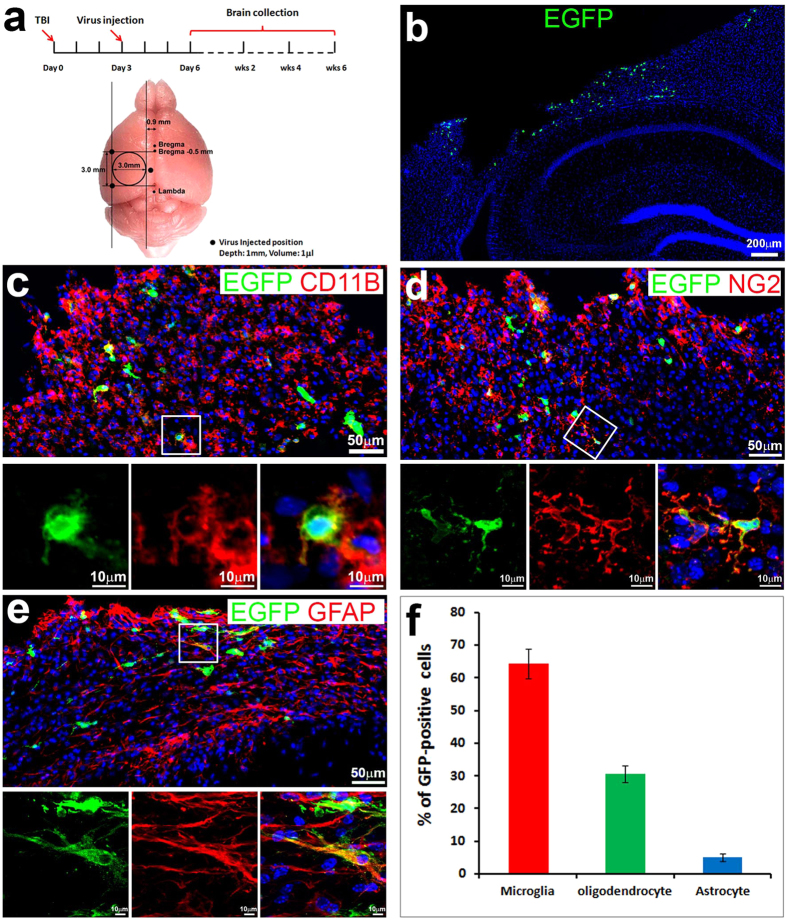
Traumatic brain injury (TBI) results in a significant amount of cell death in the brain. Unfortunately, the adult mammalian brain possesses little regenerative potential following injury and little can be done to reverse the initial brain damage caused by trauma. Reprogramming adult cells to generate induced pluripotent stem cell (iPSCs) has opened new therapeutic opportunities to generate neurons in a non-neurogenic regions in the cortex. In this study we showed that retroviral mediated expression of four transcription factors, Oct4, Sox2, Klf4, and c-Myc, cooperatively reprogrammed reactive glial cells into iPSCs in the adult neocortex following TBI. These iPSCs further differentiated into a large number of neural stem cells, which further differentiated into neurons and glia in situ, and filled up the tissue cavity induced by TBI. The induced neurons showed a typical neuronal morphology with axon and dendrites, and exhibited action potential. Our results report an innovative technology to transform reactive glia into a large number of functional neurons in their natural environment of neocortex without embryo involvement and without the need to grow cells outside the body and then graft them back to the brain. Thus this technology offers hope for personalized regenerative cell therapies for repairing damaged brain.
创伤性脑损伤(TBI)会导致大脑中大量细胞死亡。不幸的是,成年哺乳动物的大脑在受伤后几乎没有再生潜力,对于逆转由创伤引起的初始脑损伤几乎无能为力。将成体细胞重编程以生成诱导多能干细胞(iPSC)为在皮质非神经源性区域生成神经元开辟了新的治疗机会。在本研究中,我们表明,在创伤性脑损伤后的成年新皮质中,逆转录病毒介导的四种转录因子Oct4、Sox2、Klf4和c-Myc的表达协同作用,可将反应性胶质细胞重编程为iPSC。这些iPSC进一步分化为大量神经干细胞,这些神经干细胞在原位进一步分化为神经元和胶质细胞,并填充了由创伤性脑损伤诱导的组织腔。诱导产生的神经元呈现出具有轴突和树突的典型神经元形态,并表现出动作电位。我们的研究结果报告了一种创新技术,可在新皮质的自然环境中将反应性胶质细胞转化为大量功能性神经元,无需涉及胚胎,也无需在体外培养细胞然后再将其移植回大脑。因此,这项技术为修复受损大脑的个性化再生细胞疗法带来了希望。