Mendenhall Marcus H, Mullen Katharine, Cline James P
National Institute of Standards and Technology, Gaithersburg, MD 20899 USA.
University of California Los Angeles, Department of Statistics, 8125 Math Sciences Bldg., Los Angeles, CA 90095-1554 USA.
J Res Natl Inst Stand Technol. 2015 Oct 21;120:223-51. doi: 10.6028/jres.120.014. eCollection 2015.
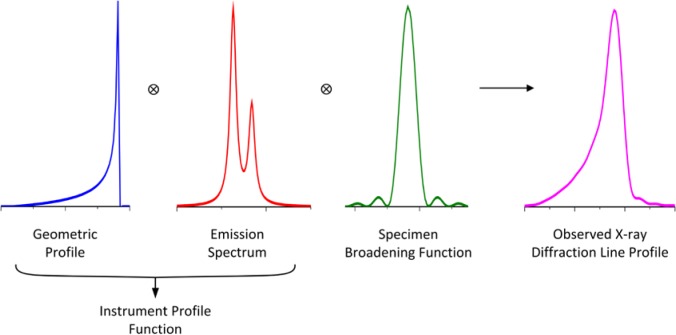
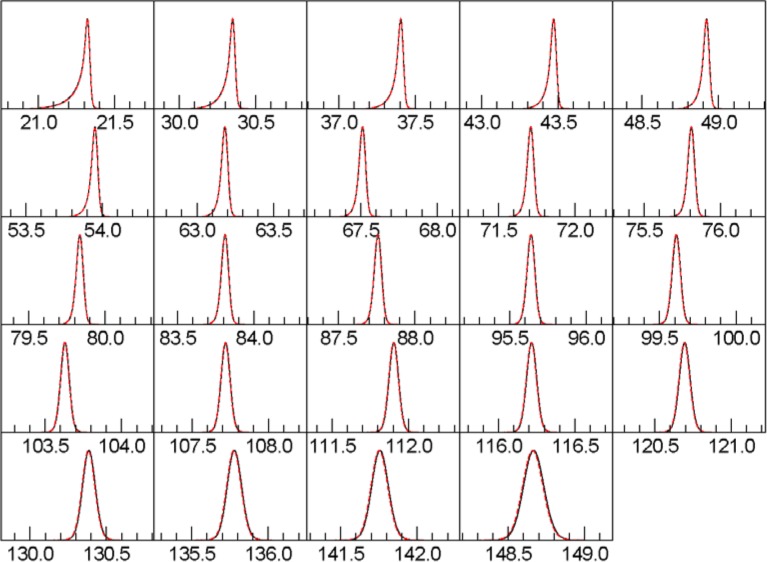
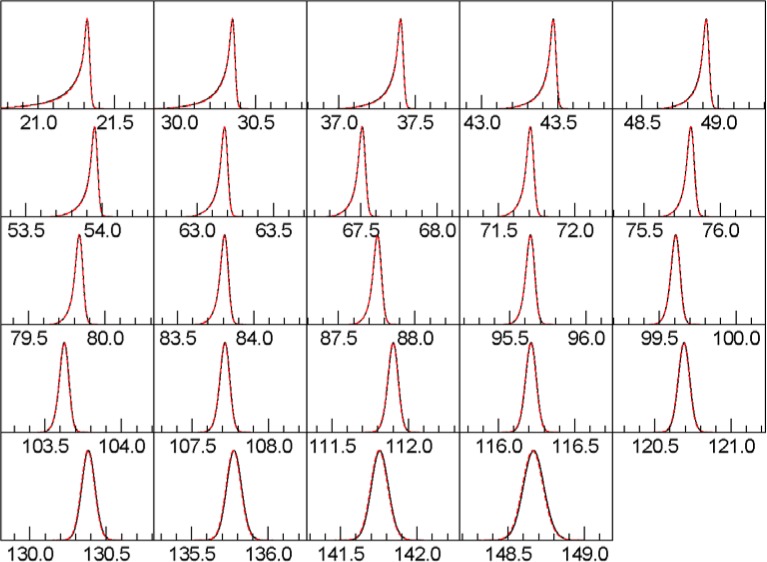
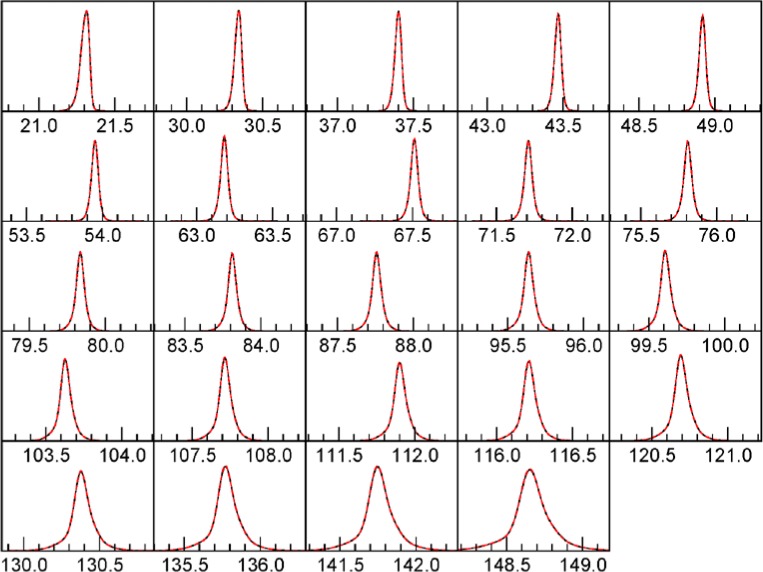
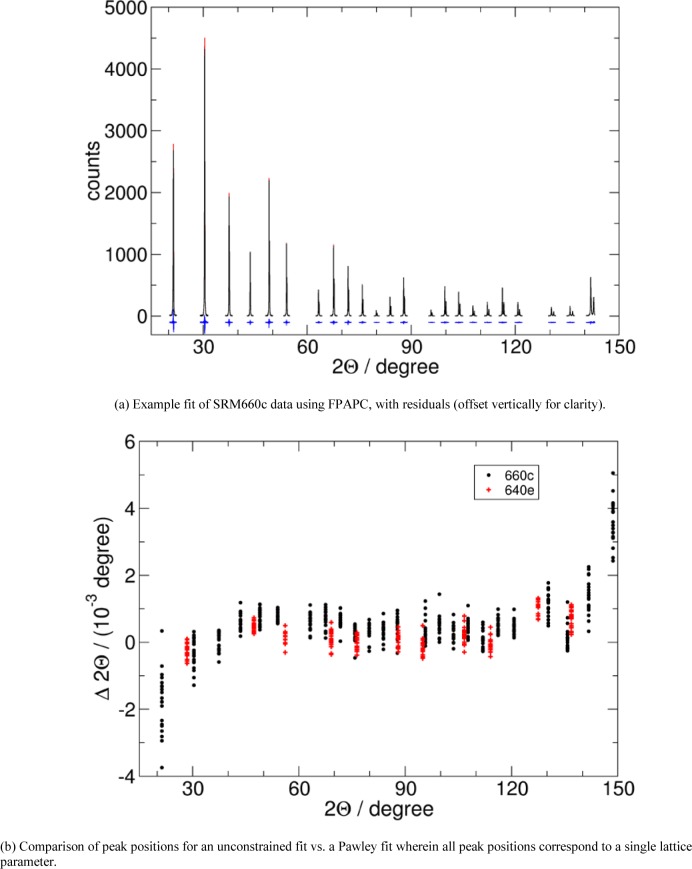
This work presents an open implementation of the Fundamental Parameters Approach (FPA) models for analysis of X-ray powder diffraction line profiles. The original literature describing these models was examined and code was developed to allow for their use within a Python based least squares refinement algorithm. The NIST interest in the FPA method is specific to its ability to account for the optical aberrations of the powder diffraction experiment allowing for an accurate assessment of lattice parameter values. Lattice parameters are one of the primary certified measurands of NIST Standard Reference Materials (SRMs) for powder diffraction. Lattice parameter values obtained from analysis of data from SRMs 640e and 660c using both the NIST FPA Python code and the proprietary, commercial code Topas, that constitutes the only other actively supported, complete implementation of FPA models within a least-squares data analysis environment, agreed to within 2 fm. This level of agreement demonstrates that both the NIST code and Topas constitute an accurate implementation of published FPA models.
本文介绍了用于分析X射线粉末衍射线轮廓的基本参数法(FPA)模型的开放实现。研究了描述这些模型的原始文献,并开发了代码,以便在基于Python的最小二乘精修算法中使用这些模型。美国国家标准与技术研究院(NIST)对FPA方法的兴趣,具体在于其能够考虑粉末衍射实验的光学像差,从而能够准确评估晶格参数值。晶格参数是NIST粉末衍射标准参考物质(SRM)的主要认证测量值之一。使用NIST FPA Python代码和专有的商业代码Topas(在最小二乘数据分析环境中,Topas是FPA模型唯一另一个得到积极支持的完整实现),对SRM 640e和660c的数据进行分析得到的晶格参数值,在2飞米内相符。这种相符程度表明,NIST代码和Topas都构成了已发表的FPA模型的准确实现。