Bödeker Birte, Betsch Cornelia, Wichmann Ole
Department for Infectious Disease Epidemiology, Immunization Unit, Robert Koch Institute, Seestraße 10, 13353, Berlin, Germany.
Charité-University Medicine Berlin, Augustenburger Platz 1, 13353, Berlin, Germany.
BMC Public Health. 2015 Dec 29;16:1308. doi: 10.1186/s12889-015-2621-5.
Pregnant women and their newborns have an increased risk of developing severe influenza and influenza-related complications. In Germany, seasonal influenza vaccination is recommended for pregnant women since 2010. However, little is known about pregnant women's vaccination-related knowledge and attitudes, as well as their risk perceptions. This study therefore assessed pregnant women's vaccination-related knowledge, risk perceptions related to influenza disease and influenza vaccination during pregnancy, and aimed to identify determinants of influenza vaccination uptake during pregnancy in Germany.
Between 2012 and 2014, a nationwide web-based prospective cohort study with follow-up interviews was conducted in initially pregnant women who gave birth over the study period. Control groups were set up in a cross-sectional fashion during the follow-up interviews. Women who participated in both, the baseline interview before giving birth and in the 1st interview after giving birth were included in the analysis. Univariate and multiple logistic regression were used to identify associations between influenza vaccination uptake and sociodemographic characteristics as well as items assessing attitude and knowledge.
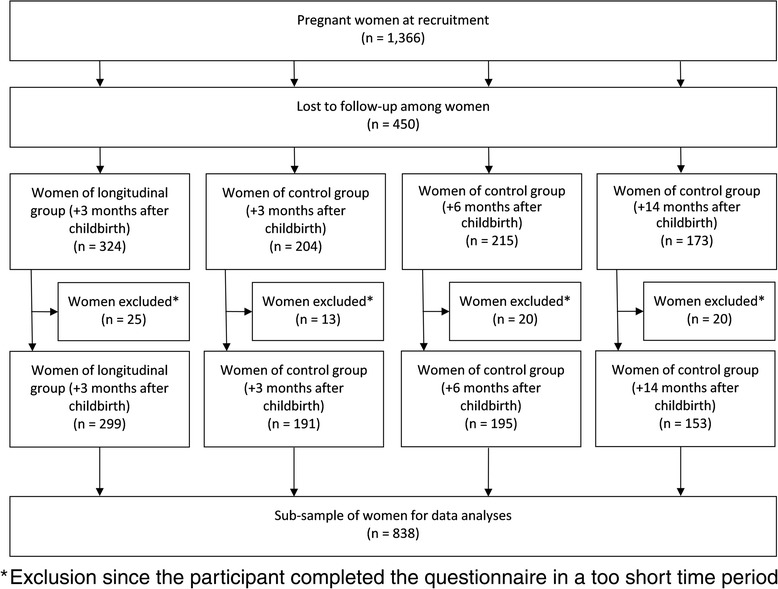
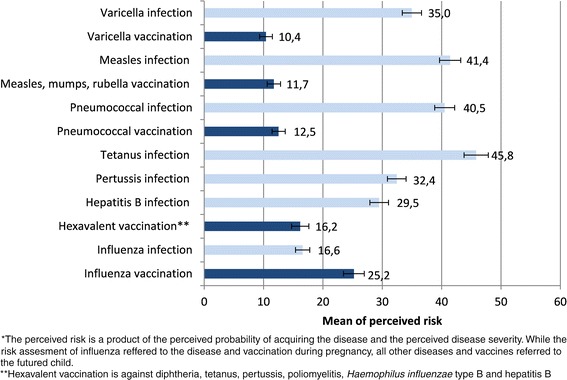
In total, 838 women were included in the analyses. Pregnant women had a positive attitude towards vaccination in general, but only modest vaccination knowledge. Overall, 10.9 % of women were vaccinated against seasonal influenza during pregnancy. While pregnant women perceived classical childhood diseases to be more risky than the respective vaccinations, this relation reversed for influenza: The risk of vaccination was perceived higher than the risk of the disease. These two types of risk perceptions independently determined influenza vaccination uptake-higher perception of disease risk and lower perceptions of vaccination-related risks increased uptake. Additionally, knowledge about the vaccination recommendation for pregnant women and a positive gynaecologist's attitude towards vaccination during pregnancy influenced the uptake significantly.
Influenza vaccination uptake in pregnant women is low in Germany. Tailored communication strategies for pregnant women should focus especially on changing the perceptions of personal risks regarding influenza and influenza vaccination during pregnancy. Gynaecologists should be made aware about their crucial role in supporting vaccination decision-making of pregnant women and the need to provide relevant information to counteract misconceptions.
孕妇及其新生儿患重症流感及流感相关并发症的风险增加。自2010年起,德国建议孕妇接种季节性流感疫苗。然而,对于孕妇的疫苗接种相关知识和态度以及她们的风险认知了解甚少。因此,本研究评估了孕妇的疫苗接种相关知识、孕期流感疾病及流感疫苗接种的风险认知,并旨在确定德国孕期流感疫苗接种率的决定因素。
在2012年至2014年期间,对在研究期间分娩的初孕妇进行了一项全国性的基于网络的前瞻性队列研究,并进行随访访谈。在随访访谈期间以横断面方式设立对照组。参与分娩前基线访谈和分娩后第一次访谈的妇女纳入分析。采用单因素和多因素逻辑回归来确定流感疫苗接种率与社会人口学特征以及评估态度和知识的项目之间的关联。
总共838名妇女纳入分析。孕妇总体上对疫苗接种持积极态度,但疫苗接种知识水平一般。总体而言,10.9%的妇女在孕期接种了季节性流感疫苗。虽然孕妇认为经典的儿童疾病比相应的疫苗接种风险更高,但对于流感,这种关系则相反:疫苗接种的风险被认为高于疾病风险。这两种风险认知独立地决定了流感疫苗接种率——对疾病风险的较高认知和对疫苗接种相关风险的较低认知会增加接种率。此外,关于孕妇疫苗接种建议的知识以及妇科医生对孕期疫苗接种的积极态度对接种率有显著影响。
德国孕妇的流感疫苗接种率较低。针对孕妇的定制沟通策略应特别侧重于改变对孕期流感及流感疫苗接种个人风险的认知。应使妇科医生意识到他们在支持孕妇疫苗接种决策方面的关键作用,以及提供相关信息以消除误解的必要性。