Henshall Catherine, Taylor Beck, Kenyon Sara
Public Health, Epidemiology and Biostatistics, Institute of Applied Health Research, University of Birmingham, Birmingham, B15 2TT, UK.
BMC Pregnancy Childbirth. 2016 Mar 14;16:53. doi: 10.1186/s12884-016-0832-0.
Discussion of place of birth is important for women and maternity services, yet the detail, content and delivery of these discussions are unclear. The Birthplace Study found that for low risk, multiparous women, there was no significant difference in neonatal safety outcomes between women giving birth in obstetric units, midwifery-led units, or home. For low risk, nulliparous women giving birth in a midwifery-led unit was as safe as in hospital, whilst birth at home was associated with a small, increased risk of adverse perinatal outcomes. Intervention rates were reduced in all settings outside hospital. NICE guidelines recommend all women are supported in their choice of birth setting. Midwives have the opportunity to provide information to women about where they choose to give birth. However, research suggests women are sometimes unaware of all the options available. This systematic review will establish what is known about midwives' perspectives of discussions with women about their options for where to give birth and whether any interventions have been implemented to support these discussions.
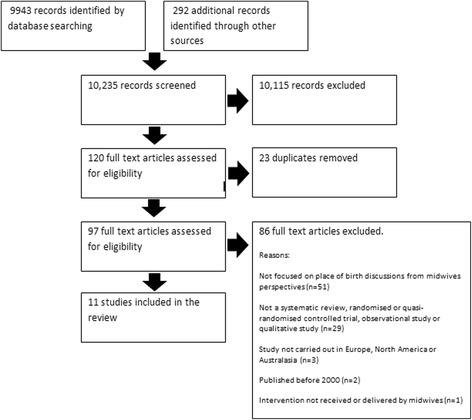
The systematic review was PROSPERO registered (registration number: CRD42015017334). The PRISMA statement was followed. Medline, Cochrane, CINAHL, PsycINFO, Popline and EMBASE databases were searched between 2000-March 2015 and grey literature was searched. All identified studies were screened for inclusion. Qualitative data was thematically analysed, whilst quantitative data was summarised.
The themes identified relating to influences on midwives' place of birth discussions with women were organisational pressures and professional norms, inadequate knowledge and confidence of midwives, variation in what midwives told women and the influence of colleagues. None of the interventions identified provided sufficient evidence of effectiveness and were of poor quality.
The review has suggested the need for a pragmatic, understandable place of birth dialogue containing standard content to ensure midwives provide low risk women with adequate information about their place of birth options and the need to improve midwives knowledge about place of birth. A more robust, systematic evaluation of any interventions designed is required to improve the quality of place of birth discussions. By engaging with co-produced research, more effective interventions can be designed, implemented and sustained.
对于女性和产科服务而言,讨论分娩地点很重要,但这些讨论的细节、内容和方式尚不清楚。“分娩地点研究”发现,对于低风险经产妇,在产科病房、助产士主导单位或家中分娩的女性,其新生儿安全结局并无显著差异。对于低风险初产妇,在助产士主导单位分娩与在医院分娩一样安全,而在家中分娩会使围产期不良结局风险略有增加。医院外所有环境下的干预率均有所降低。英国国家卫生与临床优化研究所(NICE)指南建议,应支持所有女性选择分娩地点。助产士有机会向女性提供有关她们选择分娩地点的信息。然而,研究表明女性有时并不知晓所有可用选项。本系统评价将确定关于助产士与女性讨论分娩地点选项的观点以及是否实施了任何干预措施来支持这些讨论的已知情况。
本系统评价已在国际前瞻性系统评价注册库(PROSPERO)注册(注册号:CRD42015017334)。遵循了系统评价和Meta分析的首选报告项目(PRISMA)声明。检索了2000年至2015年3月期间的Medline、Cochrane、护理学与健康领域数据库(CINAHL)、心理学文摘数据库(PsycINFO)、人口信息数据库(Popline)和荷兰医学文摘数据库(EMBASE),并检索了灰色文献。对所有识别出的研究进行筛选以确定是否纳入。对定性数据进行主题分析,对定量数据进行总结。
确定的与影响助产士与女性讨论分娩地点相关的主题包括组织压力和专业规范、助产士知识和信心不足、助产士告知女性的内容存在差异以及同事的影响。所确定的干预措施均未提供充分的有效性证据,且质量较差。
该评价表明需要进行务实、易懂的分娩地点对话,包含标准内容,以确保助产士为低风险女性提供有关其分娩地点选项的充分信息,并表明需要提高助产士关于分娩地点的知识。需要对所设计的任何干预措施进行更有力、系统的评估,以提高分娩地点讨论的质量。通过参与共同开展的研究,可以设计、实施和维持更有效的干预措施。