Manchester Cancer Research Centre, Wellcome Trust Centre for Cell-Matrix Research, The University of Manchester, Michael Smith Building, Oxford Road, Manchester, M13 9PT, UK.
Molecular Oncology Group, CRUK Manchester Institute for Cancer Research, Manchester Cancer Research Centre, Wilmslow Road, Manchester, M20 4BX, UK.
Cancer Cell. 2016 Mar 14;29(3):270-284. doi: 10.1016/j.ccell.2016.02.003.
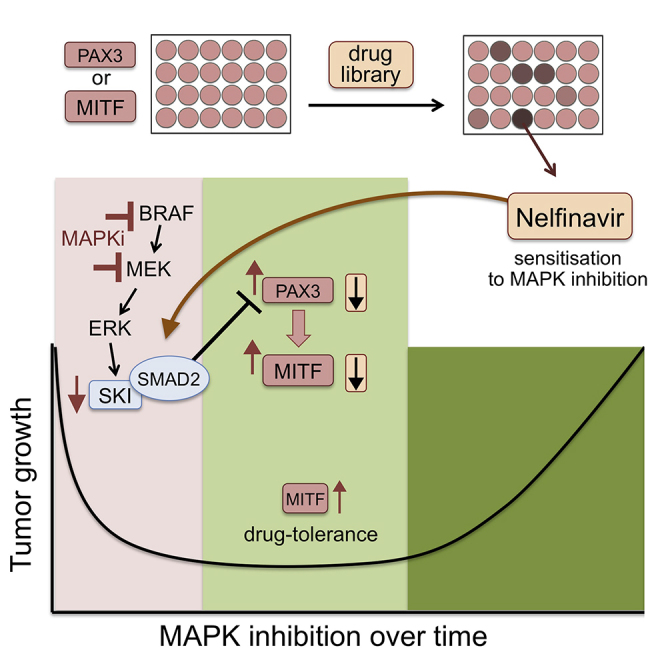
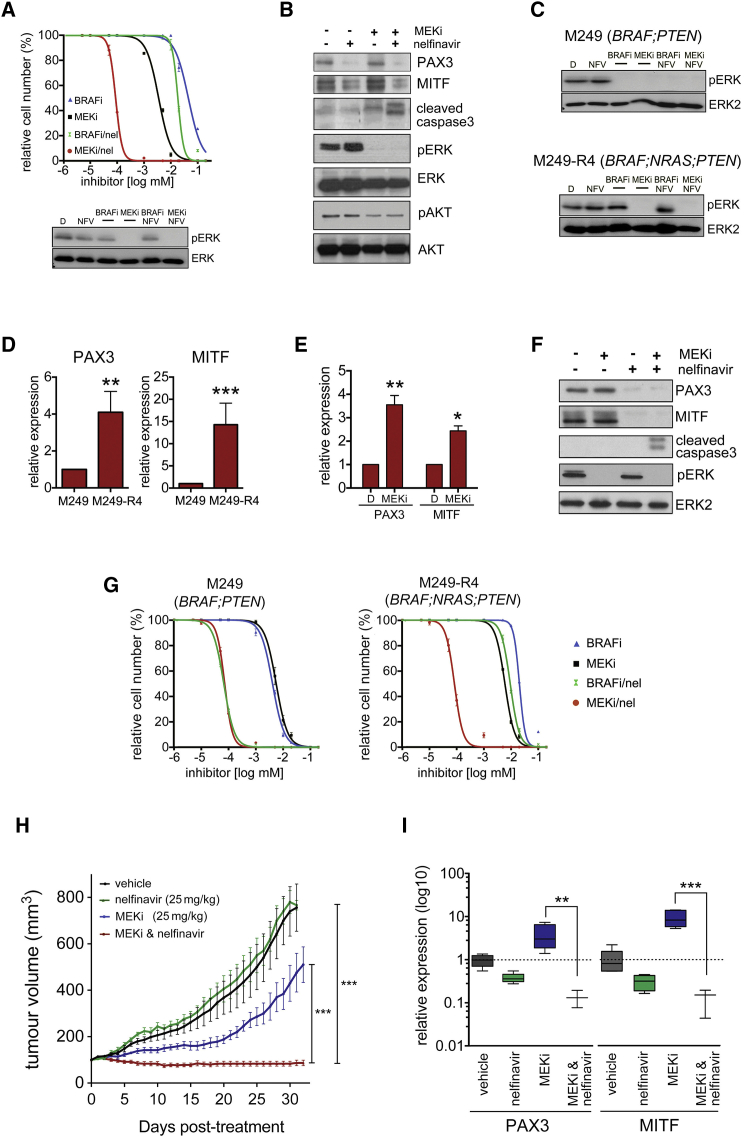
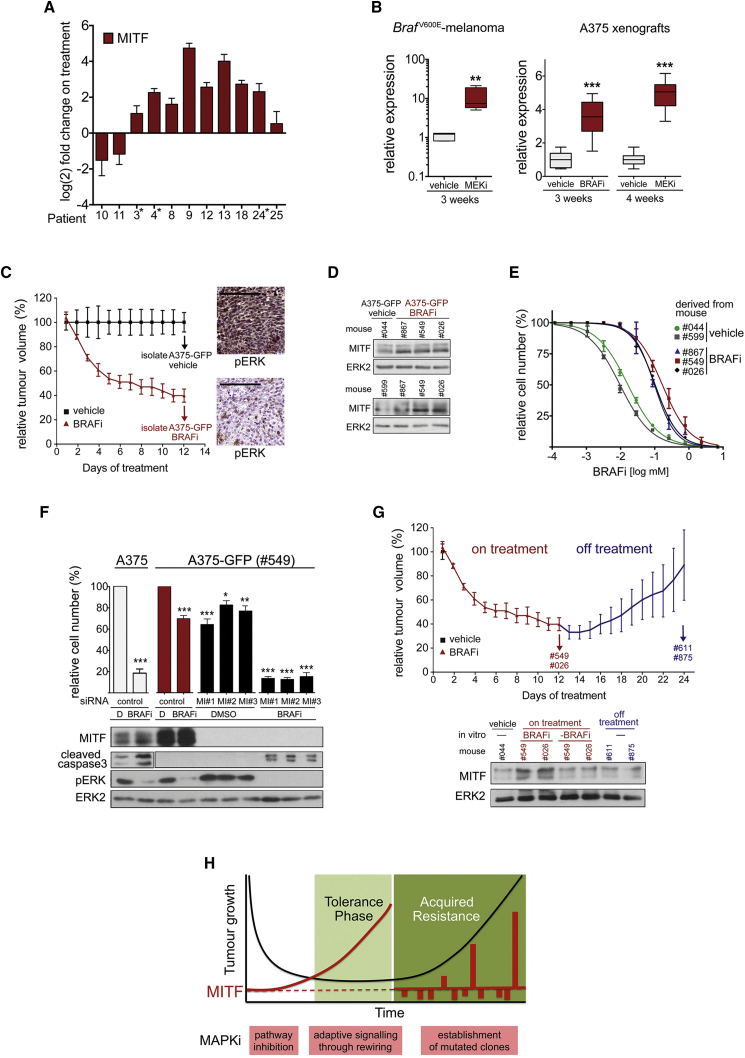
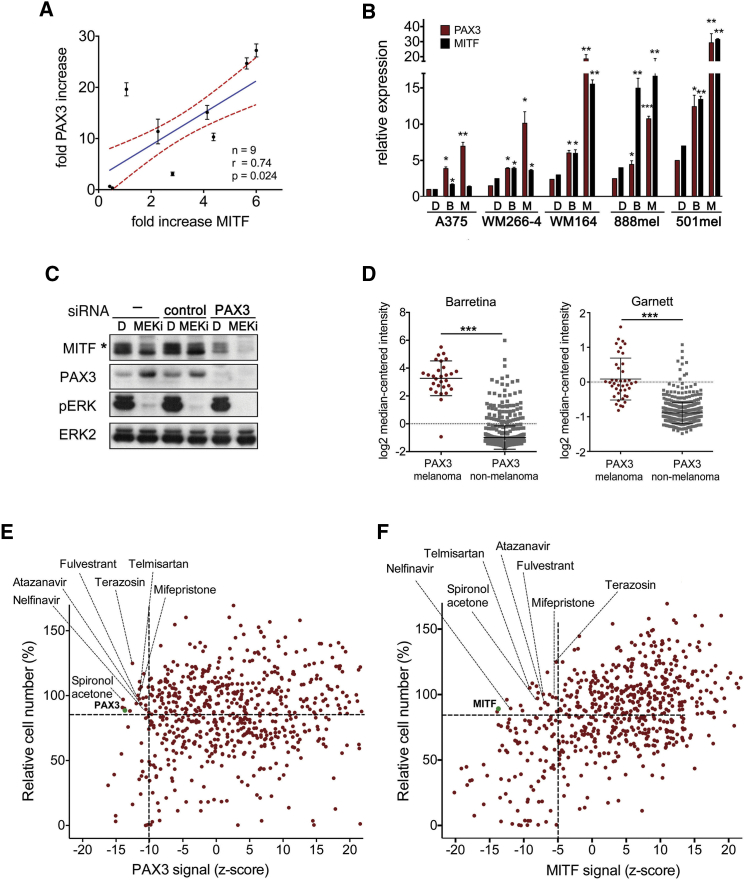
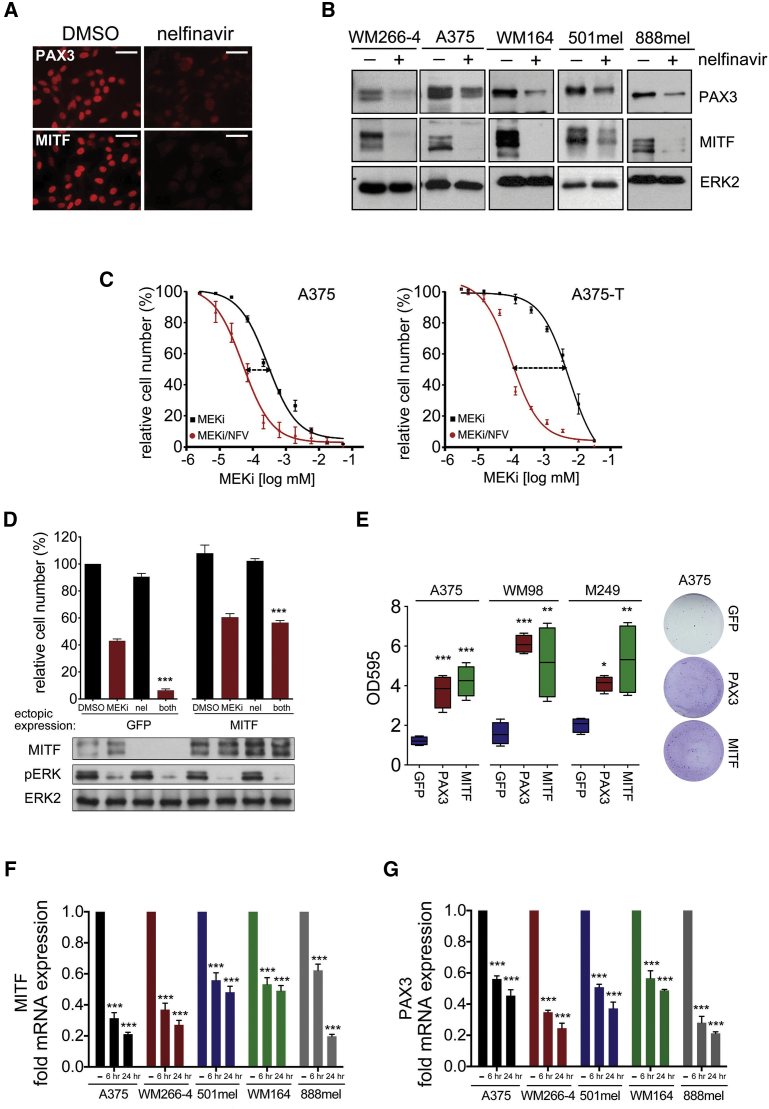
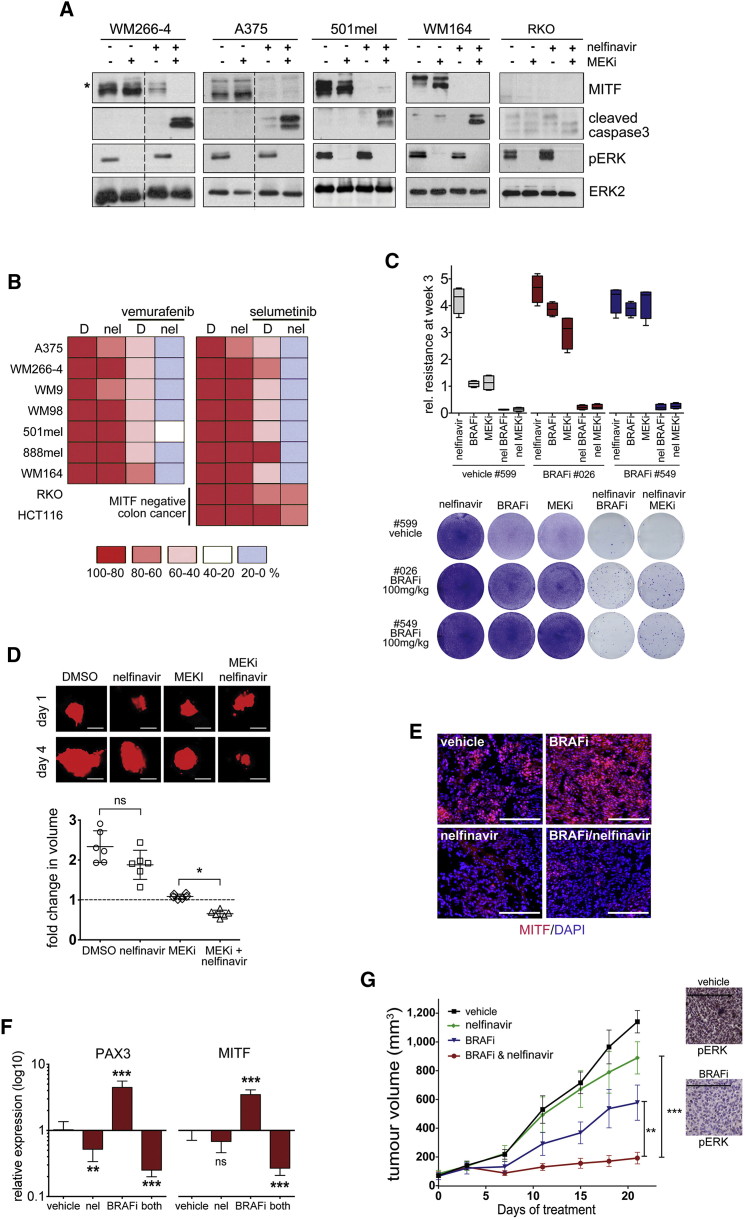
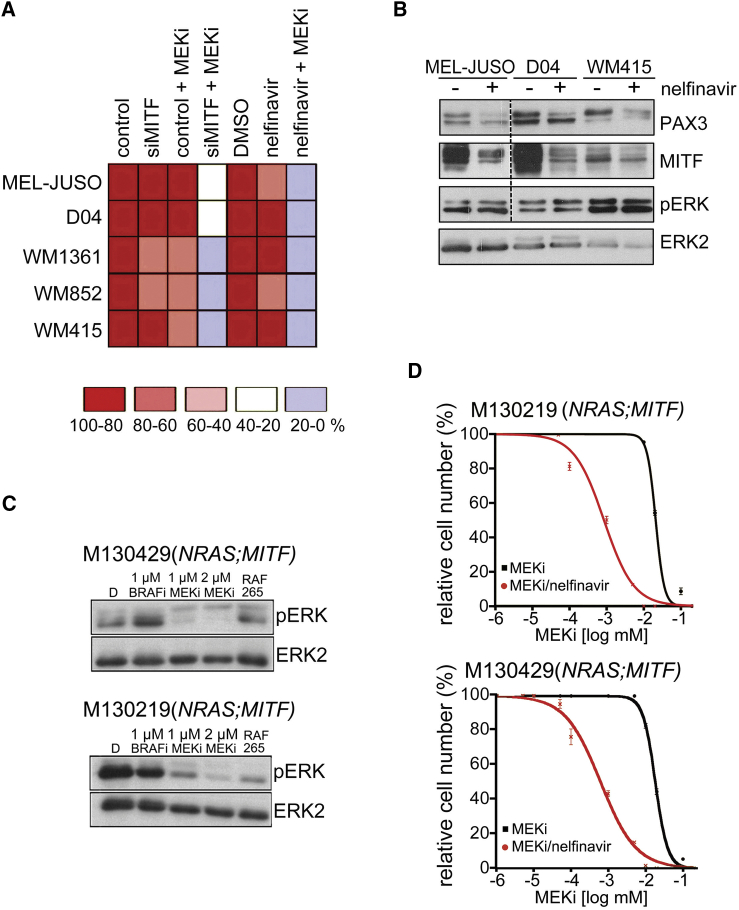
Once melanomas have progressed with acquired resistance to mitogen-activated protein kinase (MAPK)-targeted therapy, mutational heterogeneity presents a major challenge. We therefore examined the therapy phase before acquired resistance had developed and discovered the melanoma survival oncogene MITF as a driver of an early non-mutational and reversible drug-tolerance state, which is induced by PAX3-mediated upregulation of MITF. A drug-repositioning screen identified the HIV1-protease inhibitor nelfinavir as potent suppressor of PAX3 and MITF expression. Nelfinavir profoundly sensitizes BRAF and NRAS mutant melanoma cells to MAPK-pathway inhibitors. Moreover, nelfinavir is effective in BRAF and NRAS mutant melanoma cells isolated from patients progressed on MAPK inhibitor (MAPKi) therapy and in BRAF/NRAS/PTEN mutant tumors. We demonstrate that inhibiting a driver of MAPKi-induced drug tolerance could improve current approaches of targeted melanoma therapy.
一旦黑色素瘤对丝裂原活化蛋白激酶 (MAPK) 靶向治疗产生获得性耐药,突变异质性就会带来重大挑战。因此,我们在获得性耐药发生之前检查了治疗阶段,并发现黑色素瘤存活基因 MITF 是由 PAX3 介导的 MITF 上调诱导的早期非突变和可逆药物耐受状态的驱动因素。药物重新定位筛选发现 HIV1 蛋白酶抑制剂奈非那韦是 PAX3 和 MITF 表达的有效抑制剂。奈非那韦可显著增强 BRAF 和 NRAS 突变黑色素瘤细胞对 MAPK 通路抑制剂的敏感性。此外,奈非那韦对 MAPKi 治疗进展的患者分离的 BRAF 和 NRAS 突变黑色素瘤细胞以及 BRAF/NRAS/PTEN 突变肿瘤有效。我们证明,抑制 MAPKi 诱导的药物耐受的驱动因素可能会改善当前的靶向黑色素瘤治疗方法。