Institute for Bioscience and Biotechnology Research, University of Maryland, College Park, Rockville, United States.
Department of Physics, Carnegie Mellon University, Pittsburgh, United States.
Elife. 2016 Mar 15;5:e13152. doi: 10.7554/eLife.13152.
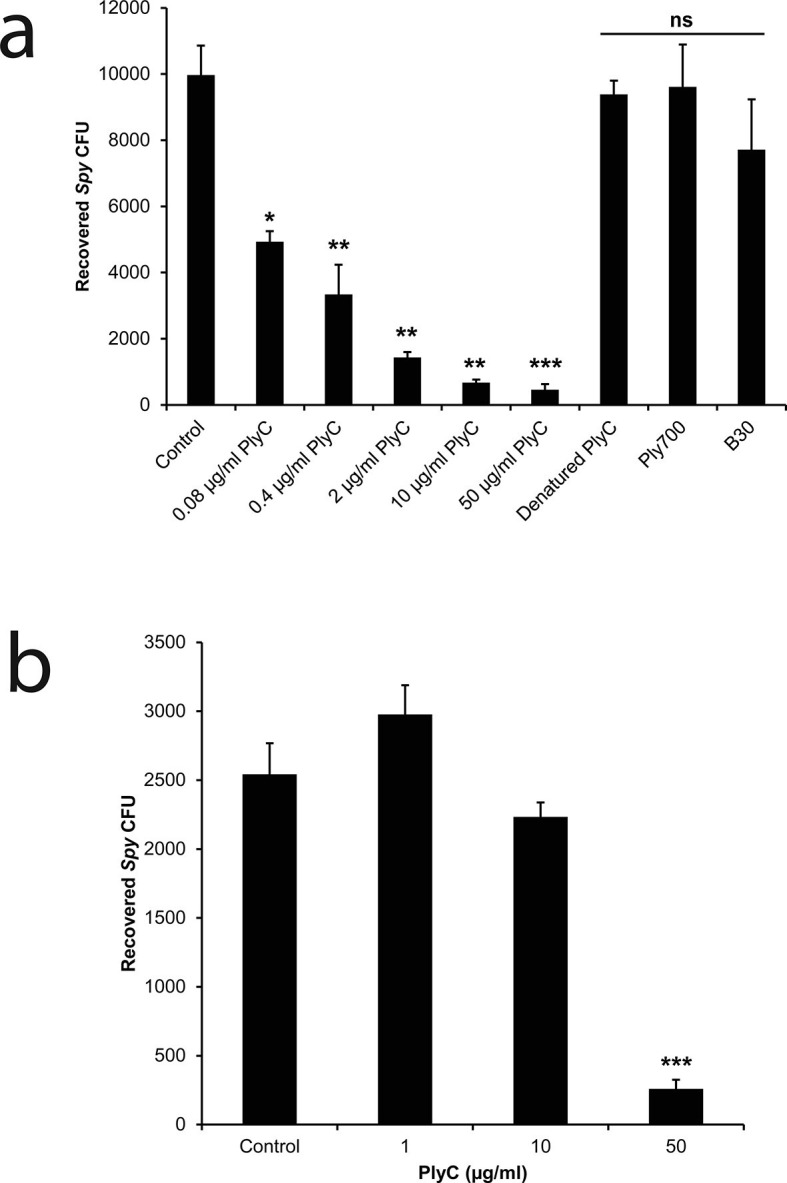
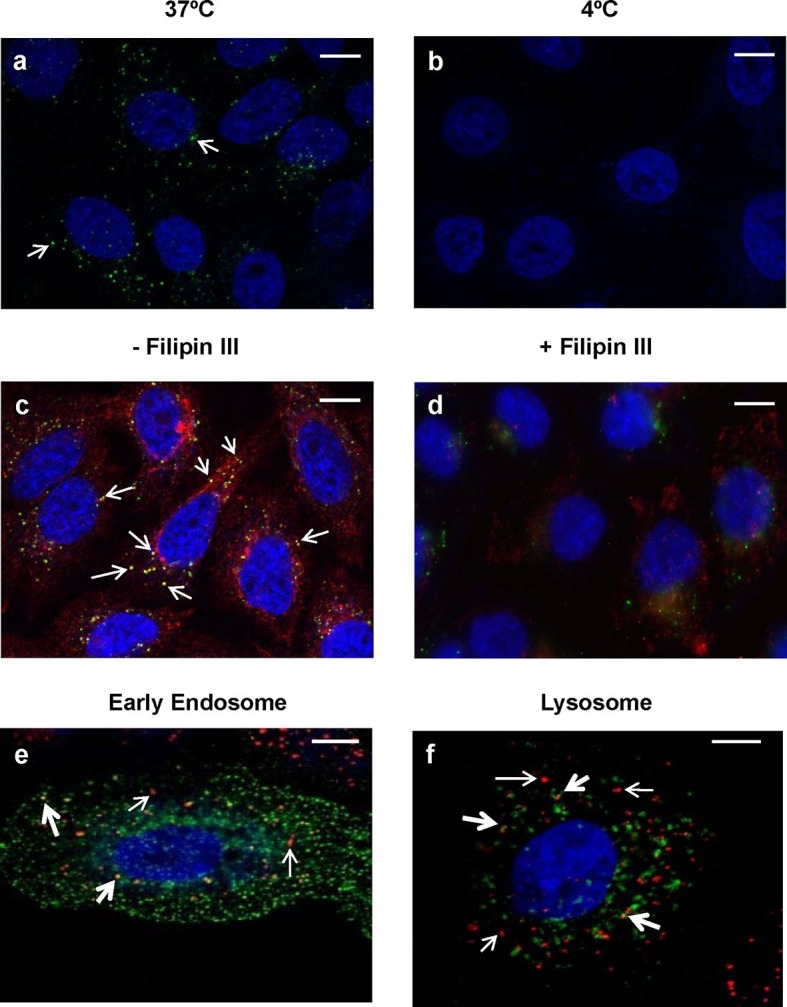
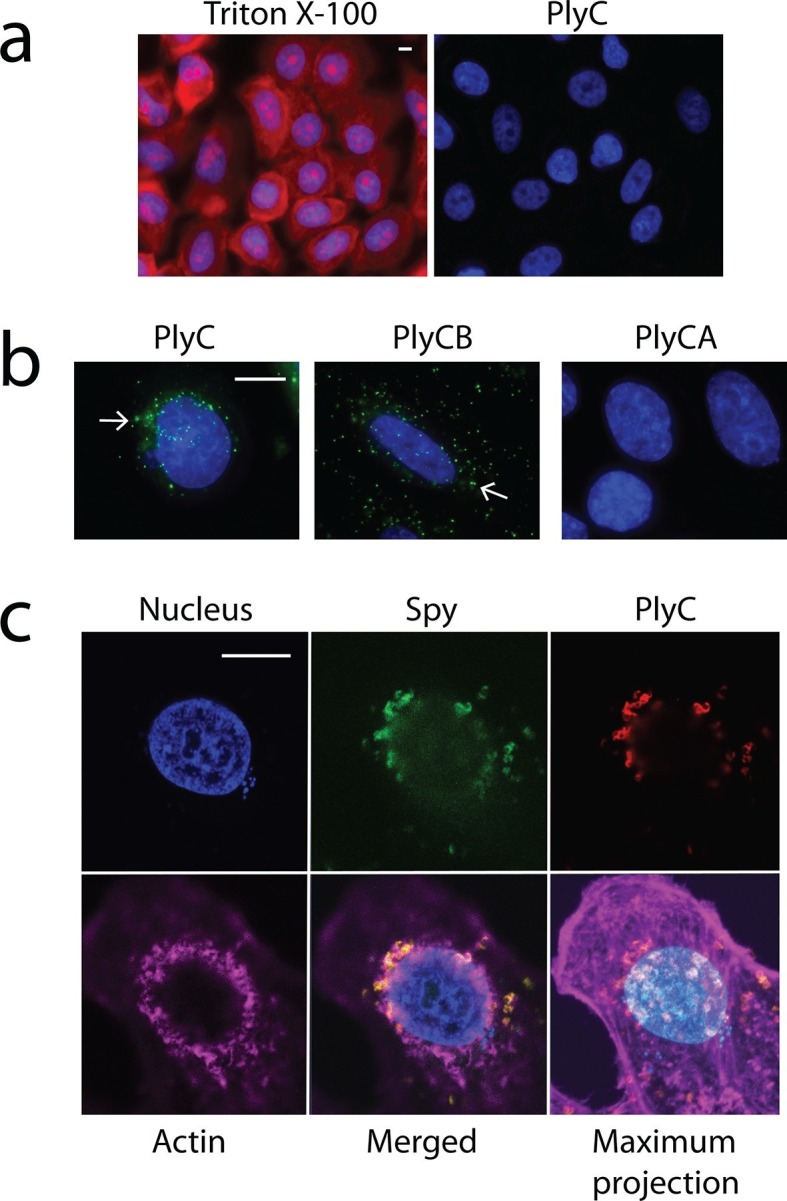
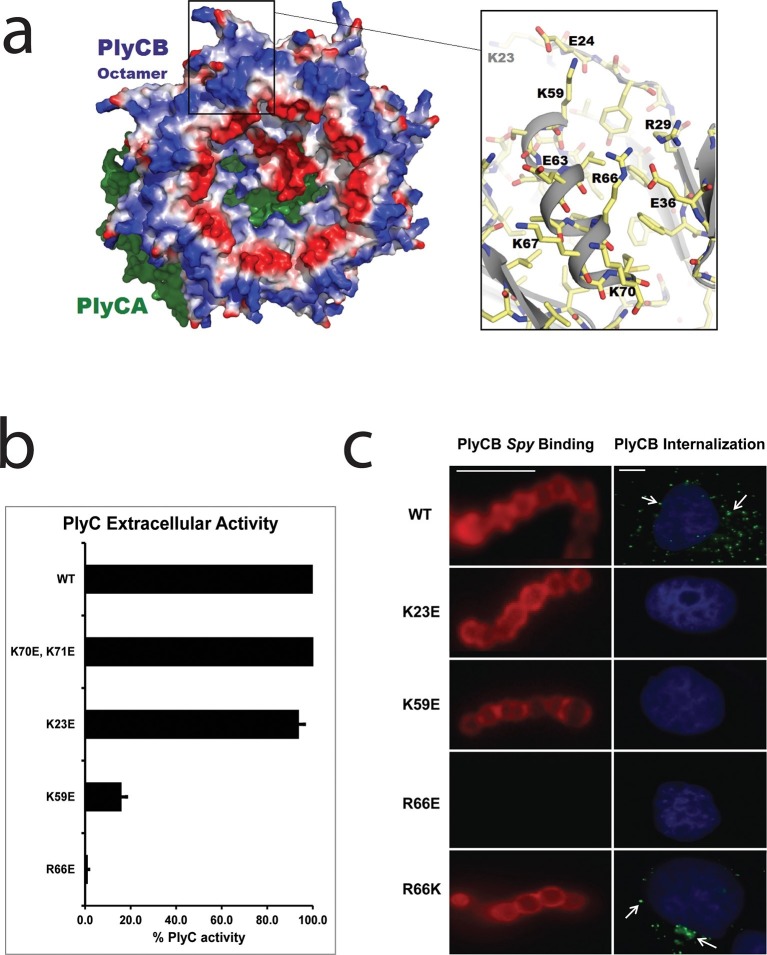
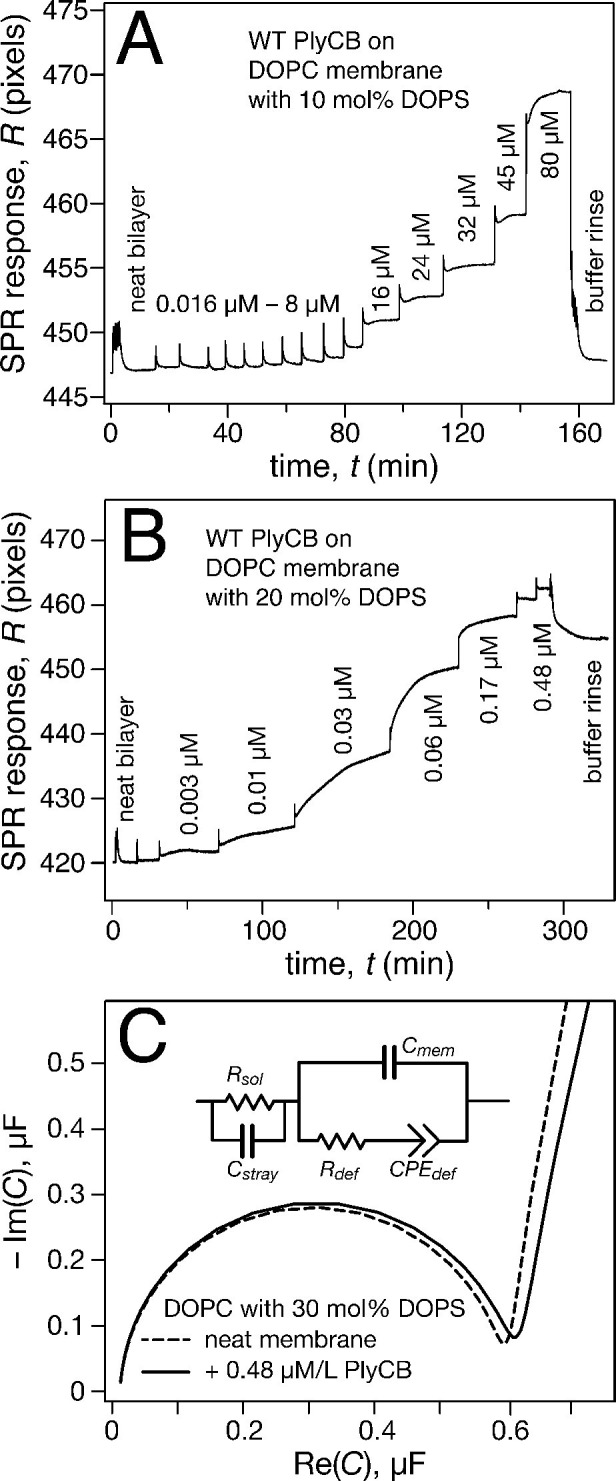
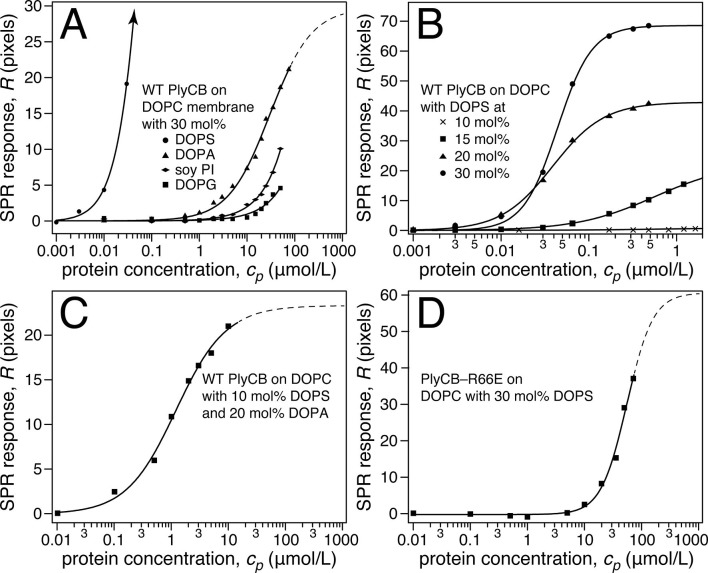
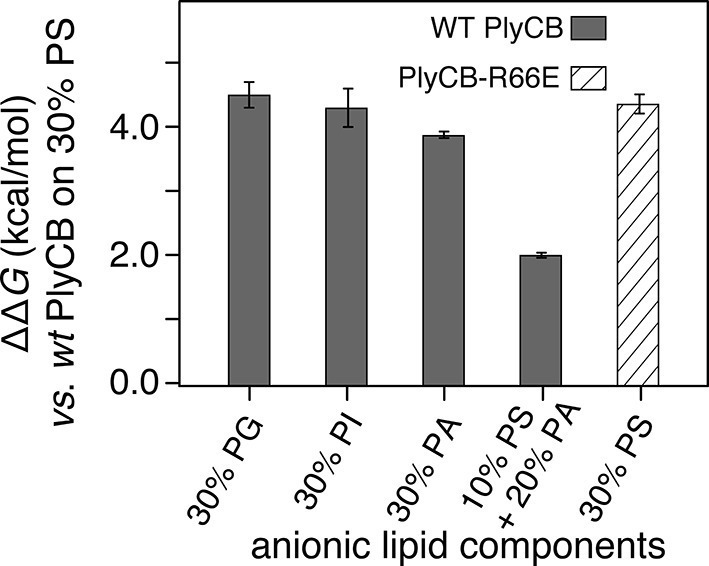
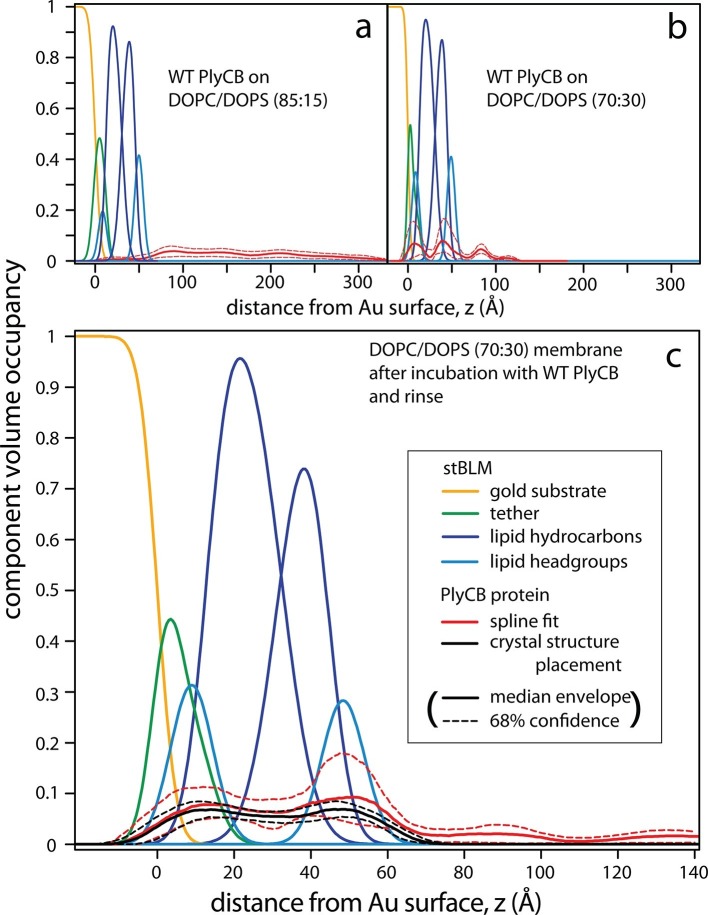
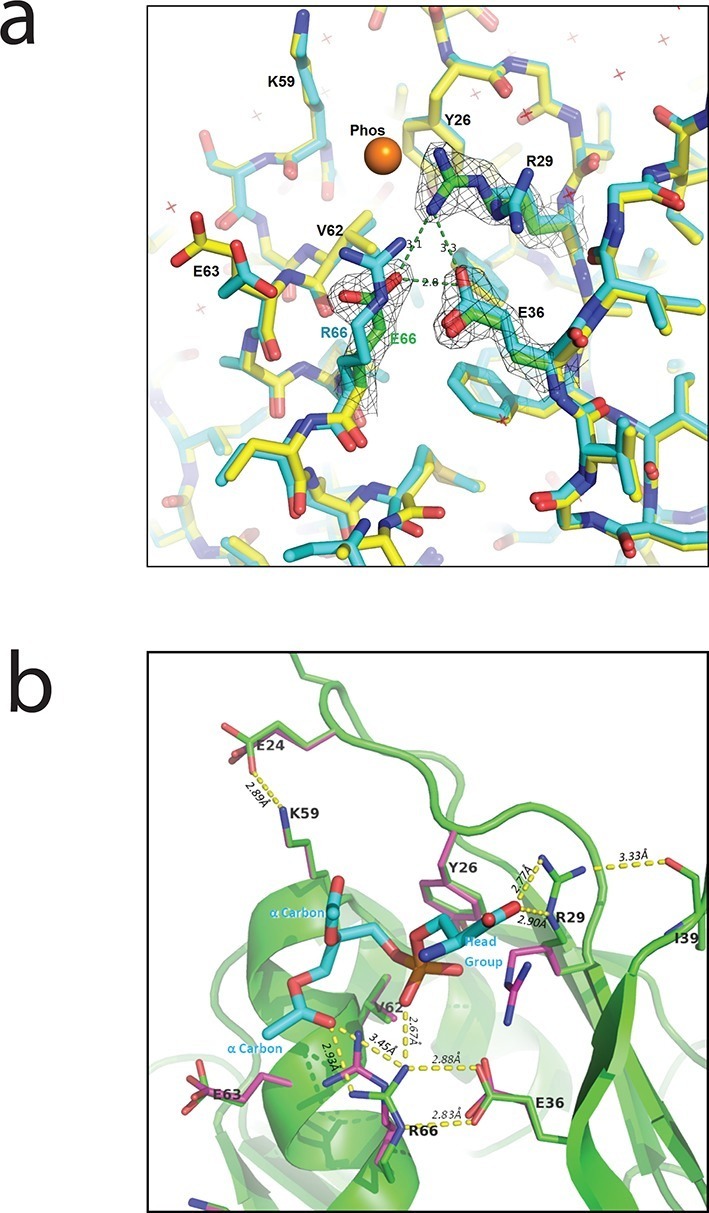
PlyC, a bacteriophage-encoded endolysin, lyses Streptococcus pyogenes (Spy) on contact. Here, we demonstrate that PlyC is a potent agent for controlling intracellular Spy that often underlies refractory infections. We show that the PlyC holoenzyme, mediated by its PlyCB subunit, crosses epithelial cell membranes and clears intracellular Spy in a dose-dependent manner. Quantitative studies using model membranes establish that PlyCB interacts strongly with phosphatidylserine (PS), whereas its interaction with other lipids is weak, suggesting specificity for PS as its cellular receptor. Neutron reflection further substantiates that PlyC penetrates bilayers above a PS threshold concentration. Crystallography and docking studies identify key residues that mediate PlyCB-PS interactions, which are validated by site-directed mutagenesis. This is the first report that a native endolysin can traverse epithelial membranes, thus substantiating the potential of PlyC as an antimicrobial for Spy in the extracellular and intracellular milieu and as a scaffold for engineering other functionalities.
PlyC 是一种噬菌体编码的溶菌素,可在接触时裂解化脓性链球菌(Spy)。在这里,我们证明 PlyC 是一种有效的控制细胞内 Spy 的手段,Spy 常导致难治性感染。我们表明, PlyC 全酶通过其 PlyCB 亚基介导,以剂量依赖的方式穿过上皮细胞膜并清除细胞内的 Spy。使用模型膜进行的定量研究表明,PlyCB 与磷脂酰丝氨酸(PS)强烈相互作用,而与其他脂质的相互作用较弱,这表明 PS 是其细胞受体的特异性。中子反射进一步证实 PlyC 在 PS 阈值浓度以上穿透双层。晶体学和对接研究确定了介导 PlyCB-PS 相互作用的关键残基,通过定点突变对其进行了验证。这是第一个报道天然溶菌素可以穿透上皮细胞膜的报告,从而证实了 PlyC 作为 Spy 细胞外和细胞内环境中的抗菌剂以及作为工程其他功能的支架的潜力。