Casanova Emily L, Sharp Julia L, Chakraborty Hrishikesh, Sumi Nahid Sultana, Casanova Manuel F
Department of Biomedical Sciences, University of South Carolina, South Carolina, USA ; Department of Pediatrics, Greenville Health System, Patewood Medical Campus, 200A Patewood Dr, Greenville, SC 29615 USA.
Department of Mathematical Sciences, Clemson University, Clemson, USA.
Mol Autism. 2016 Mar 15;7:18. doi: 10.1186/s13229-016-0082-z. eCollection 2016.
Intellectual disability (ID), autism, and epilepsy share frequent yet variable comorbidities with one another. In order to better understand potential genetic divergence underlying this variable risk, we studied genes responsible for monogenic IDs, grouped according to their autism and epilepsy comorbidities.
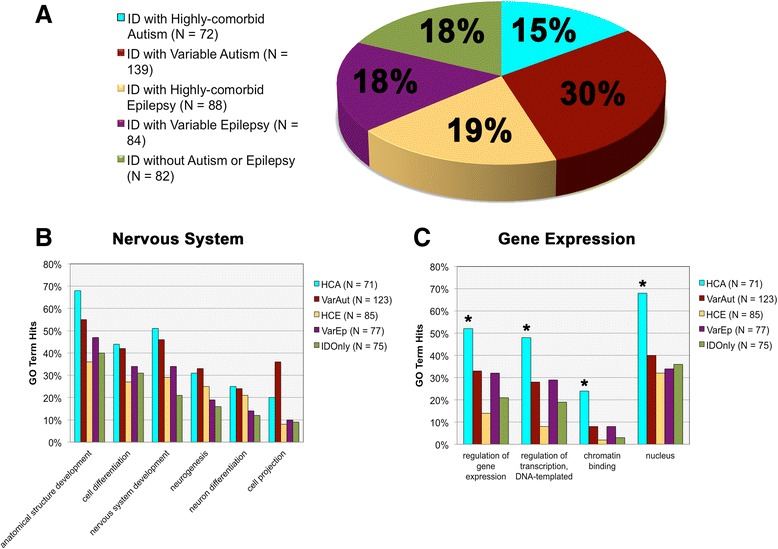
Utilizing 465 different forms of ID with known molecular origins, we accessed available genetic databases in conjunction with gene ontology (GO) to determine whether the genetics underlying ID diverge according to its comorbidities with autism and epilepsy and if genes highly penetrant for autism or epilepsy share distinctive features that set them apart from genes that confer comparatively variable or no apparent risk.
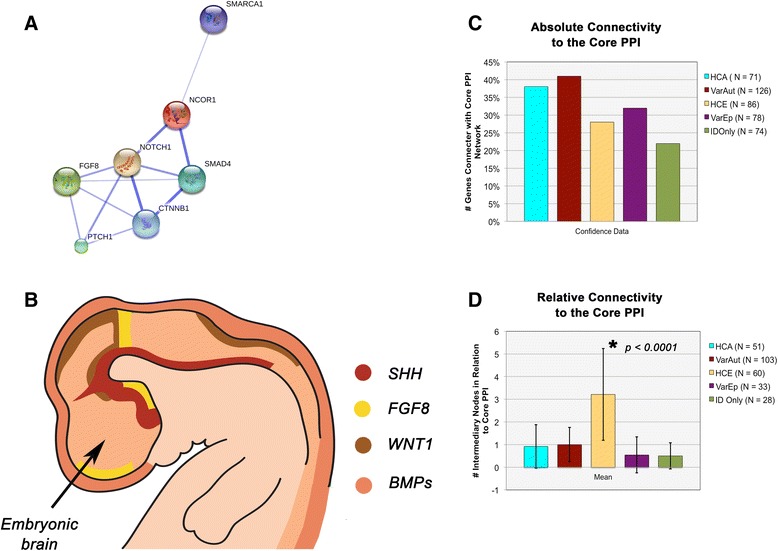
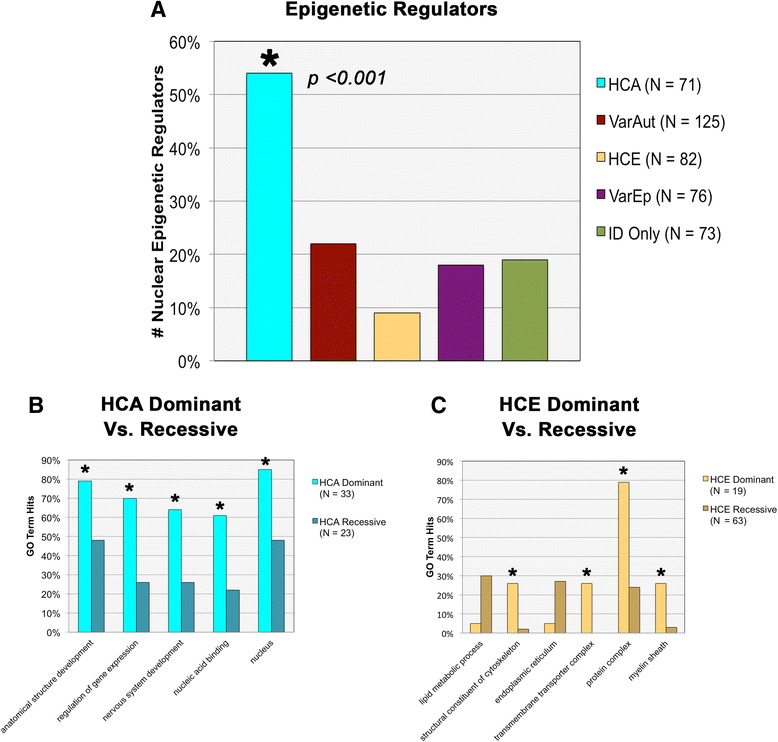
The genetics of ID with autism are relatively enriched in terms associated with nervous system-specific processes and structural morphogenesis. In contrast, we find that ID with highly comorbid epilepsy (HCE) is modestly associated with lipid metabolic processes while ID without autism or epilepsy comorbidity (ID only) is enriched at the Golgi membrane. Highly comorbid autism (HCA) genes, on the other hand, are strongly enriched within the nucleus, are typically involved in regulation of gene expression, and, along with IDs with more variable autism, share strong ties with a core protein-protein interaction (PPI) network integral to basic patterning of the CNS.
According to GO terminology, autism-related gene products are integral to neural development. While it is difficult to draw firm conclusions regarding IDs unassociated with autism, it is clear that the majority of HCA genes are tightly linked with general dysregulation of gene expression, suggesting that disturbances to the chronology of neural maturation and patterning may be key in conferring susceptibility to autism spectrum conditions.
智力障碍(ID)、自闭症和癫痫常常相互并存,且并存情况各不相同。为了更好地理解这种可变风险背后潜在的基因差异,我们研究了导致单基因ID的基因,并根据它们与自闭症和癫痫的并存情况进行分组。
利用465种已知分子起源的不同形式的ID,我们结合基因本体论(GO)访问了可用的遗传数据库,以确定ID的遗传学是否根据其与自闭症和癫痫的并存情况而有所不同,以及对自闭症或癫痫具有高外显率的基因是否具有独特特征,使其有别于那些带来相对可变风险或无明显风险的基因。
伴有自闭症的ID遗传学在与神经系统特异性过程和结构形态发生相关的术语方面相对富集。相比之下,我们发现高度并存癫痫(HCE)的ID与脂质代谢过程适度相关,而无自闭症或癫痫并存情况的ID(仅ID)在高尔基体膜处富集。另一方面,高度并存自闭症(HCA)的基因在细胞核内强烈富集,通常参与基因表达的调控,并且与具有更多可变自闭症的ID一起,与中枢神经系统基本模式形成所必需的核心蛋白质-蛋白质相互作用(PPI)网络有紧密联系。
根据GO术语,与自闭症相关的基因产物对神经发育至关重要。虽然很难就与自闭症无关的ID得出确凿结论,但很明显,大多数HCA基因与基因表达的普遍失调紧密相关,这表明神经成熟和模式形成时间的紊乱可能是导致自闭症谱系疾病易感性的关键。