Gruosso Tina, Mieulet Virginie, Cardon Melissa, Bourachot Brigitte, Kieffer Yann, Devun Flavien, Dubois Thierry, Dutreix Marie, Vincent-Salomon Anne, Miller Kyle Malcolm, Mechta-Grigoriou Fatima
Stress and Cancer Laboratory, Equipe Labelisée LNCC, Institut Curie, Paris Cedex 05, France Inserm, U830, Paris, France.
Institut Curie, CNRS UMR3347, INSERM U1021, University Paris-Sud 11, Orsay, France.
EMBO Mol Med. 2016 May 2;8(5):527-49. doi: 10.15252/emmm.201505891. Print 2016 May.
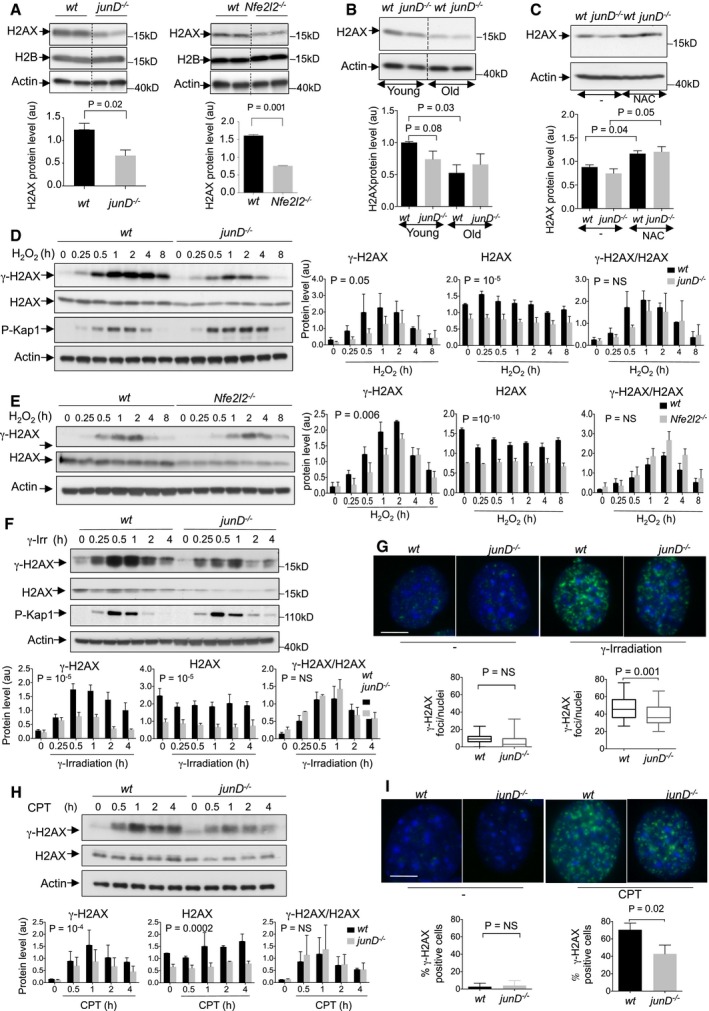
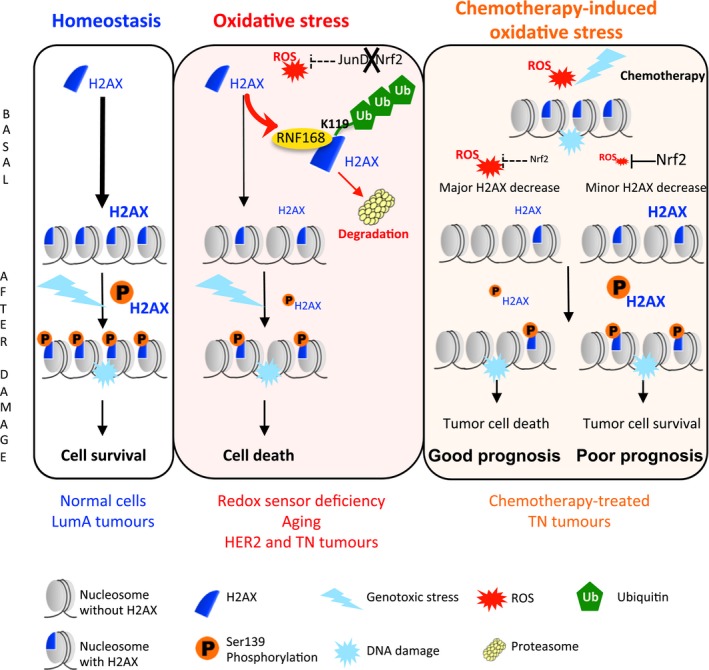
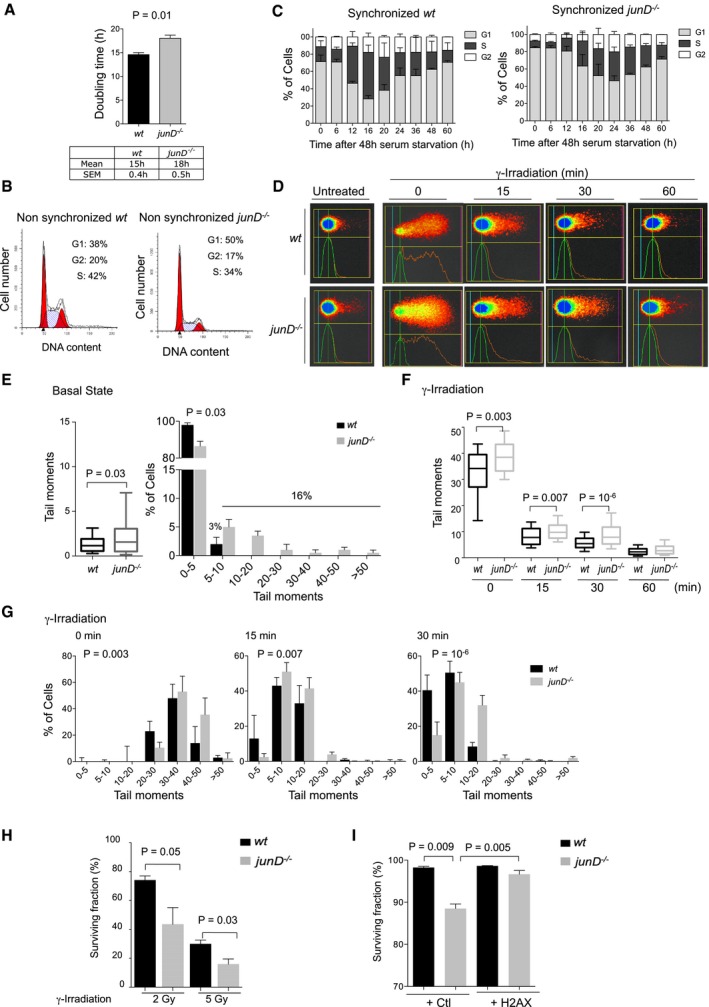
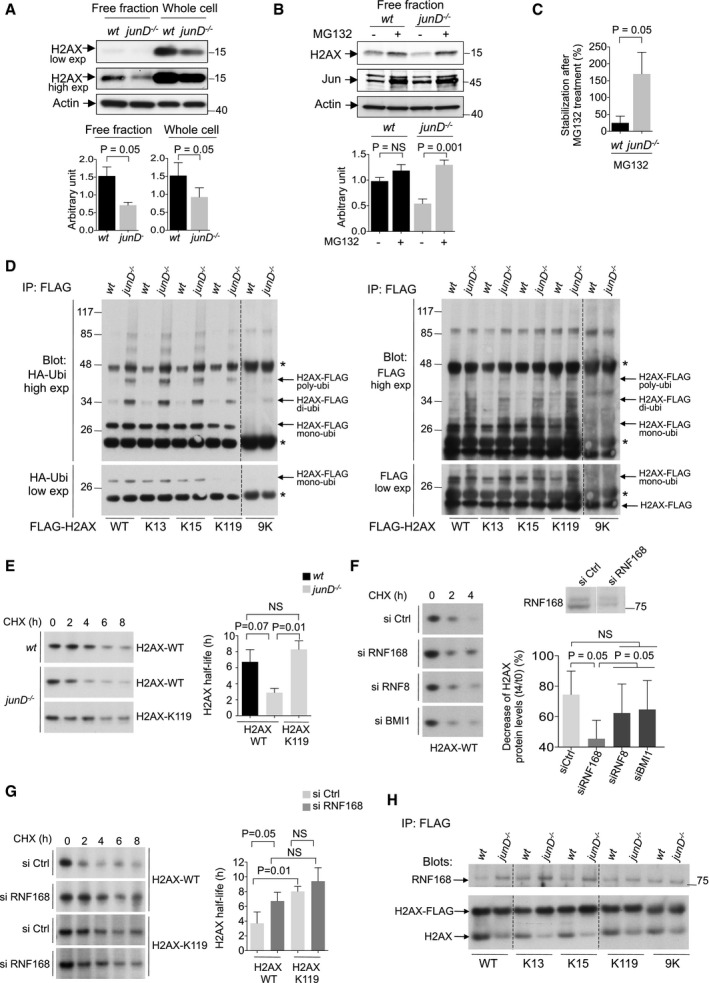
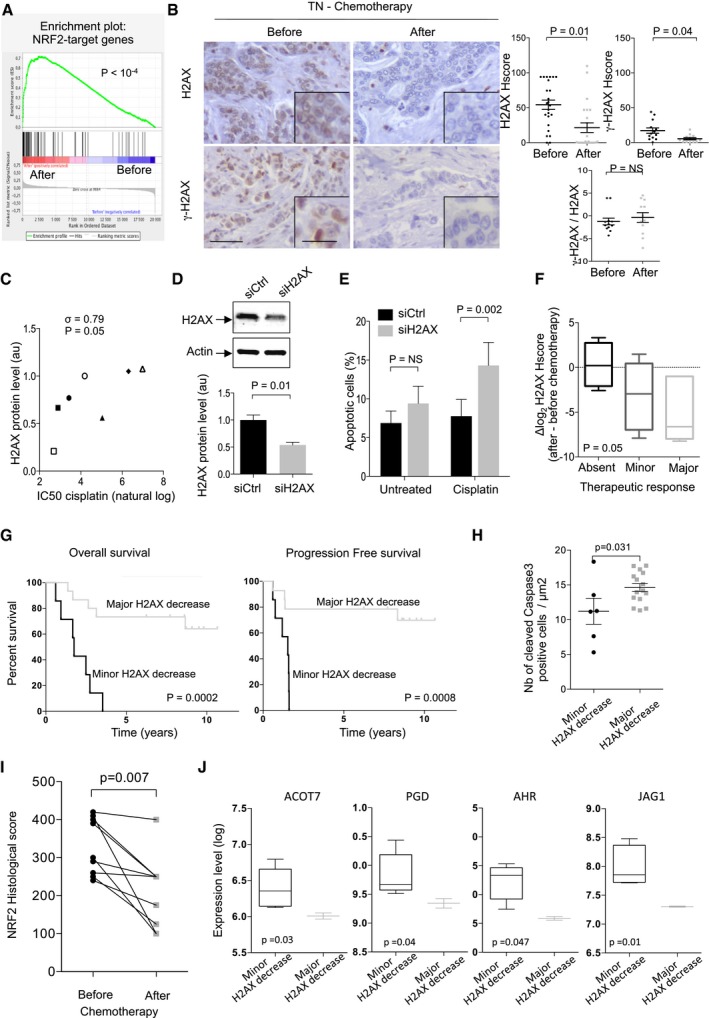
Anti-cancer drugs often increase reactive oxygen species (ROS) and cause DNA damage. Here, we highlight a new cross talk between chronic oxidative stress and the histone variant H2AX, a key player in DNA repair. We observe that persistent accumulation of ROS, due to a deficient JunD-/Nrf2-antioxidant response, reduces H2AX protein levels. This effect is mediated by an enhanced interaction of H2AX with the E3 ubiquitin ligase RNF168, which is associated with H2AX poly-ubiquitination and promotes its degradation by the proteasome. ROS-mediated H2AX decrease plays a crucial role in chemosensitivity. Indeed, cycles of chemotherapy that sustainably increase ROS reduce H2AX protein levels in Triple-Negative breast cancer (TNBC) patients. H2AX decrease by such treatment is associated with an impaired NRF2-antioxidant response and is indicative of the therapeutic efficiency and survival of TNBC patients. Thus, our data describe a novel ROS-mediated regulation of H2AX turnover, which provides new insights into genetic instability and treatment efficacy in TNBC patients.
抗癌药物常常会增加活性氧(ROS)并导致DNA损伤。在此,我们着重介绍慢性氧化应激与组蛋白变体H2AX(DNA修复中的关键因子)之间一种新的相互作用。我们观察到,由于JunD-/Nrf2-抗氧化反应缺陷导致的ROS持续积累会降低H2AX蛋白水平。这种效应是由H2AX与E3泛素连接酶RNF168之间增强的相互作用介导的,RNF168与H2AX多泛素化相关,并促进其通过蛋白酶体降解。ROS介导的H2AX减少在化学敏感性中起关键作用。实际上,持续增加ROS的化疗周期会降低三阴性乳腺癌(TNBC)患者的H2AX蛋白水平。这种治疗导致的H2AX减少与NRF2-抗氧化反应受损相关,并且预示着TNBC患者的治疗效果和生存率。因此,我们的数据描述了一种新的ROS介导的H2AX周转调节机制,这为TNBC患者的基因不稳定和治疗效果提供了新的见解。