Delgado-Peraza Francheska, Ahn Kwang H, Nogueras-Ortiz Carlos, Mungrue Imran N, Mackie Ken, Kendall Debra A, Yudowski Guillermo A
Department of Anatomy and Neurobiology (F.D.-P., G.A.Y.) and Institute of Neurobiology (F.D.-P., C.N.-O., G.A.Y.), University of Puerto Rico - Medical Sciences Campus, San Juan, Puerto Rico; Department of Pharmaceutical Sciences, University of Connecticut, Storrs, Connecticut (K.H.A., D.A.K.); Department of Pharmacology & Experimental Therapeutics, Louisiana State University Health Sciences Center, New Orleans, Louisiana (I.N.M.); and Department of Psychological & Brain Sciences, Gill Center for Biomedical Sciences, Indiana University, Bloomington, Indiana (K.M.).
Department of Anatomy and Neurobiology (F.D.-P., G.A.Y.) and Institute of Neurobiology (F.D.-P., C.N.-O., G.A.Y.), University of Puerto Rico - Medical Sciences Campus, San Juan, Puerto Rico; Department of Pharmaceutical Sciences, University of Connecticut, Storrs, Connecticut (K.H.A., D.A.K.); Department of Pharmacology & Experimental Therapeutics, Louisiana State University Health Sciences Center, New Orleans, Louisiana (I.N.M.); and Department of Psychological & Brain Sciences, Gill Center for Biomedical Sciences, Indiana University, Bloomington, Indiana (K.M.)
Mol Pharmacol. 2016 Jun;89(6):618-29. doi: 10.1124/mol.115.103176. Epub 2016 Mar 23.
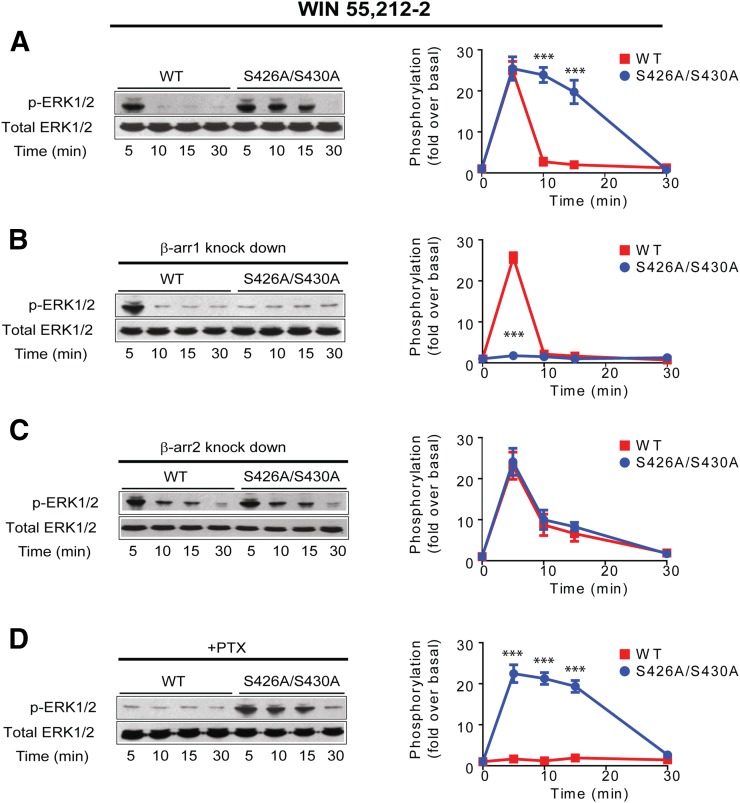
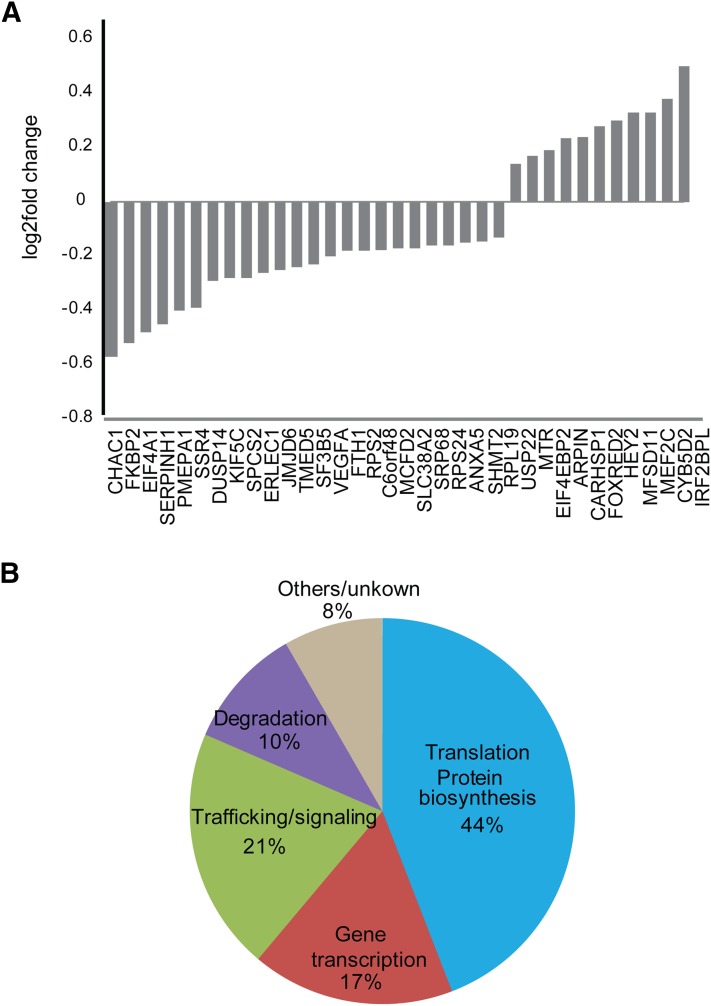
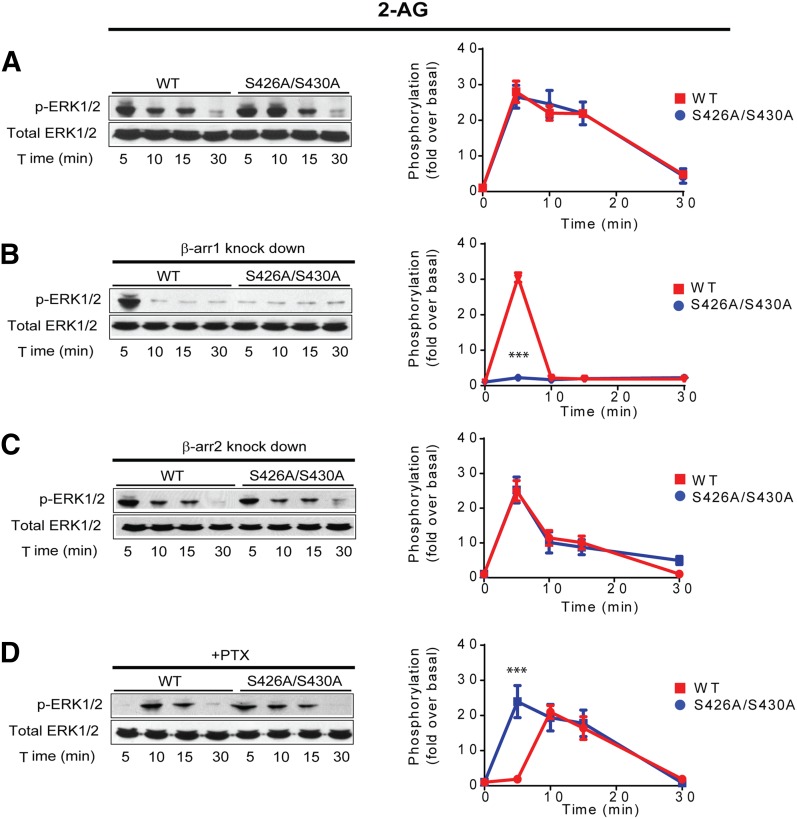
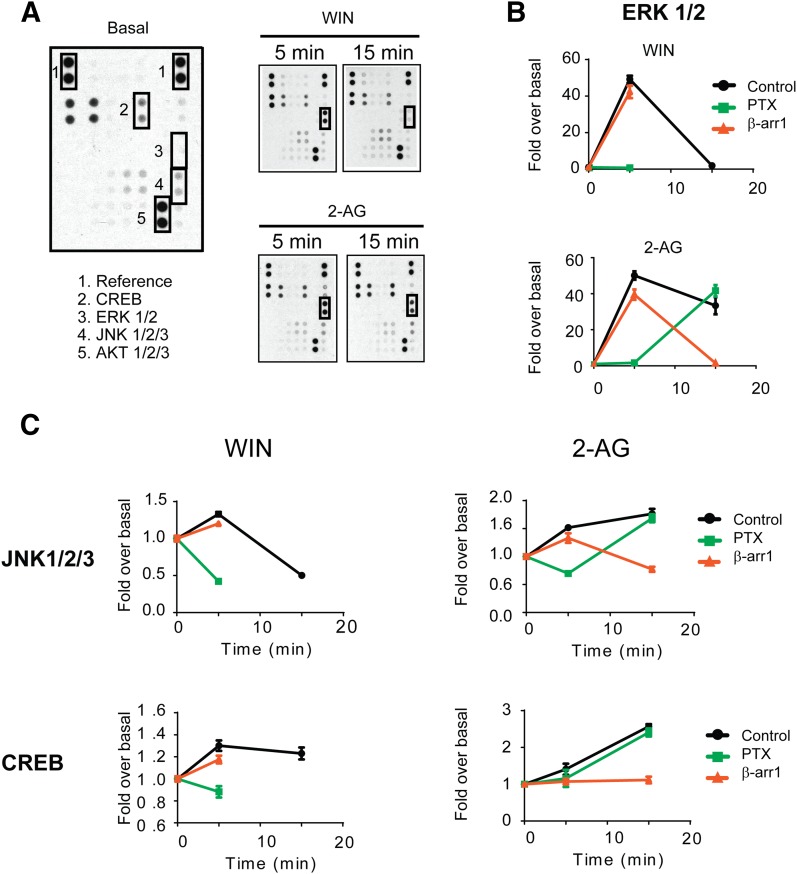
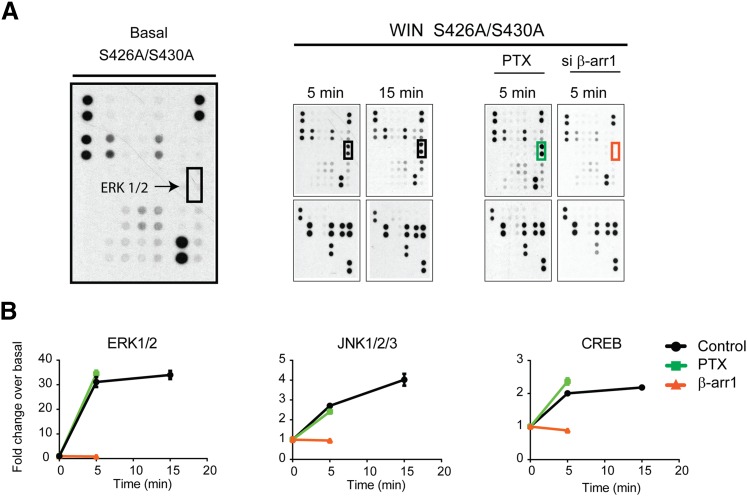
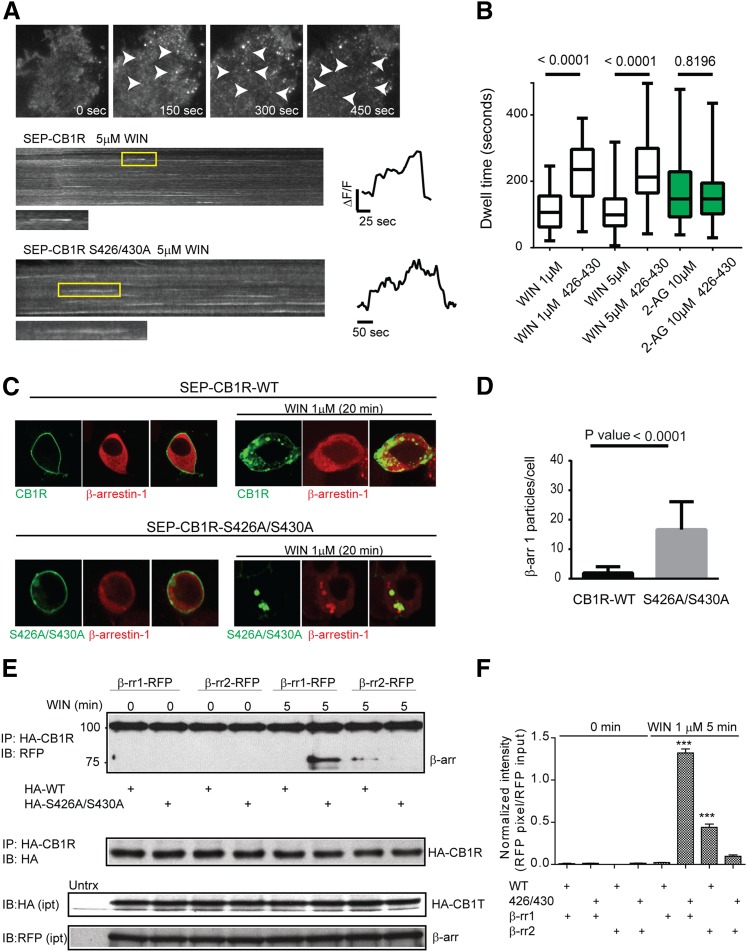
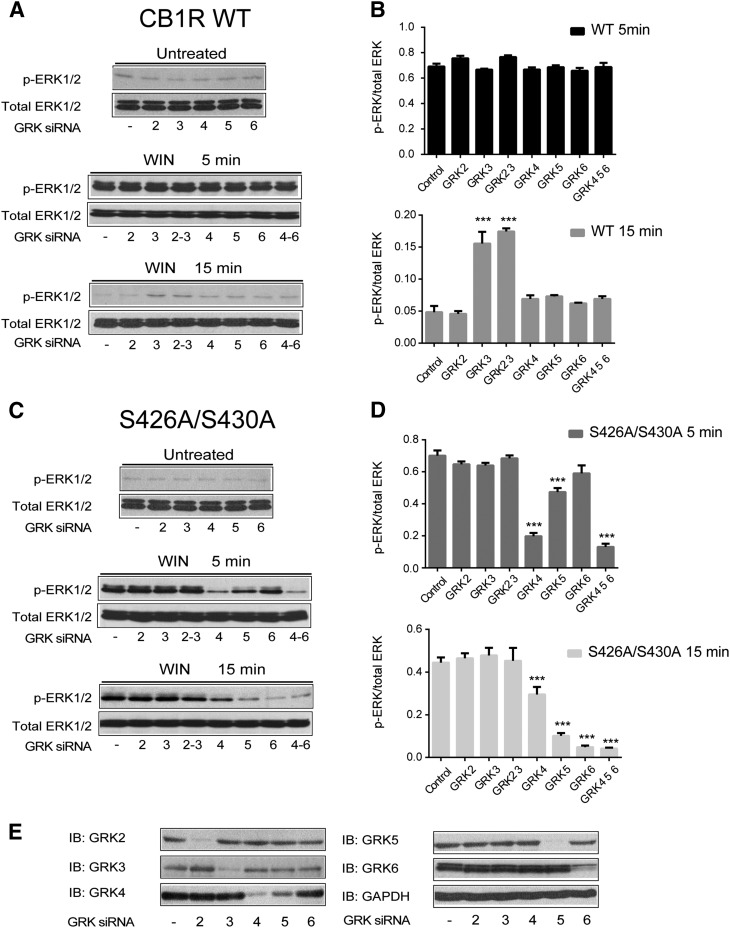
Activation of G protein-coupled receptors results in multiple waves of signaling that are mediated by heterotrimeric G proteins and the scaffolding proteins β-arrestin 1/2. Ligands can elicit full or subsets of cellular responses, a concept defined as ligand bias or functional selectivity. However, our current understanding of β-arrestin-mediated signaling is still very limited. Here we provide a comprehensive view of β-arrestin-mediated signaling from the cannabinoid 1 receptor (CB1R). By using a signaling biased receptor, we define the cascades, specific receptor kinases, and molecular mechanism underlying β-arrestin-mediated signaling: We identify the interaction kinetics of CB1R and β-arrestin 1 during their endocytic trafficking as directly proportional to its efficacy. Finally, we demonstrate that signaling results in the control of genes clustered around prosurvival and proapoptotic functions among others. Together, these studies constitute a comprehensive description of β-arrestin-mediated signaling from CB1Rs and suggest modulation of receptor endocytic trafficking as a therapeutic approach to control β-arrestin-mediated signaling.
G蛋白偶联受体的激活会引发多波信号传导,这些信号由异源三聚体G蛋白和支架蛋白β-抑制蛋白1/2介导。配体可引发细胞反应的全部或部分反应,这一概念被定义为配体偏向性或功能选择性。然而,我们目前对β-抑制蛋白介导的信号传导的理解仍然非常有限。在此,我们提供了大麻素1受体(CB1R)介导的β-抑制蛋白信号传导的全面观点。通过使用一种信号偏向性受体,我们定义了β-抑制蛋白介导的信号传导的级联反应、特定受体激酶和分子机制:我们确定了CB1R与β-抑制蛋白1在其胞吞运输过程中的相互作用动力学与其效力成正比。最后,我们证明信号传导可控制包括促生存和促凋亡功能等在内的相关基因。总之,这些研究构成了对CB1R介导的β-抑制蛋白信号传导的全面描述,并表明调节受体内吞运输作为控制β-抑制蛋白介导的信号传导的一种治疗方法。