Roman-Vendrell Cristina, Chevalier Michael, Acevedo-Canabal Agnes M, Delgado-Peraza Francheska, Flores-Otero Jacqueline, Yudowski Guillermo A
Institute of Neurobiology, University of Puerto Rico Medical Sciences Campus San Juan, PR, USA ; Department of Physiology, School of Medicine, University of Puerto Rico San Juan, PR, USA.
Department of Biochemistry and Biophysics, California Institute for Quantitative Biosciences, University of California San Francisco San Francisco, CA, USA.
Front Cell Neurosci. 2014 Nov 3;8:363. doi: 10.3389/fncel.2014.00363. eCollection 2014.
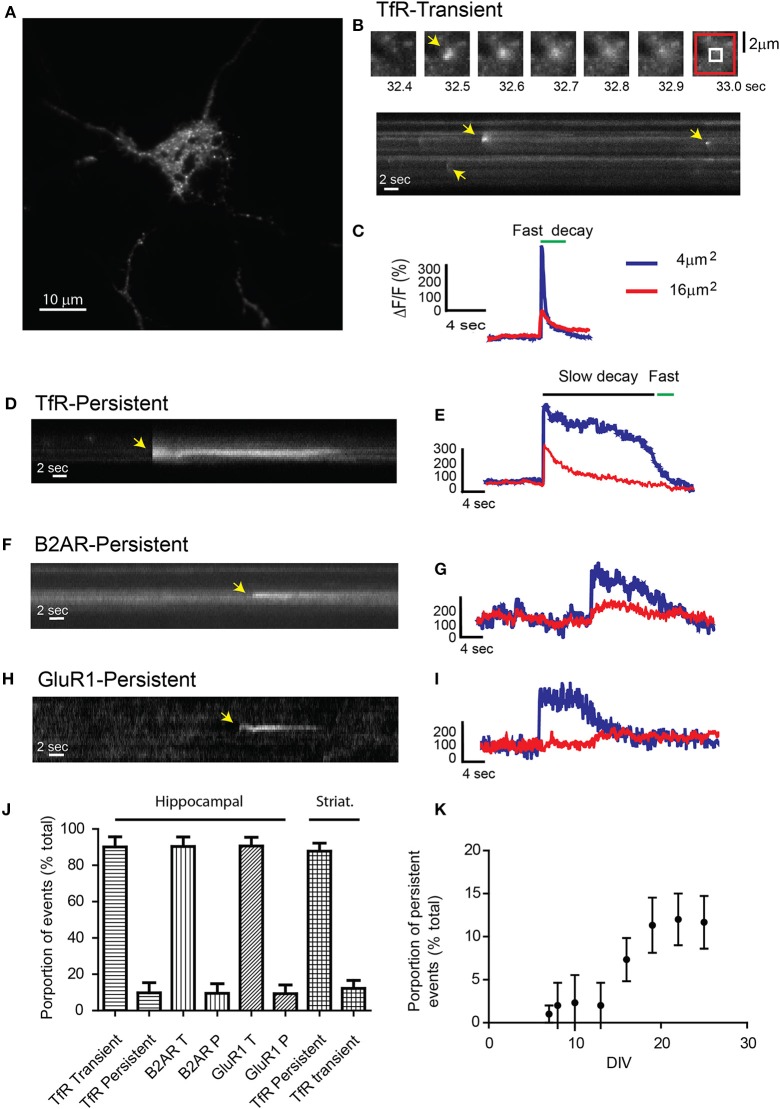
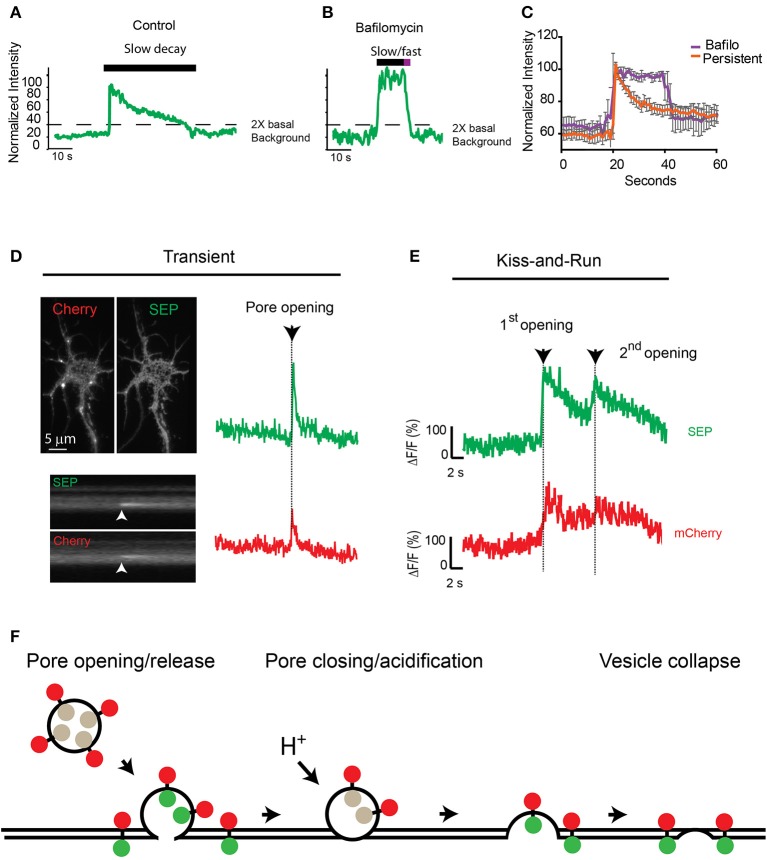
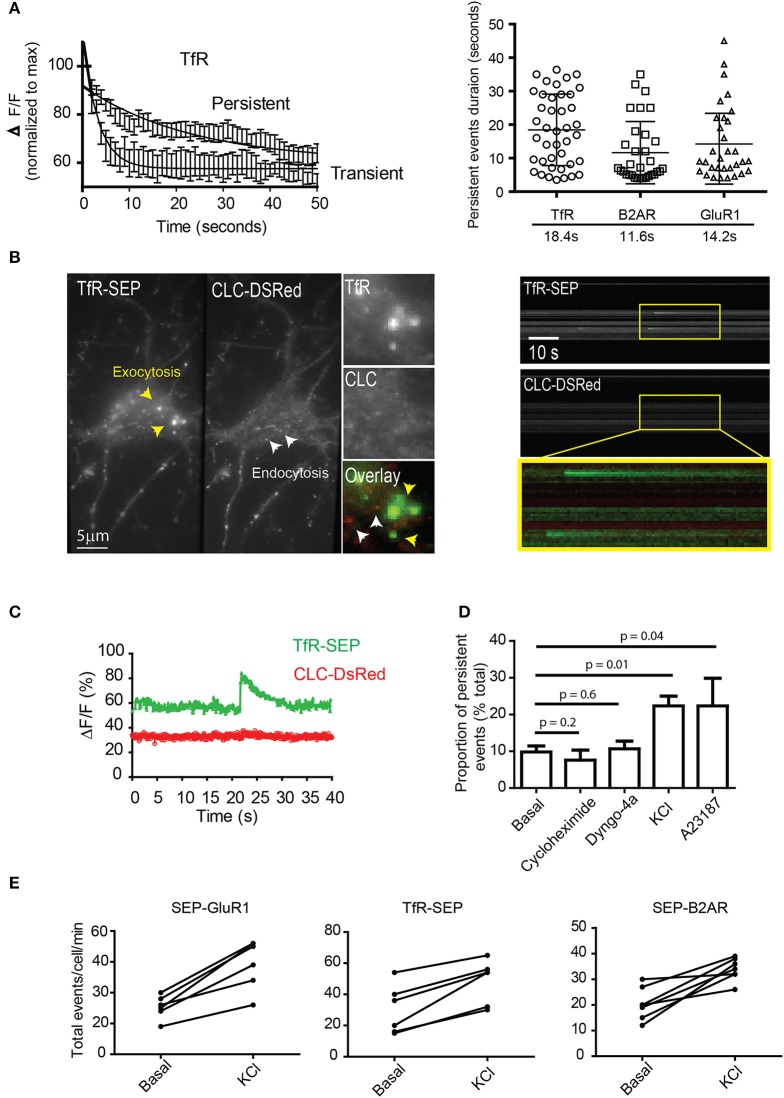
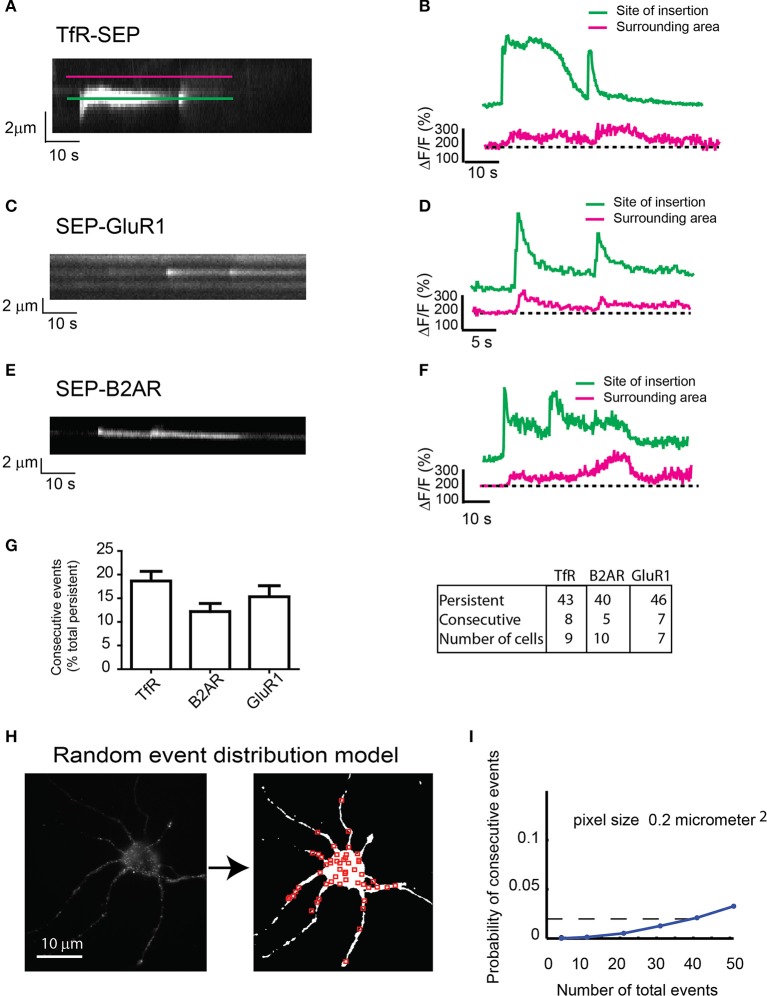
Transmembrane proteins are continuously shuttled from the endosomal compartment to the neuronal plasma membrane by highly regulated and complex trafficking steps. These events are involved in many homeostatic and physiological processes such as neuronal growth, signaling, learning and memory among others. We have previously shown that endosomal exocytosis of the B2 adrenergic receptor (B2AR) and the GluR1-containing AMPA receptor to the neuronal plasma membrane is mediated by two different types of vesicular fusion. A rapid type of exocytosis in which receptors are delivered to the plasma membrane in a single kinetic step, and a persistent mode in which receptors remain clustered at the insertion site for a variable period of time before delivery to the cell surface. Here, by comparing the exocytosis of multiple receptors in dissociated hippocampal and striatal cultures, we show that persistent events are a general mechanism of vesicular delivery. Persistent events were only observed after 10 days in vitro, and their frequency increased with use of the calcium ionophore A23187 and with depolarization induced by KCl. Finally, we determined that vesicles producing persistent events remain at the plasma membrane, closing and reopening their fusion pore for a consecutive release of cargo in a mechanism reminiscent of synaptic kiss-and-run. These results indicate that the delivery of transmembrane receptors to the cell surface can be dynamically regulated by kiss-and-run exocytosis.
跨膜蛋白通过高度调控且复杂的运输步骤,不断地从内体区室穿梭至神经元质膜。这些过程参与了许多稳态和生理过程,如神经元生长、信号传导、学习和记忆等。我们之前已经表明,β2肾上腺素能受体(B2AR)和含GluR1的AMPA受体向内体胞吐至神经元质膜是由两种不同类型的囊泡融合介导的。一种快速的胞吐类型,其中受体在单个动力学步骤中被递送至质膜;另一种持续模式,其中受体在递送至细胞表面之前,在插入位点聚集一段可变的时间。在这里,通过比较解离的海马体和纹状体培养物中多种受体的胞吐作用,我们表明持续事件是囊泡递送的一种普遍机制。持续事件仅在体外培养10天后才观察到,并且其频率随着钙离子载体A23187的使用以及KCl诱导的去极化而增加。最后,我们确定产生持续事件的囊泡停留在质膜上,关闭并重新打开其融合孔,以连续释放货物,这一机制类似于突触的亲吻-逃离。这些结果表明,跨膜受体向细胞表面的递送可通过亲吻-逃离胞吐作用进行动态调节。