Joung Je-Gun, Bae Joon Seol, Kim Sang Cheol, Jung HyunChul, Park Woong-Yang, Song Sang-Yong
Samsung Genome Institute, Samsung Medical Center, Seoul, Republic of Korea.
Molecular Cell Biology, Sungkyunkwan University School of Medicine, Suwon, Republic of Korea.
PLoS One. 2016 Mar 24;11(3):e0152574. doi: 10.1371/journal.pone.0152574. eCollection 2016.
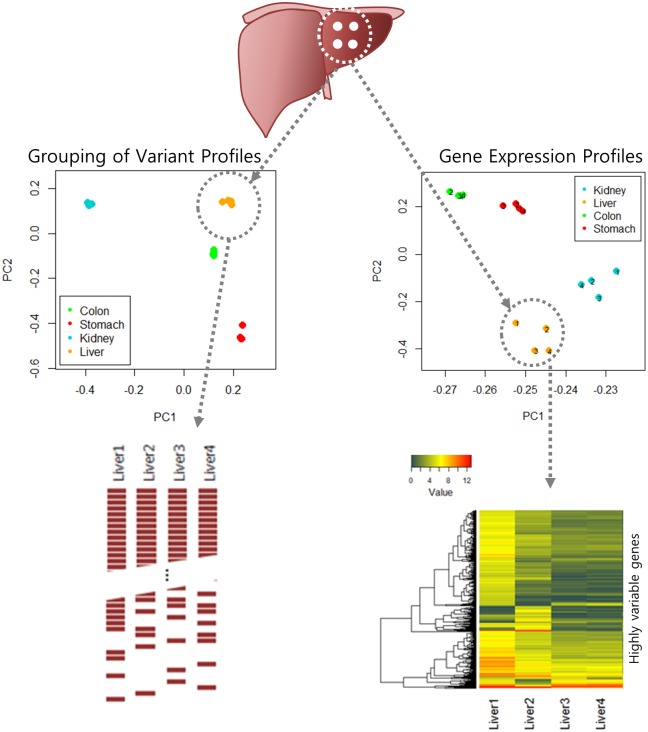
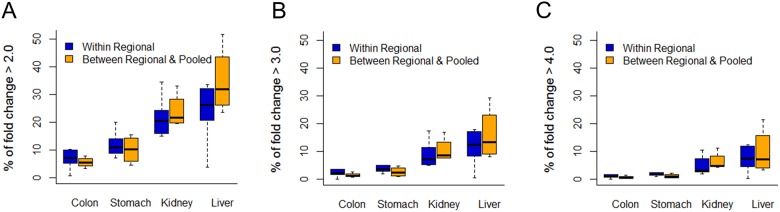
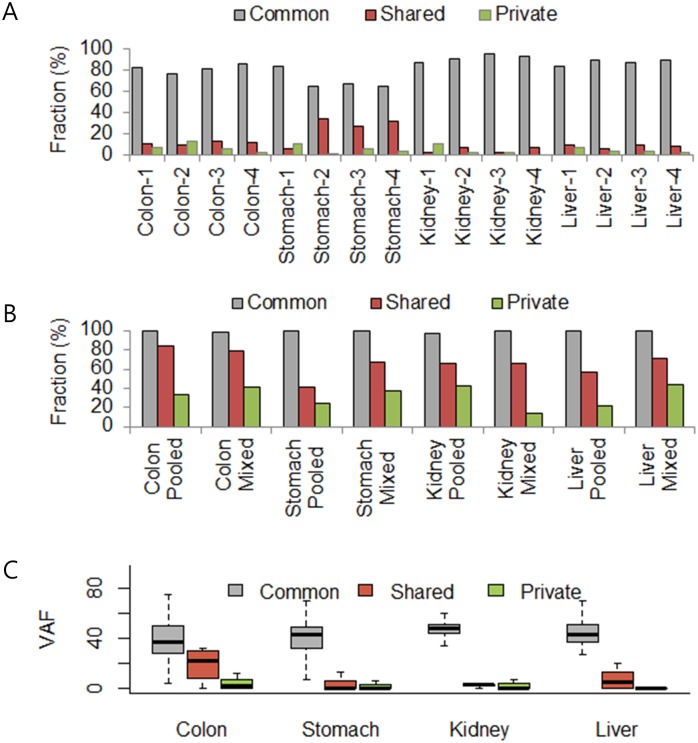
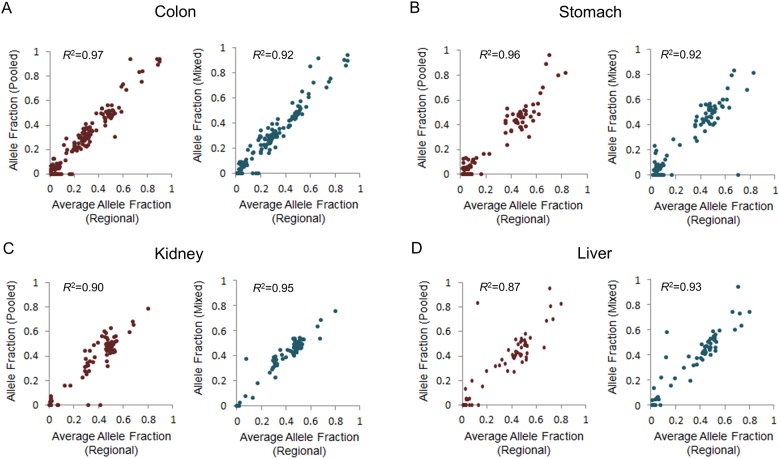
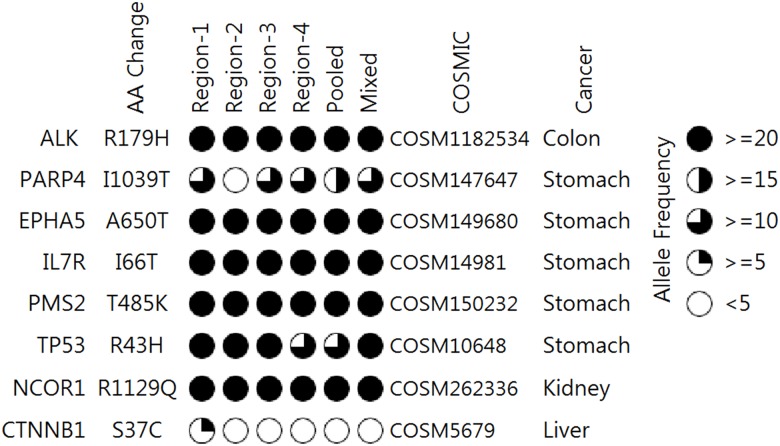
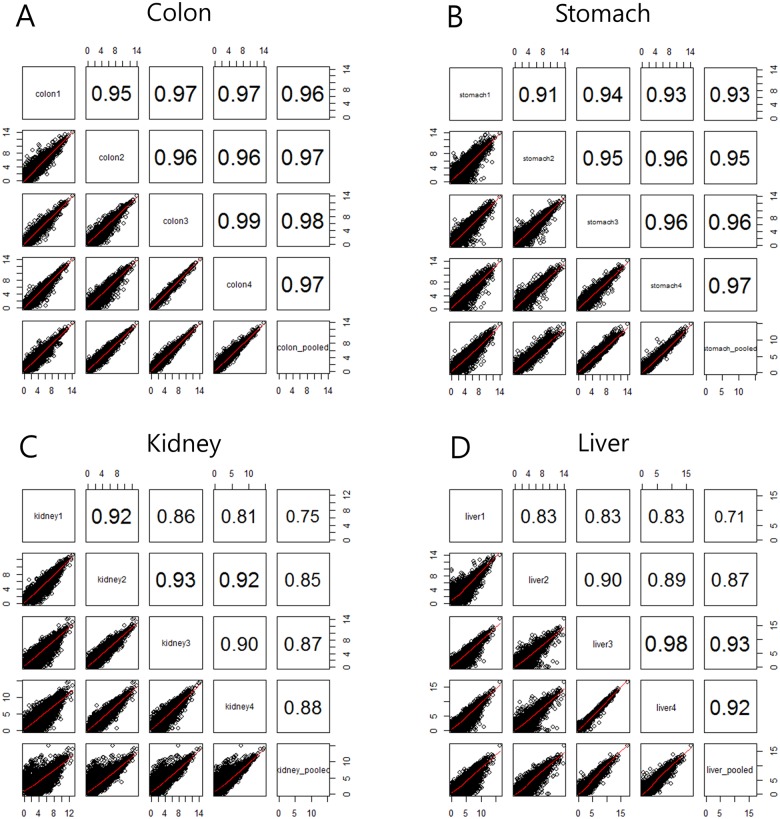
A single tumor biopsy specimen is typically used in cancer genome studies. However, it may represent incompletely the underlying mutational and transcriptional profiles of tumor biology. Multi-regional biopsies have the advantage of increased sensitivity for genomic profiling, but they are not cost-effective. The concept of an alternative method such as the pooling of multiple biopsies is a challenge. In order to determine if the pooling of distinct regions is representative at the genomic and transcriptome level, we performed sequencing of four regional samples and pooled samples for four cancer types including colon, stomach, kidney and liver cancer. Subsequently, a comparative analysis was conducted to explore differences in mutations and gene expression profiles between multiple regional biopsies and pooled biopsy for each tumor. Our analysis revealed a marginal level of regional difference in detected variants, but in those with low allele frequency, considerable discrepancies were observed. In conclusion, sequencing pooled samples has the benefit of detecting many variants with moderate allele frequency that occur in partial regions, but it is not applicable for detecting low-frequency mutations that require deep sequencing.
在癌症基因组研究中,通常使用单个肿瘤活检样本。然而,它可能无法完全代表肿瘤生物学潜在的突变和转录谱。多区域活检在基因组分析方面具有更高的敏感性,但成本效益不高。诸如合并多个活检样本等替代方法的概念是一项挑战。为了确定不同区域的合并样本在基因组和转录组水平上是否具有代表性,我们对包括结肠癌、胃癌、肾癌和肝癌在内的四种癌症类型的四个区域样本和合并样本进行了测序。随后,进行了比较分析,以探索每种肿瘤的多个区域活检样本和合并活检样本之间在突变和基因表达谱方面的差异。我们的分析揭示了检测到的变体中存在一定程度的区域差异,但在等位基因频率较低的变体中,观察到了相当大的差异。总之,对合并样本进行测序有利于检测部分区域中出现的中等等位基因频率的许多变体,但不适用于检测需要深度测序的低频突变。