Luo N, Guo J, Chen L, Yang W, Qu X, Cheng Z
Department of Gynecology & Obstetrics, Yangpu Hospital, School of Medicine, Tongji University, Shanghai 200090, China.
Institute of Gynecological Minimally Invasive Medicine, School of Medicine, Tongji University, Shanghai 200090, China.
Cell Death Dis. 2016 Mar 24;7(3):e2157. doi: 10.1038/cddis.2015.401.
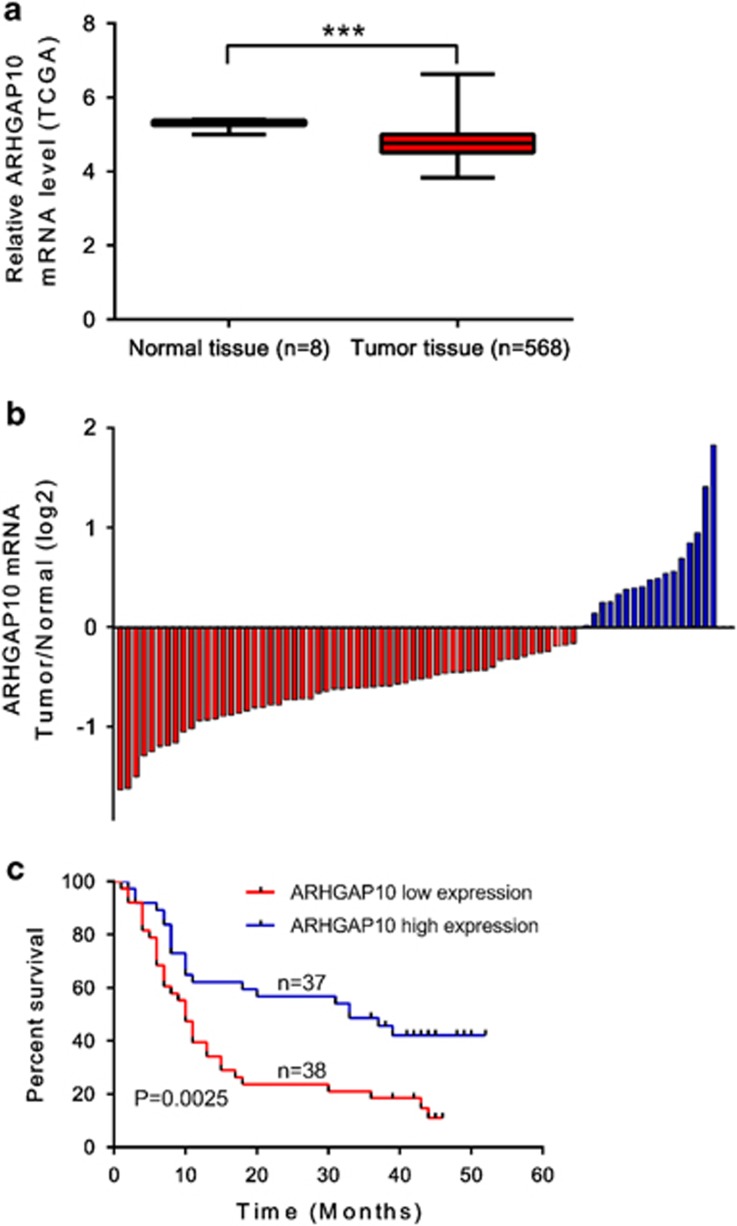
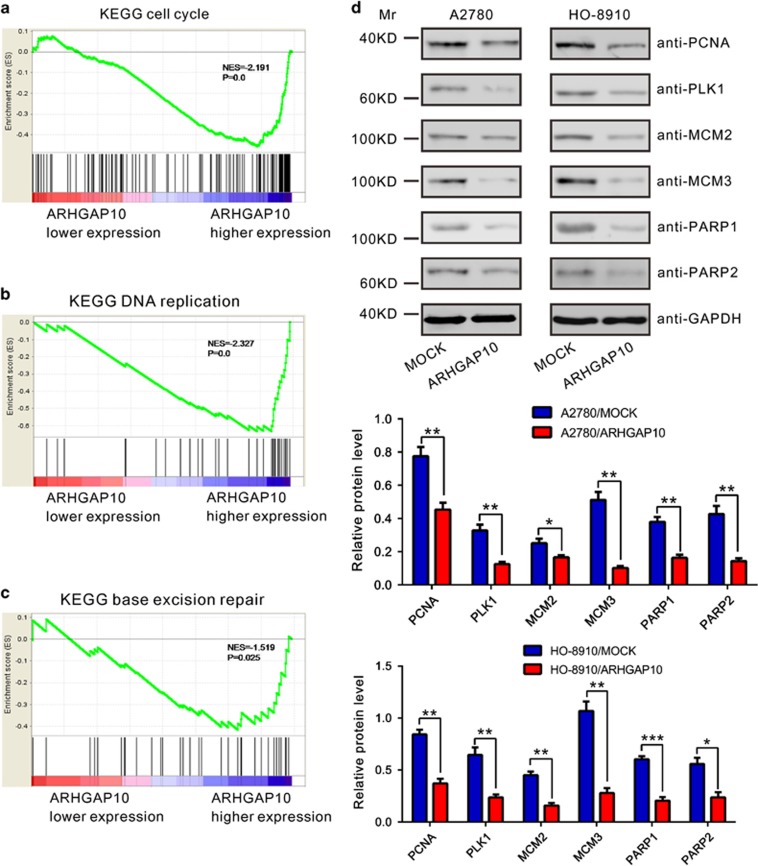
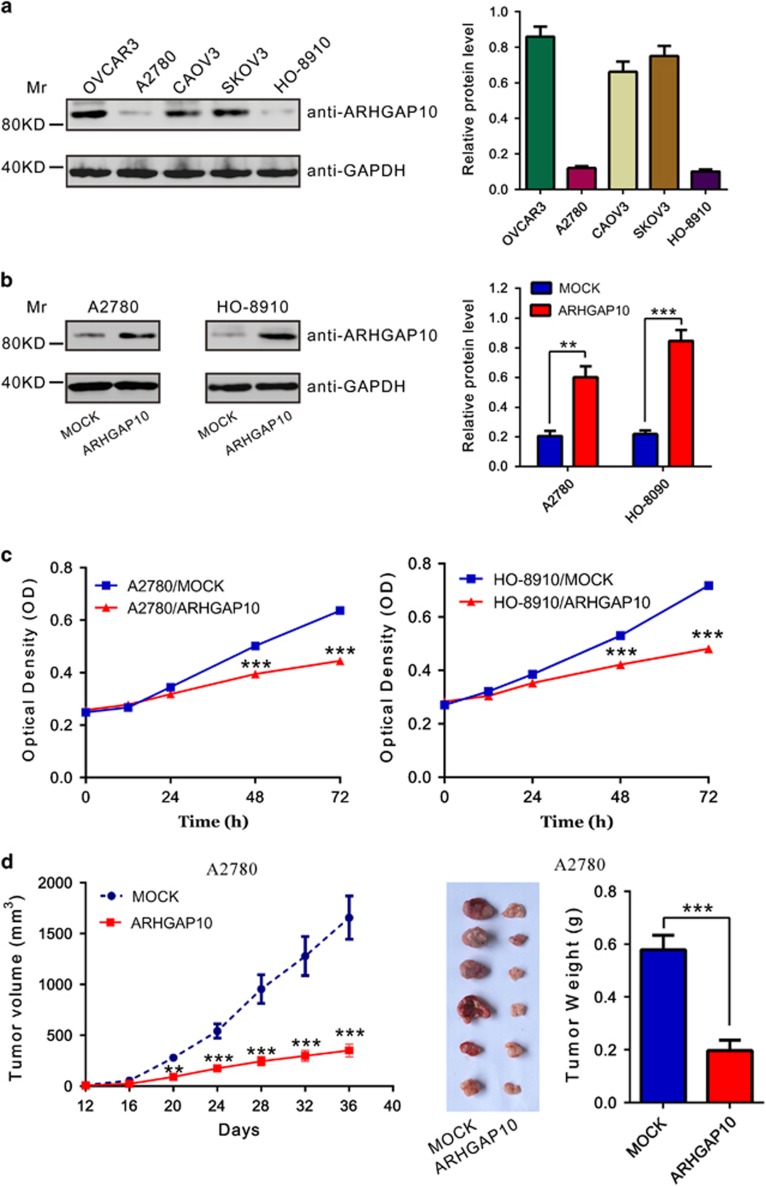
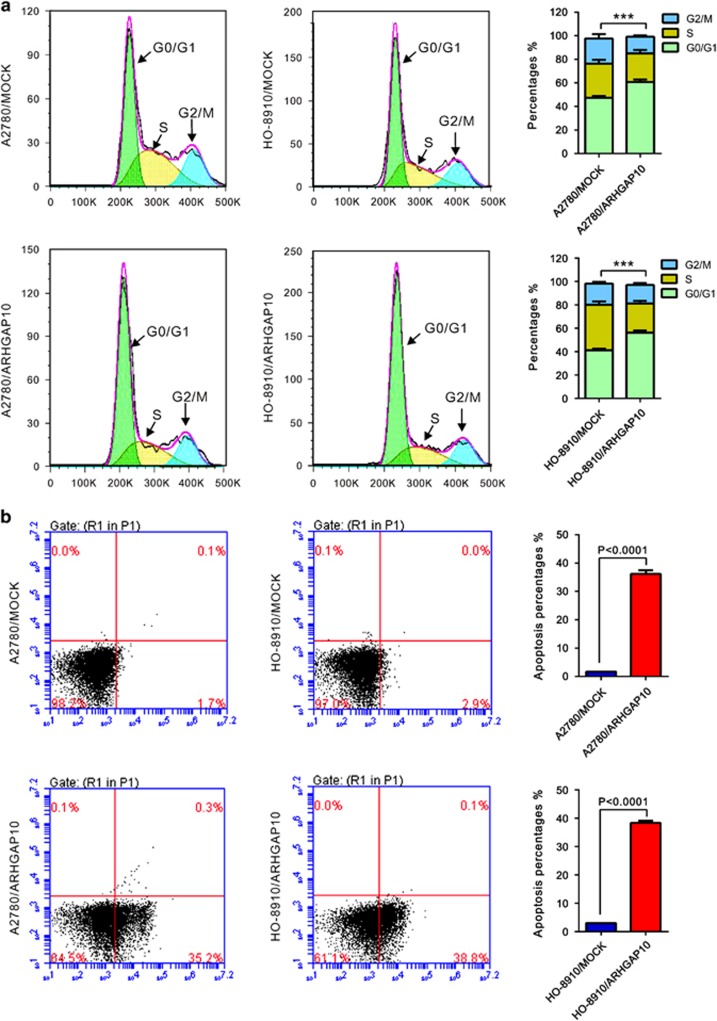
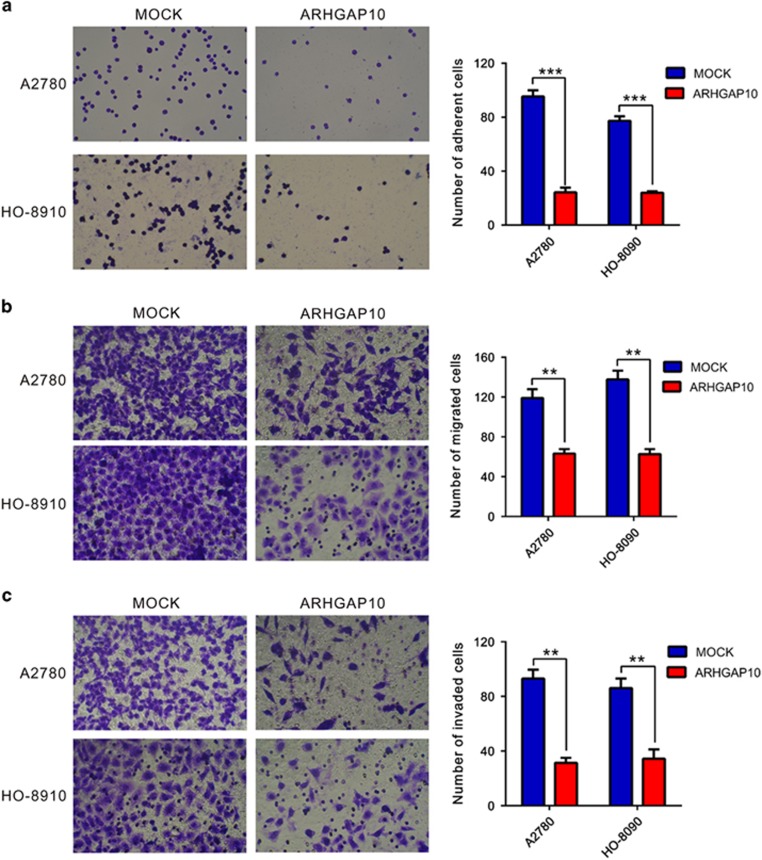
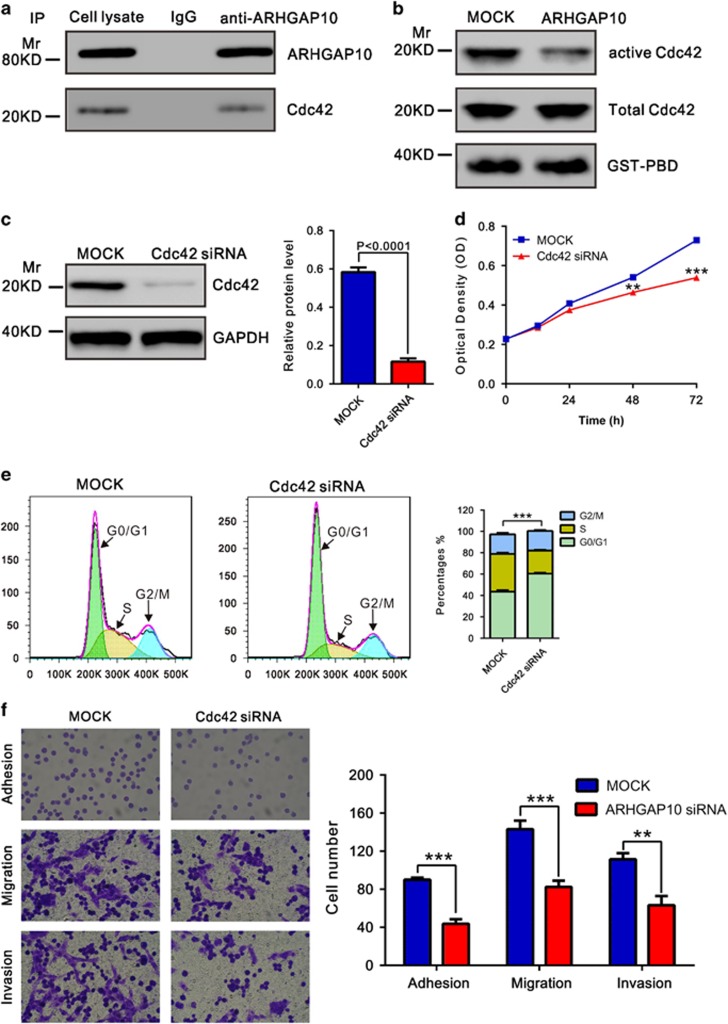
Rho GTPase-activating proteins (RhoGAPs) are implicated in the development and progression of ovarian cancer. ARHGAP10 is a member of RhoGAP proteins and inactivates Cdc42 by converting GTP-bound form to GDP-bound form. Here, we aimed to evaluate ARHGAP10 expression profile and functions in ovarian cancer. The decreased expression of ARHGAP10 was found in 77.3% (58/75) of ovarian cancer tissues, compared with their non-tumorous counterparts. Furthermore, overall survival in ovarian cancer patients with higher expression of ARHGAP10 was longer than those with lower expression. Ectopic expression of ARHGAP10 in two ovarian cancer cell lines with lower expression of ARHGAP10 (A2780 and HO-8910) dramatically suppressed cell proliferation in vitro. In nude mice, its stable overexpression significantly inhibited the tumorigenicity of A2780 cells. We further demonstrated that overexpression of ARHGAP10 significantly inhibited cell adhesion, migration and invasion, resulted in cell arrest in G1 phase of cell cycle and a significant increase of apoptosis. Moreover, ARHGAP10 interacted with Cdc42 and overexpression of ARHGAP10 inhibited the activity of Cdc42 in A2780 cells. Gene set enrichment analysis on The Cancer Genome Atlas dataset showed that KEGG cell cycle, replication and base excision repair (BER) pathways were correlatively with the ARHGAP10 expression, which was further confirmed in ovarian cancer cells by western blotting. Hence, ARHGAP10 may serve as a tumor suppressor through inactivating Cdc42, as well as inhibiting cell cycle, replication and BER pathways. Our data suggest an important role of ARHGAP10 in the molecular etiology of cancer and implicate the potential application of ARHGAP10 in cancer therapy.
Rho GTP酶激活蛋白(RhoGAPs)与卵巢癌的发生发展有关。ARHGAP10是RhoGAP蛋白家族的一员,通过将结合GTP的形式转化为结合GDP的形式使Cdc42失活。在此,我们旨在评估ARHGAP10在卵巢癌中的表达谱及功能。与非肿瘤组织相比,77.3%(58/75)的卵巢癌组织中发现ARHGAP10表达降低。此外,ARHGAP10高表达的卵巢癌患者总生存期长于低表达患者。在两个ARHGAP10低表达的卵巢癌细胞系(A2780和HO - 8910)中异位表达ARHGAP10显著抑制了体外细胞增殖。在裸鼠中,其稳定过表达显著抑制了A2780细胞的致瘤性。我们进一步证明,ARHGAP10过表达显著抑制细胞黏附、迁移和侵袭,导致细胞停滞在细胞周期的G1期并显著增加细胞凋亡。此外,ARHGAP10与Cdc42相互作用,ARHGAP10过表达抑制了A2780细胞中Cdc42的活性。对癌症基因组图谱数据集进行基因集富集分析表明,KEGG细胞周期、复制和碱基切除修复(BER)途径与ARHGAP10表达相关,这在卵巢癌细胞中通过蛋白质印迹法得到进一步证实。因此,ARHGAP10可能通过使Cdc42失活以及抑制细胞周期、复制和BER途径发挥肿瘤抑制作用。我们的数据表明ARHGAP10在癌症分子病因学中具有重要作用,并暗示了ARHGAP10在癌症治疗中的潜在应用。