Department of Psychiatry, Nagoya University Graduate School of Medicine, Nagoya, Aichi, Japan.
Department of Pharmacology, Nagoya University Graduate School of Medicine, Nagoya, Aichi, Japan.
Transl Psychiatry. 2020 Jul 22;10(1):247. doi: 10.1038/s41398-020-00917-z.
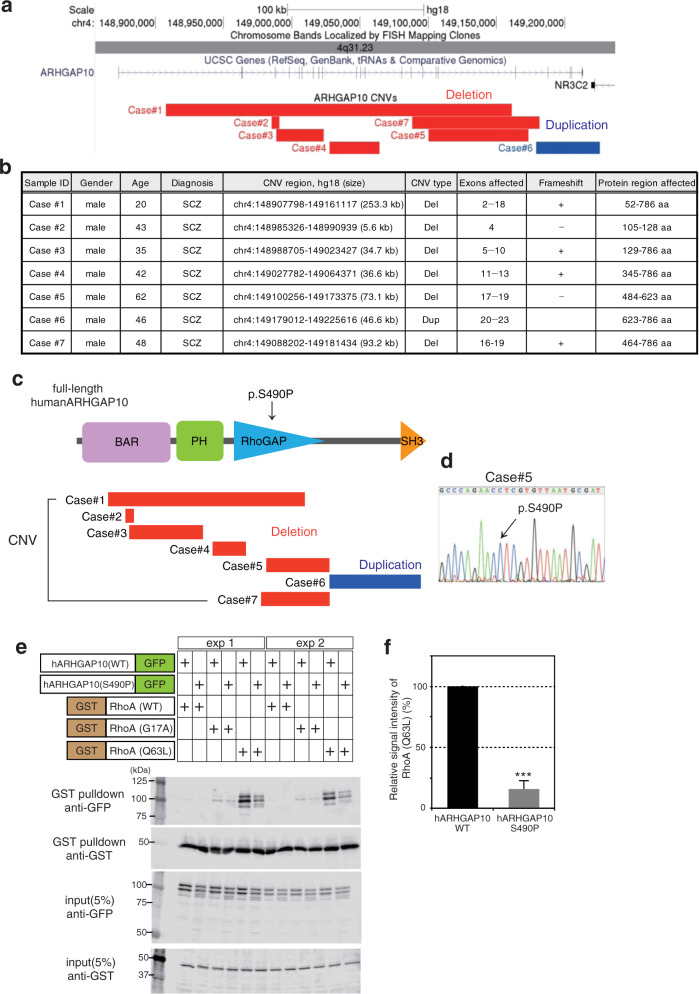
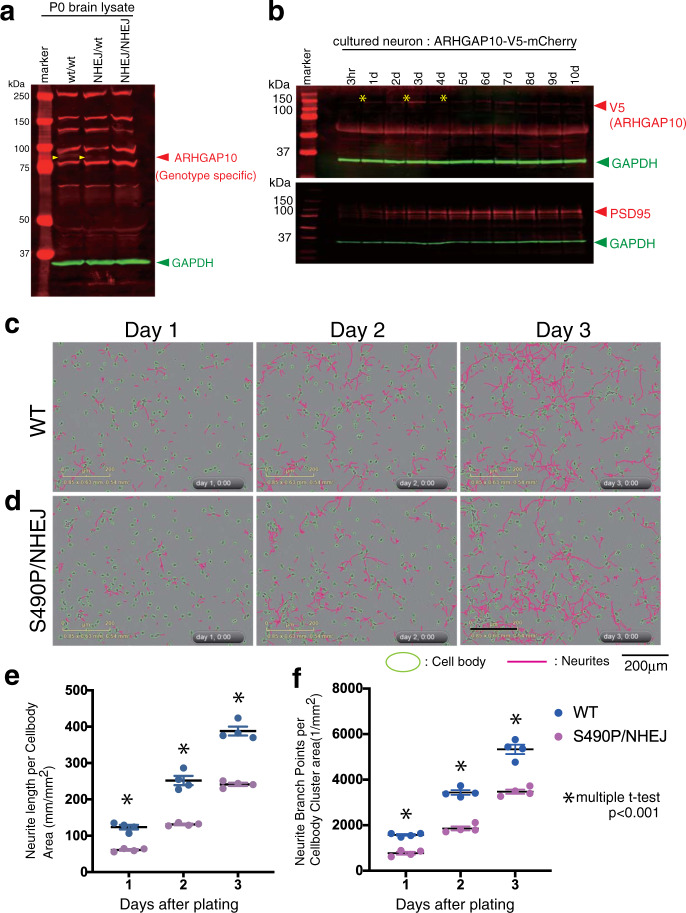
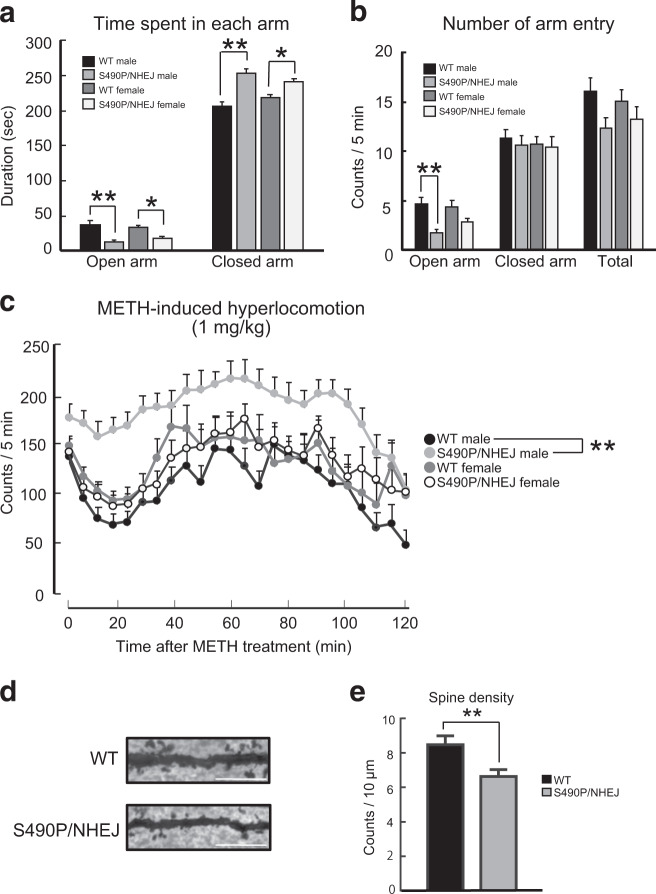
Schizophrenia (SCZ) is known to be a heritable disorder; however, its multifactorial nature has significantly hampered attempts to establish its pathogenesis. Therefore, in this study, we performed genome-wide copy-number variation (CNV) analysis of 2940 patients with SCZ and 2402 control subjects and identified a statistically significant association between SCZ and exonic CNVs in the ARHGAP10 gene. ARHGAP10 encodes a member of the RhoGAP superfamily of proteins that is involved in small GTPase signaling. This signaling pathway is one of the SCZ-associated pathways and may contribute to neural development and function. However, the ARHGAP10 gene is often confused with ARHGAP21, thus, the significance of ARHGAP10 in the molecular pathology of SCZ, including the expression profile of the ARHGAP10 protein, remains poorly understood. To address this issue, we focused on one patient identified to have both an exonic deletion and a missense variant (p.S490P) in ARHGAP10. The missense variant was found to be located in the RhoGAP domain and was determined to be relevant to the association between ARHGAP10 and the active form of RhoA. We evaluated ARHGAP10 protein expression in the brains of reporter mice and generated a mouse model to mimic the patient case. The model exhibited abnormal emotional behaviors, along with reduced spine density in the medial prefrontal cortex (mPFC). In addition, primary cultured neurons prepared from the mouse model brain exhibited immature neurites in vitro. Furthermore, we established induced pluripotent stem cells (iPSCs) from this patient, and differentiated them into tyrosine hydroxylase (TH)-positive neurons in order to analyze their morphological phenotypes. TH-positive neurons differentiated from the patient-derived iPSCs exhibited severe defects in both neurite length and branch number; these defects were restored by the addition of the Rho-kinase inhibitor, Y-27632. Collectively, our findings suggest that rare ARHGAP10 variants may be genetically and biologically associated with SCZ and indicate that Rho signaling represents a promising drug discovery target for SCZ treatment.
精神分裂症(SCZ)是一种已知的遗传性疾病;然而,其多因素的性质极大地阻碍了对其发病机制的研究。因此,在这项研究中,我们对 2940 名精神分裂症患者和 2402 名对照进行了全基因组拷贝数变异(CNV)分析,确定了 ARHGAP10 基因中外显子 CNV 与精神分裂症之间存在统计学显著关联。ARHGAP10 基因编码 RhoGAP 超家族蛋白的一个成员,该蛋白参与小 GTP 酶信号转导。该信号通路是与精神分裂症相关的通路之一,可能与神经发育和功能有关。然而,ARHGAP10 基因经常与 ARHGAP21 混淆,因此,ARHGAP10 在精神分裂症的分子病理学中的意义,包括 ARHGAP10 蛋白的表达谱,仍然知之甚少。为了解决这个问题,我们专注于一个患者,该患者在 ARHGAP10 中既有外显子缺失又有错义变异(p.S490P)。该错义变异位于 RhoGAP 结构域内,与 ARHGAP10 与 RhoA 活性形式之间的关联有关。我们评估了报告小鼠大脑中的 ARHGAP10 蛋白表达,并生成了一个模拟患者病例的小鼠模型。该模型表现出异常的情绪行为,以及内侧前额叶皮层(mPFC)的棘突密度降低。此外,从小鼠模型大脑中制备的原代培养神经元在体外表现出不成熟的神经突。此外,我们从该患者建立了诱导多能干细胞(iPSC),并将其分化为酪氨酸羟化酶(TH)阳性神经元,以分析其形态表型。从患者来源的 iPSC 分化的 TH 阳性神经元在神经突长度和分支数量上均表现出严重缺陷;这些缺陷可以通过添加 Rho 激酶抑制剂 Y-27632 来恢复。总之,我们的研究结果表明,罕见的 ARHGAP10 变体可能与精神分裂症在遗传和生物学上有关,并表明 Rho 信号代表精神分裂症治疗的一个有前途的药物发现靶点。