Ahn Woo-Young, Ramesh Divya, Moeller Frederick Gerard, Vassileva Jasmin
Department of Psychiatry, Virginia Commonwealth University, Richmond, VA, USA; Institute for Drug and Alcohol Studies, Virginia Commonwealth University, Richmond, VA, USA; Department of Psychology, The Ohio State University, Columbus, OH, USA.
School of Nursing, University of Connecticut , Storrs, CT , USA.
Front Psychiatry. 2016 Mar 10;7:34. doi: 10.3389/fpsyt.2016.00034. eCollection 2016.
Identifying objective and accurate markers of cocaine dependence (CD) can innovate its prevention and treatment. Existing evidence suggests that CD is characterized by a wide range of cognitive deficits, most notably by increased impulsivity. Impulsivity is multidimensional and it is unclear which of its various dimensions would have the highest predictive utility for CD. The machine-learning approach is highly promising for discovering predictive markers of disease. Here, we used machine learning to identify multivariate predictive patterns of impulsivity phenotypes that can accurately classify individuals with CD.
Current cocaine-dependent users (N = 31) and healthy controls (N = 23) completed the self-report Barratt Impulsiveness Scale-11 and five neurocognitive tasks indexing different dimensions of impulsivity: (1) Immediate Memory Task (IMT), (2) Stop-Signal Task, (3) Delay-Discounting Task (DDT), (4) Iowa Gambling Task (IGT), and (5) Probabilistic Reversal-Learning task. We applied a machine-learning algorithm to all impulsivity measures.
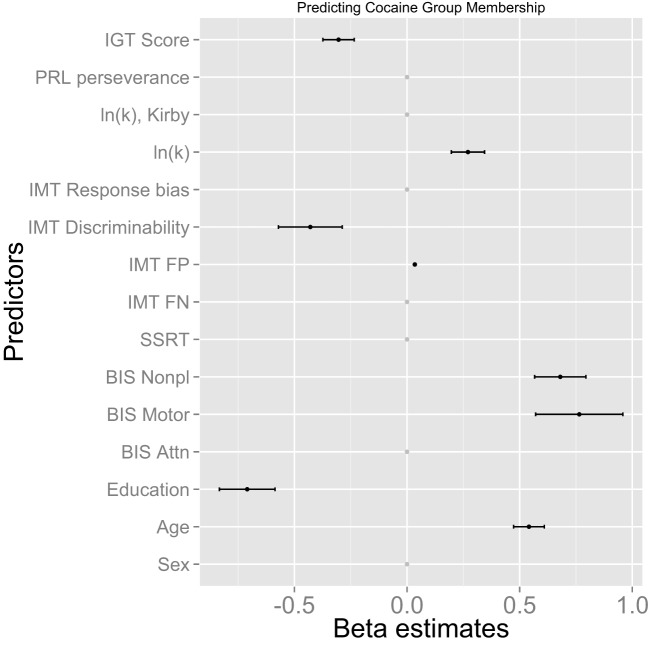
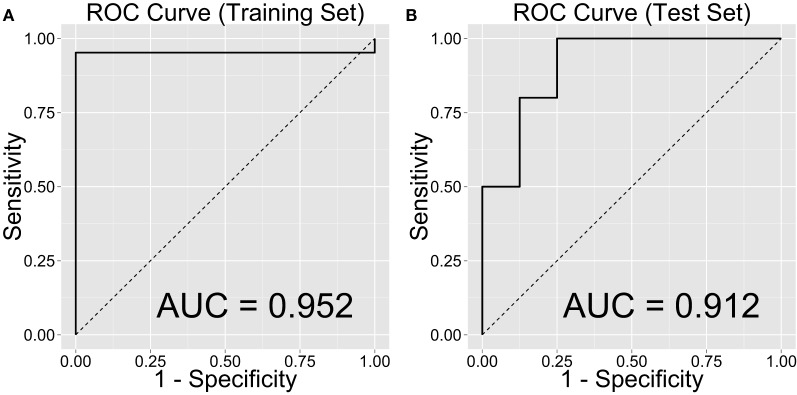
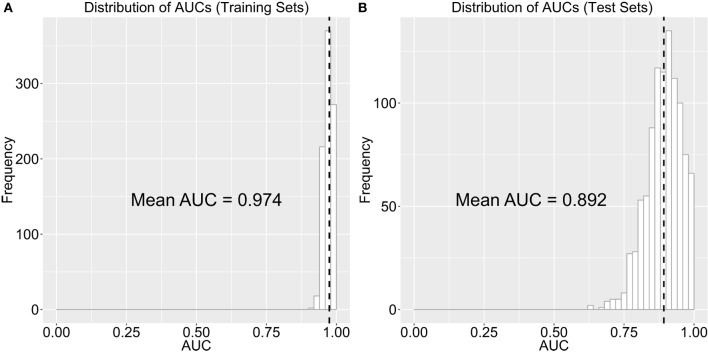
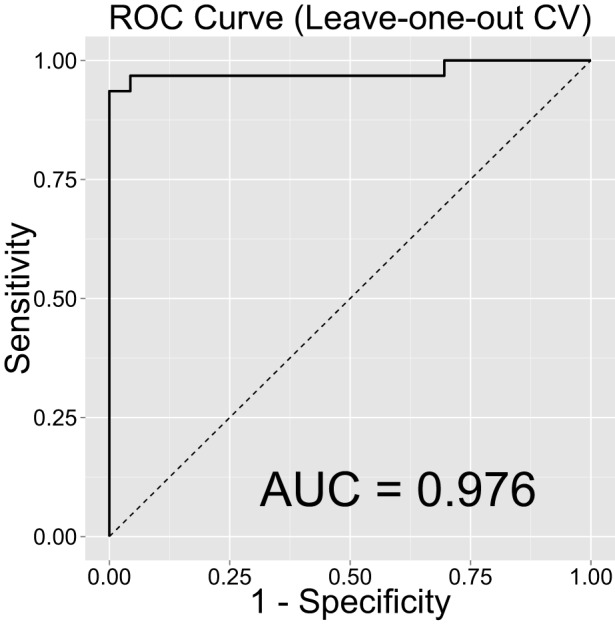
Machine learning accurately classified individuals with CD and predictions were generalizable to new samples (area under the curve of the receiver-operating characteristic curve was 0.912 in the test set). CD membership was predicted by higher scores on motor and non-planning trait impulsivity, poor response inhibition, and discriminability on the IMT, higher delay discounting on the DDT, and poor decision making on the IGT.
Our results suggest that multivariate behavioral impulsivity phenotypes can predict CD with high degree of accuracy, which can potentially be used to assess individuals' vulnerability to CD in clinical settings.
识别可卡因依赖(CD)的客观准确标志物能够革新其预防和治疗方法。现有证据表明,CD的特征是存在广泛的认知缺陷,最显著的是冲动性增加。冲动性是多维度的,目前尚不清楚其哪个维度对CD具有最高的预测效用。机器学习方法在发现疾病预测标志物方面极具前景。在此,我们使用机器学习来识别冲动性表型的多变量预测模式,从而能够准确地对CD个体进行分类。
当前的可卡因依赖使用者(N = 31)和健康对照者(N = 23)完成了自我报告的巴雷特冲动性量表-11以及五项索引冲动性不同维度的神经认知任务:(1)即时记忆任务(IMT),(2)停止信号任务,(3)延迟折扣任务(DDT),(4)爱荷华赌博任务(IGT)以及(5)概率性反转学习任务。我们将一种机器学习算法应用于所有冲动性测量指标。
机器学习能够准确地对CD个体进行分类,并且预测结果能够推广到新样本(测试集中受试者工作特征曲线下面积为0.912)。运动和非计划性特质冲动性得分较高、反应抑制能力差、IMT上的辨别能力、DDT上较高的延迟折扣以及IGT上决策能力差可预测是否为CD。
我们的结果表明,多变量行为冲动性表型能够高度准确地预测CD,这在临床环境中可能潜在地用于评估个体对CD的易感性。