Tan Hao, Zhang Lu, Weng Yuding, Chen Ronghao, Zhu Feng, Jin Yongxin, Cheng Zhihui, Jin Shouguang, Wu Weihui
State Key Laboratory of Medicinal Chemical Biology, Key Laboratory of Molecular Microbiology and Technology of the Ministry of Education, Department of Microbiology, College of Life Sciences, Nankai University Tianjin, China.
State Key Laboratory of Medicinal Chemical Biology, Key Laboratory of Molecular Microbiology and Technology of the Ministry of Education, Department of Microbiology, College of Life Sciences, Nankai UniversityTianjin, China; Department of Molecular Genetics and Microbiology, College of Medicine, University of Florida, GainesvilleFL, USA.
Front Microbiol. 2016 Mar 16;7:317. doi: 10.3389/fmicb.2016.00317. eCollection 2016.
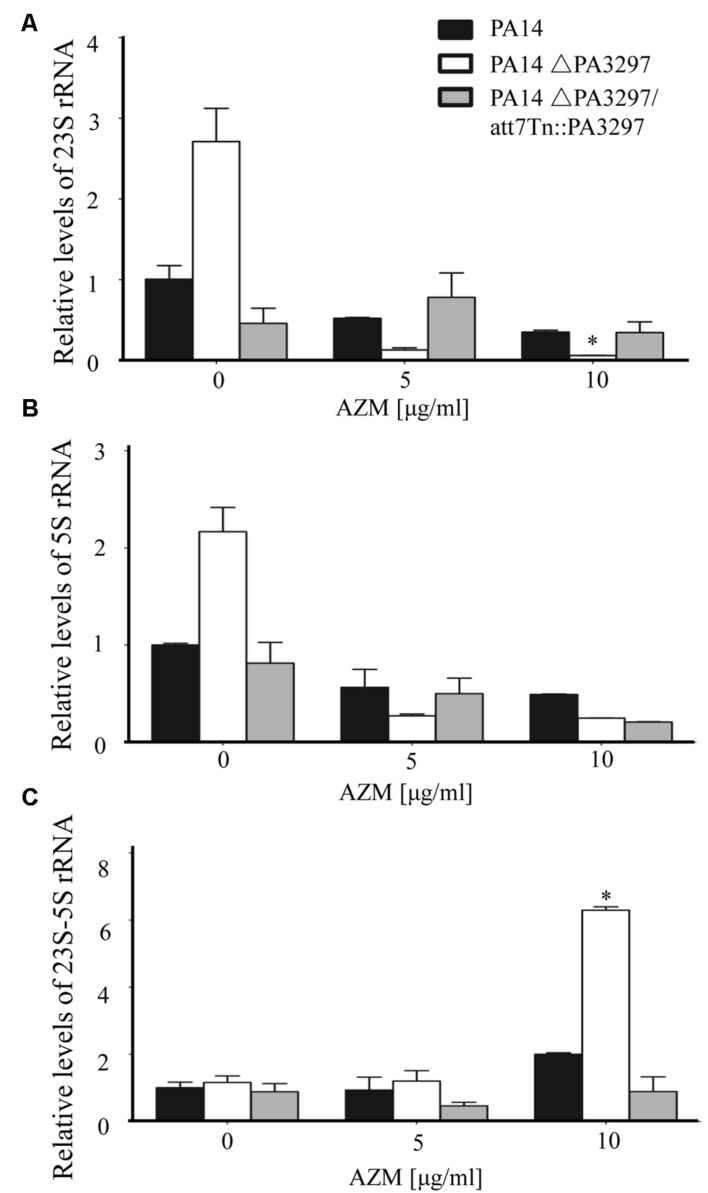
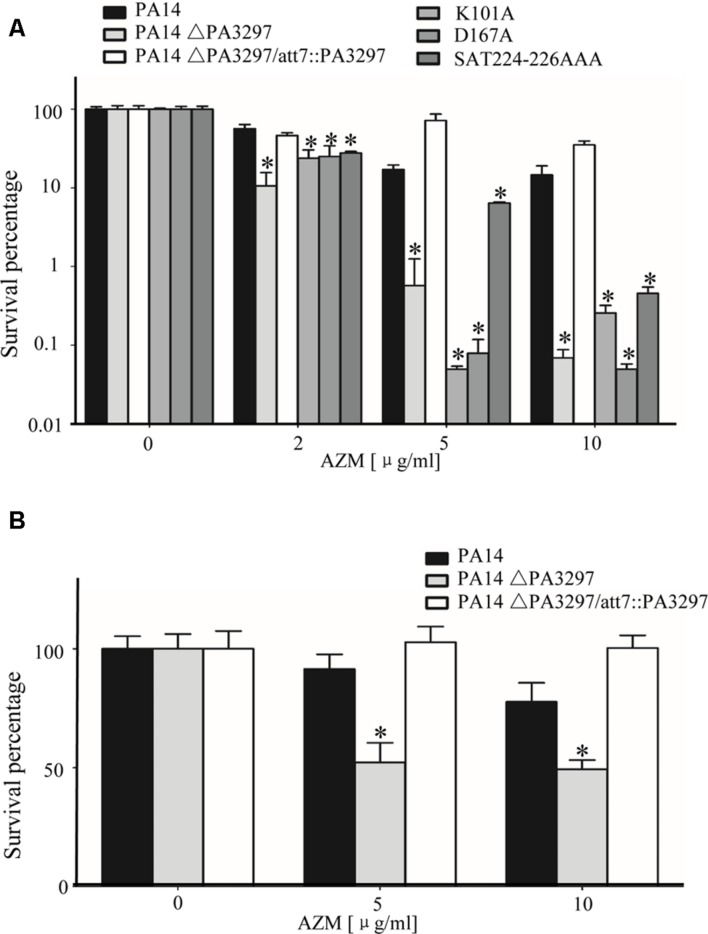
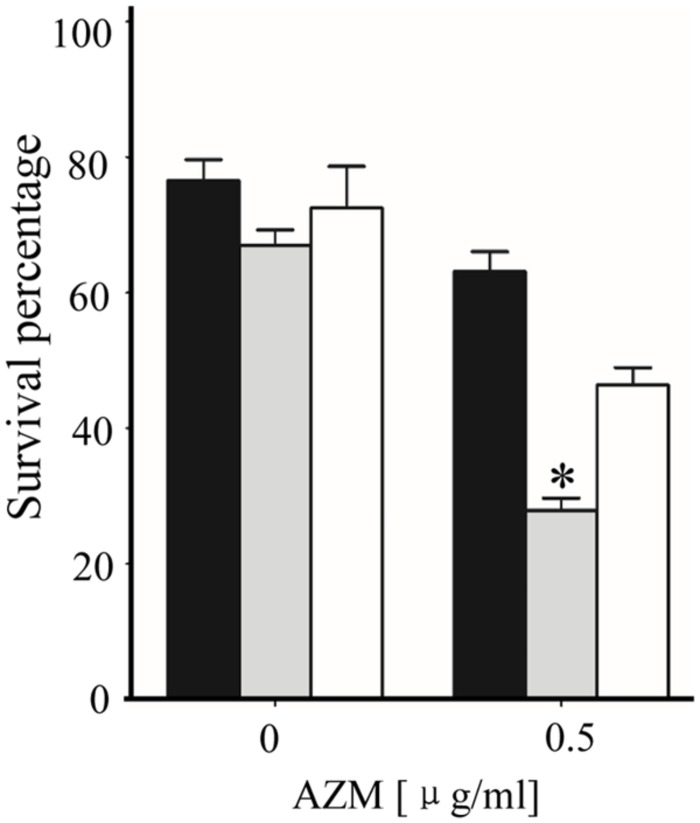
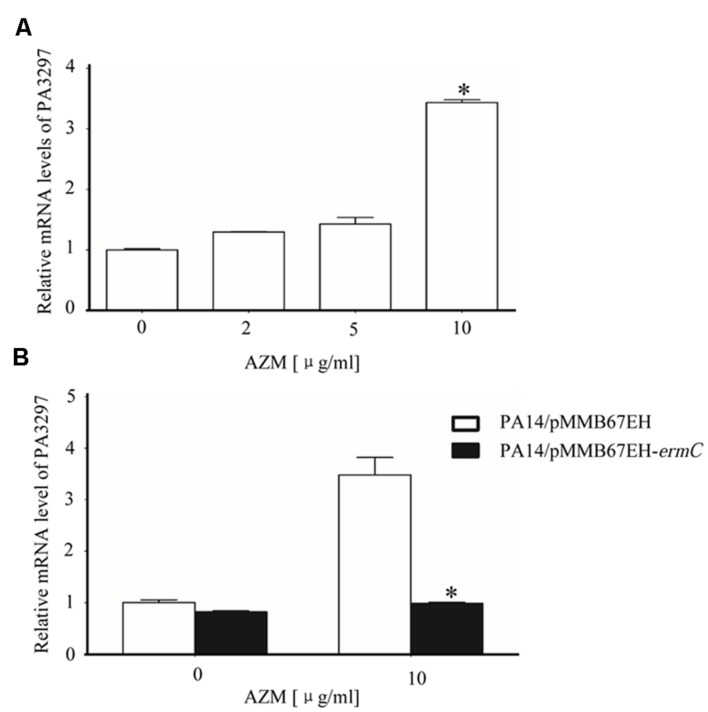
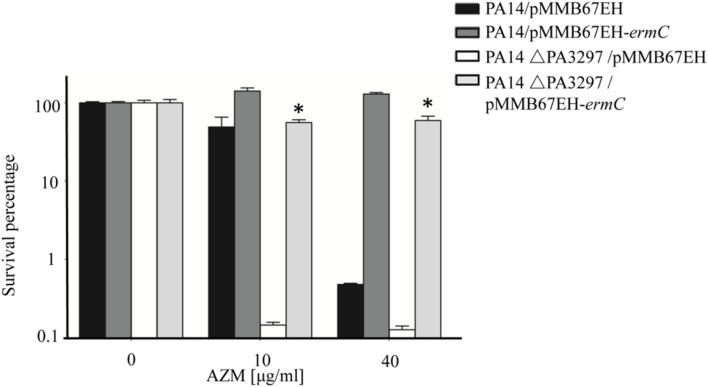
Pseudomonas aeruginosa causes acute and chronic infections in human. Its increasing resistance to antibiotics requires alternative treatments that are more effective than available strategies. Among the alternatives is the unconventional usage of conventional antibiotics, of which the macrolide antibiotic azithromycin (AZM) provides a paradigmatic example. AZM therapy is associated with a small but consistent improvement in respiratory function of cystic fibrosis patients suffering from chronic P. aeruginosa infection. Besides immunomodulating activities, AZM represses bacterial genes involved in virulence, quorum sensing, biofilm formation, and motility, all of which are due to stalling of ribosome and depletion of cellular tRNA pool. However, how P. aeruginosa responds to and counteracts the effects of AZM remain elusive. Here, we found that deficiency of PA3297, a gene encoding a DEAH-box helicase, intensified AZM-mediated bacterial killing, suppression of pyocyanin production and swarming motility, and hypersusceptibility to hydrogen peroxide. We demonstrated that expression of PA3297 is induced by the interaction between AZM and ribosome. Importantly, mutation of PA3297 resulted in elevated levels of unprocessed 23S-5S rRNA in the presence of AZM, which might lead to increased susceptibility to AZM-mediated effects. Our results revealed one of the bacterial responses in counteracting the detrimental effects of AZM.
铜绿假单胞菌可引起人类急性和慢性感染。其对抗生素的耐药性不断增加,需要比现有策略更有效的替代治疗方法。替代方法之一是传统抗生素的非常规使用,其中大环内酯类抗生素阿奇霉素(AZM)就是一个典型例子。AZM治疗与患有慢性铜绿假单胞菌感染的囊性纤维化患者的呼吸功能有小幅但持续的改善相关。除免疫调节活性外,AZM还可抑制参与毒力、群体感应、生物膜形成和运动性的细菌基因,所有这些都是由于核糖体停滞和细胞tRNA池耗竭所致。然而,铜绿假单胞菌如何应对和抵消AZM的影响仍不清楚。在这里,我们发现编码DEAH盒解旋酶的基因PA3297的缺失增强了AZM介导的细菌杀伤、绿脓菌素产生的抑制和群体运动性,以及对过氧化氢的超敏感性。我们证明PA3297的表达是由AZM与核糖体之间的相互作用诱导的。重要的是,在存在AZM的情况下,PA3297的突变导致未加工的23S - 5S rRNA水平升高,这可能导致对AZM介导的效应的易感性增加。我们的结果揭示了细菌对抗AZM有害影响的一种反应。