Yonova-Doing Ekaterina, Forkin Zoe A, Hysi Pirro G, Williams Katie M, Spector Tim D, Gilbert Clare E, Hammond Christopher J
Department of Twin Research and Genetic Epidemiology, Kings College London, London, United Kingdom.
Department of Twin Research and Genetic Epidemiology, Kings College London, London, United Kingdom; University of Warwick Medical School, Coventry, United Kingdom.
Ophthalmology. 2016 Jun;123(6):1237-44. doi: 10.1016/j.ophtha.2016.01.036. Epub 2016 Mar 23.
To determine the heritability of nuclear cataract progression and to explore prospectively the effect of dietary micronutrients on the progression of nuclear cataract.
Prospective cohort study.
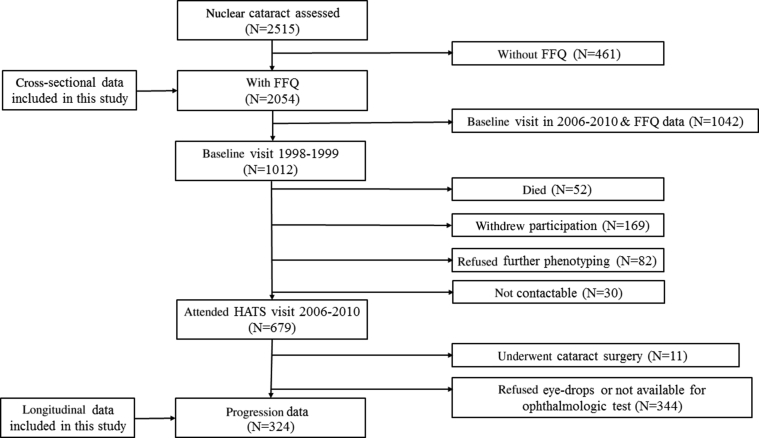
Cross-sectional nuclear cataract and dietary measurements were available for 2054 white female twins from the TwinsUK cohort. Follow-up cataract measurements were available for 324 of the twins (151 monozygotic and 173 dizygotic twins).
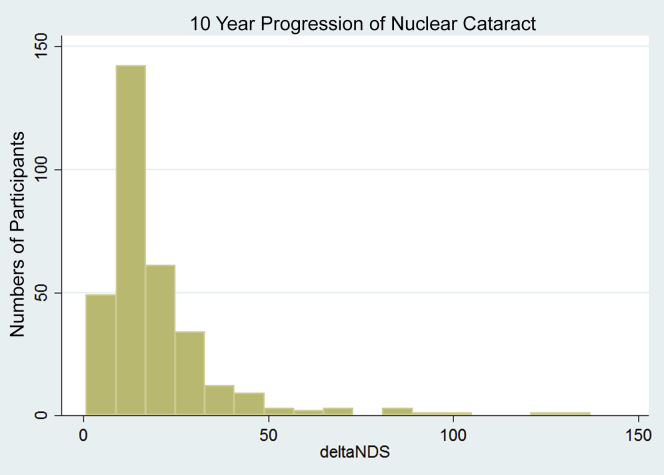
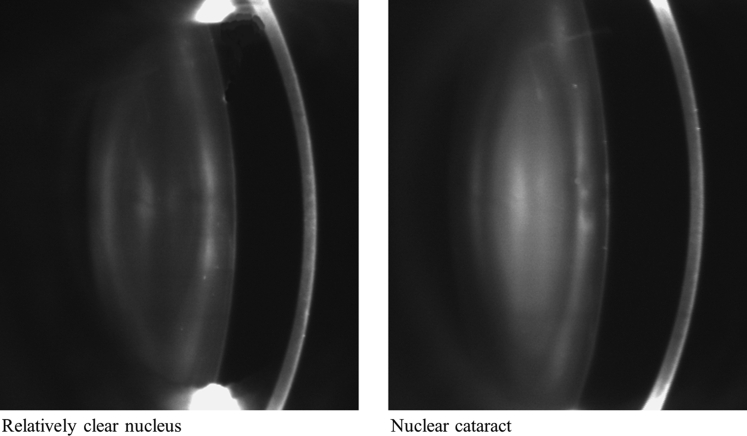
Nuclear cataract was measured using a quantitative measure of nuclear density obtained from digital Scheimpflug images. Dietary data were available from EPIC food frequency questionnaires. Heritability was modeled using maximum likelihood structural equation twin modeling. Association between nuclear cataract change and micronutrients was investigated using linear and multinomial regression analysis. The mean interval between baseline and follow-up examination was 9.4 years.
Nuclear cataract progression.
The best-fitting model estimated that the heritability of nuclear cataract progression was 35% (95% confidence interval [CI], 13-54), and individual environmental factors explained the remaining 65% (95% CI, 46-87) of variance. Dietary vitamin C was protective against both nuclear cataract at baseline and nuclear cataract progression (β = -0.0002, P = 0.01 and β = -0.001, P = 0.03, respectively), whereas manganese and intake of micronutrient supplements were protective against nuclear cataract at baseline only (β = -0.009, P = 0.03 and β = -0.03, P = 0.01, respectively).
Genetic factors explained 35% of the variation in progression of nuclear cataract over a 10-year period. Environmental factors accounted for the remaining variance, and in particular, dietary vitamin C protected against cataract progression assessed approximately 10 years after baseline.
确定核性白内障进展的遗传度,并前瞻性地探讨膳食微量营养素对核性白内障进展的影响。
前瞻性队列研究。
来自英国双胞胎队列的2054名白人女性双胞胎提供了横断面核性白内障和膳食测量数据。324名双胞胎(151对同卵双胞胎和173对异卵双胞胎)有随访时的白内障测量数据。
使用从数字Scheimpflug图像获得的核密度定量测量方法来测量核性白内障。膳食数据来自欧洲癌症与营养前瞻性调查(EPIC)食物频率问卷。使用最大似然结构方程双胞胎模型对遗传度进行建模。使用线性和多项回归分析研究核性白内障变化与微量营养素之间的关联。基线检查和随访检查之间的平均间隔为9.4年。
核性白内障进展。
最佳拟合模型估计,核性白内障进展的遗传度为35%(95%置信区间[CI],13 - 54),个体环境因素解释了其余65%(95%CI,46 - 87)的变异。膳食维生素C对基线时的核性白内障和核性白内障进展均有保护作用(β = -0.0002,P = 0.01和β = -0.001,P = 0.03),而锰和微量营养素补充剂的摄入仅对基线时的核性白内障有保护作用(β = -0.009,P = 0.03和β = -0.03,P = 0.01)。
遗传因素解释了10年内核性白内障进展变异的35%。环境因素解释了其余变异,特别是膳食维生素C对基线后约10年评估的白内障进展有保护作用。