Blasi Barbara, Poyntner Caroline, Rudavsky Tamara, Prenafeta-Boldú Francesc X, Hoog Sybren De, Tafer Hakim, Sterflinger Katja
University of Natural Resources and Life Sciences Vienna, VIBT-Extremophile Center , Vienna , Austria.
GIRO Joint Research Unit IRTA-UPC, Torre Marimon, Caldes de Montbui , Barcelona , Catalonia , Spain.
Geomicrobiol J. 2016 Mar 15;33(3-4):308-317. doi: 10.1080/01490451.2015.1052118. Epub 2016 Feb 25.
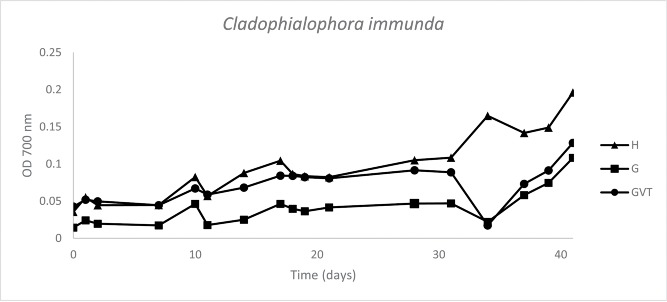
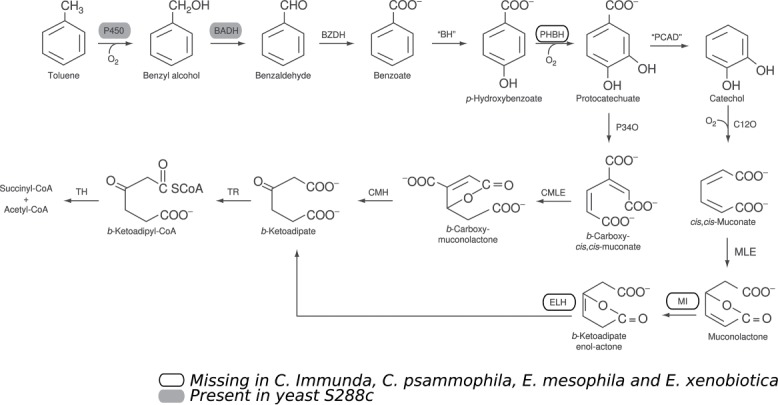
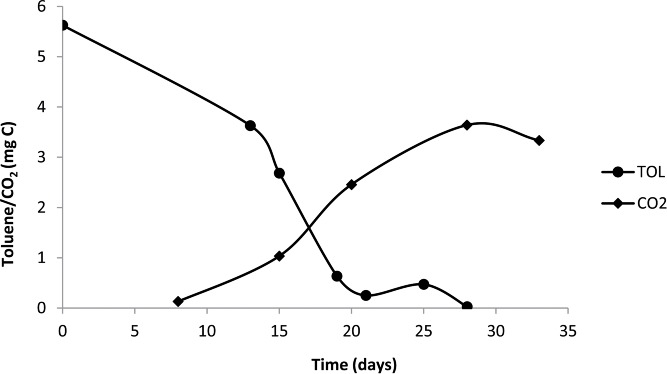
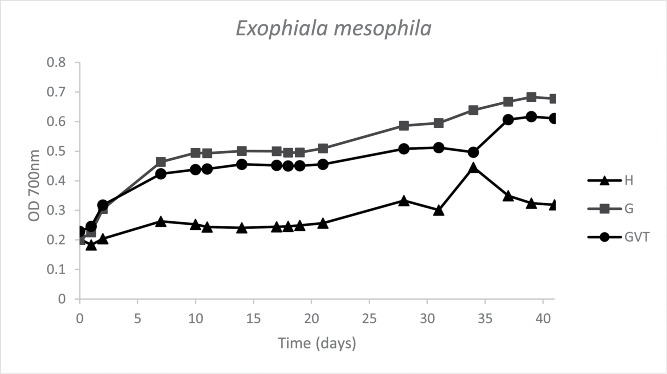
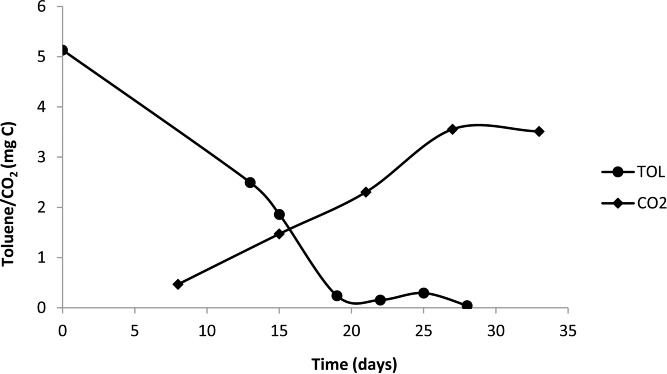
A collection of 163 strains of black yeast-like fungi from the CBS Fungal Biodiversity Center (Utrecht, The Netherlands), has been screened for the ability to grow on hexadecane, toluene and polychlorinated biphenyl 126 (PCB126) as the sole carbon and energy source. These compounds were chosen as representatives of relevant environmental pollutants. A microtiter plate-based culture assay was set up in order to screen the fungal strains for growth on the selected xenobiotics versus glucose, as a positive control. Growth was observed in 25 strains on at least two of the tested substrates. Confirmation of substrate assimilation was performed by cultivation on closed vials and analysis of the headspace composition with regard to the added volatile substrates and the generated carbon dioxide. (CBS 120910) and (CBS 110551), both of the order and isolated from a patient with chronic sinusitis and a polluted soil sample, respectively, showed the ability to grow on toluene as the sole carbon and energy source. Toluene assimilation has previously been described for but this is the first account for . Also, this is the first time that the capacity to grow on alkylbenzenes has been demonstrated for a clinical isolate. Assimilation of toluene could not be demonstrated for the human opportunistic pathogen (CBS 115.59, ), but the results from microtiter plate assays suggest that strains of this species are promising candidates for further studies. The outstanding abilities of black yeast-like fungi to thrive in extreme environments makes them ideal agents for the bioremediation of polluted soils, and for the treatment of contaminated gas streams in biofilters. However, interrelations between hydrocarbonoclastic and potentially pathogenic strains need to be elucidated in order to avoid the possibility of biohazards occurring.
对荷兰乌得勒支CBS真菌生物多样性中心的163株黑色酵母样真菌菌株进行了筛选,以检测它们在十六烷、甲苯和多氯联苯126(PCB126)作为唯一碳源和能源的情况下生长的能力。选择这些化合物作为相关环境污染物的代表。建立了一种基于微量滴定板的培养测定法,以筛选真菌菌株在选定的外源化合物上相对于葡萄糖(作为阳性对照)的生长情况。在25株菌株中观察到它们在至少两种测试底物上生长。通过在密闭小瓶中培养并分析顶空成分(关于添加的挥发性底物和产生的二氧化碳)来确认底物同化情况。分别从一名慢性鼻窦炎患者和一个受污染土壤样本中分离出的属于同一目(CBS 120910)和(CBS 110551)的菌株,显示出以甲苯作为唯一碳源和能源生长的能力。此前已报道过对甲苯的同化作用,但这是对该菌株首次报道。此外,这是首次证明临床分离株具有在烷基苯上生长的能力。对于人类机会致病菌(CBS 115.59,),未能证明其对甲苯的同化作用,但微量滴定板测定结果表明该物种的菌株是进一步研究的有希望的候选菌株。黑色酵母样真菌在极端环境中茁壮成长的卓越能力使其成为污染土壤生物修复以及生物滤池中处理污染气流的理想媒介。然而,需要阐明烃分解菌株与潜在致病菌株之间的相互关系,以避免发生生物危害的可能性。