Tanimoto Hirokazu, Kimura Akatsuki, Minc Nicolas
Institut Jacques Monod, 75205 Paris, France.
Department of Genetics, The Graduate University for Advanced Studies (SOKENDAI), Mishima 411-8540, Japan National Institute of Genetics, Mishima 411-8540, Japan Institut Curie, Centre National de la Recherche Scientifique UMR 144, 75248 Paris, France
J Cell Biol. 2016 Mar 28;212(7):777-87. doi: 10.1083/jcb.201510064.
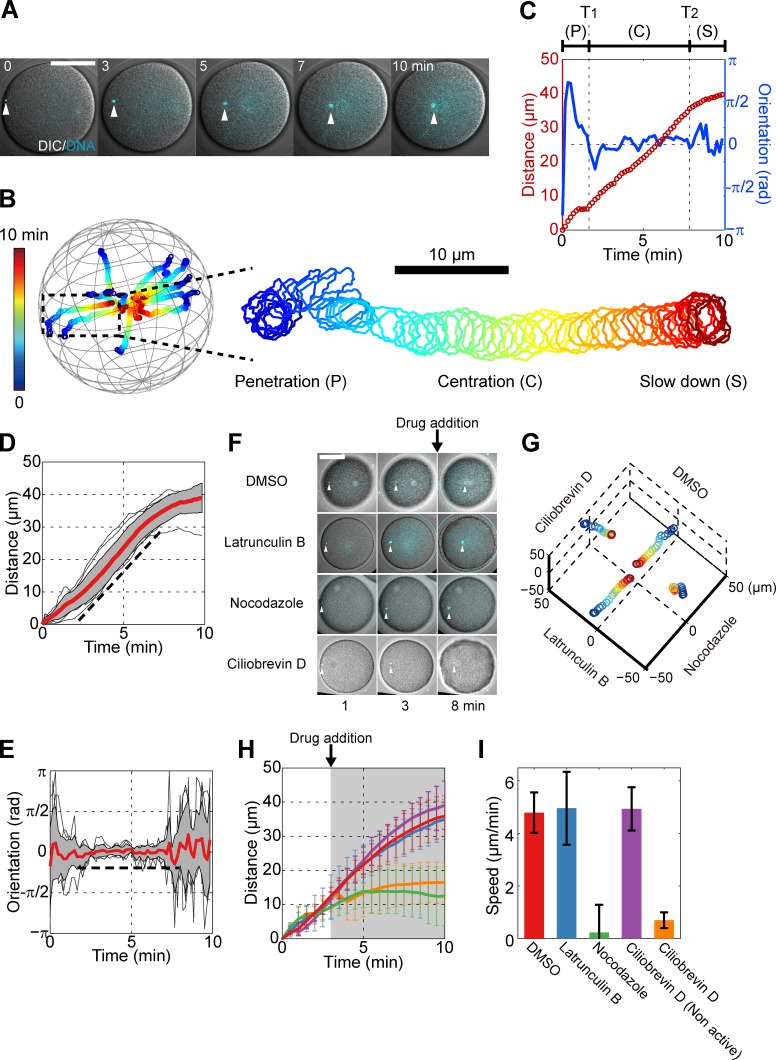
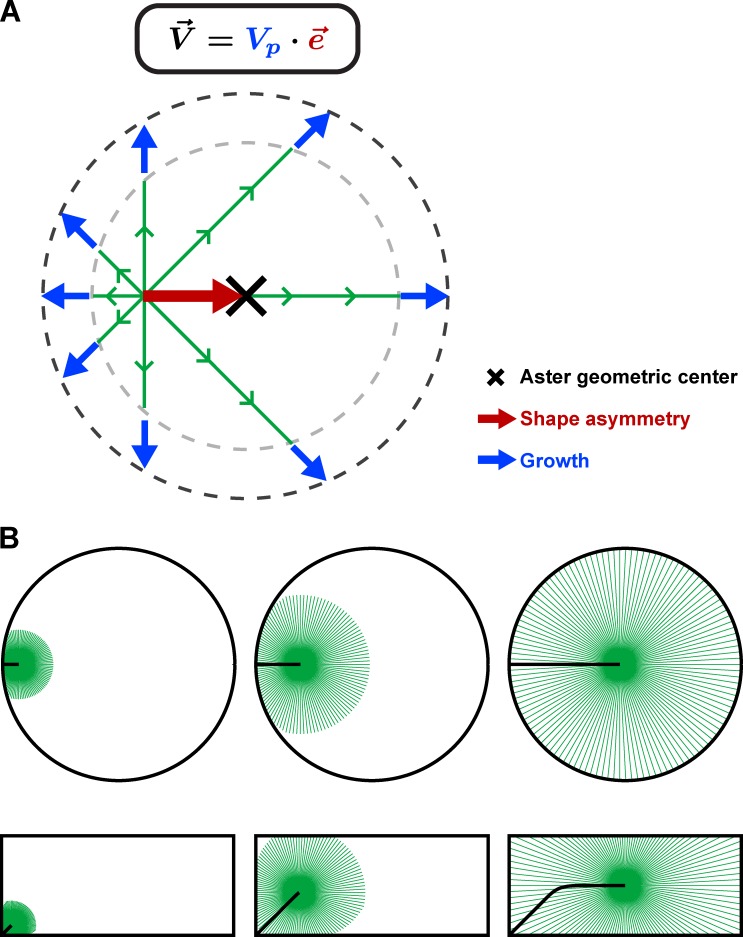
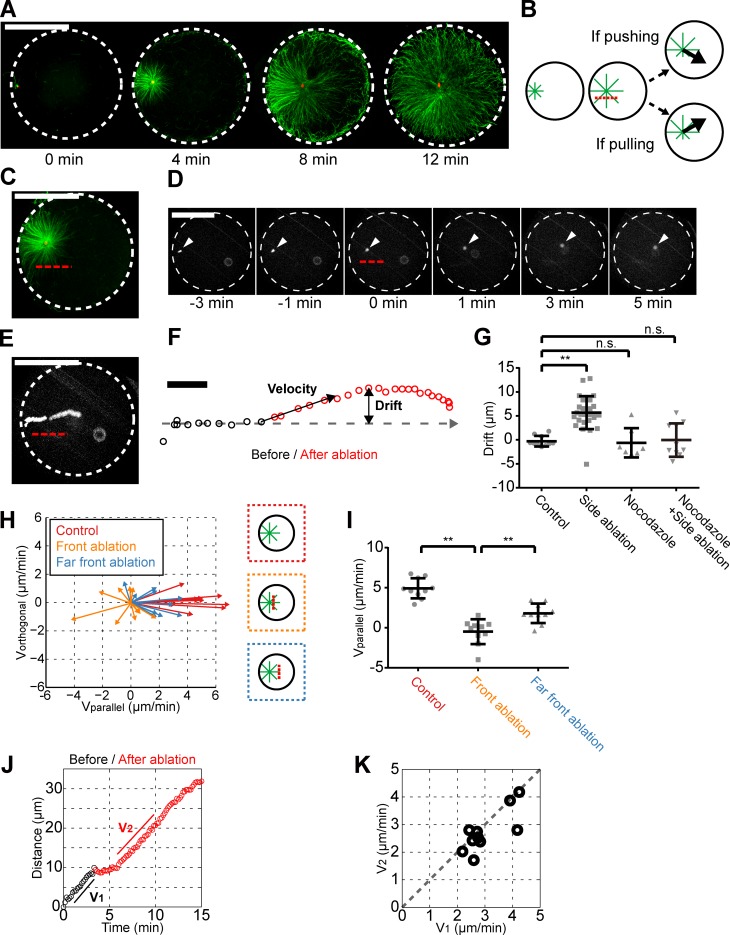
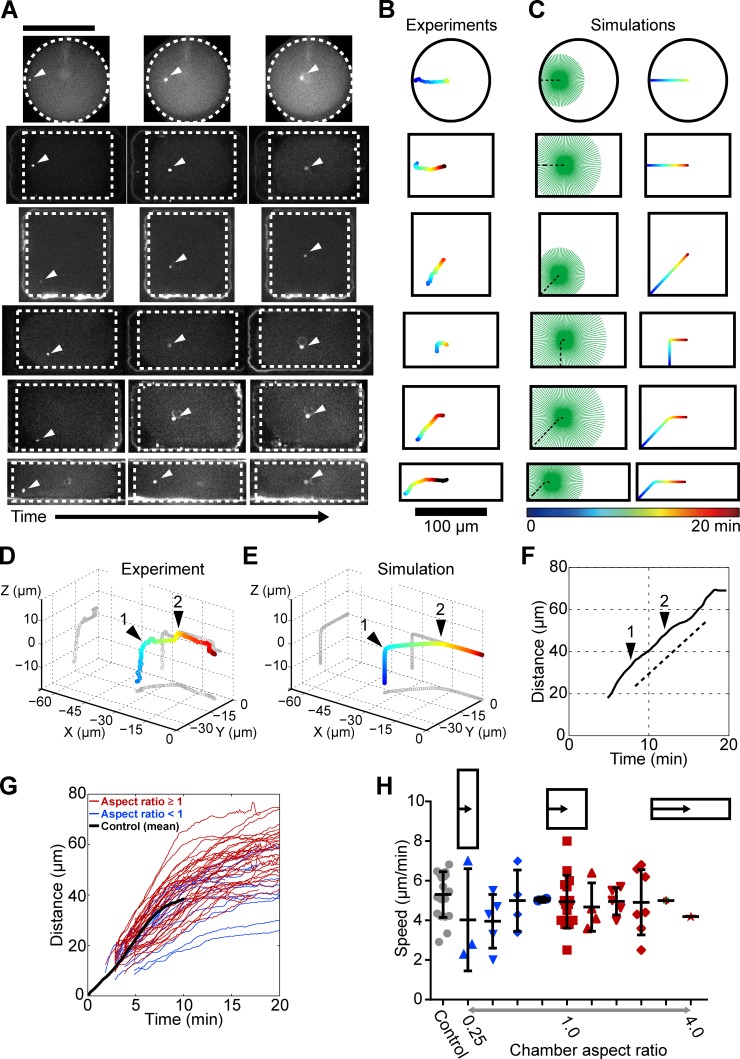
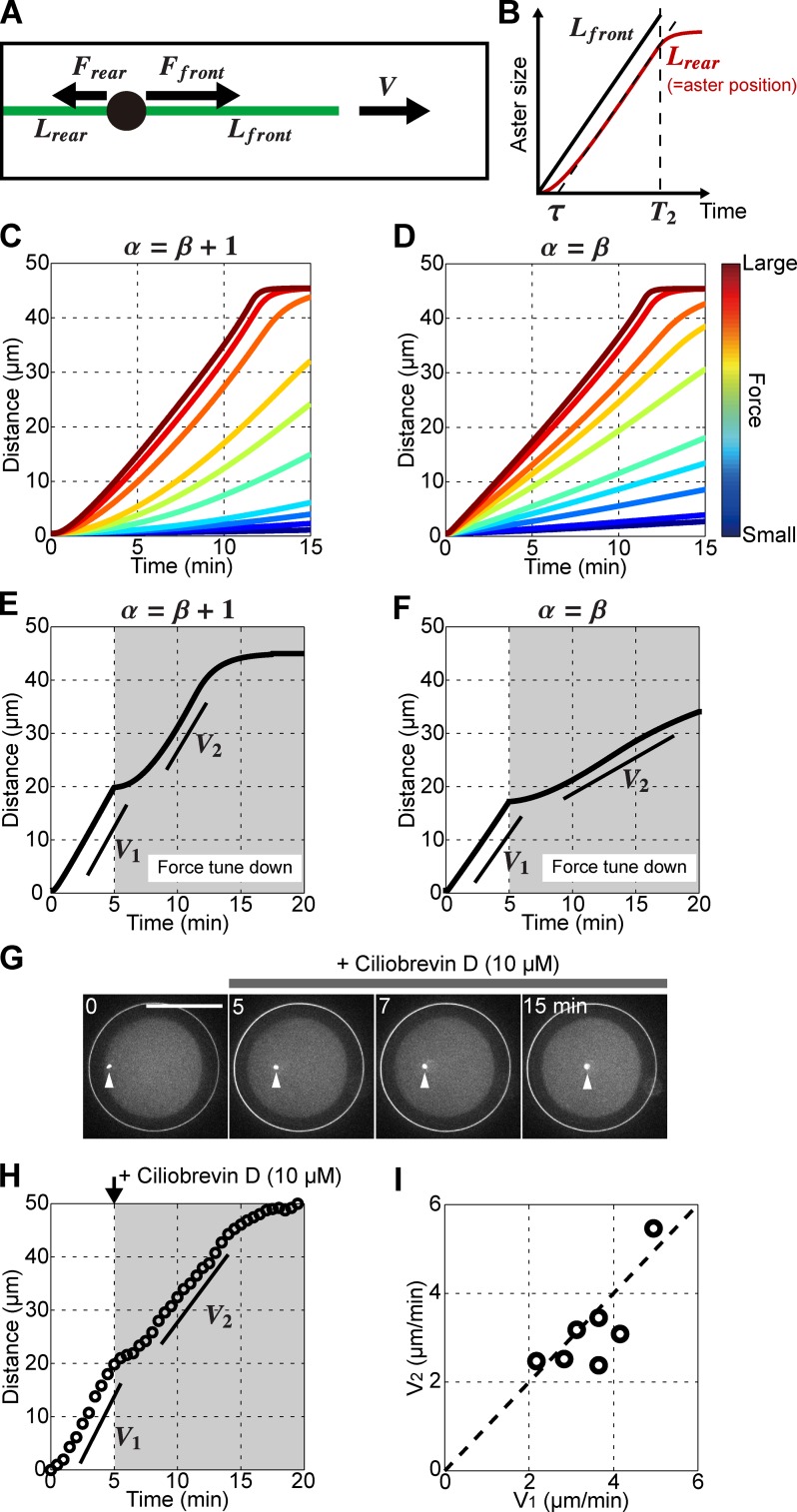
Although mechanisms that contribute to microtubule (MT) aster positioning have been extensively studied, still little is known on how asters move inside cells to faithfully target a cellular location. Here, we study sperm aster centration in sea urchin eggs, as a stereotypical large-scale aster movement with extreme constraints on centering speed and precision. By tracking three-dimensional aster centration dynamics in eggs with manipulated shapes, we show that aster geometry resulting from MT growth and interaction with cell boundaries dictates aster instantaneous directionality, yielding cell shape-dependent centering trajectories. Aster laser surgery and modeling suggest that dynein-dependent MT cytoplasmic pulling forces that scale to MT length function to convert aster geometry into directionality. In contrast, aster speed remains largely independent of aster size, shape, or absolute dynein activity, which suggests it may be predominantly determined by aster growth rate rather than MT force amplitude. These studies begin to define the geometrical principles that control aster movements.
尽管有助于微管(MT)星状体定位的机制已得到广泛研究,但对于星状体如何在细胞内移动以准确靶向细胞位置仍知之甚少。在这里,我们研究海胆卵中精子星状体的集中过程,这是一种典型的大规模星状体移动,对集中速度和精度有极高的限制。通过追踪形状受控的卵中星状体的三维集中动力学,我们发现由MT生长以及与细胞边界的相互作用所产生的星状体几何形状决定了星状体的瞬时方向性,从而产生依赖于细胞形状的集中轨迹。星状体激光手术和建模表明,依赖动力蛋白的MT细胞质拉力与MT长度成比例,其作用是将星状体几何形状转化为方向性。相比之下,星状体速度在很大程度上与星状体大小、形状或动力蛋白的绝对活性无关,这表明它可能主要由星状体生长速率而非MT力的幅度决定。这些研究开始界定控制星状体移动的几何原理。