
锌离子诱导乌贼精氨酸激酶失活和聚集的动力学
Kinetics for Zinc Ion Induced Sepia Pharaonis Arginine Kinase Inactivation and Aggregation.
作者信息
Si Yue-Xiu, Lee Jinhyuk, Cheng Juan-Ge, Yin Shang-Jun, Park Yong-Doo, Qian Guo-Ying, Jiang Xia-Min
机构信息
College of Biological and Environmental Sciences, Zhejiang Wanli University, Ningbo 315100, P.R China.
School of Marine Sciences, Ningbo University, Ningbo 315211, P.R. China.
出版信息
Protein Pept Lett. 2016;23(6):508-17. doi: 10.2174/0929866523666160331144049.
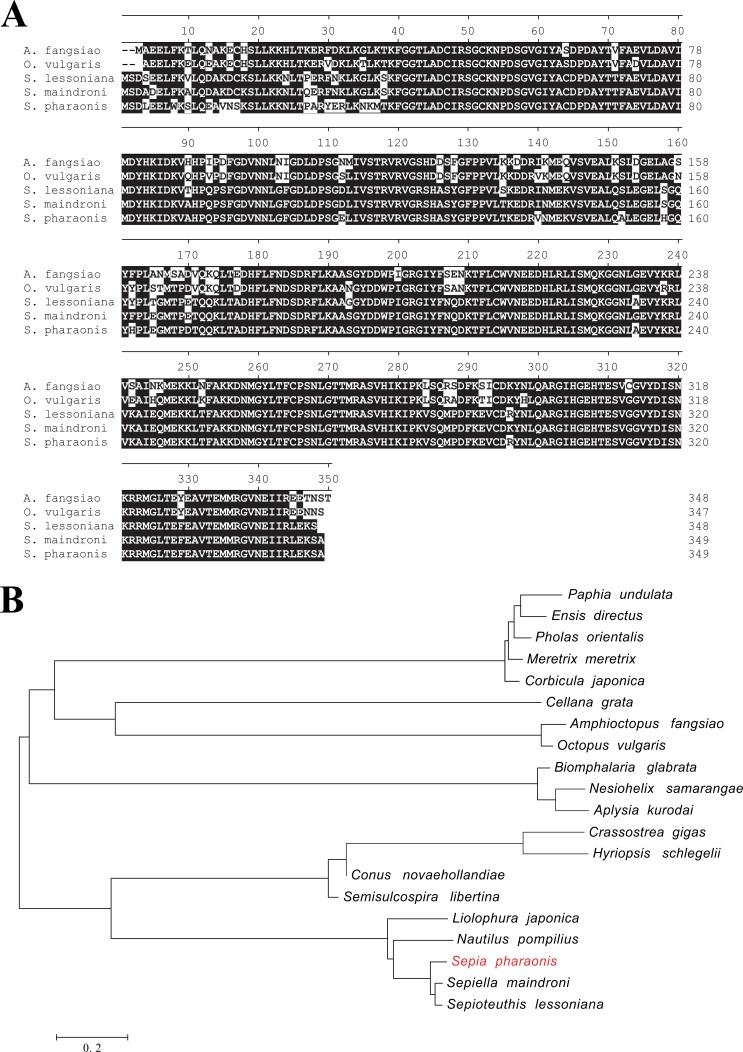
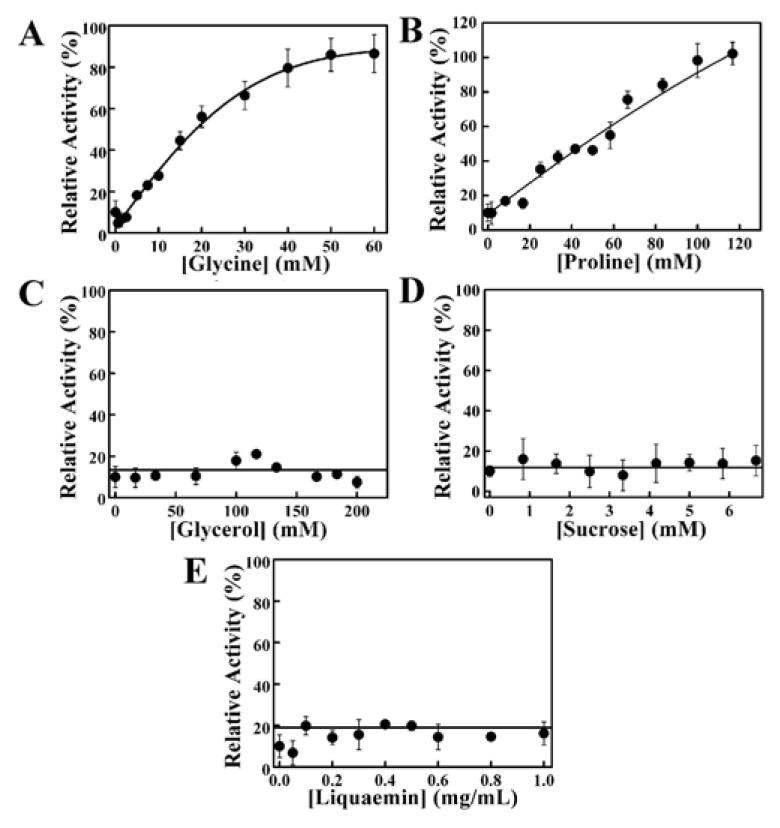
Arginine kinase is an essential enzyme which is closely related to energy metabolism in marine invertebrates. Arginine kinase provides a significant role in quick response to environmental change and stress. In this study, we simulated a tertiary structure of Sepia pharaonis arginine kinase (SPAK) based on the gene sequence and conducted the molecular dynamics simulations between SPAK and Zn(2+). Using these results, the Zn(2+) binding sites were predicted and the initial effect of Zn(2+) on the SPAK structure was elucidated. Subsequently, the experimental kinetic results were compared with the simulation results. Zn(2+) markedly inhibited the activity of SPAK in a manner of non-competitive inhibitions for both arginine and ATP. We also found that Zn(2+) binding to SPAK resulted in tertiary conformational change accompanying with the hydrophobic residues exposure. These changes caused SPAK aggregation directly. We screened two protectants, glycine and proline, which effectively prevented SPAK aggregation and recovered the structure and activity. Overall, our study suggested the inhibitory effect of Zn(2+) on SPAK and Zn(2+) can trigger SPAK aggregation after exposing large extent of hydrophobic surface. The protective effects of glycine and proline against Zn(2+) on SPAK folding were also demonstrated.
精氨酸激酶是一种与海洋无脊椎动物能量代谢密切相关的关键酶。精氨酸激酶在对环境变化和应激的快速反应中发挥着重要作用。在本研究中,我们基于基因序列模拟了法老乌贼精氨酸激酶(SPAK)的三级结构,并进行了SPAK与Zn(2+)之间的分子动力学模拟。利用这些结果,预测了Zn(2+)结合位点,并阐明了Zn(2+)对SPAK结构的初步影响。随后,将实验动力学结果与模拟结果进行了比较。Zn(2+)以非竞争性抑制精氨酸和ATP的方式显著抑制了SPAK的活性。我们还发现,Zn(2+)与SPAK结合导致三级构象变化,并伴有疏水残基暴露。这些变化直接导致了SPAK聚集。我们筛选了两种保护剂,甘氨酸和脯氨酸,它们有效地防止了SPAK聚集,并恢复了其结构和活性。总体而言,我们的研究表明Zn(2+)对SPAK具有抑制作用,并且Zn(2+)在暴露大量疏水表面后可引发SPAK聚集。同时也证明了甘氨酸和脯氨酸对Zn(2+)对SPAK折叠的保护作用。



 Zotero 插件