de Araujo Guerra Grangeia Tiago, de Jorge Bruno, Franci Daniel, Martins Santos Thiago, Vellutini Setubal Maria Silvia, Schweller Marcelo, de Carvalho-Filho Marco Antonio
Department of Internal Medicine, Division of Emergency Medicine, Faculty of Medical Sciences at State University of Campinas (Unicamp), São Paulo, Brazil.
Faculty of Medical Sciences at State University of Campinas (Unicamp), São Paulo, Brazil.
PLoS One. 2016 Mar 31;11(3):e0152462. doi: 10.1371/journal.pone.0152462. eCollection 2016.
Emergency clerkships expose students to a stressful environment that require multiple tasks, which may have a direct impact on cognitive load and motivation for learning. To address this challenge, Cognitive Load Theory and Self Determination Theory provided the conceptual frameworks to the development of a Moodle-based online Emergency Medicine course, inspired by real clinical cases.
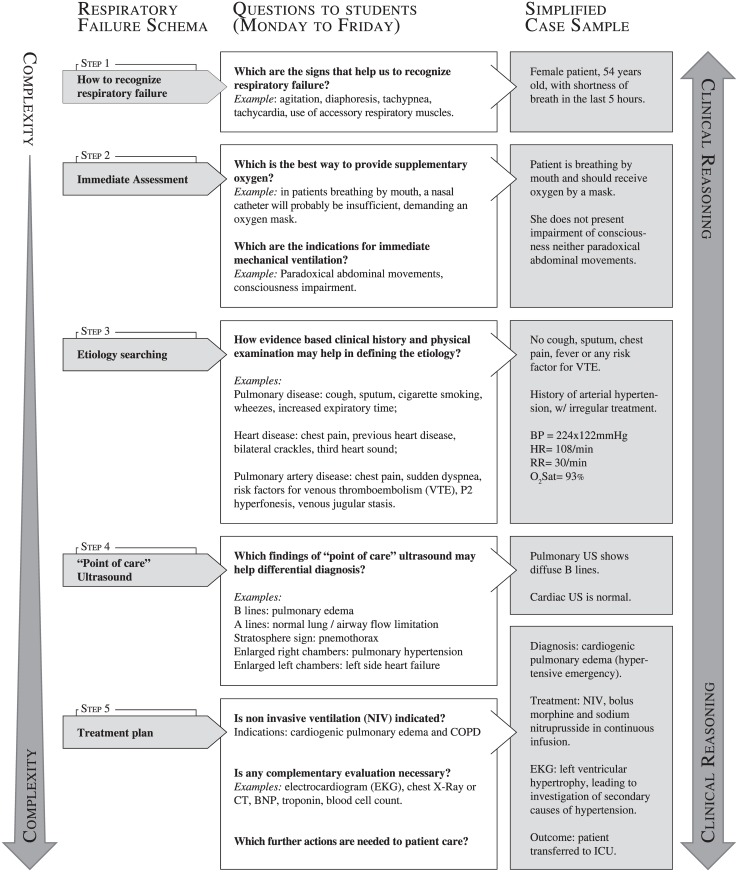
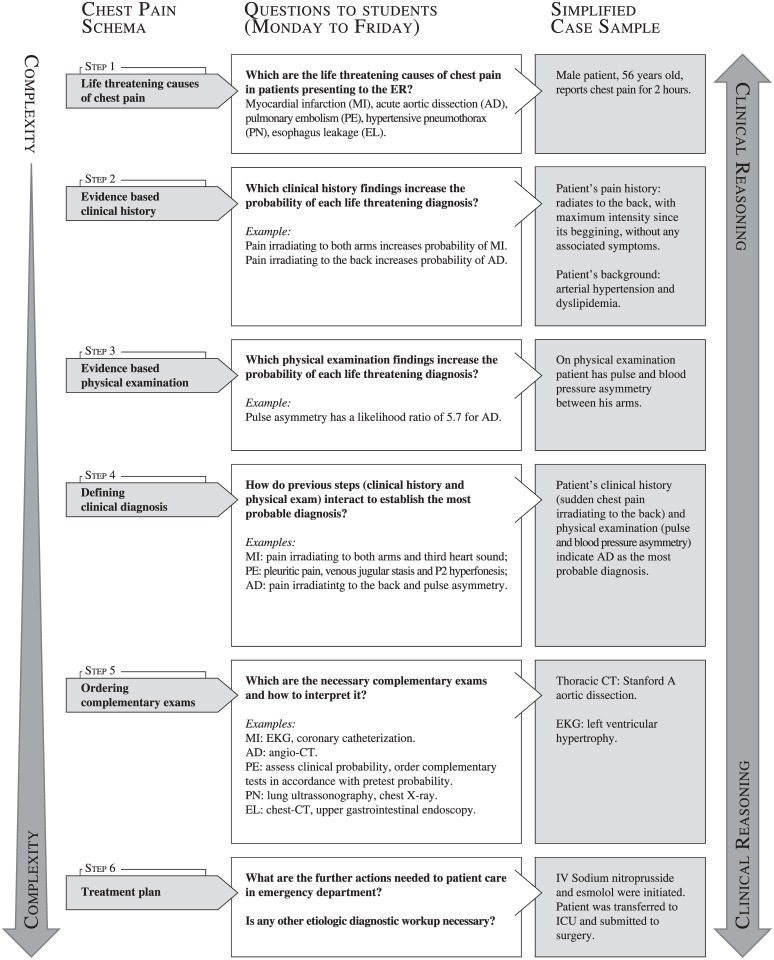
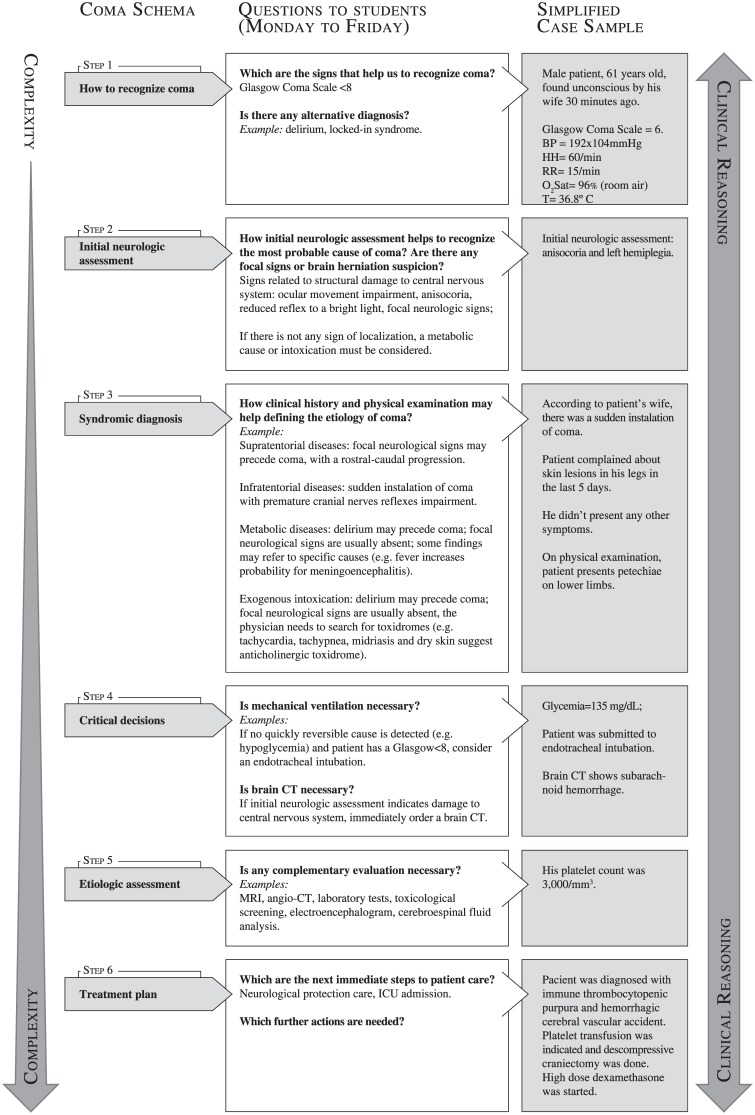
Three consecutive classes (2013-2015) of sixth-year medical students (n = 304) participated in the course, during a curricular and essentially practical emergency rotation. "Virtual Rounds" provided weekly virtual patients in narrative format and meaningful schemata to chief complaints, in order to simulate real rounds at Emergency Unit. Additional activities such as Extreme Decisions, Emergency Quiz and Electrocardiographic challenge offered different views of emergency care. Authors assessed student´s participation and its correlation with their academic performance. A survey evaluated students´ opinions. Students graduating in 2015 answered an online questionnaire to investigate cognitive load and motivation.
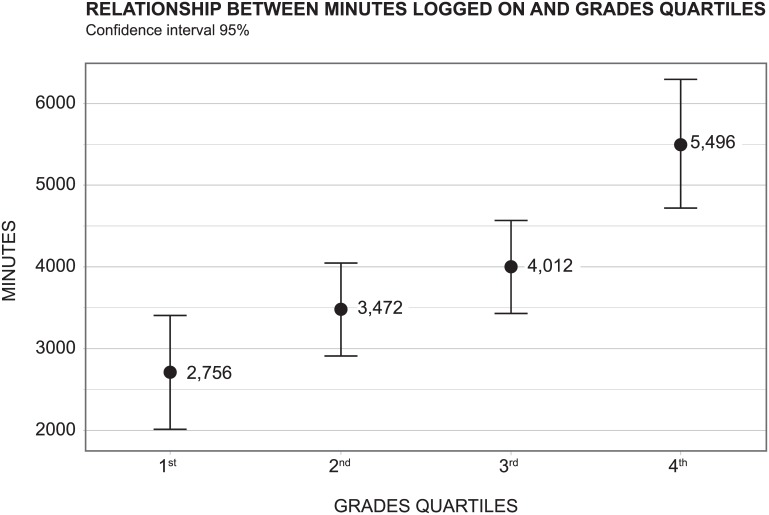
Each student produced 1965 pageviews and spent 72 hours logged on. Although Clinical Emergency rotation has two months long, students accessed the online course during an average of 5.3 months. Virtual Rounds was the most accessed activity, and there was positive correlations between the number of hours logged on the platform and final grades on Emergency Medicine. Over 90% of students felt an improvement in their clinical reasoning and considered themselves better prepared for rendering Emergency care. Considering a Likert scale from 1 (minimum load) to 7 (maximum load), the scores for total cognitive load were 4.79±2.2 for Virtual Rounds and 5.56±1.96 for real medical rounds(p<0,01).
A real-world inspired online course, based on cognitive and motivational conceptual frameworks, seems to be a strong tool to engage students in learning. It may support them to manage the cognitive challenges involved in clinical care and increase their motivation for learning.
急诊实习让学生置身于一个需要同时处理多项任务的压力环境中,这可能会直接影响认知负荷和学习动机。为应对这一挑战,认知负荷理论和自我决定理论为开发一门基于Moodle平台的在线急诊医学课程提供了概念框架,该课程的灵感来源于真实临床案例。
连续三个班级(2013 - 2015年)的六年级医学生(n = 304)在课程安排的、本质上是实践的急诊轮转期间参加了该课程。“虚拟查房”每周以叙述形式提供虚拟患者,并为主要症状提供有意义的模式,以模拟急诊室的实际查房。诸如“极端决策”“急诊测验”和“心电图挑战”等其他活动提供了不同的急诊护理视角。作者评估了学生的参与情况及其与学业成绩的相关性。一项调查评估了学生的意见。2015年毕业的学生回答了一份在线问卷,以调查认知负荷和动机。
每个学生产生了1965次页面浏览量,登录时长为72小时。尽管临床急诊轮转为期两个月,但学生平均在5.3个月内访问了在线课程。“虚拟查房”是访问量最大的活动,在平台上的登录时长与急诊医学的最终成绩之间存在正相关。超过90%的学生感觉自己的临床推理能力有所提高,并认为自己在提供急诊护理方面准备得更充分。考虑到从1(最小负荷)到7(最大负荷)的李克特量表,虚拟查房的总认知负荷得分为4.79±2.2,实际医学查房的得分为5.56±1.96(p<0.01)。
一门基于认知和动机概念框架、受现实世界启发的在线课程似乎是促使学生参与学习的有力工具。它可能支持他们应对临床护理中涉及的认知挑战,并增强他们的学习动机。