Hong Soyon, Beja-Glasser Victoria F, Nfonoyim Bianca M, Frouin Arnaud, Li Shaomin, Ramakrishnan Saranya, Merry Katherine M, Shi Qiaoqiao, Rosenthal Arnon, Barres Ben A, Lemere Cynthia A, Selkoe Dennis J, Stevens Beth
F.M. Kirby Neurobiology Center, Boston Children's Hospital and Harvard Medical School, Boston, Massachusetts 02115, USA.
Ann Romney Center for Neurologic Diseases, Department of Neurology, Brigham and Women's Hospital and Harvard Medical School, Boston, Massachusetts 02115, USA.
Science. 2016 May 6;352(6286):712-716. doi: 10.1126/science.aad8373. Epub 2016 Mar 31.
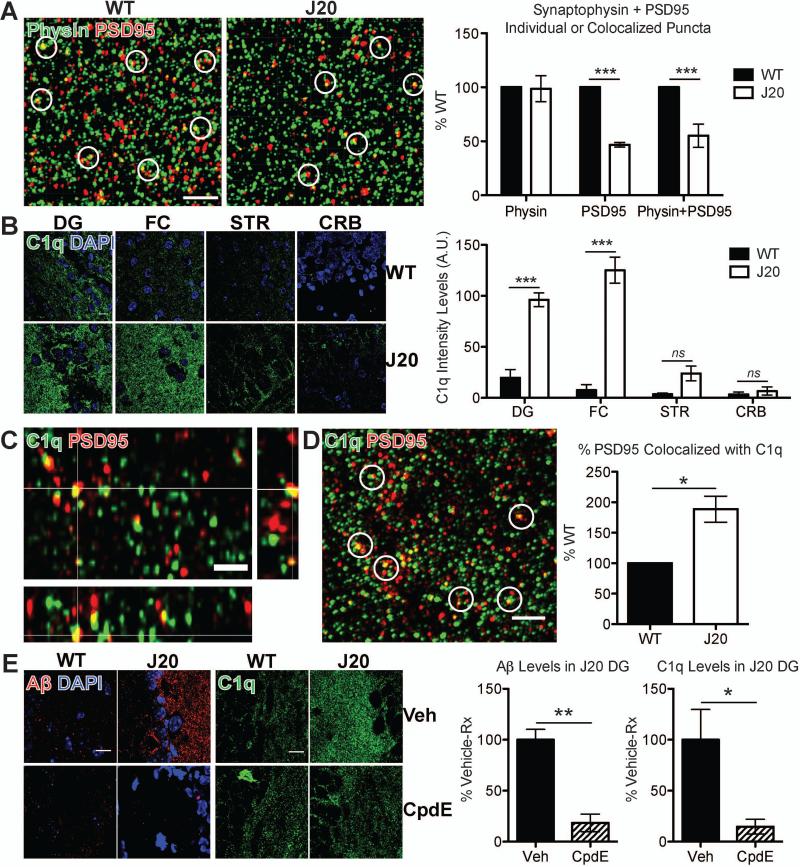
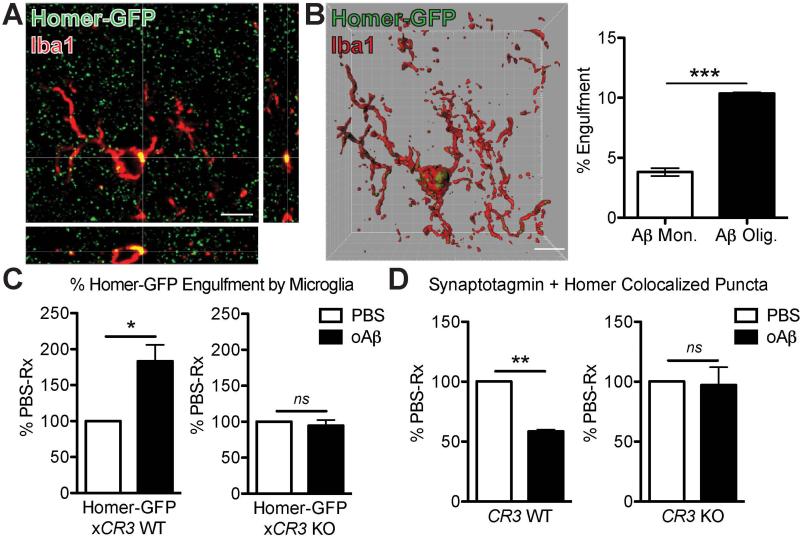
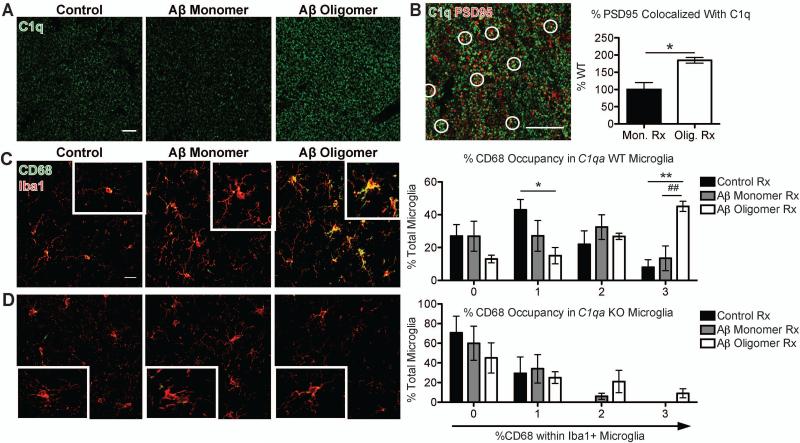
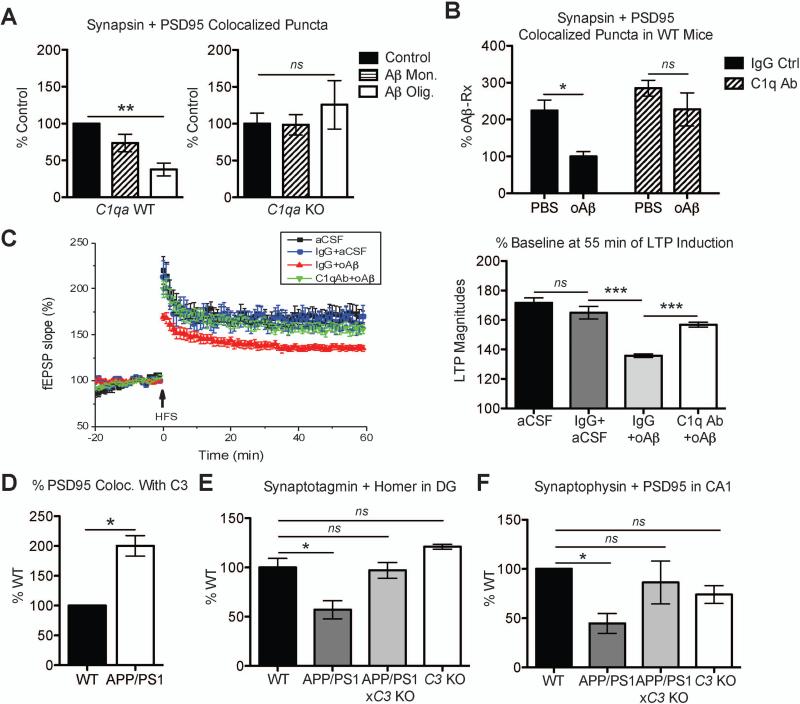
Synapse loss in Alzheimer's disease (AD) correlates with cognitive decline. Involvement of microglia and complement in AD has been attributed to neuroinflammation, prominent late in disease. Here we show in mouse models that complement and microglia mediate synaptic loss early in AD. C1q, the initiating protein of the classical complement cascade, is increased and associated with synapses before overt plaque deposition. Inhibition of C1q, C3, or the microglial complement receptor CR3 reduces the number of phagocytic microglia, as well as the extent of early synapse loss. C1q is necessary for the toxic effects of soluble β-amyloid (Aβ) oligomers on synapses and hippocampal long-term potentiation. Finally, microglia in adult brains engulf synaptic material in a CR3-dependent process when exposed to soluble Aβ oligomers. Together, these findings suggest that the complement-dependent pathway and microglia that prune excess synapses in development are inappropriately activated and mediate synapse loss in AD.
阿尔茨海默病(AD)中的突触丧失与认知衰退相关。小胶质细胞和补体在AD中的作用一直被归因于神经炎症,这在疾病后期较为突出。在此,我们在小鼠模型中表明,补体和小胶质细胞在AD早期介导突触丧失。C1q是经典补体级联反应的起始蛋白,在明显的斑块沉积之前就已增加并与突触相关联。抑制C1q、C3或小胶质细胞补体受体CR3可减少吞噬性小胶质细胞的数量以及早期突触丧失的程度。C1q对于可溶性β淀粉样蛋白(Aβ)寡聚体对突触和海马体长期增强作用的毒性效应是必需的。最后,成年大脑中的小胶质细胞在暴露于可溶性Aβ寡聚体时,会通过依赖CR3的过程吞噬突触物质。总之,这些发现表明,在发育过程中修剪多余突触的补体依赖性途径和小胶质细胞被不恰当地激活,并介导了AD中的突触丧失。