Großkopf Tobias, Soyer Orkun S
School of Life Sciences, University of Warwick, Coventry, UK.
ISME J. 2016 Nov;10(11):2725-2733. doi: 10.1038/ismej.2016.49. Epub 2016 Apr 1.
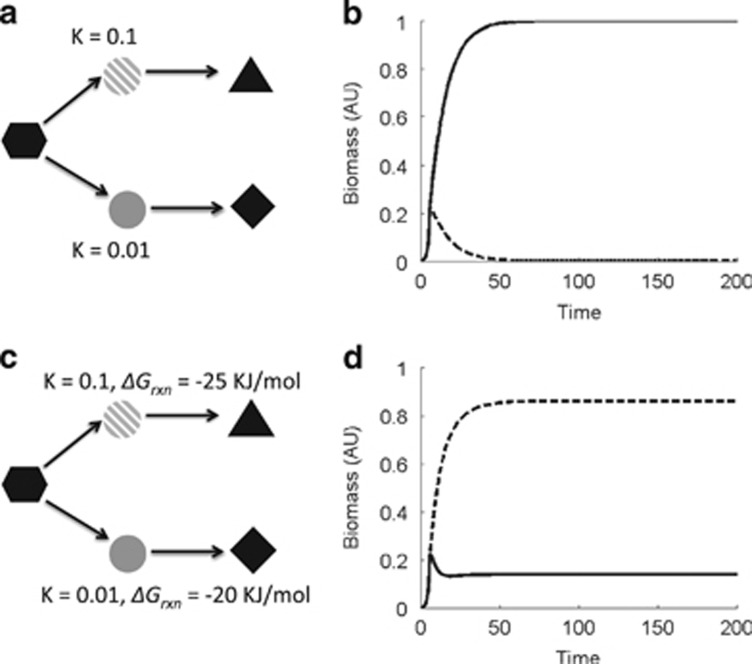
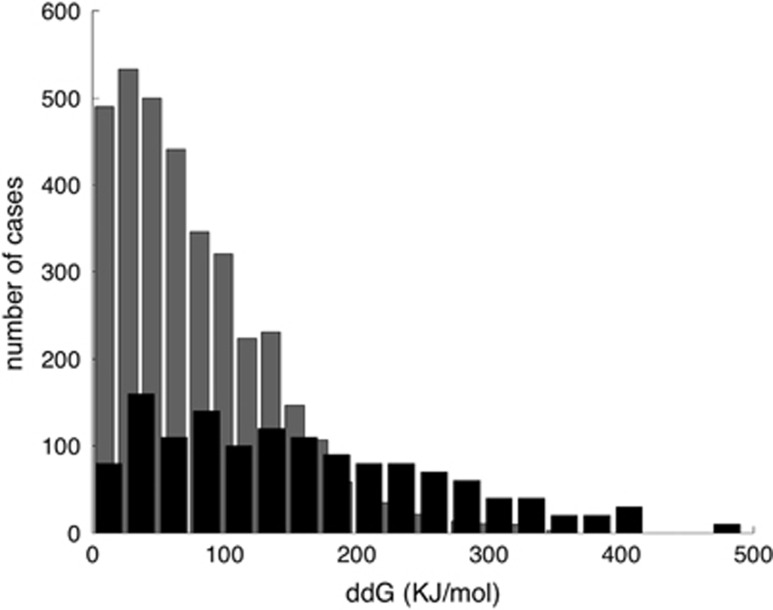
The microbial world displays an immense taxonomic diversity. This diversity is manifested also in a multitude of metabolic pathways that can utilise different substrates and produce different products. Here, we propose that these observations directly link to thermodynamic constraints that inherently arise from the metabolic basis of microbial growth. We show that thermodynamic constraints can enable coexistence of microbes that utilise the same substrate but produce different end products. We find that this thermodynamics-driven emergence of diversity is most relevant for metabolic conversions with low free energy as seen for example under anaerobic conditions, where population dynamics is governed by thermodynamic effects rather than kinetic factors such as substrate uptake rates. These findings provide a general understanding of the microbial diversity based on the first principles of thermodynamics. As such they provide a thermodynamics-based framework for explaining the observed microbial diversity in different natural and synthetic environments.
微生物世界呈现出巨大的分类学多样性。这种多样性还体现在众多的代谢途径中,这些代谢途径可以利用不同的底物并产生不同的产物。在此,我们提出这些观察结果与微生物生长代谢基础中固有的热力学限制直接相关。我们表明,热力学限制能够使利用相同底物但产生不同终产物的微生物共存。我们发现,这种由热力学驱动的多样性出现对于低自由能的代谢转化最为相关,例如在厌氧条件下所见,其中种群动态由热力学效应而非诸如底物摄取速率等动力学因素所支配。这些发现基于热力学第一原理对微生物多样性提供了一般性理解。因此,它们为解释在不同自然和合成环境中观察到的微生物多样性提供了一个基于热力学的框架。