Gardiner Amy S, Gutierrez Hilda L, Luo Li, Davies Suzy, Savage Daniel D, Bakhireva Ludmila N, Perrone-Bizzozero Nora I
Department of Neurosciences, University of New Mexico Health Sciences Center, Albuquerque, New Mexico.
Department of Pharmacy Practice and Administrative Sciences, University of New Mexico Health Sciences Center, Albuquerque, New Mexico.
Alcohol Clin Exp Res. 2016 Apr;40(4):826-37. doi: 10.1111/acer.13026.
Given the challenges of confirming prenatal alcohol exposure (PAE) during pregnancy using currently established biomarkers of alcohol consumption, we examined whether serum microRNAs (miRNAs) may serve as stable biomarkers for PAE. Alterations in the levels of specific circulating miRNAs have been associated with various disease states and in animal models of fetal alcohol spectrum disorder.
Pregnant women in this prospective study were recruited from substance abuse and general maternity clinics affiliated with the University of New Mexico. Serum was collected at the time of admission for delivery from 14 subjects who reported ≥1 binge-drinking episode or ≥3 drinks/wk during pregnancy and 16 subjects who reported abstinence during pregnancy and tested negative for 5 ethanol biomarkers. Total RNA was isolated from serum and used for microarray analysis.
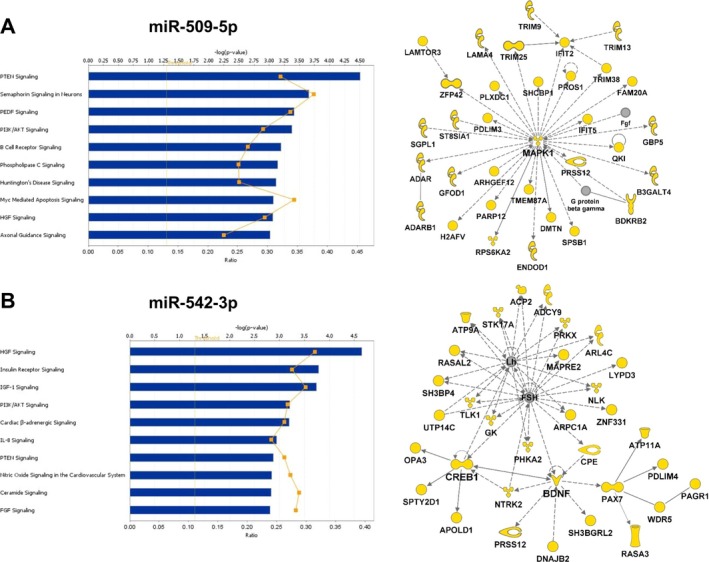
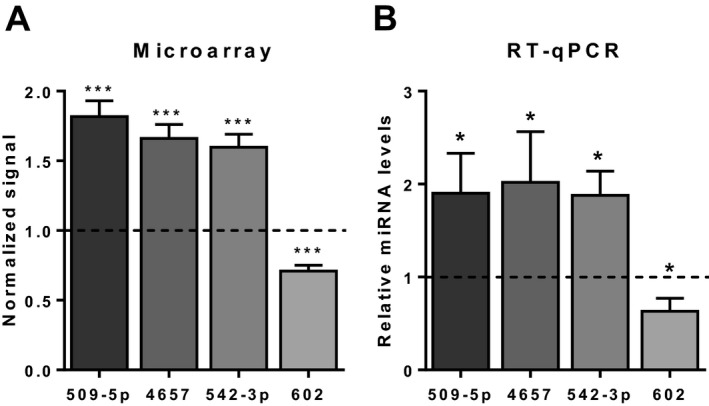
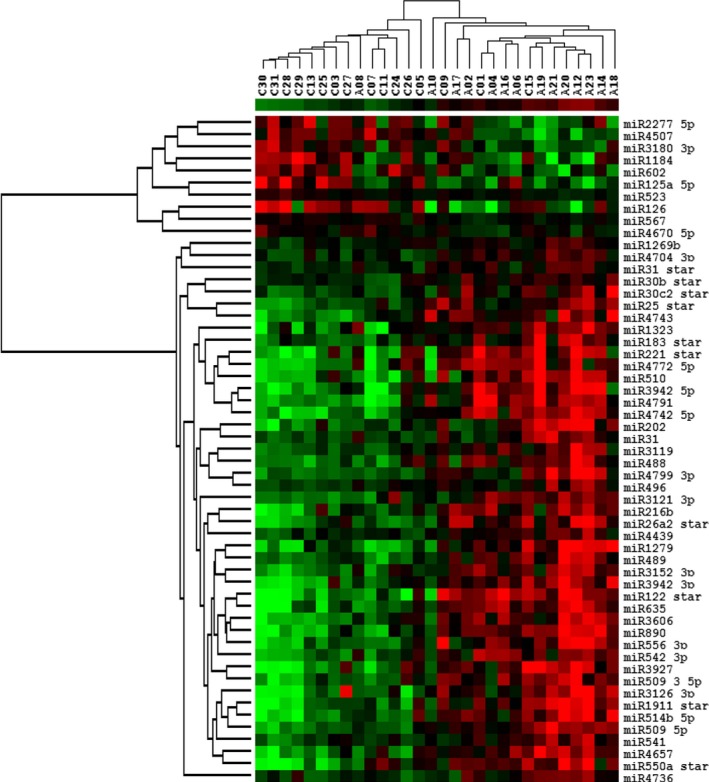
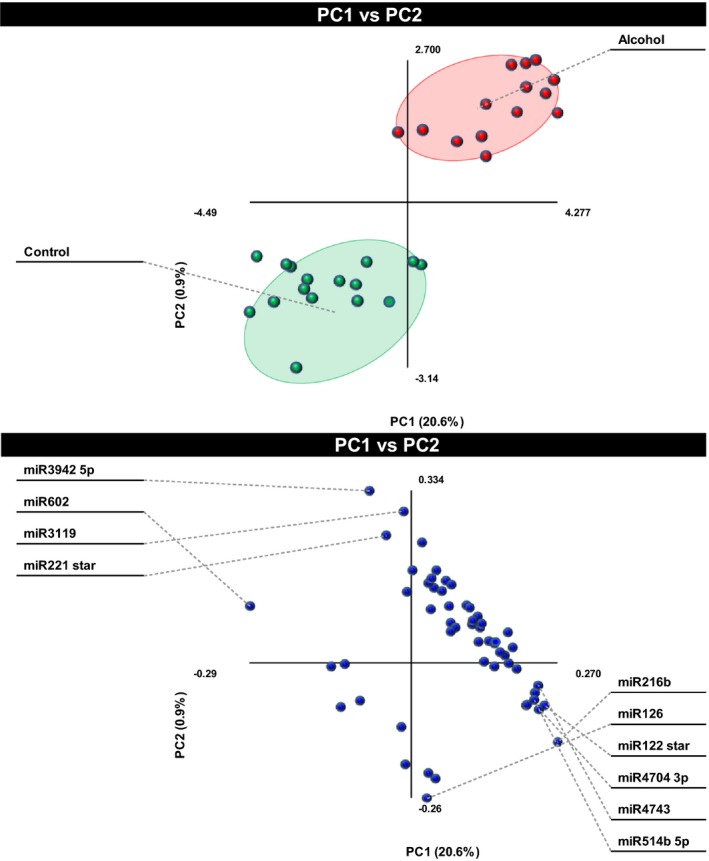
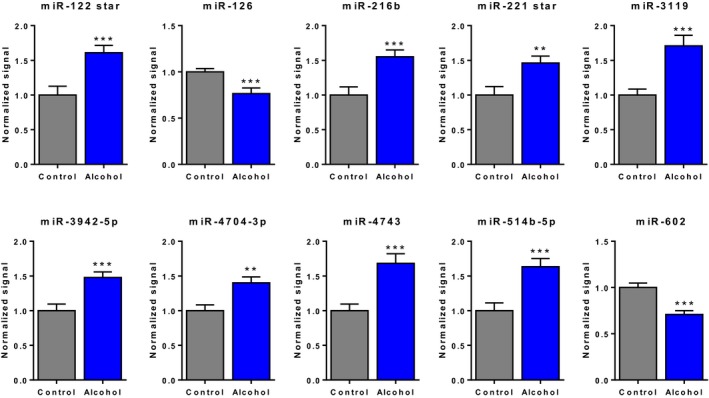
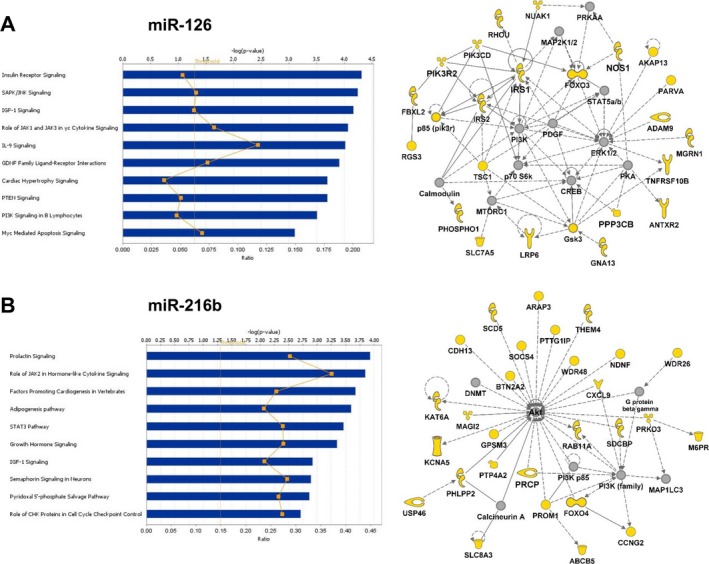
False discovery rate-corrected analyses of covariance revealed that 55 miRNAs were significantly altered between the 2 groups. Hierarchical clustering using only the significantly altered miRNAs grouped samples into alcohol-consuming and non-alcohol-consuming individuals. Discriminant analysis then identified miRs-122*, -126, -216b, -221*, -3119, -3942-5p, -4704-3p, -4743, -514-5p, and -602 as the top 10 discriminators between the 2 groups. Ingenuity Pathway Analysis of putative miRNA targets illustrated that miRNAs identified in this study are involved in biological pathways that mediate the effects of alcohol, such as brain-derived neurotrophic factor, ERK1/2, and PI3K/AKT signaling.
This is the first report of alterations in serum miRNA expression that are associated with alcohol use during human pregnancy. These results suggest that serum miRNAs could be useful as biomarkers of alcohol exposure.
鉴于使用当前已确立的酒精消费生物标志物来确认孕期产前酒精暴露(PAE)存在挑战,我们研究了血清微小RNA(miRNA)是否可作为PAE的稳定生物标志物。特定循环miRNA水平的改变已与多种疾病状态以及胎儿酒精谱系障碍动物模型相关联。
本前瞻性研究中的孕妇从新墨西哥大学附属的药物滥用诊所和普通产科诊所招募。在分娩入院时,从14名报告孕期有≥1次暴饮或≥3杯/周饮酒量的受试者以及16名报告孕期戒酒且5种乙醇生物标志物检测呈阴性的受试者中采集血清。从血清中分离总RNA并用于微阵列分析。
经错误发现率校正的协方差分析显示,两组之间有55种miRNA发生了显著改变。仅使用显著改变的miRNA进行层次聚类,可将样本分为饮酒者和非饮酒者。判别分析随后确定miR-122*、-126、-216b、-221*、-3119、-3942-5p、-4704-3p、-4743、-514-5p和-602为两组之间的前10个判别因子。对假定的miRNA靶标的 Ingenuity 通路分析表明,本研究中鉴定的miRNA参与介导酒精作用的生物途径,如脑源性神经营养因子、ERK1/2和PI3K/AKT信号传导。
这是首篇关于人类孕期血清miRNA表达改变与酒精使用相关的报告。这些结果表明血清miRNA可用作酒精暴露的生物标志物。